Drooping Leaves on Yucca Plant: Causes, Checks & Fixes
Quick answer
Drooping leaves on Yucca Plant usually mean the roots cannot supply water-either because the mix is too wet and roots are failing, or because it has dried out too long. Lift the pot and check trunk firmness before you change anything.
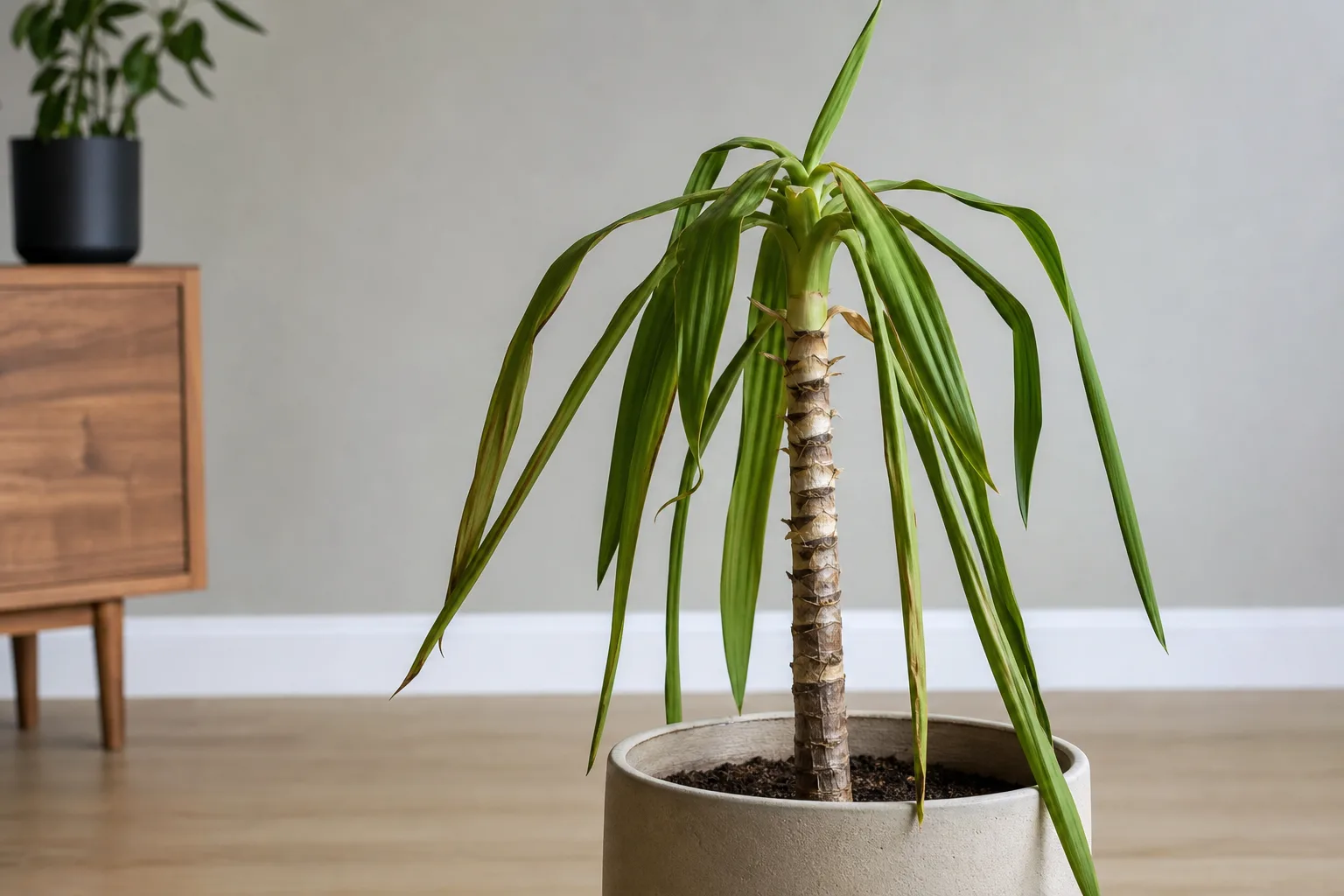
Drooping Leaves on Yucca Plant: Causes, Checks & Fixes
This guide covers drooping leaves on Yucca Plant. See also the general Drooping Leaves guide, watering, and light pages for this plant.
Drooping Leaves on Yucca Plant: Causes, Checks & Fixes
Quick answer
Drooping leaves on Yucca Plant look like the plant needs water, but on this drought-adapted cane the opposite cause is more common. Wilted or drooping leaves with wet soil mean rotting roots cannot take up water-the mix holds moisture the failing root system cannot use. underwatering on Yucca Plant droops too, but yucca leaves usually curl and feel papery before they hang limply.
First step: lift the pot and squeeze the trunk base. A light dry pot with a firm trunk needs water; a heavy wet pot with a softening base needs drying and root inspection-not another drink.
What drooping leaves look like on Yucca Plant
Healthy Yucca elephantipes holds its sword-shaped leaves at a slight upward angle from each rosette atop the cane. When turgor drops, those stiff leaves hang downward along the stem or flop outward from the rosette center. The change can hit one rosette or the whole plant.
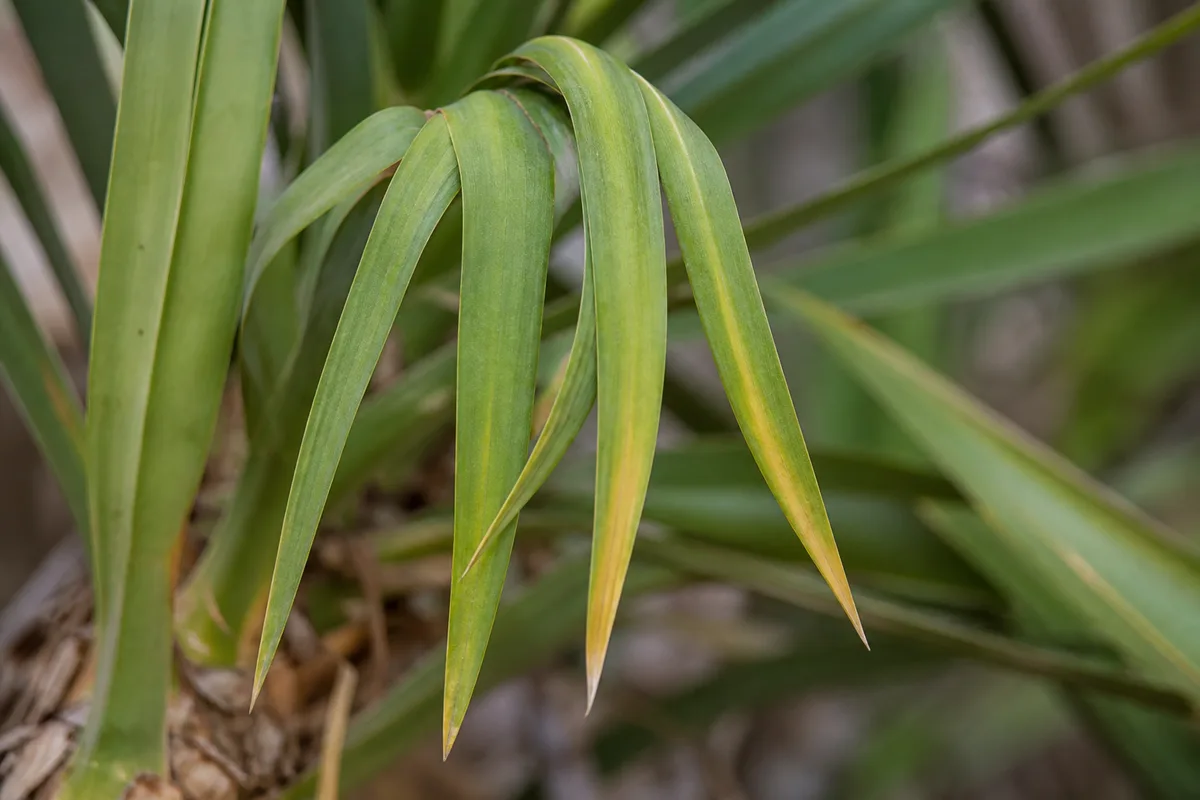
Drooping Leaves symptoms on Yucca Plant - compare with healthy tissue on the same plant.
Typical drooping patterns:
- Whole-plant limpness - every rosette sags at once, often with yellow lower leaves; usually root-zone stress
- Lower rosette droop only - older leaves hang while new center growth stays upright; can be normal aging mixed with overwatering on Yucca Plant
- One-sided droop - the side facing a heat source or draft collapses first; environmental shock
- Gradual lean with pale leaves - stretched thin canes and sparse rosettes drooping toward the window; insufficient light
Unlike tropical houseplants that perk up within hours of watering, yucca droop from root damage persists until the root zone is corrected. Leaves that have gone fully limp for more than a week rarely regain their original stiffness-you judge recovery by new upright growth, not old flopped blades.
Why Yucca Plant gets drooping leaves
Yucca elephantipes stores water in its trunk and thick leaves. It expects soil to dry out between waterings in a well-drained sandy soil mix. When roots sit in wet mix, they lose oxygen; roots growing in waterlogged soil may die because they cannot absorb the oxygen needed to function normally. Damaged roots cannot move water upward, so leaves droop even though the pot feels heavy.
Overwatering and poor drainage
This is the leading cause indoors. Heavy peat-based mix, pots without drainage, oversized containers, and winter watering at summer frequency all keep roots wet too long. Yucca tolerates drought far better than soggy soil. Drooping often appears before yellow halos spread up the cane.
Underwatering during active growth
Yucca survives dry spells, but long drought in bright summer light depletes stored trunk moisture. Leaves first curl inward and feel less rigid, then hang limply. The pot feels light and the mix is dry several centimeters down. This pattern is less common than overwatering but shows up when owners fear root rot on Yucca Plant and withhold water too long.
Not enough light
In deep shade, yucca produces thin stretched canes with weak rosettes that cannot support leaf weight. Leaves look pale and droop toward the brightest side. The mix may dry slowly because the plant is not photosynthesizing actively, which confuses owners into watering less when the real issue is light.
Recent Yucca Plant repotting guide or relocation
Disturbed fine roots after repotting can cause temporary droop for one to two weeks while the plant re-establishes. A sudden move to intense direct sun after months indoors can also stress leaves until acclimated. Trunk firmness stays normal in both cases if watering is restrained.
Cold drafts and temperature shock
Prolonged exposure to sustained cold damages yucca tissue and slows root function Leaves near cold windows or AC vents droop without obvious soil problems. Draft stress often pairs with blackened or water-soaked leaf tips rather than uniform limpness.
How to confirm the cause
Work through these checks in order before you treat anything:
- Pot weight - Lift the container off the saucer. Light means dry; heavy and waterlogged means saturated.
- Soil moisture at depth - Push a finger or skewer 5–7 cm into the mix. Surface dryness with wet core confirms poor drainage or overwatering history.
- Trunk firmness - Grip the cane base just above soil level. Firm wood is good; spongy or soft tissue signals rot spreading from wet roots.
- Drainage test - Water should exit the drainage hole within seconds of watering and never pool in the saucer for hours.
- Light assessment - Note whether canes are stretched, pale, or leaning hard toward one window.
- Recent changes - Repotting within two weeks, a move to hotter sun, or a heating season shift can explain temporary droop with otherwise healthy roots.
Diagnosis shortcuts:
| Pattern | Likely cause | What confirms it |
|---|---|---|
| Heavy wet pot + soft trunk base | Overwatering / root rot | Mushy brown roots when unpotted |
| Light dry pot + firm trunk + curled leaves | Underwatering | Mix dry throughout; leaves firm up after watering |
| Pale stretched canes + slow dry-down | Low light | Firm roots; improvement after brighter placement |
| Drooping 1–2 weeks after repot | Transplant stress | Firm trunk; no sour smell |
| Drooping near cold window in winter | Cold / draft damage | Blackened tips; stable temperature fixes new growth |
First fix for Yucca Plant
Stop watering and lift the pot to feel its weight before you add any water.
This single check prevents the most dangerous mistake-watering an already wet yucca because drooping leaves look thirsty. If the pot is heavy and the mix is wet, move the plant to brighter light with good airflow and do not water again until the mix dries completely. If the trunk base is soft, unpot immediately, trim mushy roots with clean shears, let cuts dry for a day, and repot firm tissue into dry gritty mix.
If the pot is light and the trunk is firm, water deeply until it runs from the drainage hole, empty the saucer, and recheck in 12 hours. One thorough drink fixes drought droop; repeated small sips do not rehydrate a large cane.
Do not fertilize, repot, or prune heavily until you know which pattern you have. Stressed yucca roots need stable conditions, not extra inputs.
Step-by-step recovery
For overwatering-related droop
- Stop watering and move to the brightest spot available indoors.
- If the trunk base is still firm, wait until the mix is dry throughout before the next drink.
- If the base softens or soil smells sour, unpot and inspect roots.
- Trim all brown, mushy root tissue; leave only firm white or tan roots.
- Cut away any soft trunk sections above the rot line with sterilized tools.
- Let the plant and trimmed cuts air-dry for 24–48 hours.
- Repot into fresh fast-draining cactus mix with perlite or coarse sand in a pot only slightly larger than the root ball.
- Wait one to two weeks before the first light watering; then resume only when dry.
For underwatering-related droop
- Water thoroughly until runoff, then discard saucer water.
- If the mix repels water, bottom-soak for 20–30 minutes so the root ball rehydrates evenly.
- Keep the plant in bright light so it can use the moisture efficiently.
- Resume a dry-down rhythm-water only when the mix is dry several centimeters deep during growth season.
For low-light droop
- Move gradually to bright indirect or direct light-a south or west window is ideal indoors.
- Rotate the pot weekly so rosettes develop evenly.
- Hold watering until the mix dries; weak growth in shade uses less water than owners expect.
- Trim only leaves that stay permanently floppy after new upright growth appears.
Recovery timeline
Mild drought droop often improves within 12 to 24 hours of proper watering. Overwatering recovery takes longer-expect two to six weeks before new firm leaves emerge from rosette centers if the trunk stayed solid. Root rot with a soft trunk may take months to show new growth, and severely damaged canes may not recover at all.
Signs the plant is improving:
- New leaves emerge upright and stiff from rosette centers
- Trunk base stays firm when squeezed
- Pot weight drops predictably between waterings
- Yellowing stops spreading up the cane
Signs the problem is worsening:
- Trunk base softens further or blackens
- More rosettes collapse despite dry soil
- Sour smell returns after repotting
- No new growth after six weeks in corrected conditions
Lookalike symptoms
Wilting vs drooping - On yucca these overlap, but wilting describes sudden collapse while drooping is often a slower sag. The diagnostic path is identical: check pot weight first.
Yellow leaves - Yellow lower leaves with brown halos usually accompany overwatering droop. Pure yellowing without limpness may mean salt buildup or natural aging of old blades.
Leggy growth - Thin stretched canes with sparse rosettes look like drooping from weakness, not turgor loss. Brighter light fixes the structure; watering does not.
Brown tips - Crispy brown edges with otherwise upright leaves point to fluoride, low humidity, or salt stress-not the same as whole-leaf droop from root failure.
Mistakes to avoid
- Watering on sight alone - Drooping leaves trigger reflex watering even when the mix is already wet.
- Using standard potting mix - Peat-heavy soil holds moisture too long for yucca roots.
- Misting leaves - Surface moisture does not fix root-zone problems and can encourage fungal spots in stagnant air.
- Fertilizing stressed plants - Salts burn damaged roots and worsen droop.
- Repotting into a much larger pot - Excess wet soil around sparse roots prolongs saturation.
- Ignoring trunk firmness - Soft base tissue means rot; drying the surface soil is not enough.
Wear gloves when handling cut yucca tissue if sap irritates your skin, and keep the plant away from pets-Yucca is toxic to cats and dogs.
How to prevent drooping leaves next time
Match watering to how fast the pot dries in your home, not a calendar. During active growth, water only after the mix dries completely. During indoor winter months, reduce watering to the minimum-enough to prevent foliage loss but not enough to keep soil moist.
Use pots with open drainage holes and empty saucers after every watering. A gritty cactus blend with added perlite or sand drains faster than all-purpose mix. Place yucca where it gets bright light for most of the day so photosynthesis and water use stay in balance.
In autumn, cut back watering before room light and temperature drop. A summer schedule in a dim winter room is a common trigger for droop and rot.
When to worry
Treat drooping as urgent when wet soil, soft trunk tissue, or sour odor appear together-that pattern can progress to crown rot within days. Also escalate if drooping persists more than 48 hours after correcting underwatering, or if multiple rosettes collapse while the pot stays heavy.
A firm trunk with dry soil and drooping leaves is manageable. A spongy trunk with wet soil may require cutting the cane above healthy tissue and rooting firm sections as a last rescue-not a guaranteed save, but sometimes the only option when base rot has advanced.
Conclusion
Drooping leaves on Yucca Plant are a root-zone message, not a leaf problem. The cane stores water precisely because its desert-adapted roots hate staying wet. Read pot weight and trunk firmness before you water, match the mix and schedule to bright dry-down conditions, and judge recovery by stiff new growth-not by hoping old flopped blades will rise again.
When to use this page vs other Yucca Plant guides
- Yucca Plant watering guide - Use for routine moisture checks before assuming drooping leaves is the main issue.
- Yucca Plant problems hub - Browse all 29 common issues on this species.
- Underwatering on Yucca Plant - Different entry point when symptoms overlap with drooping leaves.
- Overwatering on Yucca Plant - Different entry point when symptoms overlap with drooping leaves.
- Root Rot on Yucca Plant - Different entry point when symptoms overlap with drooping leaves.