Yellow Leaves on Yucca Plant: Causes, Checks & Fixes
Quick answer
Yellow leaves on Yucca Plant usually mean normal lower-leaf aging or root stress from wet soil. First, check pot weight, soil moisture at depth, and trunk firmness before changing water, fertilizer, or pot size.
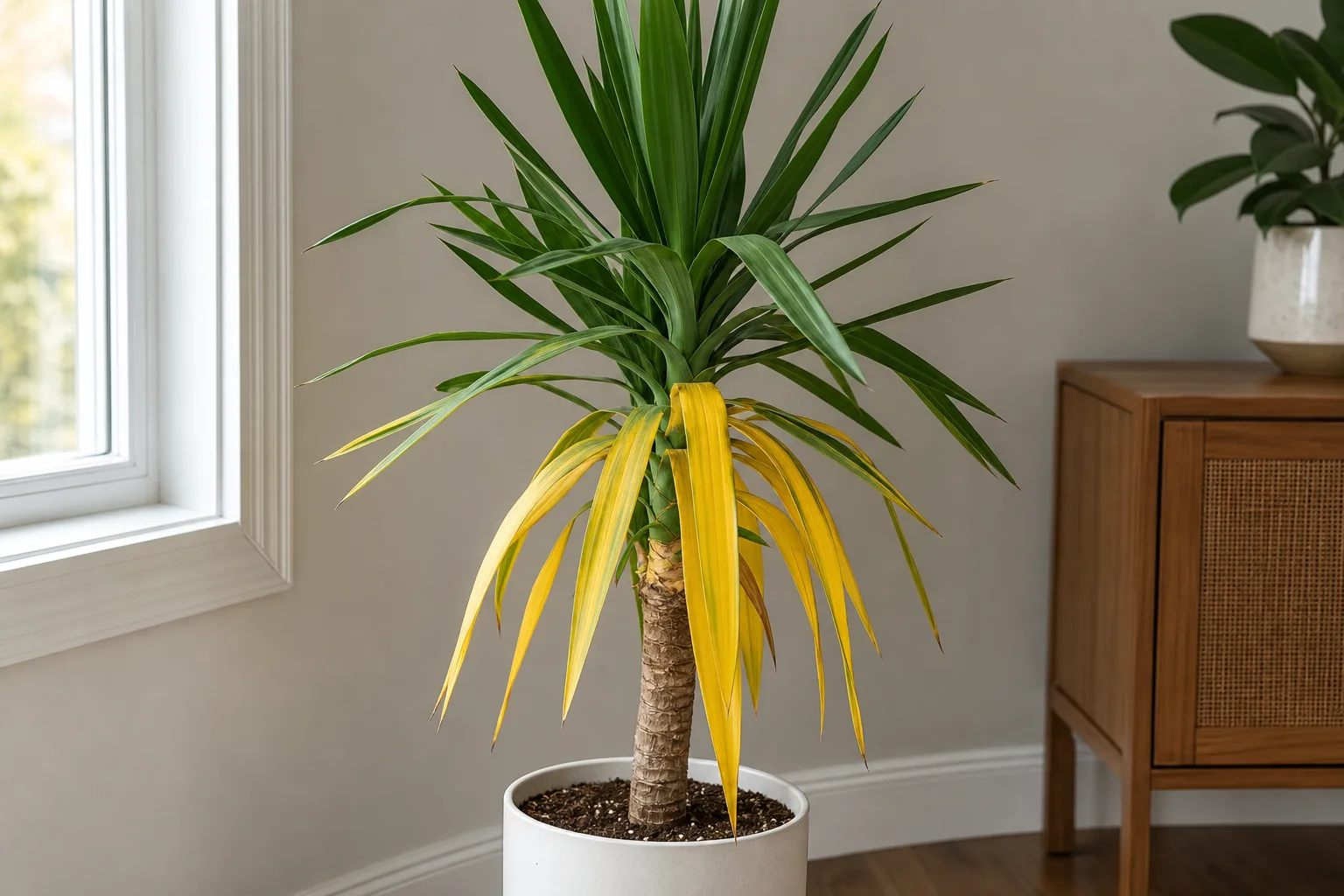
Yellow Leaves on Yucca Plant: Causes, Checks & Fixes
This guide covers yellow leaves on Yucca Plant. See also the general Yellow Leaves guide, watering, and light pages for this plant.
Yellow Leaves on Yucca Plant: Causes, Checks & Fixes
Quick answer
Yellow leaves on spineless yucca (Yucca elephantipes, also sold as giant yucca or Y. gigantea) are usually either normal lower-leaf aging or root stress from staying too wet. This drought-tolerant cane yucca stores water in its woody trunk and sheds the oldest sword-shaped leaves at the base as it grows taller-so one yellow lower blade is often routine, not a crisis.
First step: check pot weight, moisture at root depth, and trunk firmness-in that order. A single old lower leaf yellowing while the cane stays firm is often normal aging. Several soft yellow leaves with a heavy wet pot points to overwatering, especially in low light or winter. Crisp yellow-brown edges on a light, dusty pot suggests underwatering instead.
| What you see | Pot feel | Trunk base | Likely cause |
|---|---|---|---|
| One lower leaf yellowing | Normal dry-down | Firm | Normal aging |
| Several soft yellow leaves | Heavy, wet for days | Usually firm early | Overwatering / root stress |
| Crisp yellow-brown edges | Very light, dry mix | Firm | Underwatering |
| Yellowing after cold snap | Variable | Firm unless rot follows | Cold stress |
| Fast widespread yellow + sour smell | Wet | Softening possible | Root rot-urgent |
For wet-soil collapse and mushy roots, see root rot on Yucca Plant. For chronic heavy pots without rot yet, see overwatering on Yucca Plant.
Why Yucca Plant gets yellow leaves
Most yucca yellowing indoors traces to how this desert-adapted cane handles water, light, and temperature-not random “houseplant stress.” The main causes:
Normal lower-leaf senescence. As the cane adds height, the oldest leaves at the base yellow, dry, and drop while the top rosette stays green. Some yellowing of lower leaves is normal on yucca; the plant redirects resources to new crown growth.
Overwatering and poor drainage. Yucca roots expect oxygen between soak-and-dry cycles. When peat-heavy mix or an oversized pot stays wet for days, roots suffocate and upper leaves yellow even though soil feels moist. Sudden yellowing and limpness of lower leaves is due to overwatering on yucca-often paired with a heavy pot and soft-feeling foliage.
Low light slowing dry-down. Dim corners mean the same watering volume evaporates slower. Drooping or yellow lower leaves in low light can look like thirst, tempting owners to add water and worsen wet-soil stress. Low light levels can result in sagging leaves but check for over or under-watering first.
Underwatering after a dry spell. Crisp, brown lower leaves result from under-watering, though lower leaves also shed naturally as the plant grows. Extended drought yellows edges before the whole blade goes crisp.
Cold stress near drafts. Tender Y. elephantipes tolerates a minimum temperature of 10°C (50°F) indoors. N.C. State advises bringing giant yucca indoors below 50°F and keeping it away from cold drafts (N.C. State Extension). Chill plus wet soil compounds yellowing.
Winter calendar watering. Cool dim rooms slow water use, but many growers keep a summer schedule. Indoor winter watering should be reduced to near-minimum so soil stays mostly dry between drinks-wet mix around semi-dormant roots is a common yellow-leaf trigger.
Trunk water storage masks early root failure. Upper leaves can stay green for weeks while roots decline underneath-the plant draws on stored moisture in the cane until reserves run out.
What yellow leaves look like on Yucca Plant
Pattern matters more than color alone. Match leaf texture, pot weight, and trunk firmness together-not a single yellow blade in isolation.
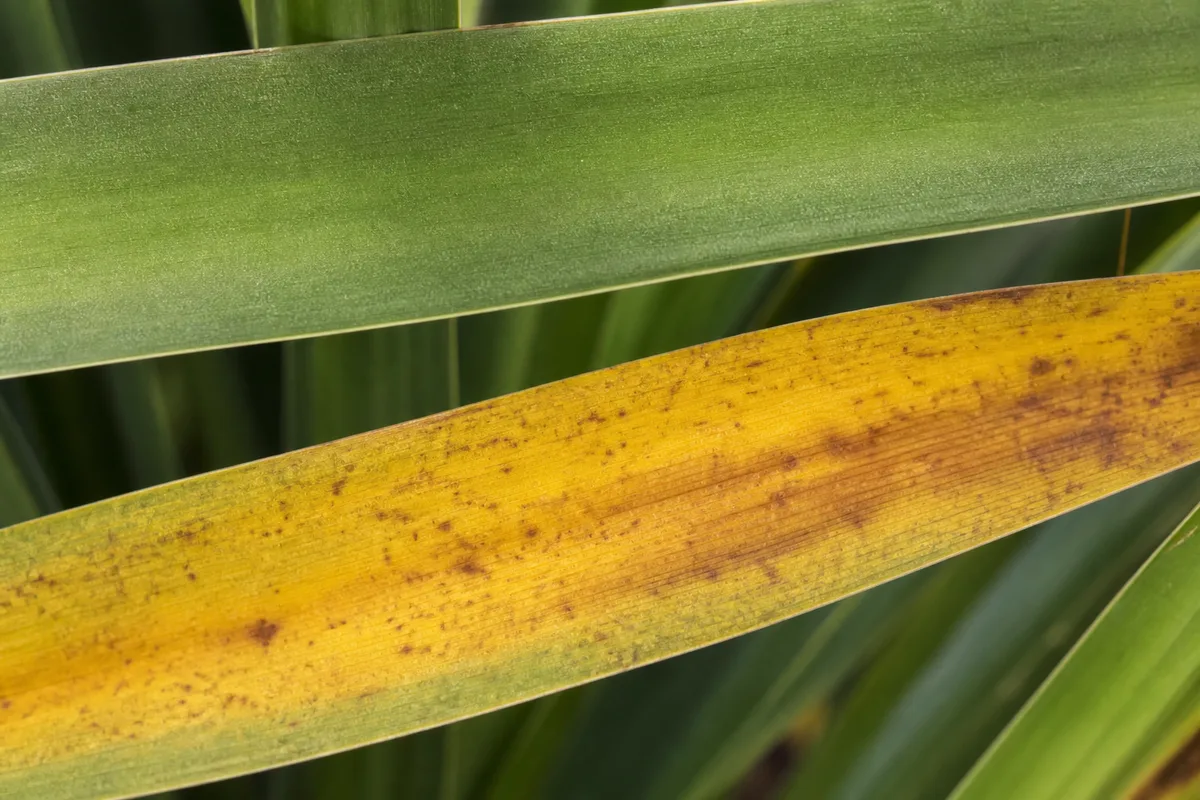
Yellow Leaves symptoms on Yucca Plant - compare with healthy tissue on the same plant.
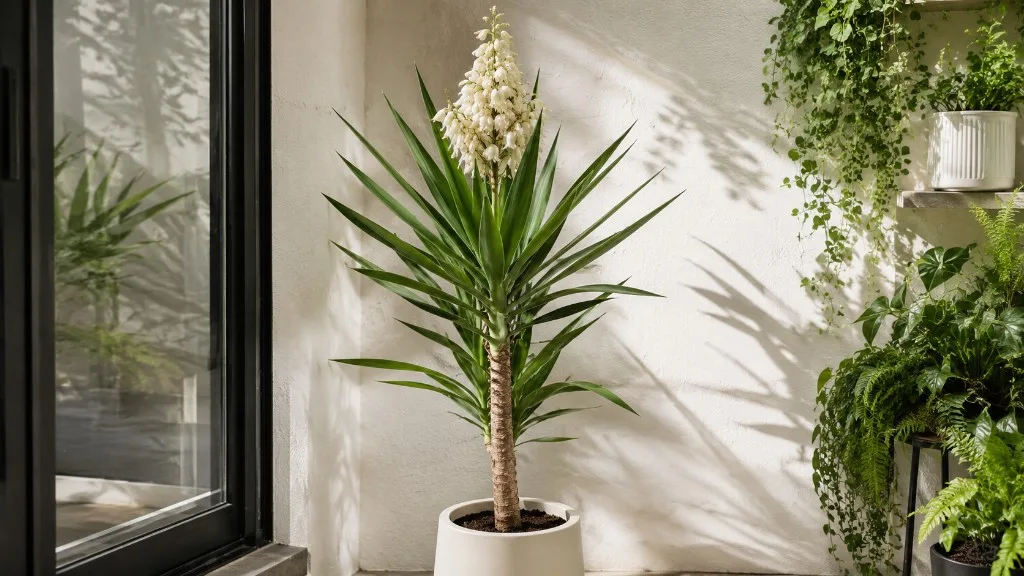
Normal aging pattern
One lower leaf at a time turns evenly yellow, then tan, while the upper rosette stays green and firm. The woody trunk feels hard when you press it. Pot weight follows your normal dry-down cycle-neither heavy for days nor bone-dry for weeks. New sword-shaped leaves at the crown look healthy. You may peel off a fully dry lower blade cleanly; the plant does not need emergency repotting for this pattern alone.
Overwatering pattern
Several lower leaves yellow together, often feeling soft or limp rather than papery dry. The pot stays heavy days after watering. Mix near the trunk may smell sour or stagnant on advanced cases. The trunk base is usually still firm on early overwatering-but softening at the base is a warning sign. Upper leaves may wilt despite wet soil because damaged roots cannot move water-a classic overwatering paradox on drought-adapted plants. When soil stays wet, oxygen drops around roots and plants can yellow or wilt even though the mix feels moist (University of Maryland Extension).
Underwatering pattern
Leaves show crisp yellow-brown edges or fully dry tan lower blades on a very light pot. Mix pulls away from pot sides and feels dusty throughout. The trunk stays firm-yucca holds water in its cane longer than thin-leaved houseplants. After a thorough soak, turgor often returns within hours if roots are still healthy. Crisp brown lower leaves can mean thirst, though some lower-leaf browning is also normal shed.
Low light plus wet soil pattern
Slower growth, slightly stretched or weaker new leaves, and persistent yellowing on lower foliage while soil stays damp-not dusty dry. The room may be a north corner, far from glass, or blocked by seasonal shade. This pattern overlaps overwatering because dim light slows evaporation; fix both light and watering rhythm rather than guessing from leaf color alone.
Cold stress pattern
Yellowing or leaf decline after exposure to cold windows, AC blasts, or entry doors in winter. Tender yucca should stay above about 50°F (10°C) (N.C. State Extension). Cold alone may yellow margins; cold plus wet soil raises root-stress risk. Trunk tissue usually stays firm unless secondary rot follows chill and saturation.
For overlapping droop without clear wet-soil signs, compare drooping leaves on yucca and not enough light on yucca.
How to confirm the cause
Work through these checks in order so you do not over-correct:
- Check pot weight. Lift the pot. A container that remains heavy several days after watering is usually still wet at root depth; extensions recommend using lift-weight as a watering check (University of Minnesota Extension).
- Check soil at depth. Insert a wooden dowel or stick to the bottom; if it comes out damp or stained, wait before watering (University of Maryland Extension).
- Check trunk firmness. Press the base on all sides. A firm cane is reassuring; softening at the base is a warning sign-see root rot or crown rot guides.
- Smell the root zone. Sour odor plus yellowing strongly suggests root decline.
- Inspect roots if needed. Soft brown roots with yellowing foliage match overwatering damage (Missouri Botanical Garden visual guide).
- Check light and temperature exposure. Dim rooms slow dry-down; cold drafts compound stress-move away from drafts into brighter conditions (RHS yucca care guide).
| Cause | Pot weight | Leaf texture | Trunk base | First action |
|---|---|---|---|---|
| Normal aging | Normal cycle | Even yellow, one at a time | Firm | None if crown healthy |
| Overwatering | Heavy, slow to dry | Soft, limp yellow | Firm early | Stop water; improve light/airflow |
| Underwatering | Light, dry throughout | Crisp yellow-brown edges | Firm | Water once thoroughly; drain saucer |
| Low light + wet soil | Often heavy | Weak lower yellowing | Firm | Brighten light; dry mix before next drink |
| Cold stress | Variable | Decline after chill | Firm unless rot follows | Move above 50°F; stabilize watering |
| Root rot | Wet + sour smell | Fast spreading yellow | May soften | Unpot immediately-see root-rot guide |
If you find mushy roots or a soft trunk base, go straight to root rot on yucca. If the pot is very dry and light, compare with underwatering on yucca.
First fix for Yucca Plant
Take one first action based on what you confirmed-do not stack repotting, fertilizer, and heavy pruning on the same day.
If soil is wet and several lower leaves are soft yellow: Stop watering. Move the pot to brighter filtered light so the mix dries faster. Lift daily to track weight. Only resume when a dowel test shows dry mix at depth.
If only one old lower leaf is yellow and the trunk is firm: No emergency fix. Remove the fully dry blade for appearance if you prefer.
If soil is dusty dry and edges are crisp: Water thoroughly once until excess drains; empty the saucer. Return to a dry-down cycle-do not water again until the mix dries throughout.
If root rot signs appear (sour smell, mushy roots, soft base): Unpot, trim mushy roots, and repot into a smaller fast-draining mix. RHS recommends cutting away rotted roots and repotting into fresh compost when rot starts.
If cold-stress signs dominate: Move the plant away from cold windows, AC vents, and drafty doors; stabilize temperatures above 50°F (N.C. State Extension).
Do not fertilize a stressed yucca as a first response. Fix water, light, and root conditions first.
Step-by-step recovery
Once you know the cause, follow the matching path:
Recovering from overwatering stress (firm trunk, no mushy roots yet)
- Stop all watering until the mix dries throughout-often one to three weeks indoors depending on pot size and light.
- Move to brighter light with good airflow so evaporation speeds up; avoid dark corners while soil is wet.
- Lift the pot daily and log weight. Resume watering only when a dowel comes out clean and dry at depth.
- Empty saucers within minutes after any future watering so roots are not left sitting in water (University of Maryland Extension).
- Watch the trunk base every few days. Firmness holding steady is a good sign; softening means unpot and inspect for root rot.
Recovering from underwatering (firm trunk, dry mix)
- Water thoroughly once until excess runs from drainage holes.
- Discard saucer water immediately-yucca hates standing moisture even after a drought correction.
- Wait for normal dry-down before the next drink; do not switch to daily watering out of guilt.
- Judge turgor on upper leaves within 24 hours. Persistent limpness on wet soil after soaking suggests root damage, not simple thirst.
Recovering from root rot (mushy roots or soft base)
- Unpot and rinse roots gently to see firm versus mushy tissue.
- Trim all soft roots back to firm white tissue; sterilize scissors between cuts.
- Air-dry the trimmed root ball 24–48 hours before repotting into dry gritty mix in a pot sized to the remaining roots-not the canopy height.
- Withhold water one to two weeks after repot, then resume sparingly when mix is dry throughout and the base stays firm.
- Propagate firm cane sections if most roots are gone but hard trunk remains-see Yucca Plant propagation.
Recovering from cold stress
- Move above 50°F away from glass and drafts.
- Hold watering slightly longer than usual while the plant stabilizes-cold plus wet soil is especially risky.
- Remove fully dead leaf tissue only after it dries; do not pull green-yellow blades early.
Make one correction at a time. Stacking fixes hides what helped and can stress a plant already shedding leaves.
Recovery timeline
After correcting care, recovery is measured over weeks, not days. Old yellow leaves generally do not turn green again-track recovery by what is new: firm cane tissue, no fresh yellowing, and healthy crown growth.
- Normal aging: Individual lower blades yellow and drop over weeks; no timeline action needed if the crown stays healthy.
- Mild overwatering or thirst mismatch: Stabilization often shows within two to four weeks once dry-down and light improve.
- Low-light fade with wet soil: Yellowing may slow within two to four weeks after brighter placement and corrected watering-old damaged blades stay yellow until you remove them.
- Root damage after trim and repot: Several weeks to months depending on how much healthy root remains; cane cuttings from firm wood may outpace saving a collapsed root ball.
Positive signs include a firm unchanged base, pot weight dropping on schedule after careful watering, and new sword-shaped leaves at the crown in spring. Negative signs include softening at the trunk base, returning sour smell, or fresh yellowing spreading up the cane despite dry mix-escalate to root rot guidance immediately.
Lookalike symptoms to rule out
Yellow leaves share triggers with several sibling problems. Use this table before repotting or cutting:
| Symptom overlap | Yellow leaves page | Better match |
|---|---|---|
| Wet soil + mushy roots + sour smell | May start here | Root rot |
| Chronic heavy pot, no mush yet | May start here | Overwatering |
| Light dry pot + crisp edges | May start here | Underwatering |
| Dim room, slow dry-down, no mush | May start here | Not enough light |
| Wilting with variable soil | May start here | Drooping leaves |
| Soft base, not just yellow tips | May start here | Crown rot |
| Black patches after chill | May start here | Cold damage |
Root rot lookalike: Wilting despite wet soil tempts owners to water more-the worst response. Confirm with unpot inspection before adding moisture.
Underwatering lookalike: A firm trunk and light pot with crisp edges rarely needs root surgery-one thorough soak and a corrected schedule usually suffice.
Normal aging lookalike: Multiple old lower leaves can yellow in sequence over months, mimicking stress. The crown and trunk firmness distinguish aging from rot.
What not to do
Do not water again just because leaves look pale when the pot is already heavy. Do not assume every yellow leaf means rot. Do not repot, fertilize, and prune heavily on the same day.
Do not judge recovery by old yellow blades-they will not re-green. Do not leave the nursery pot inside a cache pot while watering; runoff pools at the bottom and keeps roots wet.
Keep fallen leaves away from pets: Yucca spp. are toxic to cats and dogs, and ASPCA lists saponins as the toxic principle. If ingestion is possible, contact your veterinarian promptly.
How to prevent yellow leaves next time
Allow the soil to dry out between waterings during active growth, use a pot with drainage holes, and keep yucca in strong light so it uses water efficiently. Use a gritty cactus-style mix and an appropriately sized container-oversized pots stay wet around sparse yucca roots.
In winter, reduce watering to a minimum indoors because growth slows and wet soil lingers longer. Empty saucers after watering so roots are not left sitting in water (University of Maryland Extension).
Inspect indirectly each time you water: lift for weight, dowel-test depth, and press the trunk base for firmness. A pot that stays heavy longer than usual means cut back water before leaves yellow from root stress.
For ongoing prevention, keep care aligned with the core guides: yucca overview, watering, light, and cold damage.
When to worry
Treat yellowing as urgent when:
- Several leaves yellow quickly across the lower rosette while soil stays wet-not one old blade at a time.
- The trunk base softens when you press it, or black tissue appears near the soil line.
- The mix smells sour or rotten from the drainage hole.
- Leaves wilt despite wet soil and weight stays heavy for more than a week after you stopped watering.
- Mushy brown roots appear on unpotting-more than minor surface decay.
Mild overwatering on a firm trunk often stabilizes after dry-down and light improvement. Fast widespread yellow with a soft base rarely saves the whole root ball-unpot immediately and follow root rot trim protocol, or propagate firm cane sections before losing the plant.
When yellowing follows chronic overwatering and crown tissue is involved, read both this guide and crown rot before deciding what to cut.
Conclusion
Yellow leaves on Yucca Plant are a pattern problem-not a single diagnosis. One firm lower blade yellowing on schedule is often normal cane aging; several soft yellow leaves on a heavy wet pot is wet-soil stress that needs dry-down before fertilizer or repotting. Check pot weight, dowel moisture at depth, and trunk firmness first, apply one matching fix, and judge recovery by new crown growth-not by expecting old yellow tissue to turn green again.