Not Enough Light on Yucca Plant: Causes, Checks & Fixes
Quick answer
Yucca elephantipes weakens in deep shade: stems stretch, leaves pale, and growth stalls. First step: move the pot to your brightest window with several hours of direct sun, acclimating over one to two weeks if it came from a dark spot.
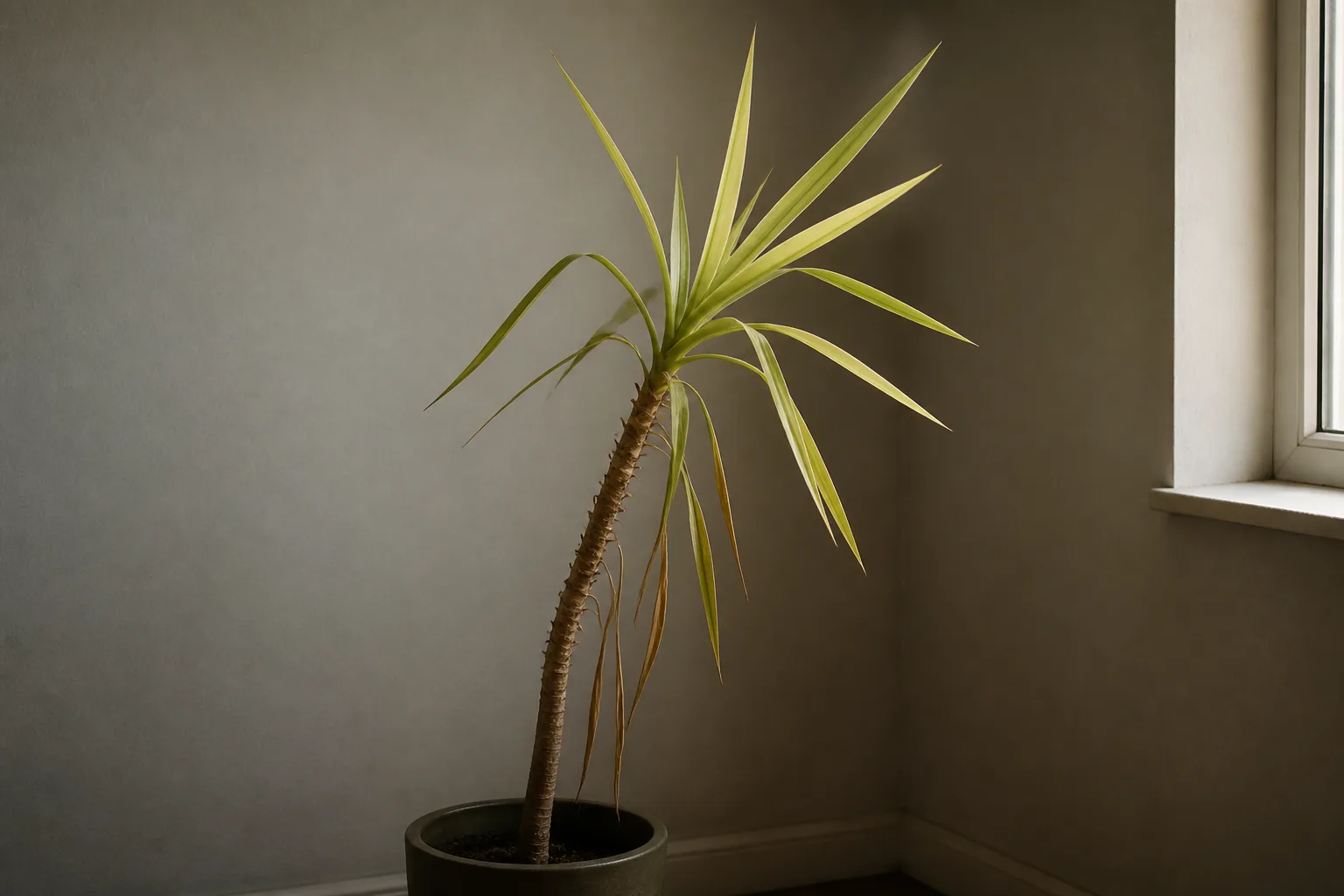
Not Enough Light on Yucca Plant: Causes, Checks & Fixes
This guide covers not enough light on Yucca Plant. See also the general Not Enough Light guide, watering, and light pages for this plant.
Not Enough Light on Yucca Plant: Causes, Checks & Fixes
Quick answer
Yucca elephantipes-sold as spineless yucca, stick yucca, or yucca cane-is a sun-loving desert plant, not a dim-corner survivor. In containers it wants full sun to part shade and bright conditions that match its drought-adapted metabolism. Parked in a hallway, north room, or spot more than a few feet from glass, canes stretch toward light, sword leaves pale and shrink, and new growth nearly stops.
First step: move the pot to the brightest location you have with real direct sun on the leaves-typically a south- or west-facing window, or outdoors in summer after frost risk passes. If the plant lived in deep shade, acclimate over seven to fourteen days rather than jumping straight into harsh midday rays.
After you improve light, slow watering until you learn how fast the mix dries in the new spot. Low light reduces water use; keeping the same calendar in a dark corner is how firm-looking yuccas develop soft trunk bases and root rot on Yucca Plant.
What not enough light looks like on Yucca Plant
Insufficient light on spineless yucca shows up as architecture changes-long canes, sparse rosettes, and weak structure-more often than dramatic leaf yellowing. The sword-shaped foliage may stay green while stems change shape, which makes the problem easy to overlook until the plant looks top-heavy and floppy.
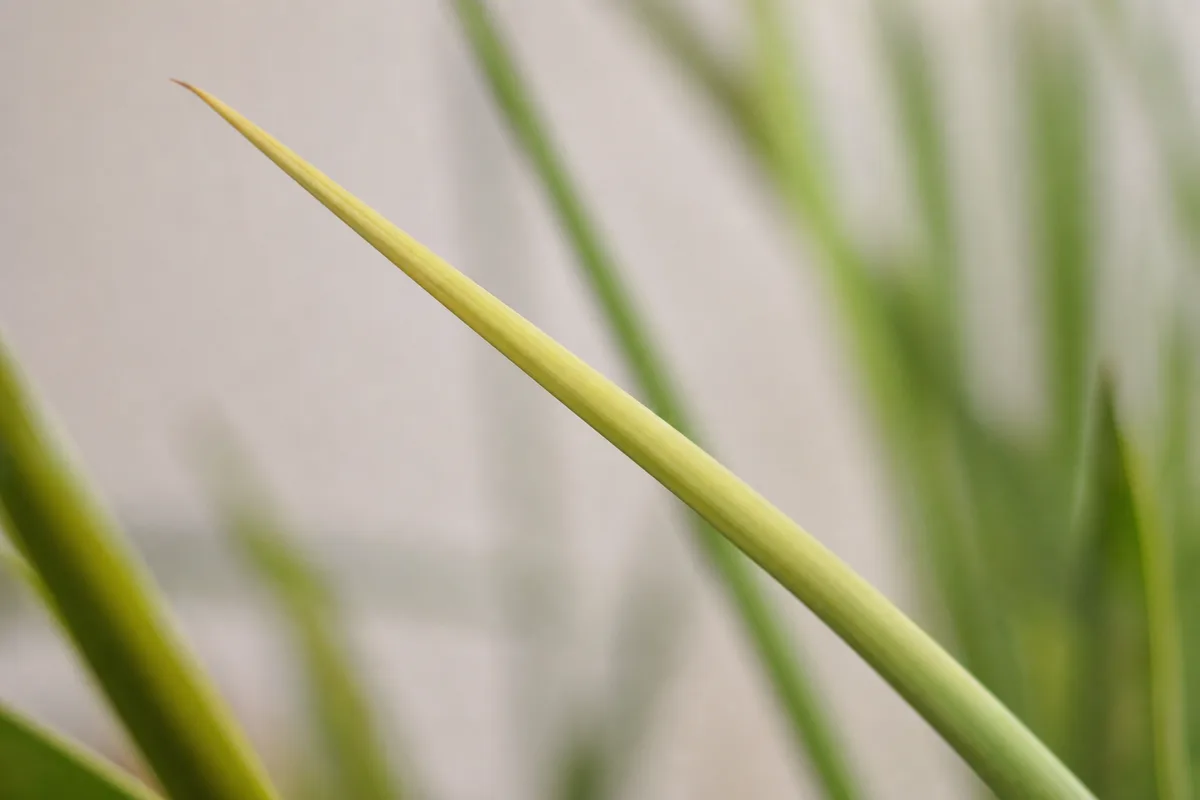
Not Enough Light symptoms on Yucca Plant - compare with healthy tissue on the same plant.
Typical low-light signs:
- Leggy canes - internodes lengthen between leaf rosettes; bare trunk sections appear where leaves used to cluster
- Pale, thin sword leaves - new blades emerge smaller and lighter green than older growth
- Leaning or twisting - the whole plant or individual canes reach toward the brightest patch in the room
- Sparse top rosettes - fewer leaves per crown compared with a compact yucca in strong light
- Very slow or absent new growth - no fresh tips through spring and summer despite warm room temperatures
- Soil that stays damp - mix remains moist for weeks because photosynthesis and transpiration are minimal
What a healthy yucca in acceptable bright light looks like:
- Canes stay relatively upright with moderate spacing between rosettes, not extreme stretch
- Sword leaves are rigid, medium to dark green, and reasonably sized for the cane diameter
- A few new leaf tips appear during the warm season-even if overall growth is naturally slow in pots
- Soil dries completely between waterings on your normal schedule
Yucca is inherently slow in containers compared with wild specimens. The diagnostic question is whether canes are stretching toward light with pale sparse tops-not whether the plant pushes new leaves every week.
Why Yucca Plant struggles in too little light
Spineless yucca evolved in bright, dry Central American conditions where intense sun fuels thick cane growth and rigid sword leaves. It is not a forest-floor understory plant that tolerates perpetual shade. Without enough photosynthetic energy, the plant etiolates-stretching canes to reach brighter zones while producing smaller, weaker foliage.
Low light also slows transpiration and root activity. A yucca in a dark corner uses far less water than one in a sunny window. If you water on the same schedule as a high-light plant, roots sit in wet mix for extended periods. On this drought-tolerant species, that combination invites crown rot and root decay-[roots in waterlogged soil may die because they cannot absorb the oxygen needed to function normally](https://www.missouribotanicalgarden.org/gardens-gardening/your-garden/help-for-the-home-gardener/advice-tips-resources/insects-pests-and-problems/environmental/[overwatering on Yucca Plant](/plants/yucca-plant/overwatering/)).
Winter compounds the problem indoors. Short days cut intensity even at the same window. Cooler room temperatures further slow metabolism. Many owners keep watering through winter while light drops-during indoor winter months, reduce watering to the minimum-which turns a manageable low-light stretch into a wet-root emergency.
Large decorative pots in dim living rooms are a common trap. The cane looks architectural from across the room, but sparse pale tops and a pot that never lightens after watering tell a different story.
How to confirm insufficient light
Work through these checks before Yucca Plant repotting guide, fertilizing, or pruning heavily:
- Light at the plant, not the room - Stand where the pot sits at midday. If no sunbeam ever touches the foliage and you would need a lamp to read comfortably, the yucca is in very low light. Indoor plants generally need more light than people expect-yucca wants several hours of direct sun or very strong reflected light from close to glass.
- Cane pattern - Compare internode length on older canes versus any newer tips. Progressive lengthening with smaller rosettes confirms etiolation.
- Directional lean - Canes pointing toward a single window or lamp strongly suggest the current spot is too dim on the shaded side.
- New tip timeline - Note the last time a fresh sword-leaf rosette emerged at a cane tip. No new growth through an entire warm season in a spot with some daylight points to insufficient energy.
- Soil dry-down speed - Push a finger deep into the mix. If soil stays moist for three weeks or more while you water on a normal schedule, metabolism is slow-often from low light, not necessarily from overwatering yet.
- Trunk firmness - Press the cane base above soil. Firm tissue supports a light diagnosis. Soft, dented, or waterlogged base means pivot to rot treatment, not just a brighter window.
If lower leaves yellow with brown halos, soil smells sour, or the trunk base softens, prioritize drainage and root checks. Those symptoms overlap with low-light overwatering but need different urgency.
First fix for Yucca Plant
Move the pot to the brightest location available with direct sun on the foliage.
Good targets:
- A south- or west-facing window where blades receive at least a few hours of direct sun daily
- An east window if afternoon west sun is too harsh in your climate-morning direct light still beats a dark interior
- Outdoors in summer on a patio after frost risk passes-it may be set outside during the summer months-then brought indoors prior to the first fall frost
- Under a full-spectrum grow light if your brightest window is still weak-position above the canopy for ten to twelve hours daily during dark months
Do not blast a shade-adapted yucca with all-day hot glass on day one. Sudden intense direct sun after months in shade can scorch leaf tips and bleach tissue. Shift the pot closer to the window over seven to fourteen days, or provide partial shade outdoors for the first week.
After moving, wait to water until the potting mix is fully dry through-often longer than before. Match irrigation to dry-down in the new spot, not the old calendar.
Step-by-step recovery
Once the pot is in stronger light:
- Acclimate if the jump is large - Increase direct sun exposure gradually over one to two weeks if the plant came from a very dark interior. Watch for pale bleached patches on leaves facing glass.
- Rotate weekly - Turn the pot a quarter turn each week so all sides receive similar light and canes grow upright instead of one-sided.
- Hold fertilizer - Do not feed a stressed yucca hoping to force compact growth in a still-dim spot. Fertilizer without adequate light cannot fix etiolation and can salt-stress roots in slow-growing plants.
- Prune leggy canes if needed - Once new tighter rosettes appear, shorten excessively stretched canes in spring using clean tools. Old thin sections will not fill in with more leaves on their own.
- Add supplemental light if windows are insufficient - A full-spectrum LED above the canopy supports north-facing apartments. Keep fixtures a safe distance above foliage to avoid heat stress on rigid sword leaves.
- Reassess watering monthly - As light increases, dry-down accelerates. Check soil with your finger rather than assuming the old low-light schedule still applies. Reduce to minimum water during indoor winter months.
Isolate the plant only if you unpot for rot inspection-not for light correction alone.
Recovery timeline
Yucca recovery is measured in new rosettes, not overnight fullness. Expect weeks to months before fresh tight leaf tips emerge, even after light improves, because container yuccas grow deliberately even in good conditions.
Within three to six weeks after a modest light increase, you may see a new sword-leaf cluster beginning at a cane tip if the plant has stored energy. A yucca moved from a very dark spot may take an entire warm season to push its first new rosette while it acclimates.
Old stretched cane sections remain thin permanently. Judge success by tighter new growth, faster soil dry-down, and stiffer upright canes-not by shrinking existing stretch.
If no new growth appears after three to four months in clearly brighter direct light, verify trunk firmness and confirm the new spot truly receives direct sun rather than medium shade several feet from the window.
Lookalike symptoms to rule out
Overwatering and root rot - Yellow lower leaves with brown halos, mushy trunk base, sour soil smell, and wilt despite wet mix. Low light contributes by slowing dry-down, but a soft cane base means rot treatment takes priority over light alone.
underwatering on Yucca Plant - Sword leaves curl and feel less rigid, but canes stay relatively upright without extreme stretch. Soil is bone dry for weeks. A deep soak restores rigidity within days if roots are healthy.
Sunburn - Brown, bleached, or papery patches on leaves facing the window after a sudden move into intense direct sun. Distinct from etiolation, which keeps most tissue green while canes lengthen.
Natural winter quiet - A firm yucca may produce little or no new growth through short winter days even in a good window. Without progressive stretch or strong lean, that may be seasonal rest-not a light emergency.
Brown tips from water quality - Fluoride, salts, or dry air can scorch leaf margins while canes stay compact. Tips brown without cane stretch or lean toward windows.
Nutrient deficiency - Rare on yucca with minimal feeding needs. Uniform pale yellowing without stretch points to other causes before fertilizer.
Mistakes to avoid
Do not treat yucca like a low-light office plant. It survives dim corners briefly but declines over time-unlike true shade-tolerant species.
Do not water on the same schedule after moving to a darker room-or keep the same frequency after moving to a brighter one without checking soil.
Do not place the pot in harsh all-day glass sun to fix legginess instantly. Scorched sword leaves do not recover; acclimate instead.
Do not fertilize heavily in low light hoping to stimulate growth. That can burn leaf tips without solving stretch.
Do not expect old leggy canes to compact after light improves. Prune or live with the architecture; new growth carries the fix.
Do not ignore wet soil in dim corners. Low light plus moisture is the classic setup for crown rot on Yucca Plant overview.
Yucca Plant care cross-check
Light and water move together on Yucca elephantipes. In strong light, the mix should dry completely between waterings in a well-drained sandy soil mix. In low light, “dry between” takes longer-sometimes several weeks.
During indoor winter months, reduce watering to the minimum needed to prevent foliage loss while short days cut light intensity. Cool dim rooms need even less water than summer sun rooms.
Temperature comfort runs roughly 18°C to 30°C (65–86°F). Prolonged exposure below about 7°C (45°F) damages foliage indoors-cold drafts near windows compound low-light stress.
Humidity is rarely the limiting factor. Yucca tolerates standard dry indoor air; focus on light and dry-down first.
How to prevent low-light problems
Place new yucca plants in the brightest available spot from day one-not where the pot looks best decoratively.
Rotate pots weekly in any asymmetric light environment, especially near single windows.
Move outdoors in summer when temperatures stay above frost, then bring inside before first fall frost. Outdoor sun resets compact growth better than most indoor windows.
Adjust watering when seasons change. Winter short days reduce light even in the same window; extend dry periods accordingly.
Clean windows and remove obstructions that cut light more than you realize-sheers, tall furniture, and dirty glass all lower intensity at the pot.
Use grow lights if north-facing rooms are your only option and you want upright compact canes rather than slow decline.
When buying, choose plants with tight rosettes and firm canes. Severely leggy stock in a shop may have been light-starved for months.
When to worry
Low light alone is gradual on yucca, not an overnight crisis. Escalate when:
- Soil stays wet for weeks and the trunk base feels soft-inspect for rot immediately
- Canes yellow and collapse at the base despite corrective light
- Leaves bleach or brown across large sections after a sudden move into intense direct sun
- No new growth appears after four months in verified bright direct light-check trunk firmness and true light levels at the pot
A sparse but firm, green yucca in a mediocre window that you water sparingly may hold for a season. Worry when stretch accelerates, wet soil persists, or tissue turns mushy.
Conclusion
Not enough light on Yucca Plant shows up as stretched canes, pale sparse sword leaves, and glacial growth-not always as yellow foliage. Spineless yucca needs bright direct or very strong reflected sun and watering matched to slower dry-down in shade. Move to the sunniest spot you have, acclimate carefully, cut water until the mix truly dries, and judge recovery by new tight rosettes-not by old leggy canes that will never compact on their own.
When to use this page vs other Yucca Plant guides
- Yucca Plant watering guide - Use for routine moisture checks before assuming not enough light is the main issue.
- Yucca Plant problems hub - Browse all 29 common issues on this species.
- Leggy Growth on Yucca Plant - Different entry point when symptoms overlap with not enough light.
- Slow Growth on Yucca Plant - Different entry point when symptoms overlap with not enough light.
- Yellow Leaves on Yucca Plant - Different entry point when symptoms overlap with not enough light.