Slow Growth on Yucca Plant: Causes, Checks & Fixes
Quick answer
Container yucca grows deliberately: a firm trunk with occasional rosette tips in summer and little growth in winter is healthy. Abnormal stall means no new sword-leaf tips through an entire warm spring, wet soil that never dries, or a softening trunk base. First step: confirm the trunk is firm, then move the pot to brighter direct sun if light is the limiter.
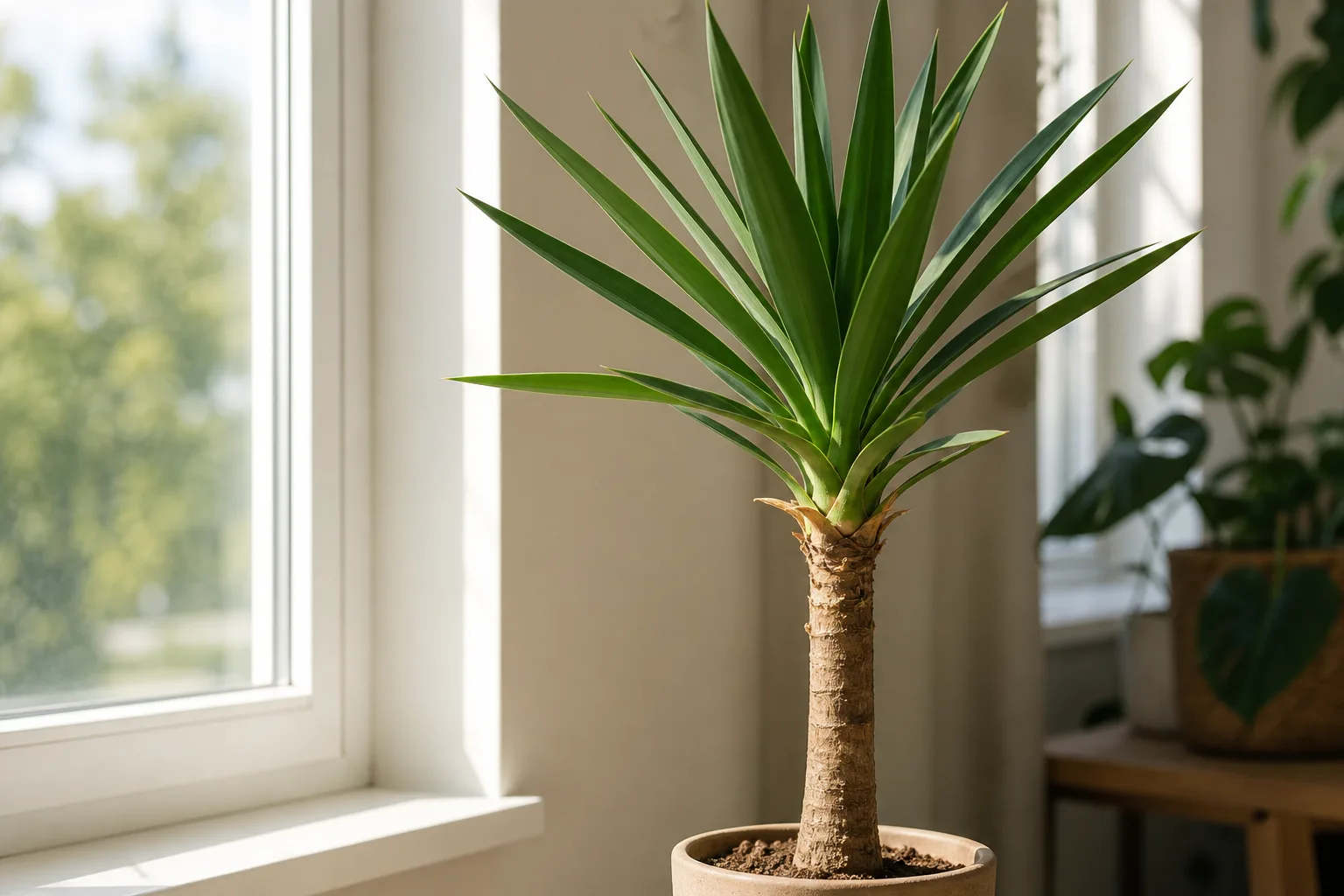
Slow Growth on Yucca Plant: Causes, Checks & Fixes
This guide covers slow growth on Yucca Plant. See also the general Slow Growth guide, watering, and light pages for this plant.
Slow Growth on Yucca Plant: Causes, Checks & Fixes
Quick answer
Yucca elephantipes - spineless yucca, stick yucca, or yucca cane - is a slow-growing desert plant in containers. Indoors it thickens woody trunks and adds sword-leaf rosettes at cane tips on a seasonal clock, not on a weekly houseplant schedule. Container specimens stay much smaller than landscape plants and rarely flower indoors.
Healthy slow growth looks like a firm trunk, green rigid leaves, one to three new rosette tips per cane over an entire bright summer, and little or no growth through short winter days.
Abnormal stall means no fresh tips through a full warm spring despite room temperatures, soil that stays wet for weeks, pale sparse tops with a pot that never lightens after watering, or a trunk base that feels soft instead of woody.
First step: press the trunk base above soil. Firm wood means you are usually managing pace, light, or pot size-not fighting rot. Soft dented tissue with sour soil means pivot to overwatering or root rot before chasing fertilizer or a bigger pot.
This page owns pace baseline, seasonality, and trunk health. For stretched canes and pale lean toward windows, use not enough light on Yucca Plant. For long bare internodes and top-heavy flop, see leggy growth.
Is slow growth normal for Yucca Plant?
Yes - for container yucca, slow is the default. The plant stores water in thick sword leaves and a woody trunk, then allocates energy to trunk thickening and occasional rosette tips rather than constant leaf production. Comparing your cane to a pothos or philodendron will always make yucca look stalled even when it is healthy.
Healthy slow pace indoors (what to expect by season)
| Season | Normal on firm, green yucca | Worth investigating |
|---|---|---|
| Spring (March–May) | First new rosette tips appear as days lengthen; growth may start slowly | No tips by late May in a room with real direct sun on leaves |
| Summer (June–August) | One to three new tips per cane over the season in bright light; trunk slowly thickens | Zero tips all summer; soil wet for three-plus weeks |
| Fall (September–November) | Growth tapers; existing leaves stay rigid and green | Yellow lower leaves with wet heavy pot |
| Winter (December–February) | Little or no new growth; reduce watering to the minimum | Soft trunk base or sour soil smell |
Rosette-tip frequency is the best growth diagnostic on Yucca Plant overview. A firm cane that adds even one clean sword-leaf cluster in a bright summer is on pace. A firm cane with zero tips from March through August in warm room temperatures is not.
When slow growth is actually a problem
Treat growth as abnormal when:
- No new rosette tips appear through an entire warm spring and summer in a spot that receives several hours of direct sun
- Soil stays moist for three weeks or more while you water on a normal schedule-metabolism is stalled, often from low light or an oversized pot
- The trunk base softens, yellow lower leaves collapse, or the mix smells sour-rot crossover, not patience
- You repotted in spring and the plant sat idle for months with wet center soil-oversized container stall
What slow growth looks like on Yucca Plant
Normal slow growth:
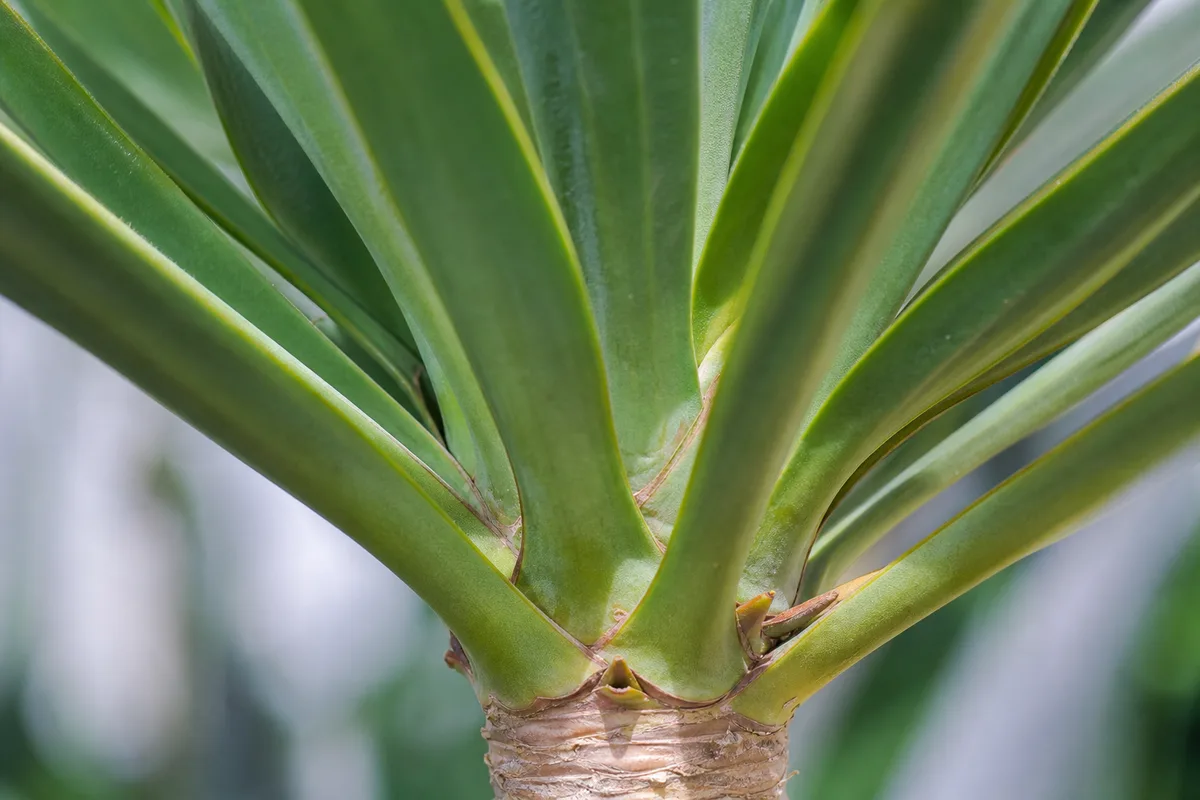
Slow Growth symptoms on Yucca Plant - compare with healthy tissue on the same plant.
- Trunk feels hard and woody from soil line upward
- Sword leaves stay medium to dark green and rigid
- Canes stay relatively upright without extreme stretch between rosettes
- A few new leaf tips emerge during warm months-even if months apart
- Soil dries completely between waterings on your normal schedule in bright light
Problem slow growth:
- No fresh rosette tips from spring through summer despite warm room air
- Pale, thin new blades smaller than older growth-may overlap with not enough light if canes also lean or stretch
- Pot stays heavy; mix never dries-hidden root stress from low light, poor drainage, or a pot too large
- Trunk stops thickening and feels spongy at the base
- Water runs straight through a root-bound pot without the mix holding moisture-crowded roots, not drought
Compare year over year on the same cane, not to fast-growing tropical foliage plants in the same room.
Why Yucca Plant grows slowly
Desert-adapted cane biology
Spineless yucca evolved in bright, dry Central American conditions. Indoors it behaves like a structural desert tree: thickening storage tissue matters more than rapid leaf flushes. That is why a two-meter lobby yucca may have only a handful of rosette tips per year and still be healthy.
Winter dormancy slowdown
Short winter days cut photosynthesis even at the same window. Many firm yuccas produce little or no new growth October through February. That seasonal quiet is normal-not a care failure-if the trunk stays hard and leaves stay green. Match water to the pause using the Yucca Plant watering guide.
Light as the primary limiter indoors
Yucca wants full sun to part shade and bright conditions. In dim rooms growth nearly stops even when you water faithfully. Indoor plants generally need more light than people expect-yucca typically needs several hours of direct sun on the foliage or very strong light close to glass. Placement detail lives on the light guide and not enough light pages; here the key is that insufficient energy is the most common reason for a year-long stall.
Pot too large (wet soil stall)
Counterintuitively, upsizing to a huge decorative pot hoping for speed often backfires. Extra mix holds moisture around drought-adapted roots that suffer when overwatered. The center stays damp while you think you are watering correctly. Growth stalls for months while roots breathe poorly-same oxygen problem as overwatering, without necessarily mushy rot yet.
Root-bound vs. appropriately sized pot
A slightly snug pot can slow vertical growth without harming health-many mature canes stay stable for years. True root-bound stall shows circling roots, water channeling straight through, and no new tips despite good light. That needs spring repotting one size up, not a massive jump.
Slow growth vs. leggy growth vs. not enough light - which page to use
| Symptom pattern | Likely issue | Best page |
|---|---|---|
| Firm trunk, green leaves, sparse but occasional summer tips, no stretch | Normal slow pace or modest light | This page - check rosette-tip frequency and season |
| Long bare cane sections, lean toward window, pale thin leaves, wide gaps between rosettes | Etiolation from low light | Not enough light and leggy growth |
| Wet heavy pot, soft trunk base, yellow lower leaves | Root stress / rot | Overwatering → root rot |
| Idle after spring repot, damp center soil, firm trunk | Oversized pot or repot shock | This page + repotting guide |
Slow growth without stretch is often healthy patience. Stretch plus stall means light is limiting energy-the architecture changes on the light pages, not here.
Lookalike symptoms to rule out
Not enough light / leggy growth - Canes lengthen toward glass, internodes widen, rosettes shrink and pale. Growth is slow and architecture changes. Route to not enough light for placement and acclimation.
Overwatering and root rot - Yellow lower sword leaves, sour soil, wilt on wet mix, soft trunk base. Slow growth is a side effect; rot triage comes first on overwatering or root rot.
Repot shock - Plant pushed no new tips for six to ten weeks after an unnecessary spring repot, especially into heavy wet mix. Trunk stays firm; soil moisture pattern changed. Hold water until dry-down stabilizes; see repotting.
Cold-window slowdown - Growth pauses near cold glass in winter even with adequate summer light. Trunk firm; leaf tips may brown on the cold side. Compare cold damage if patches are water-soaked after a chill.
Natural winter dormancy - Firm plant, green leaves, zero tips December–February. Not pathology if spring tips return in brighter months.
Nutrient deficiency - Rare on yucca with minimal feeding needs. Uniform pale yellowing without wet soil or stretch-confirm light and watering before fertilizer.
How to confirm the cause
Work through this checklist in order:
- Trunk firmness - Press the base above soil. Hard woody tissue supports a pace or light diagnosis. Soft tissue means rot protocol immediately.
- Season - Is it winter quiet on a firm plant? Wait for spring before calling it a stall.
- Rosette-tip log - Note the last new sword-leaf cluster on each cane. No tips March–August in a warm room is abnormal; no tips January is often fine.
- Light at the pot - Stand where the plant sits at midday. Fewer than four hours of direct sun on leaves indoors commonly explains sluggish growth. Use the light guide if placement is marginal.
- Soil dry-down - Push a finger deep. Mix wet for three-plus weeks on your schedule suggests low metabolism or oversized pot-not healthy drought rhythm.
- Pot size vs. roots - Slide the root ball out. Dense circling roots with fast channeling water suggest root-bound stall. Damp center in a huge pot suggests oversize stall.
- Recent repot - Unnecessary upsize within eight weeks? Pause fertilizer and match water to slower dry-down.
First fix for Yucca Plant
Pick one branch based on what you confirmed-do not fertilize, repot, and move sun all on day one.
If light is the limiter
Move the pot to the brightest location with direct sun on the foliage, acclimating over seven to fourteen days if it lived in deep shade. South- or west-facing glass, summer patio after frost, or a grow light ten to twelve hours daily in dark apartments. After moving, wait to water until the mix is fully dry-photosynthesis will accelerate dry-down. Full placement steps: not enough light.
If winter dormancy just ended
Hold patience and minimum water until days lengthen and you see the first spring rosette tip. Do not force growth with fertilizer on cold wet soil. Resume normal soak-and-dry from the watering guide only when new growth is visible.
If root-bound
Repot in spring one container size up into gritty cactus blend with drainage holes-see repotting guide. Trim only circling roots that are brown or mushy; healthy white tan roots can stay. Water once after repot, then let the mix dry through before the next soak.
If pot is too large and soil stays wet
Stop watering until the full pot dries-often two to three weeks. Do not upsize further. If mix is heavy and soggy at center, consider repotting into a smaller appropriate container with fast-draining soil rather than waiting for rot. Match future drinks to dry-down, not calendar.
If rot signs present
Soft trunk base, sour smell, or mushy roots override every growth tip. Stop watering, inspect roots, and follow overwatering → root rot rescue. Light alone cannot fix a decaying base.
Step-by-step recovery by cause
Light-limited stall:
- Move to brighter direct sun with gradual acclimation if needed.
- Rotate the pot weekly for even exposure.
- Hold fertilizer until a new rosette tip appears.
- Reassess dry-down monthly as light increases.
Post-winter wake-up:
- Keep minimum winter water until March growth signals return.
- Move to brightest window as days lengthen.
- Apply diluted balanced feed once after the first new tip-see fertilizer guide.
Root-bound stall:
- Repot spring only; one size up, terracotta or heavy base to prevent tip-over.
- Use sandy cactus mix; firm soil lightly without packing wet mud.
- One cautious soak, then full dry-down cycle before next water.
Oversized wet pot:
- Dry the mix completely.
- Repot down or sideways into appropriate volume if center stays damp after three weeks dry.
- Empty saucers; never let the pot sit in standing water.
Rot crossover:
- Unpot, trim mushy roots, air-dry cuts.
- Repot dry gritty mix; salvage firm upper cane via propagation if base is lost.
Recovery timeline
Yucca recovery is measured in new rosette tips, not overnight height.
| Cause fixed | What to expect |
|---|---|
| Modest light increase | First new tip in four to eight weeks if trunk is firm and energy was stored |
| Large jump from deep shade | One to three months-or entire warm season-for first tip while acclimating |
| Spring after winter quiet | Tips often appear April–June as days lengthen; lag of several weeks is normal |
| Root-bound repot (spring) | Pause four to ten weeks, then new tips as roots colonize fresh mix |
| Oversized wet pot corrected | Dry-down improvement in days; new growth may take six to twelve weeks |
| Rot salvage | Months at best; judge by firm new tissue and clean roots, not old leaves |
Old cane sections do not speed up retroactively. Success means fresh tight rosettes, faster soil dry-down in bright light, and a trunk that keeps thickening.
If no new tip appears after four months in verified direct sun on a firm plant, re-check true light at leaf height-not across the room-and inspect roots for hidden decay.
What not to do
Do not over-fertilize hoping to force speed on a stressed yucca-salt burn on rigid sword leaves does not create rosettes. Feed only during active growth after new tips show.
Do not upsize to a huge pot for faster growth; wet center soil stalls drought-adapted roots for months.
Do not water heavily through winter quiet on a firm plant-reduce to minimum when growth pauses.
Do not repot on day one for a simple light stall-unnecessary repot shock adds another pause.
Do not compare to tropical vines in the same room; yucca will always look glacial by comparison.
Wear gloves when handling cut canes; yucca is toxic to pets. Contact your veterinarian if a pet chews foliage-especially after moving the plant to a brighter pet-accessible shelf.
How to prevent chronic slow growth
Place new yuccas in the brightest spot from day one-see light guide. Match pot size to root mass; repot every one to two years in spring only when roots crowd. Use well-drained sandy mix and dry completely between waterings during active growth.
Move outdoors in frost-free summer for a sun reset, then bring indoors before first fall frost. Adjust winter water when short days slow metabolism. Fertilize lightly in spring only when tips are actively emerging-details on the fertilizer page.
Track rosette-tip dates once a year. That log tells you whether the plant is on its normal cane clock or drifting into a year-long stall.
Practical checks
Urgency check
Today: Soft trunk base, sour wet soil, or yellow collapsing leaves on a heavy pot-rot triage, not patience.
This season: Zero tips through August on a firm plant in dim light-improve placement before repotting or feeding.
Can wait: Firm green yucca with no winter tips until March.
Best inspection order
Trunk firmness → season → rosette-tip log → light at pot → soil dry-down → root and pot size → recent repot history.
Yucca Plant care cross-check
Light and water move together. Bright sun accelerates dry-down; dim corners keep mix wet and stall growth. Winter short days cut both-even in the same window. Background on seasonal care: Yucca Plant overview.
Conclusion
Slow growth on spineless yucca is usually normal container pace, winter quiet, or insufficient light-not a mystery disease. Use rosette-tip frequency across seasons, trunk firmness, and soil dry-down to separate healthy glacial growth from a true stall. Fix light first on a firm plant; dry down oversized wet pots; repot root-bound canes in spring only; escalate to rot guides if the base softens. Judge success by new sword-leaf clusters and a thickening woody trunk-not by pothos-speed leaf flushes.
Related Yucca Plant problems
- Not enough light on Yucca Plant - stretched canes, pale lean, etiolation detail
- Leggy growth on Yucca Plant - long bare internodes and top-heavy architecture
- Yucca Plant light - placement, outdoor summer moves, grow lights
- Overwatering on Yucca Plant - wet heavy pot with slow metabolism
- Root rot on Yucca Plant - soft base and mushy roots
- Yucca Plant repotting - timing, pot size, mix
- Yucca Plant overview - full care hub for spineless yucca
FAQ
How many new leaves should a yucca plant grow per season?
In bright direct sun during warm months, a healthy container yucca may push one to three new rosette tips per cane over the whole summer-not weekly flushes like a pothos. Zero new tips October through February in a firm plant is normal winter quiet. Zero tips through an entire warm spring in a sunny window is not.
Is it normal for yucca not to grow in winter?
Yes. Short days slow metabolism even in a good window. A firm trunk, green sword leaves, and no new tips for two to three months in winter fit seasonal rest. Keep watering at minimum during that pause and resume normal dry-down when new growth appears in spring.
Why is my yucca growing slowly but not stretching?
Compact slow growth with a firm trunk and green rigid leaves usually means acceptable light with naturally glacial pace-not etiolation. If canes stay upright without wide gaps between rosettes, you may simply need patience. Compare rosette-tip frequency year over year rather than to fast tropical houseplants.
Should I repot a yucca that stopped growing?
Repot in spring only when roots circle densely, water runs straight through without soaking, or the pot tips from being top-heavy. Do not upsize hoping for speed-a too-large pot stays wet and can stall roots for months. If soil stays damp and the trunk base softens, treat wet-soil or rot issues before repotting.
When is slow growth urgent on Yucca Plant?
Escalate when slow growth pairs with a soft trunk base, sour wet soil, or yellow collapsing lower leaves-that pattern points to overwatering or rot, not normal sluggishness. A firm green yucca with sparse summer tips in mediocre light is gradual, not an emergency.
When to use this page vs other Yucca Plant guides
- Yucca Plant watering guide - Use for routine moisture checks before assuming slow growth is the main issue.
- Yucca Plant problems hub - Browse all 29 common issues on this species.
- Not Enough Light on Yucca Plant - Different entry point when symptoms overlap with slow growth.
- Leggy Growth on Yucca Plant - Different entry point when symptoms overlap with slow growth.
- Yellow Leaves on Yucca Plant - Different entry point when symptoms overlap with slow growth.