Leggy Growth on Yucca Plant: Causes, Checks & Fixes
Quick answer
Leggy Yucca Plant canes are almost always etiolation from insufficient light indoors-extra fertilizer in shade can make stretch worse, not fuller. First step: move the plant to the brightest available spot with several hours of direct sun; do not repot or feed until light improves.
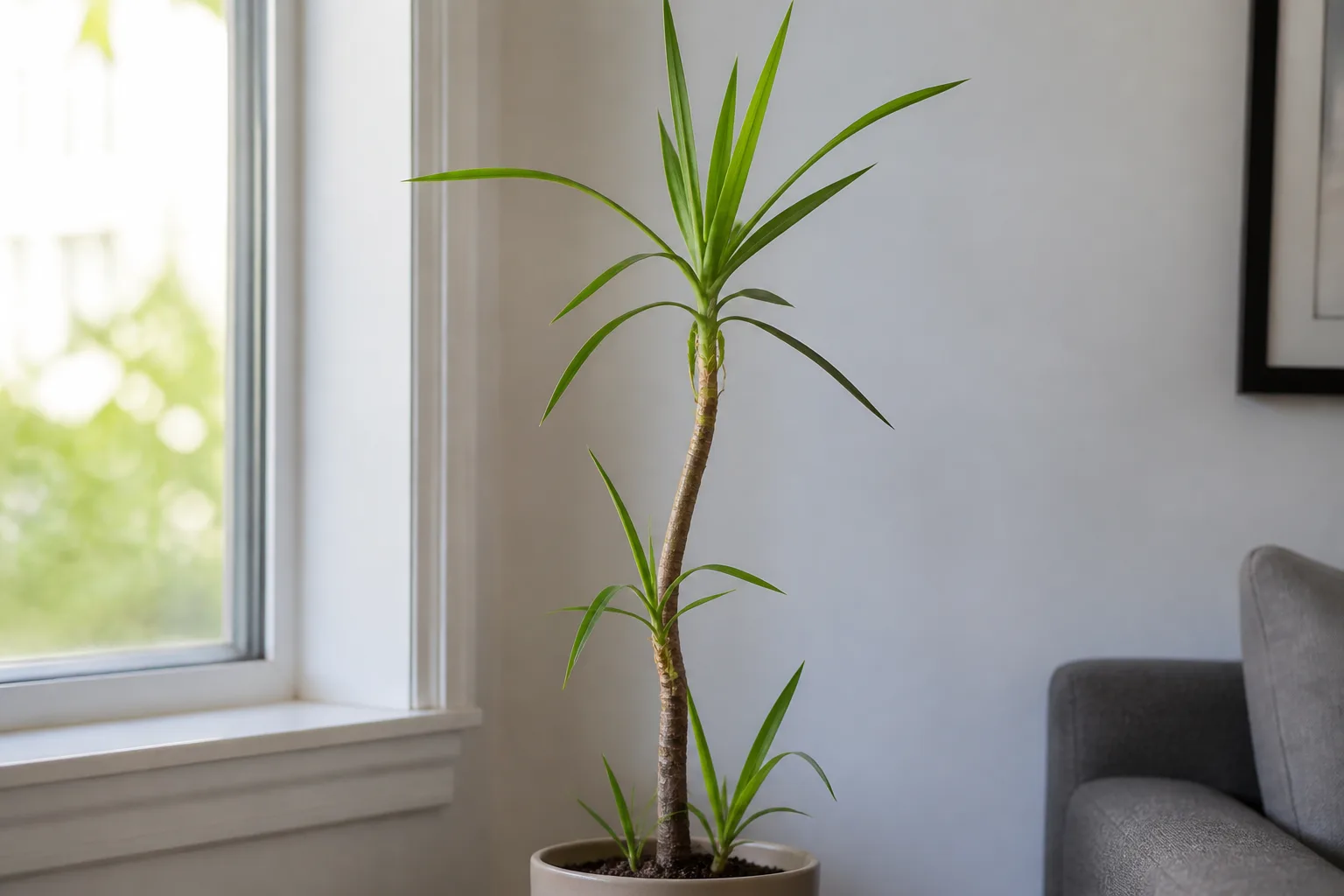
Leggy Growth on Yucca Plant: Causes, Checks & Fixes
This guide covers leggy growth on Yucca Plant. See also the general Leggy Growth guide, watering, and light pages for this plant.
Leggy Growth on Yucca Plant: Causes, Checks & Fixes
Quick answer
Leggy spineless yucca (Yucca elephantipes, also sold as giant yucca or stick yucca) means the cane is stretching for light-not starving for fertilizer. Extra nitrogen in a dim room can add weak stem length without building sturdy tissue, so do not feed a stretched plant before you fix exposure. Indoors, this desert-adapted cane plant wants as much bright light as you can give it. When light falls short, internodes lengthen, leaf rosettes space out along a thin trunk, and the whole plant leans toward the brightest window.
First step: move the plant to the brightest available location with several hours of direct sun. A south- or west-facing window within roughly 30 to 60 cm (12 to 24 inches) of the glass is the usual indoor target-see the full Yucca Plant light guide for window placement. Do not repot, fertilize, or prune heavily until the plant has been in stronger light for at least two weeks and you see tighter new growth forming.
Scope note: This page focuses on visible cane stretch and sparse rosettes (etiolation). For broader low-light weakness-pale foliage, stalled tips, and wet-soil overlap without obvious stretch-read not enough light on Yucca Plant. For naturally slow winter growth without lengthening internodes, compare slow growth on Yucca Plant.
What leggy growth looks like on Yucca Plant
Healthy indoor yucca canes look architectural: a firm woody trunk with dense rosettes of sword-shaped leaves clustered at the top or along short side branches. Leggy growth breaks that silhouette.
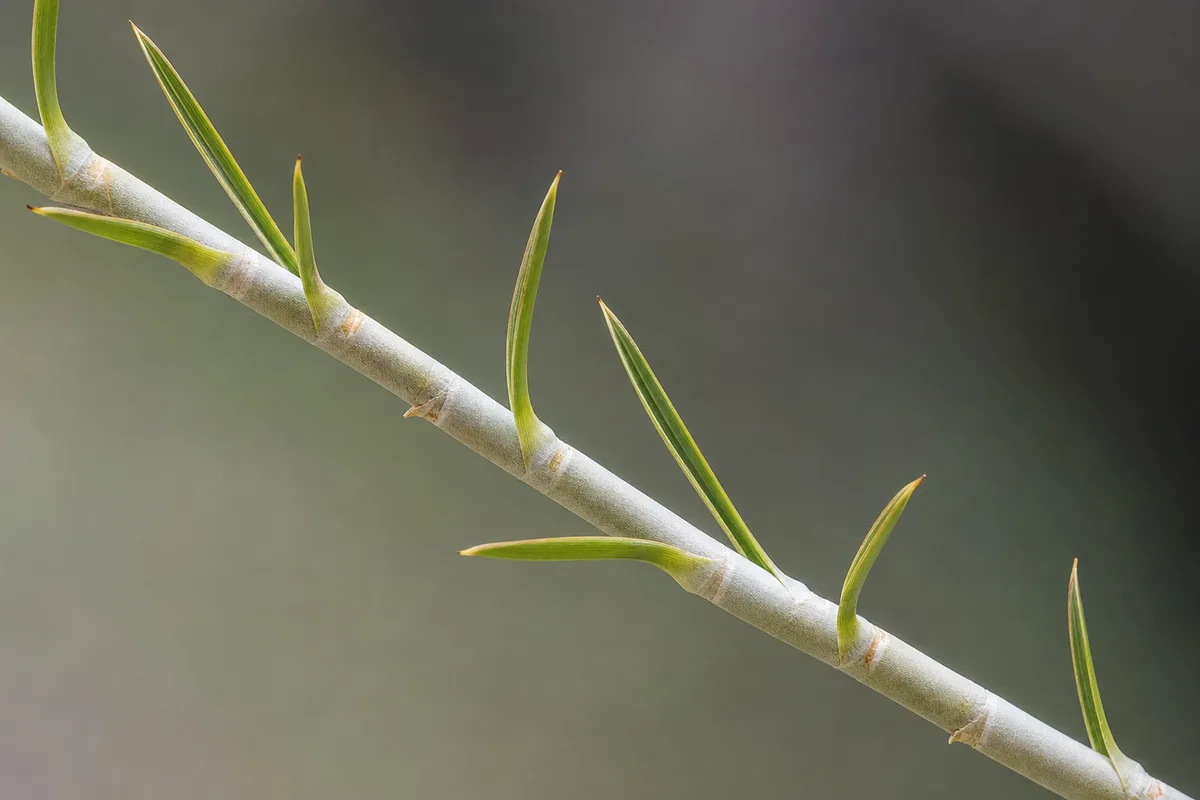
Leggy Growth symptoms on Yucca Plant - compare with healthy tissue on the same plant.
Typical signs on Yucca elephantipes:
- Long bare trunk between leaf clusters-the cane looks like a palm with a single puff of leaves at the tip
- Wide internode gaps on new growth compared with older compact sections near the base
- Smaller, paler new leaves that feel thinner and less rigid than earlier foliage
- One-sided lean toward a window or doorway, with the shaded side staying sparse
- Weak, flexible stems that bend under the weight of the rosette instead of staying upright
- Slow leaf replacement on the lower trunk as the plant channels energy upward toward light
Legginess develops gradually. A yucca bought from a bright greenhouse often stretches within two to three months in a dim living room, especially through winter when daylight hours drop. The change is most obvious on the newest cane section above the last rosette.
Not legginess: Yellow leaves with brown halos on a plant in a dark corner with constantly damp soil usually signal overwatering and root stress-not etiolation alone. Drooping with firm dark green leaves and very dry soil points to underwatering. Leggy yuccas often stay pale green and upright while reaching, not floppy and yellow.
Why Yucca Plant gets leggy
Spineless yucca evolved for bright, dry Mexico and Central America habitats. It tolerates indoor conditions better than spiny desert yuccas, but it still photosynthesizes best with strong light. When daily light intensity or duration falls below what the plant needs, it triggers etiolation-a growth pattern that lengthens stems and thins tissue so the rosette can reach a brighter zone.
Insufficient light (primary cause)
Deep shade, north-facing rooms with no direct sun, or placement more than a few feet from a window rarely support compact growth on Yucca elephantipes, which the RHS places in full sun to part shade outdoors and bright conditions indoors. The plant survives but stretches.
Seasonal light drop and uneven exposure
Shorter winter days plus drawn curtains or moved furniture can push a borderline plant into obvious legginess by spring even if summer growth looked acceptable. Yucca canes do not rotate themselves; the side facing the window grows stronger while the back stays sparse unless you turn the pot regularly.
Over-fertilizing in low light and crowding
Yuccas are light feeders; nitrogen pushed into a dim plant encourages elongation the light budget cannot support. Salt buildup from overfertilization can lead to root damage and reduced growth when other stressors are present-on yucca in shade, weak stretch is the more common visible outcome than leaf burn.
Crowding from nearby tall furniture or other plants blocks light on one face of the cane and triggers directional stretch.
Low light also slows water use. A leggy yucca in shade may keep soil damp longer, which raises secondary risk of root rot-but the legginess itself is a light problem first.
Leggy growth vs not enough light - which guide to read
| Your main symptom | Best starting guide |
|---|---|
| Long bare cane, wide internode gaps, lean toward window | This page (leggy growth / etiolation) |
| Pale sparse tops, damp soil, stalled growth-stretch mild or absent | Not enough light |
| Firm trunk, compact form, just slow new tips in winter | Slow growth |
| Proactive window placement before stretch appears | Yucca Plant light |
How to confirm the cause
Work through these checks before pruning or feeding:
- Light audit at the rosette - Note window orientation and how many hours of direct sun hit the leaves. At midday, hold your hand between the glass and the crown: a sharp, well-defined shadow means bright light; a faint or absent shadow means the spot is too dim and plants may become leggy as they stretch for more light.
- Internode comparison - Measure the gap between leaf rosettes on new growth versus older base growth. Etiolation shows dramatically longer spaces on the newest section.
- Lean direction - Stems pointing toward a specific window confirm phototropic stretch from that light source.
- Leaf size and color - Pale, smaller new leaves on an otherwise healthy trunk fit low light. Uniform yellowing with wet soil does not.
- Soil moisture rhythm - Stick a finger 5–7 cm into the mix. Leggy yuccas in shade often stay wet longer; note whether overwatering is a parallel issue.
- Pest scan - Check leaf bases and cane joints for scale, mealybugs, or webbing. Pests do not cause classic etiolation, but stressed low-light plants attract infestations more readily.
- Purchase history - Recent move from a shop greenhouse to a dim home commonly shows stretch within one to three months.
If light is clearly inadequate and the trunk is firm with no sour soil smell, you have confirmed leggy growth from etiolation. If the base is soft or soil stays wet for weeks, inspect roots before treating this as a light-only problem.
First fix: increase light before heavy pruning
Move the plant to the brightest location available-ideally a south- or west-facing window where leaves receive direct sun for part of the day, with the canopy within about 30 to 60 cm of the glass as described in the Yucca Plant light guide.
If the yucca has been in deep shade for months, acclimate over seven to fourteen days: start with bright indirect light near the target window, then shift closer so direct sun touches the rosette for an increasing portion of the day. Sudden jumps from a dark corner to harsh all-day sun can scorch leaves-see sunburn on Yucca Plant if bleached patches appear.
Do not fertilize, repot, or cut the cane back as your opening move. Light correction comes first; everything else depends on whether new growth tightens.
Grow-light setup for dim rooms
When the brightest window is still too dim-common with north exposures, deep overhangs, or short winter days-add a full-spectrum LED grow light positioned 12 to 24 inches (30 to 60 cm) above the rosette for 12 to 14 hours daily on a timer, matching the approach in the Yucca Plant light guide. Grow lights supplement weak natural sun; they do not fix chronic overwatering, but they prevent continued stretch when window light alone is inadequate.
Step-by-step recovery
Once the plant is in stronger light, follow this sequence:
- Hold watering steady - Water only when the top few centimetres of soil are dry. Leggy plants in new bright light use water faster; soggy soil after a light upgrade invites rot at the cane base.
- Rotate weekly - Turn the pot a quarter turn every week so all sides of the rosette receive similar exposure and the cane grows straighter.
- Watch new growth - Over two to four weeks, new leaves should emerge closer together and slightly darker green. That confirms the light fix is working.
- Prune stretched sections - When new growth looks compact, cut the leggy cane top back to the desired height with a sharp, clean knife or pruners. Yucca elephantipes typically sprouts one or more new rosettes below the cut on a healthy trunk-see Yucca Plant pruning for cane-cut technique. On multi-cane pots, prune one stretched cane at a time, waiting two to four weeks between cuts so remaining stems support recovery.
- Support if needed - Stake a very thin leaning cane loosely until new tissue stiffens. Remove the stake once the trunk holds itself upright.
- Summer outdoor boost - If your climate allows, set the pot outdoors in partial to full sun for the warm season, then bring it in before frost. Outdoor summer light often resets form faster than windows alone.
- Supplement in winter - If stretch returns each winter, keep the grow-light schedule above from late autumn through early spring.
Save healthy cut tops to propagate if you want a backup plant-let the cut end callus one to two days in dry air, then root in fast-draining mix per the Yucca Plant propagation guide.
Recovery timeline
| Phase | What to expect |
|---|---|
| Weeks 1–2 | Plant may show no visible change while adjusting to new light; avoid heavy pruning during this window |
| Weeks 3–6 | New leaves emerge with shorter internodes; lean may lessen as you rotate the pot |
| Weeks 6–12 | Enough compact tissue to justify pruning old stretched tops; side shoots may appear below cuts |
| Months 3–6 | Restored tree-like shape if light stays strong through a full growing season |
Old elongated trunk sections never shrink back to their former spacing-the stretched cells are permanent. Recovery is judged by new rosette density, firmer cane tissue, and upright growth-not by old bare wood filling in. Container yucca grows deliberately slowly compared with outdoor specimens; allow a full warm season before deciding a bright spot has failed.
Lookalike symptoms
| Pattern | Likely cause | First check |
|---|---|---|
| Long bare trunk; lean toward window | Low light (etiolation) | Window orientation and direct sun hours |
| Yellow leaves with brown halos; wet soil | Overwatering / root stress | Root firmness and soil dryness |
| Curled rigid leaves; very dry pot | Underwatering | Soil moisture at depth |
| One-sided sparse growth only | Uneven light | Rotate pot; supplement weak side |
| Leggy only in winter | Seasonal daylight drop | Grow light or accept slower winter growth |
| Pale new growth after heavy feeding in shade | Over-fertilization in low light | Stop feeding; increase light first |
Mistakes to avoid
- Pruning before improving light - Cut stems in shade simply regrow leggy. Fix exposure first, then prune.
- Fertilizing a stretched plant - Extra nitrogen without adequate light produces more weak height, not fuller rosettes.
- Assuming fast upward growth is healthy - Rapid stem extension in dim rooms is etiolation, not vigor.
- Moving instantly to all-day direct sun - Shade-grown leaves burn; acclimate gradually and watch for sunburn.
- Ignoring lean until the cane snaps - Weak tissue breaks at the soil line or mid-trunk; correct light early.
- Repotting on day one - Root disturbance is unnecessary for a light problem and adds stress.
How to prevent leggy growth
Place Yucca elephantipes where it receives the strongest light in your home-typically within a metre of a south- or west-facing window with some direct sun on the leaves. Rotate the pot weekly. Move the plant outdoors for summer if temperatures stay above roughly 7°C (45°F) at night. Keep soil fast-draining and let it dry between waterings so the plant stays metabolically active in bright conditions rather than limping through shade with wet roots.
Scout new growth each month. The first sign of trouble is widening gaps between emerging leaves-not overall height alone. Catching stretch early means a small position change instead of a hard cane cut later.
When to worry
Leggy growth is a structural and aesthetic problem, not an immediate death sentence. Act before weak trunks become unsafe: a tall thin cane topped with a heavy rosette can snap in a draft or when bumped. If the base is firm and roots are healthy, time is on your side-correct light and selective pruning restore form over one growing season.
Worry more urgently if legginess pairs with a soft cane base, sour soil, or yellowing lower leaves on wet mix. That combination suggests root rot overlapping low light. Inspect roots before focusing only on brighter windows.
If you move the plant to verified bright light-with direct sun on the crown or a proper grow-light schedule-and no compact new growth appears after three to four months through a warm growing season, contact your local cooperative extension office or a master gardener helpline. Persistent stretch in genuinely bright conditions may point to root decline, pest stress, or a specimen that needs cane reduction rather than relighting alone.
Conclusion
Leggy Yucca Plant canes are a light-budget problem dressed as a shape problem. Confirm stretch with internode gaps and window lean, move to brighter exposure before feeding or repotting, acclimate gradually to avoid scorch, then prune only after new rosettes tighten. Old bare trunk sections never compact backward-judge success by fresh growth, not by expecting stretched wood to shrink.