Yucca Plant Pruning: When, Where & What to Cut
Yucca Plant Pruning: When, Where & What to Cut
Yucca Plant Pruning: When, Where & What to Cut
Start by removing only lower leaves that are fully dry and brown - tissue that peels away cleanly or snaps when bent. Pull downward along the trunk with gloved hands, or snip the base flush with the cane if the leaf resists. Do that inspection before you decide whether the plant also needs a structural cane cut for height or branching.
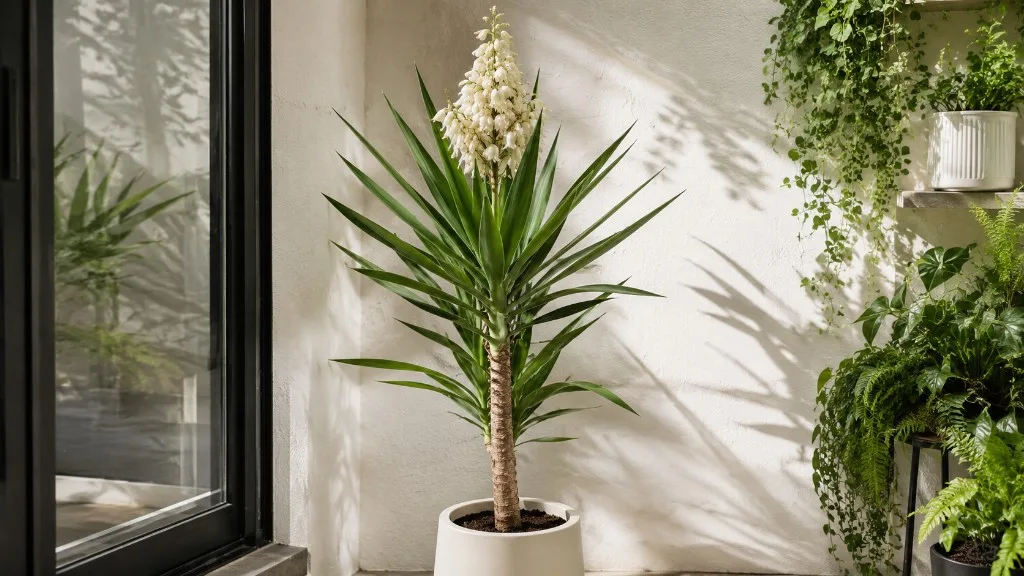
Indoor spineless yucca (Yucca elephantipes, often sold as yucca cane) grows as one or more woody trunks topped by rosettes of stiff, sword-shaped leaves. Lower leaves senesce naturally as the trunk lengthens, leaving bare wood and a leafy crown that can brush the ceiling. That creates two distinct pruning jobs: leaf cleanup (spent lower foliage and brown tips) and cane topping (height reduction and multiple heads). Tip trimming improves appearance but does not change architecture - and brown tips return if tap-water fluoride or fertilizer salts are still burning new growth.
What Pruning Does for Yucca Plant
Pruning on yucca is less about pinching soft tips and more about managing a desert-adapted trunk. The plant stores reserves in its cane and tolerates heading cuts far better than many tropical houseplants - but only when the cane below your cut is firm, the season is warm, and roots are not rotting from wet soil.
Cane Architecture and Where New Growth Forms
Each trunk is a vertical cane with leaves spiraling from the top rosette. As older leaves die, they leave horizontal scars or slight ridges on the bark - natural growing points where dormant buds can activate after you remove the apical tip. RHS notes that if an indoor yucca becomes too tall, you can cut back and reduce the height by half in spring when growth resumes; healthy plants should respond well, and the severed upper section can be used for propagation.
New shoots typically emerge from the top one or two scar lines just below a heading cut, not from random bare wood between scars. Multiple trunks in one pot are common on nursery plants; topping one cane does not affect siblings on the same root system.
What Pruning Can and Cannot Fix
Pruning can shorten a ceiling-bound cane, encourage two or more rosettes on one trunk, remove spent lower foliage for a cleaner tree form, and improve appearance when brown tips are trimmed conservatively.
Pruning cannot fix yellowing from chronic overwatering on Yucca Plant, crown rot at the soil line, or leggy pale growth from deep shade. Those problems need corrected light and watering first. Trimming every leaf shorter to reduce bulk ruins the natural spear shape and leaves permanent brown edges along each cut - cosmetic grooming only, not a substitute for a cane cut when the plant is genuinely too large.
What to Check Before You Cut
Walk the plant from soil line to crown before touching tools. Press the cane: firm wood is healthy; soft, wet, or collapsing tissue at the base signals rot and needs removal, not shaping. Feel whether the pot is top-heavy - a tall bare trunk with a small root ball may need staking after a major cut.
Decide which problem you are solving:
- Ceiling height, bare trunk, top-heavy rosette → cane topping may help if scars remain below your planned cut.
- Brown tips with green tissue below on Yucca Plant → angle trim plus filtered water; no trunk cut required.
- Dry brown lower leaves on otherwise stable wood → normal aging; peel or snip when fully spent.
- Many yellow leaves plus soft cane → root or watering stress; fix the cause before optional shaping.
Postpone voluntary cane topping if the plant was recently repotted, treated for scale or mealybugs, or sat in cold air below about 7°C (45°F) for Y. elephantipes indoors. Pruning redirects energy; a plant with compromised roots may not branch reliably.
Wear thick gloves and eye protection. Spineless yucca lacks needle spines, but leaf margins are stiff and sharp enough to scratch skin and eyes during close work.
When to Prune Yucca Plant
Timing matters for cane topping, not for pulling a single dry lower leaf.
Best window for topping or major reshaping: spring through early summer, when days are long and you see fresh leaf unfurling at the crown. RHS recommends reducing over-tall indoor yuccas in spring when growth resumes - the same active period when stem cuttings root most reliably.
Avoid heavy cane work in autumn and winter when indoor growth slows. Wounds seal slowly and buds may sit idle until spring. A April cut often shows new shoot swell in three to six weeks; a December cut may wait months.
Cleanup of dead, diseased, or fully dry lower leaves can happen any time. If a leaf is brown and papery from base to tip, remove it whenever you notice it. If a cane section is mushy from rot, cut it out immediately - that is emergency removal, not seasonal shaping.
The First Cut: Remove Fully Dry Lower Leaves
After your inspection, the first cut is always spent lower foliage only. Grasp a fully brown leaf near its base and pull downward along the trunk. If it separates cleanly, the tissue was ready. If it resists or tears green flesh, stop pulling and cut the leaf base flush with the cane using sterilized shears.
Only after dry lower leaves are cleared should you decide whether a heading cut on the trunk is warranted. Many indoor yuccas need years between structural prunes; leaf cleanup may be the only job for seasons.
How to Prune Yucca Plant Step by Step
Sterilize bypass pruners, sharp scissors, or a pruning saw with 70% isopropyl alcohol before you start and between cuts if you removed diseased tissue.
Trimming Brown Leaf Tips
Brown tips from fluoride, low humidity, or salt buildup can be trimmed on otherwise green leaves. Use sharp scissors to remove only the dry brown tissue, cutting at a shallow angle that follows the leaf’s natural pointed shape. A thin brown scar line often forms along the cut edge - that is normal.
Do not shorten entire leaves by several inches just to reduce bulk; each cut leaves a visible line and the plant loses its architectural silhouette. If the whole rosette feels oversized, a cane cut solves scale better than shearing every spear.
Topping the Cane for Height and Branching
Topping - removing the leafy crown and part of the trunk - forces new shoots from scar lines below the cut. Nurseries use this to create multi-headed “tree” forms on one trunk.
- Mark your height. Stand back and decide how much trunk to keep. The lower you cut, the shorter the finished plant but the more energy goes into branching at that point.
- Find a leaf scar below your target. Locate the first ridge or horizontal scar line below where you want the new crown. New growth activates most reliably from these points - not from smooth bare wood between scars.
- Cut just above the scar. Make one clean straight or slightly angled cut about 5–10 mm (¼ inch) above the scar with a sharp saw or loppers on thick canes. A ragged crush wound heals poorly.
- Leave wounds open. Yucca does not need pruning sealant; the cut calluses naturally in dry air.
- Do not water heavily right away. Let the wound dry and keep soil on the dry side for a week unless the plant was already thirsty. Wet soil plus open trunk wounds invite rot on drought-adapted roots.
Expect two to four new shoot buds near the cut during active growth, though light levels and cane health affect the count. Rotate the pot after regrowth so heads do not lean toward one window.
Using the Removed Top as a Cutting
The severed rosette top can root as a stem cutting. Trim leaves from the lower few inches of the cut section, let the base callus for one to two days in dry air, then plant in fast-draining cactus mix. Water lightly after planting and keep in Yucca Plant light guide. Roots often form over several weeks in warm spring conditions - the same window when cane cuts recover fastest.
How Much You Can Safely Remove
For structural cane topping, RHS advises cutting back and reducing height by up to half on a healthy indoor yucca in spring. That is aggressive but within normal practice for spineless yucca. Always leave at least one viable scar line below the cut and enough remaining trunk to support the root system - a 150 cm cane should not become a 15 cm stub in one session unless you are salvaging rot.
For leaf cleanup, removing all fully dry lower leaves does not count against that limit. Those leaves are already non-functional.
For brown tip trimming, limit each session to cosmetic edges on leaves that remain mostly green. Shearing the entire rosette counts as major foliage loss and stresses the plant similarly to a structural cut.
If you need dramatic reduction on a multi-cane pot, top one cane at a time and wait three to six weeks for bud activity before cutting a second trunk on the same plant.
What Not to Cut
- Green lower leaves that are still firm and attached - they are still photosynthesizing even if slightly pale.
- Soft, wet, or discolored cane tissue - cut back to firm wood only; painting over rot does not save the plant.
- Every leaf tip for size control when a cane cut would solve the height problem more cleanly.
- The only living rosette on a single-cane plant without a plan to root the top section or accept a bare period while buds break.
- Flower stalks indoors - rare on container plants; if one appears, remove only after it dries completely.
After Pruning: Recovery and Maintenance
Place the plant back in bright indirect to direct light - the same exposure that kept it growing before the cut. Missouri Botanical Garden notes that spineless yucca in containers prefers full sun to part shade outdoors and tolerates drought; indoors, strong light speeds wound sealing and bud break.
Hold fertilizer for three to four weeks after a major cane cut unless the plant was already on a light summer feeding schedule and looks vigorous. Do not repot on pruning day unless the mix is failing or roots are rotting.
Keep pets away from cut leaves and sap. ASPCA lists yucca as toxic to cats and dogs due to saponins, with vomiting as a common sign if ingested. Bag pruned material promptly in homes with animals.
Signs Pruning Worked vs. Went Too Far
Pruning worked when you see bud swell or new leaf spears within three to six weeks on a spring cut, the remaining cane stays firm, and lower trunk tissue does not soften.
Pruning went too far or was mistimed when the cut end turns black and mushy, no buds appear after eight to ten weeks in warm light, or many green leaves yellow rapidly after a minor trim - often a sign roots were already stressed before you cut.
Maintain shape long term by peeling dry lower leaves as they senesce, rotating the pot for even light, and topping again only when height - not leaf length - becomes the problem.
Common Yucca Plant Pruning Mistakes
- Topping in winter on a slow-growing indoor plant, then assuming the cane is dead when buds wait for spring.
- Cutting between scar lines where buds rarely activate, then wondering why no shoots appeared.
- Overwatering after a major cut - the most common post-prune killer on yucca.
- Pruning without gloves on sharp-edged leaves.
- Trimming every leaf shorter instead of cutting the trunk when the plant is too tall.
- Stacking prune + repot + fertilizer on the same week on a recently stressed plant.
When Not to Prune
Skip voluntary cane topping when the trunk is soft at soil level, soil smells sour, or many leaves yellow with brown halos - classic overwatering signals on yucca. Fix drainage and let soil dry completely before any optional shaping.
Delay structural cuts when the plant was repotted within the last four weeks, sits in deep shade, or endured cold drafts. A stable, well-lit, actively growing yucca tolerates heading cuts; a stressed one may stall or rot at the wound.
Conclusion
Yucca plant pruning is straightforward once you separate leaf cleanup from cane architecture work. Remove fully dry lower leaves first, trim brown tips only on green tissue, and reserve trunk cuts for spring when you need real height control or multiple heads. Cut just above a leaf scar, keep soil drier than usual while wounds callus, and judge success by firm wood and new spears emerging below the cut - not by how much green you removed in one afternoon.
When to use this page vs other Yucca Plant guides
- Yucca Plant overview - Start here for whole-plant context before deep-diving this topic.
- Yucca Plant problems hub - Jump to symptom-specific fix guides when this care topic does not resolve the issue.
- Leggy Growth on Yucca Plant - Escalate here when pruning adjustments are not enough.
- Slow Growth on Yucca Plant - Escalate here when pruning adjustments are not enough.
- Brown Tips on Yucca Plant - Escalate here when pruning adjustments are not enough.