Low Humidity on Yucca Plant: Causes, Checks & Fixes
Quick answer
Yucca Plant tolerates dry air better than most houseplants, but crispy sword-leaf tips near heating vents often mean localized dry air-not a humidity crisis. First step: move the plant away from vents and radiators, then rule out fluoride in tap water and spider mites.
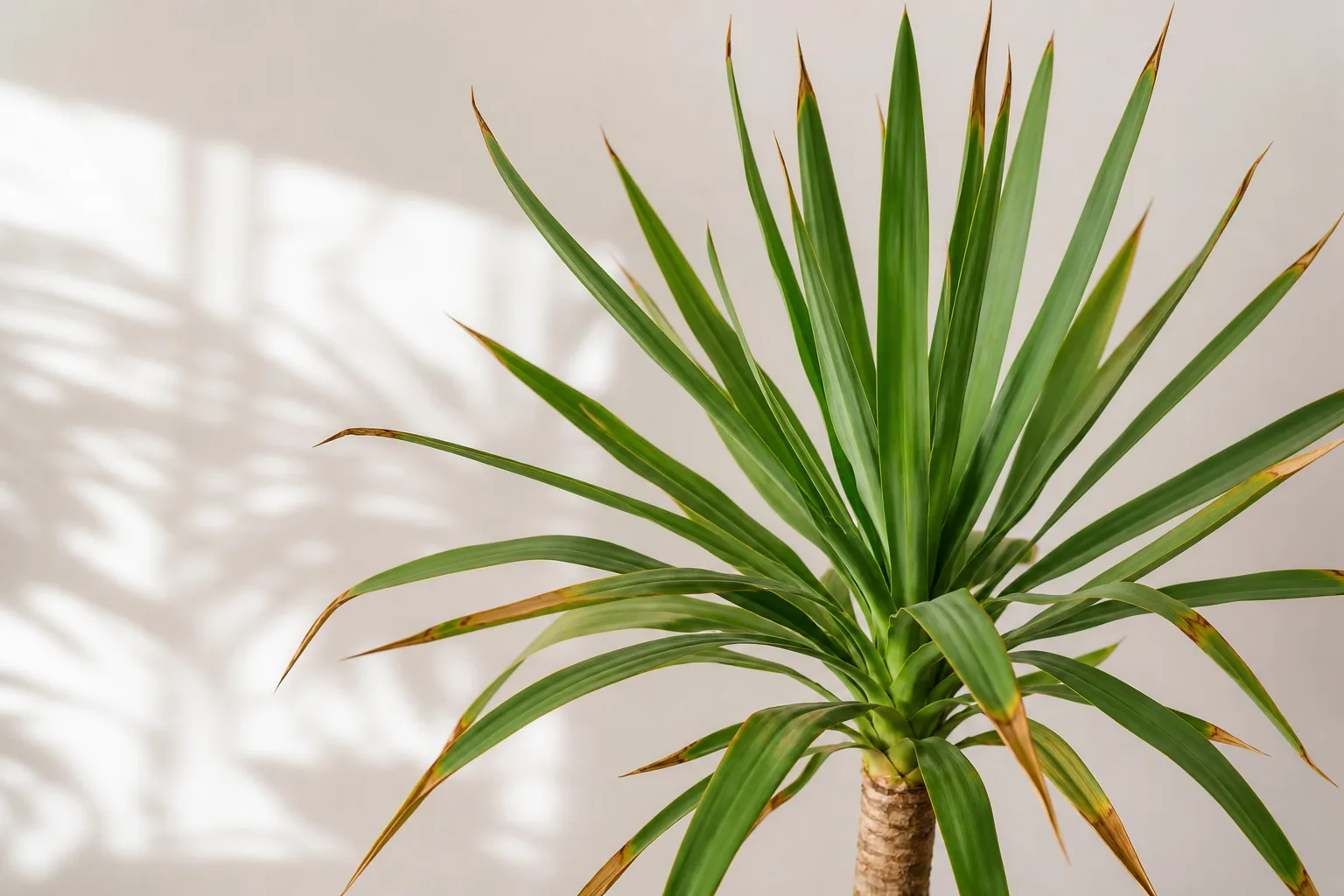
Low Humidity on Yucca Plant: Causes, Checks & Fixes
This guide covers low humidity on Yucca Plant. See also the general Low Humidity guide, watering, and light pages for this plant.
Low Humidity on Yucca Plant: Causes, Checks & Fixes
Quick answer
Yucca Plant (Yucca elephantipes, spineless yucca) evolved for arid Mexico and Guatemala-not steamy greenhouse air. It handles average indoor humidity far better than ferns or calatheas. When sword-shaped leaves develop dry, papery tips in winter, the problem is often localized dry air blasting from a heating vent, not that your whole home is too dry.
First step: move the plant away from heating vents, radiators, and forced-air registers. Yucca leaves are long and narrow, so the farthest tip loses moisture fastest when hot dry air hits the foliage daily. After relocation, watch new growth for two weeks before trying a humidifier or misting.
What low humidity looks like on Yucca Plant
Low-humidity stress on yucca is subtle compared with tropical plants. You are looking for cosmetic edge damage, not collapse.
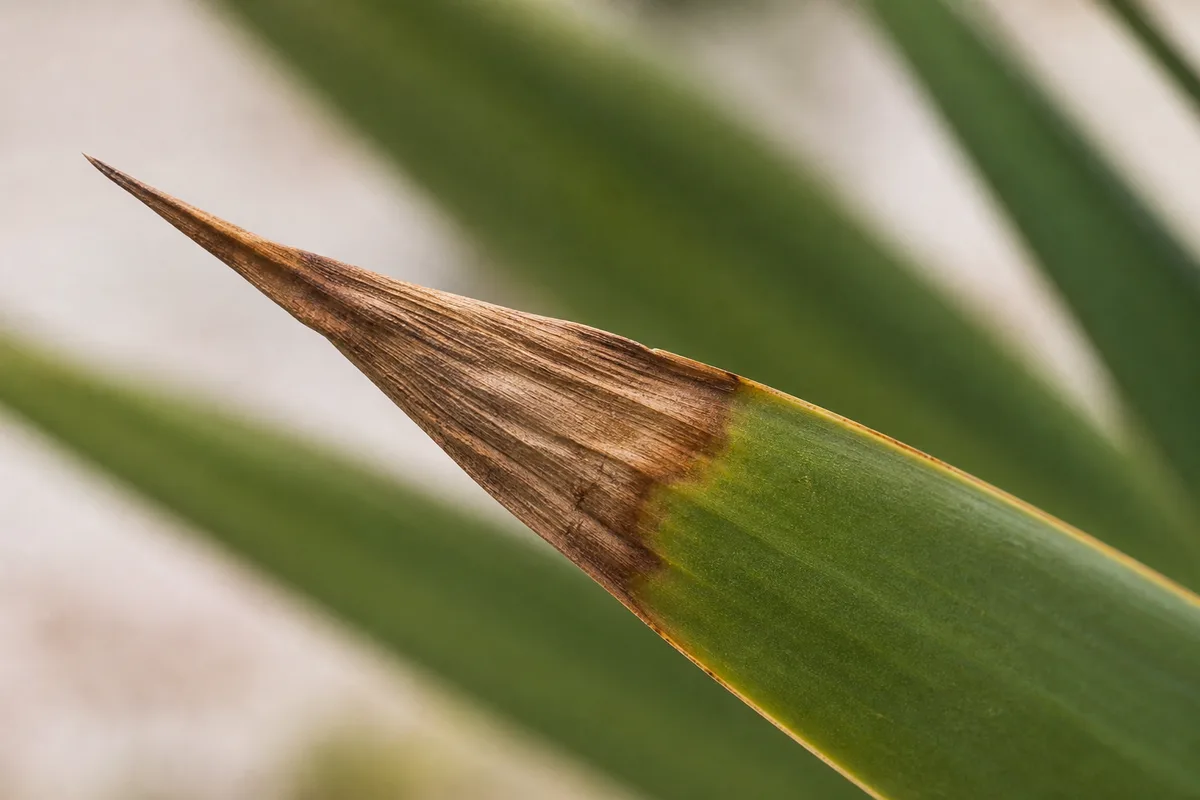
Low Humidity symptoms on Yucca Plant - compare with healthy tissue on the same plant.
Typical signs:
- Dry, brown, or tan tips on otherwise firm sword leaves-the browning starts at the point and may creep slightly inward along the margin
- Symmetry with placement-tips on the side facing a vent or radiator brown first while the rest of the rosette stays green
- Timing with heating season-symptoms appear or worsen after furnaces, baseboard heaters, or space heaters run daily
- No soft trunk or wet soil-the cane stays firm and the mix dries between waterings (if the base is soft, suspect rot instead)
What low humidity does not usually cause on yucca:
- Yellow leaves with brown halos and constantly damp soil (overwatering on Yucca Plant pattern)
- Fine webbing and stippling on leaf undersides (spider mites-often worsened by dry air but a pest problem)
- Black water-soaked patches after cold window contact (cold damage, not humidity)
- Widespread leaf drop with a sour-smelling pot (root failure)
Yucca’s thick, leathery leaves store water in the trunk and foliage. The plant can look healthy overall while only the oldest or most exposed leaf tips crisp-especially on lower rosette leaves nearest a heat source.
Why Yucca Plant gets low humidity stress
Desert-adapted yucca prefers low to average humidity (roughly 30–50%) and tolerates drought. That tolerance makes “low humidity” a misleading label on Yucca Plant overview. What actually hurts indoor yucca is extreme localized dryness-the kind forced-air heating creates when relative humidity in a room drops well below comfortable levels and a register blows directly on foliage.
Long, pointed leaves amplify tip dieback. Moisture transpires from leaf surfaces; when air near the plant is very dry, water does not reach the tip as efficiently-a pattern extension guides describe as browning around leaf edges in low humidity. Yucca’s leaf shape makes tips the first casualty even though the species is not humidity-demanding overall.
Common indoor triggers for yucca:
- Heating vents and radiators - Warm air holds less moisture; a pot on a mantel or beside a baseboard heater sits in a microclimate drier than the rest of the room
- Winter furnace season - Whole-home heating can drop humidity into the 20–30% range while yucca still only needs moderate air moisture
- New placement after a move - A yucca that thrived in a bright hallway may crisp once shifted above a floor register
- Dry air plus other stressors - Fluoride in tap water, fertilizer salts, and uneven watering produce nearly identical brown tips, so dry air is often blamed when water quality is the real driver
Spider mites thrive in the same dry, warm conditions. Dry air rarely kills yucca outright, but it can invite pests that add stippling and webbing on top of tip browning.
How to confirm the cause
Work through these checks before changing your whole care routine:
- Heat-source map - Stand where the pot sits. Can you feel warm air from a vent, radiator, fireplace, or frequently opened exterior door? Browning on the exposed side strongly suggests localized dry air.
- Season timing - Did tips crisp within weeks of turning on heat? That timeline fits environmental dryness more than a sudden disease.
- Whole-plant health - Press the cane base. Firm wood and dry soil between waterings point toward humidity or water-quality stress, not root rot on Yucca Plant.
- Water and feed history - Hard tap water, recent heavy fertilizer, or white crust on the soil surface suggest salt or fluoride tip burn mimicking humidity damage.
- Pest inspection - Hold a leaf to the light and check undersides for fine webbing, speckling, or moving dots. Spider mites in dry rooms copy humidity symptoms.
- Humidity at the plant, not the room - A hygrometer on the windowsill may read 40% while the shelf above a radiator reads much lower. Measure near the foliage if you want numbers.
If the plant sits in stable air away from heat sources, tips are still crisp, and you use hard tap water, switch water quality before raising humidity. If tips appeared only after a winter move near a vent, placement is the confirmed cause.
First fix for Yucca Plant
Relocate the pot to a bright spot at least 1–1.5 meters (3–5 feet) from active heating vents, radiators, and drafty doors.
Keep the same light level if possible-a south or west window with indirect to direct sun suits yucca. Do not compensate for the move by watering more; drought-adapted roots still need the mix to dry fully between drinks.
Leave the plant in the new spot for two weeks and watch new leaves at the rosette center. Existing brown tips will not heal; recovery shows on fresh growth.
Step-by-step recovery
After moving away from dry heat, address remaining stressors in order:
- Switch to filtered, distilled, or rainwater for one month if you use fluoridated tap water. Yucca is sensitive to fluoride, which browns tips independently of humidity.
- Flush accumulated salts if you fed heavily or see white crust on the soil. Water slowly until excess runs from drainage holes; let the pot drain fully and skip fertilizer for six to eight weeks.
- Inspect and treat spider mites if you find webbing or stippling. Rinse leaf undersides with lukewarm water in the morning, then apply insecticidal soap to affected areas weekly until clean-dry air often accompanies mite outbreaks on yucca.
- Trim only fully dead tip tissue with clean scissors once conditions stabilize. Cut into healthy green tissue at a slight angle if the brown section is narrow; leave partial damage if most of the leaf is still functional.
- Optional humidity boost - If tips on new growth still crisp after steps 1–3, a small humidifier or grouping with other plants may help. Target moderate humidity; yucca does not need tropical 70–80% levels, and excess moisture around wet soil causes more harm than dry air.
Do not repot, fertilize, or mist heavily on day one. Misting briefly raises surface moisture but does not fix register blast, and wet leaves overnight can encourage fungal spotting in stagnant corners.
Recovery timeline
Low-humidity tip damage on yucca is cosmetic and slow to show improvement because old tissue does not regenerate.
- Week 1–2 after relocation - No spread of browning on existing leaves is a good sign; new damage should stop
- Week 3–6 - Fresh leaves from the rosette should emerge without crisp edges if placement and water quality are correct
- Month 2+ - Lower old leaves with permanent tip burn can stay until you trim them for appearance; the crown should look cleaner overall
If new growth still crisps after six weeks away from heat sources, revisit fluoride sensitivity, fertilizer salts, and spider mites before assuming your home is too dry.
Lookalike symptoms
Brown tips from fluoride or salt buildup - Often uniform across the plant regardless of vent direction; may follow fertilizing or years of tap water. White soil crust is a clue. Fix with filtered water and flushing, not humidifiers.
Brown tips with yellow halos and wet soil - Classic overwatering on yucca, not dry air. Lower leaves yellow first; cane base may soften. Reduce water and inspect roots.
Spider mites in dry heat - Fine webbing, speckled yellow patches, and dusty leaf undersides. Dry air favors mites but treatment is pest control, not humidity alone.
Draft and cold-window damage - Blackened or water-soaked tissue on leaves touching cold glass in winter. Move away from the pane; this is temperature injury.
Sun scorch after a sudden move - Bleached or tan patches on leaves moved into harsh direct sun too fast. Acclimate gradually; scorch hits broad sections, not just tips.
Mistakes to avoid
- Buying a humidifier before moving the pot - Fixing a vent microclimate costs nothing and works faster for yucca than raising whole-room humidity
- Misting daily instead of fixing placement - Brief misting does not counter a heating register; it can leave leaves wet overnight
- Overwatering “because the air is dry” - Yucca roots rot in soggy mix far more easily than they fail in dry air
- Chasing high humidity like a tropical - Targeting 70%+ with wet soil and poor airflow invites leaf spot on yucca
- Trimming every leaf immediately - Wait until new growth looks clean; premature heavy pruning stresses a slow-growing plant
- Ignoring spider mites because “it’s just dry air” - Mites spread while you raise humidity that barely helps yucca tips
How to prevent low humidity stress on Yucca Plant
Place new yuccas in bright light away from seasonal heat sources before problems start. In fall, scan room layouts for where registers will blow once heat runs.
Use filtered or low-fluoride water year-round if your municipality fluoridates-this prevents tip burn that masquerades as humidity stress.
Water only when the top half of the mix is dry, with sharp drainage. A healthy root system moves water to leaf tips more evenly even in moderate dry air.
During winter, reduce feeding frequency. Salt buildup plus dry air doubles tip stress on slow-growing yucca canes.
Scout leaf undersides monthly in heated rooms. Catching spider mites early prevents tip damage from compounding.
When to worry
Low humidity alone rarely threatens yucca survival. Treat these as separate, more urgent problems:
- Soft or collapsing cane base with wet soil - Suspect crown or root rot; stop watering and inspect roots
- Rapid yellowing with halos across multiple leaves - Overwatering or root failure, not dry tips
- Spreading webbing and stippling - Active spider mite infestation needs immediate treatment
- Black mushy tissue after cold exposure - Cold damage; stabilize temperature before cosmetic trimming
If the trunk stays firm, soil dries appropriately, and only tips are crisp, you have time to adjust placement and water quality without emergency Yucca Plant repotting guide.
Conclusion
Yucca Plant is one of the most dry-air-tolerant indoor trees you can grow-but long sword leaves still crisp at the tips when a heating vent desiccates them daily. Move away from heat sources first, rule out fluoride and salts second, and treat spider mites if dry winter air brought them in. New rosette growth tells you whether the fix worked; old brown tips are permanent but harmless once the environment stabilizes.
When to use this page vs other Yucca Plant guides
- Yucca Plant watering guide - Use for routine moisture checks before assuming low humidity is the main issue.
- Yucca Plant problems hub - Browse all 29 common issues on this species.
- Brown Tips on Yucca Plant - Different entry point when symptoms overlap with low humidity.