Scale Insects on Yucca Plant: Causes, Checks & Fixes
Quick answer
Scale on Yucca Plant attaches as immobile brown bumps along canes and leaf bases, sucking sap and leaving sticky honeydew. Isolate the plant and scrape bumps with alcohol on a cotton swab before applying horticultural oil on repeat intervals.
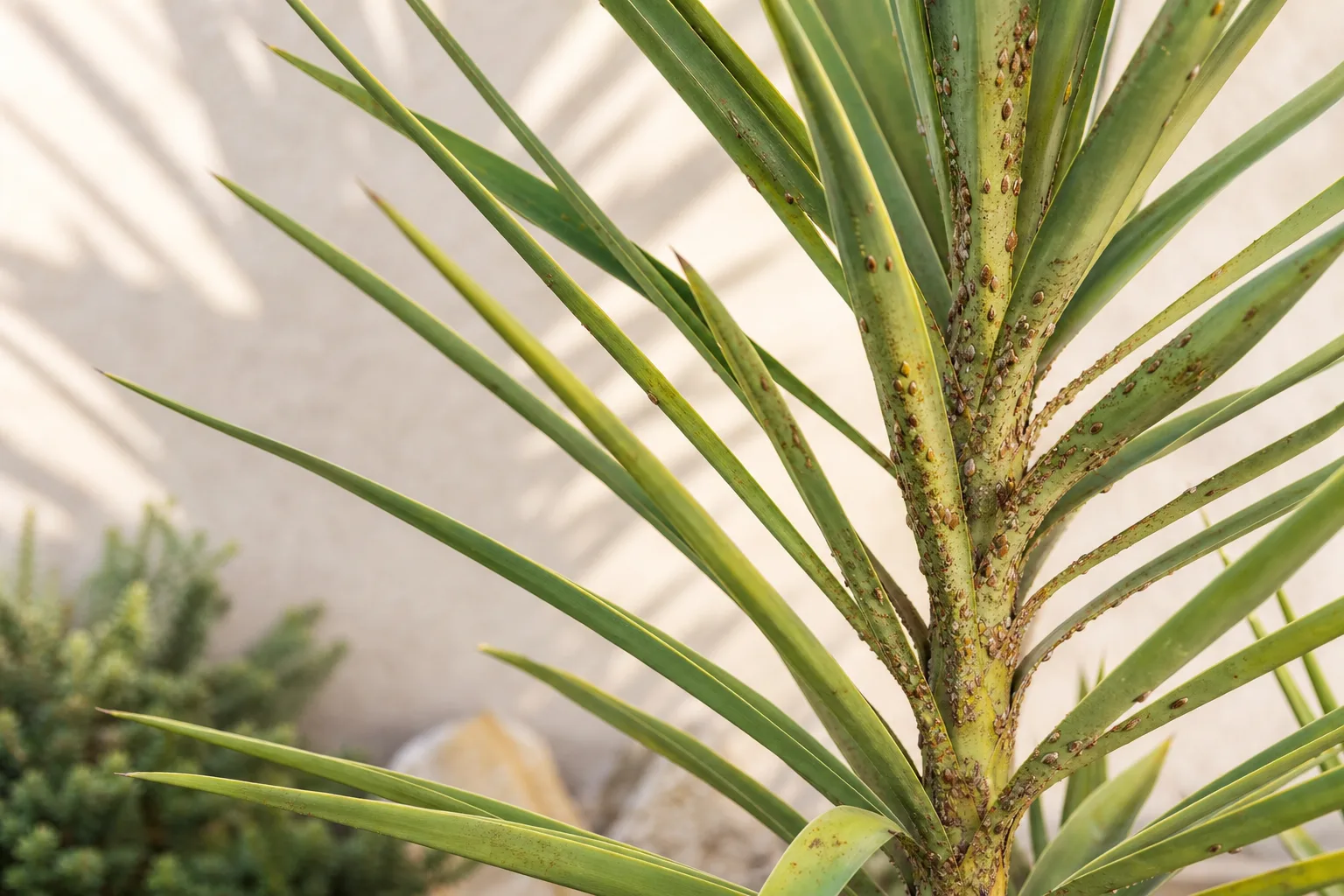
Scale Insects on Yucca Plant: Causes, Checks & Fixes
This guide covers scale insects on Yucca Plant. See also the general Scale Insects guide, watering, and light pages for this plant.
Scale Insects on Yucca Plant: Causes, Checks & Fixes
Quick answer
Scale insects on Yucca Plant appear as hard, immobile bumps along woody canes and at leaf bases where sword leaves meet the trunk. They pierce sap with sucking mouthparts and excrete sticky honeydew that coats lower leaves and can grow sooty mold. Yucca elephantipes grows slowly indoors, so even a moderate infestation drains reserves from thick cane tissue before you notice widespread yellowing.
First step: isolate the plant and scrape visible scale bumps with a cotton swab dipped in 70% isopropyl alcohol. Manual removal cuts the population immediately and confirms you are dealing with scale-not mealybugs, leaf spots, or natural bark texture. Only after scraping should you follow with horticultural oil or insecticidal soap on labeled repeat intervals.
What scale looks like on Yucca Plant
Scale on yucca cane plants differs from the fluffy white clusters of mealybugs and the stippling of spider mites. Look for these patterns:
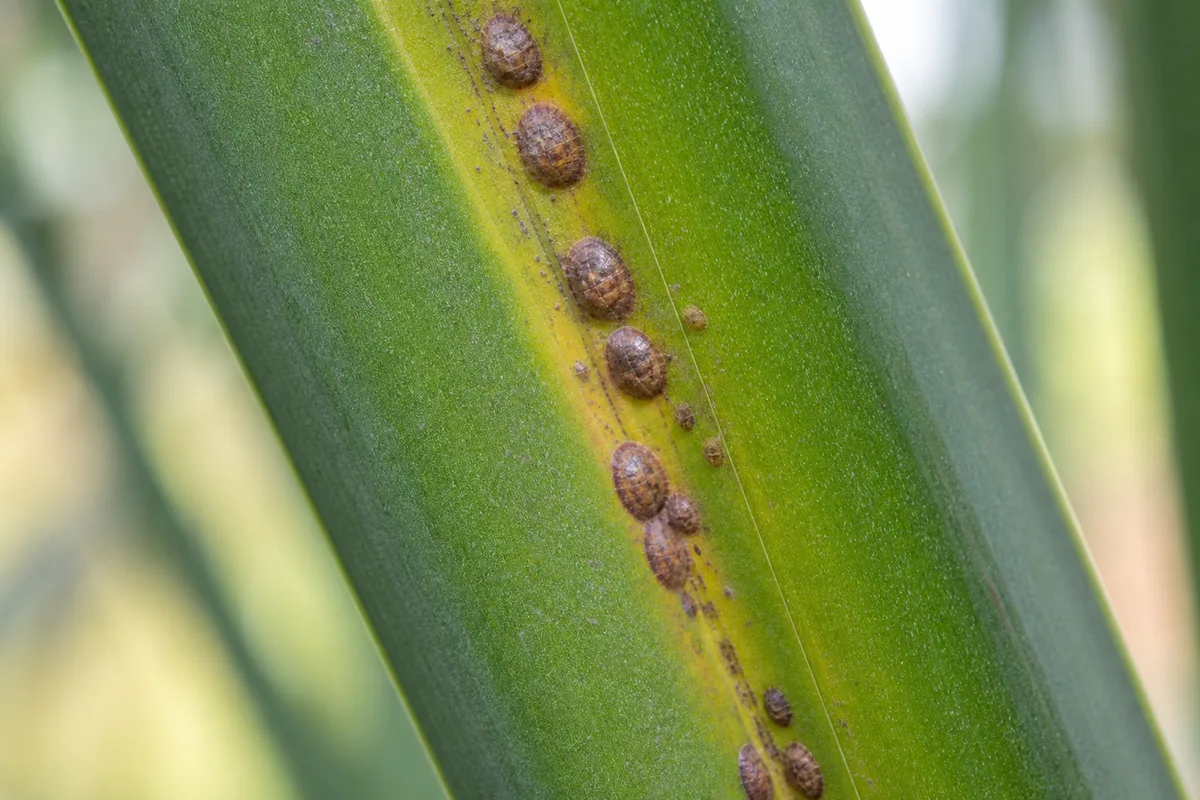
Scale Insects symptoms on Yucca Plant - compare with healthy tissue on the same plant.
Hard bumps on stems and leaf bases:
- Flat or domed brown, tan, or yellow-brown discs along cane surfaces, especially in trunk wrinkles and where leaves attach
- Bumps that do not move when touched and scrape off with fingernail pressure, leaving moist tissue underneath
- Clusters along leaf midribs on undersides of lower sword leaves
Honeydew and secondary damage:
- Shiny, tacky residue on upper leaf surfaces below infested stem sections
- Black sooty mold that wipes off once honeydew stops
- Yellowing or premature drop of heavily fed leaves
- Slowed growth at the rosette when feeding is prolonged
Soft brown scale is the most common indoor scale type and produces honeydew. Armored scale forms smaller hard shells and typically does not leave sticky residue-if your yucca leaves are tacky, soft scale or another honeydew producer is more likely.
Healthy yucca cane bark is rough but uniform. Scale bumps are discrete raised spots that appear suddenly, often starting on one cane section before spreading.
Why Yucca Plant gets scale
Scale hitchhikes on new nursery plants, shared tools, or specimens moved indoors after a summer outdoors. Once established, adult females attach permanently to stems and lay eggs beneath their protective covers. Crawlers-the mobile juvenile stage-settle in new crevices, which is why yucca’s architecture works against you: multiple cane forks, tight leaf axils, and overlapping sword leaves give scale sheltered real estate.
Warm indoor conditions without natural predators let overlapping generations build year-round. A yucca stressed by low light, overwatering on Yucca Plant, or drafty placement has less vigor to outgrow feeding damage, though scale can infest healthy plants too-do not assume your care caused the problem.
Ants often follow honeydew and protect scale colonies from predators, making infestations harder to clear. If you see ant trails on the pot or cane, inspect immediately for sap feeders above them.
How to confirm the cause
Work through these checks before treating:
- Bump test - Scratch a suspect spot with a fingernail or toothpick. Scale flakes off revealing moist insect tissue. Natural bark texture does not scrape away cleanly.
- Movement check - Scale adults are immobile. If white cottony insects shift when disturbed, you have mealybugs instead.
- Honeydew pattern - Sticky upper leaves concentrated below a specific cane section point to scale or aphids on that stem. Uniform dryness with stippling suggests spider mites.
- Distribution scan - Inspect the full length of each cane, leaf bases, and lower leaf undersides with a hand lens. Scale hides in crevices long before canopy yellowing shows.
- Neighbor check - Examine plants within a few feet. Crawlers travel short distances on air currents and shared watering tools.
- New growth check - Soft new leaves at the rosette are easier feeding sites. Yellowing tips on fresh growth while older leaves stay green often means active sap feeders.
If bumps are absent and leaves are sticky, check for aphids on new shoots or mealybugs in leaf axils before assuming scale.
First fix for Yucca Plant
Move the yucca away from other houseplants and scrape every visible scale bump with a cotton swab soaked in 70% isopropyl alcohol.
This single action isolates the infestation, confirms the pest, and removes adults that sprays alone may miss. Work systematically down each cane, into leaf axils, and along lower leaf midribs. Replace swabs as they load up with insects. Place removed scale in a sealed bag and discard-do not compost infested tissue indoors.
Do not spray oil or soap on day one before manual removal. Shells protect adults from contact sprays; scraping first makes follow-up treatments reach crawlers and exposed tissue. Do not repot or fertilize while treating-a stressed pest-hit yucca needs stable care, not extra root disturbance.
Step-by-step recovery
After the initial alcohol scrape:
- Wait 24 hours, then apply horticultural oil or insecticidal soap labeled for houseplants, coating stems, leaf bases, and leaf undersides until runoff. Oils smother crawlers and soft-bodied stages that scraping missed.
- Repeat treatments every 7 to 10 days for at least three cycles. Scale eggs hatch on staggered schedules, so one spray rarely clears an infestation.
- Wipe honeydew from sword leaves with a damp cloth after each treatment. Sooty mold stops spreading once feeding stops.
- Monitor with honeydew - fresh sticky drops mean live scale remain even if bumps look dead. Continue treatment until no new honeydew appears for two full weeks.
- Check quarantined neighbors weekly for six weeks. Crawlers are tiny and easy to miss on first inspection.
- Improve growing conditions once pests are controlled: bright light, fast-draining soil, and watering only when the top few centimeters of mix are dry. Vigorous yuccas recover faster from leaf damage.
For heavy infestations on large specimens, consider moving the plant outdoors in shade during warm weather for treatment-better ventilation and easier spray coverage-but acclimate gradually and avoid direct sun on oiled foliage.
Recovery timeline
Manual scraping shows results within days when colonies are small-you should see less fresh honeydew almost immediately. A full oil or soap course typically takes three to four weeks with label-interval repeats. Yellowed or stippled leaves do not revert; new rosette growth should emerge clean within four to six weeks once insects stay gone.
Yucca elephantipes is slow-growing indoors. Expect one to two seasons before the canopy looks fully refreshed if lower leaves were heavily damaged. Patience matters more here than on fast-growing tropicals.
Lookalike symptoms to rule out
Mealybugs form white cottony clusters in the same crevices scale occupies. They move slowly when disturbed and are easier to dab with alcohol than hard scale shells.
Aphids are soft green or black insects on new growth, not immobile bumps on woody cane. They also produce honeydew but cluster on tender shoots rather than trunk bark.
Spider mites cause fine stippling and webbing, not hard bumps or heavy honeydew. They thrive in hot dry air-confirm with a tap test over white paper.
Leaf spot disease puts brown or black lesions in leaf tissue, not raised insects on stems. Spots do not scrape off.
Natural cane texture on mature yucca is rough and corky but consistent along the trunk. Scale appears as discrete new bumps, often starting in one zone.
Mistakes to avoid
Do not treat once and assume scale are gone. Overlapping generations require repeated applications through multiple hatch cycles.
Do not use homemade soap sprays-they can burn yucca foliage. Use products labeled as insecticidal soap.
Do not apply horticultural oil in direct sun or on heat-stressed plants. Oil on leaves in bright window light can scorch tissue. Treat in evening or move the plant to shade until spray dries.
Do not ignore ants. Honeydew attracts ants that protect scale from predators, prolonging infestations.
Do not compost scraped scale or heavily infested leaf trimmings near other plants.
Do not reach for systemic imidacloprid as a first response unless label allows and other methods failed-yucca is toxic to pets, and systemic products add unnecessary chemical load when manual removal plus oil works.
Yucca care cross-check during recovery
Scale treatment works better on a stable plant. While fighting pests:
- Keep soil fast-draining and let the top few centimeters dry between waterings. Wet roots weaken yucca without helping pest control.
- Provide bright indirect to direct light. Dim corners slow recovery and encourage soft growth pests prefer.
- Hold fertilizer until new growth looks clean and the infestation is cleared for two weeks. Feeding stressed plants pushes tender tissue.
- Wear gloves when handling cut cane or treated foliage-yucca sap irritates skin and the plant is toxic to cats and dogs if chewed.
How to prevent scale next time
Quarantine every new plant for at least two weeks before placing it near your yucca. Inspect cane joints and leaf bases at entry and again before release.
Scout existing plants monthly, running a finger along cane wrinkles where scale settles first. Catching five bumps is far easier than treating five hundred.
Keep yucca in appropriate light with sharp drainage. Stressed specimens are not the sole cause of scale, but vigorous plants recover faster when hitchhikers appear.
Wash dust from sword leaves occasionally during summer. Dusty foliage in stagnant corners weakens plants and makes inspection harder.
Avoid bringing outdoor yuccas indoors in autumn without a thorough pest check. Scale populations sometimes build unnoticed during summer outside.
When to worry
Treat as urgent when scale covers most of the visible cane length, honeydew drips onto furniture below the pot, or ants actively farm the trunk. At that point, overlapping generations are well established and require disciplined repeat treatment.
Consider discarding severely infested small specimens rather than fighting months of reinfestation-economical replacement may cost less than repeated chemical cycles on a weakened plant.
Softening at the cane base alongside heavy scale suggests compounding stress from possible root rot on Yucca Plant or overwatering. Check root firmness and soil moisture before assuming pests alone are the problem.
Light scale on one cane section with firm trunk tissue and clean new growth is manageable-not an emergency. Start with isolation and alcohol scraping today.
Conclusion
Scale on Yucca Plant is manageable when you catch it early on cane joints and leaf bases. Isolate, scrape bumps with alcohol, then follow with repeated horticultural oil or insecticidal soap until honeydew stops. Yucca’s slow growth means old leaf damage lingers, but clean new rosette leaves tell you the treatment worked. Scout monthly and quarantine newcomers-that habit prevents small hitchhikers from becoming a canopy-wide problem.
When to use this page vs other Yucca Plant guides
- Yucca Plant watering guide - Use for routine moisture checks before assuming scale insects is the main issue.
- Yucca Plant problems hub - Browse all 29 common issues on this species.
- Sticky Leaves on Yucca Plant - Different entry point when symptoms overlap with scale insects.
- Yellow Leaves on Yucca Plant - Different entry point when symptoms overlap with scale insects.
- Mealybugs on Yucca Plant - Different entry point when symptoms overlap with scale insects.