Poor Drainage on Yucca Plant: Causes, Checks & Fixes
Quick answer
Poor drainage keeps Yucca Plant roots in wet mix for days-a death sentence for this drought-adapted cane. First step: stop watering and run a drainage test through the pot to see whether water exits freely before you repot or change your schedule.
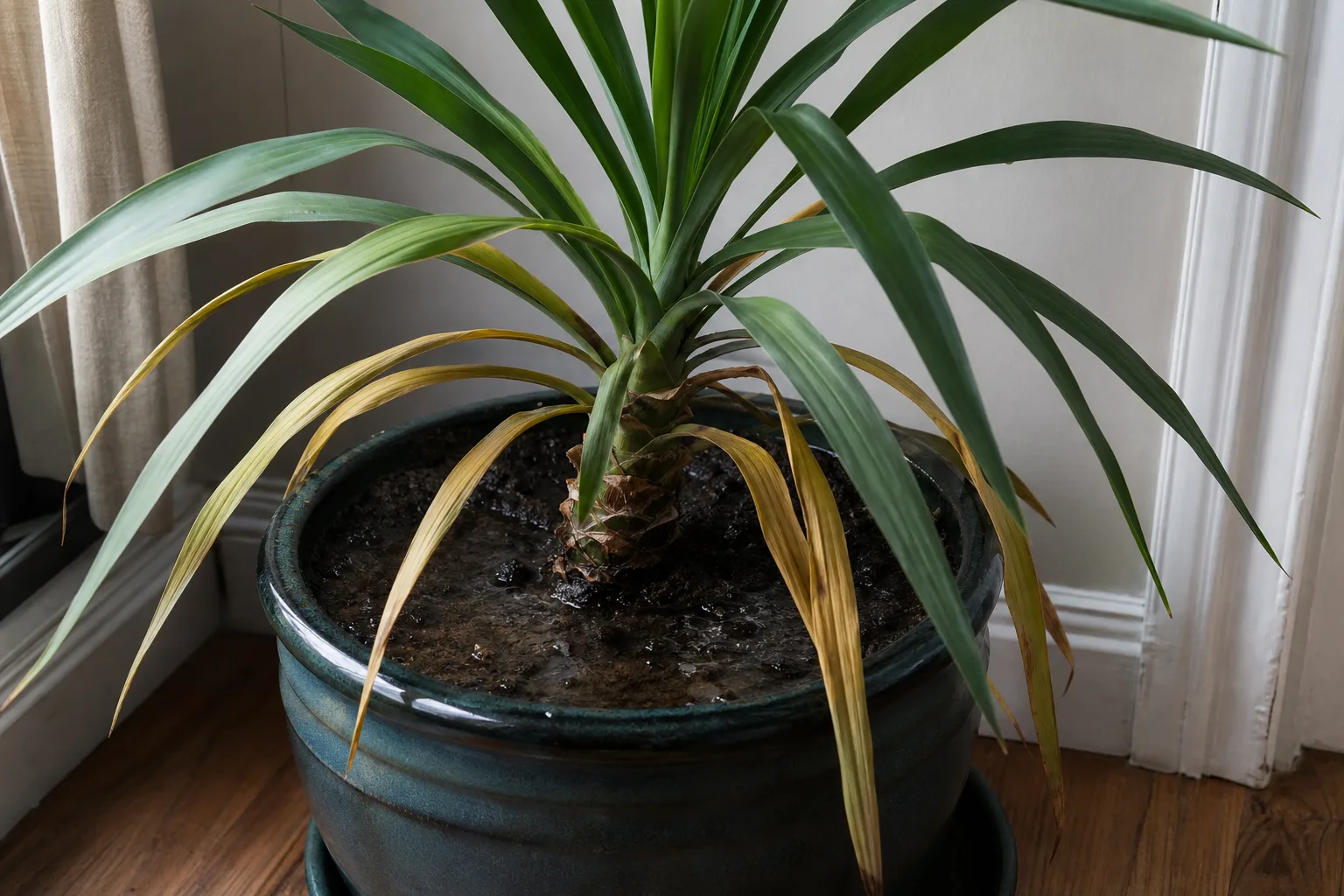
Poor Drainage on Yucca Plant: Causes, Checks & Fixes
This guide covers poor drainage on Yucca Plant. See also the general Poor Drainage guide, watering, and light pages for this plant.
Poor Drainage on Yucca Plant: Causes, Checks & Fixes
Quick answer
Poor drainage is one of the fastest ways to kill Yucca Plant indoors. Yucca elephantipes evolved for dry, well-drained sandy soil and sparse root systems that cannot tolerate sitting in wet peat for days. When mix holds water too long, roots lose oxygen and decay begins, and the cane base softens from the bottom up.
First step: stop watering and run a drainage test. Pour water slowly onto the soil surface and watch the drainage hole. If water pools on top, drips out in a trickle, or the pot still feels heavy three days later, drainage-not your watering calendar-is the problem. Fix the pot and mix before adjusting anything else.
What poor drainage looks like on Yucca Plant
Poor drainage shows up as chronic wetness even when you think you are watering carefully.
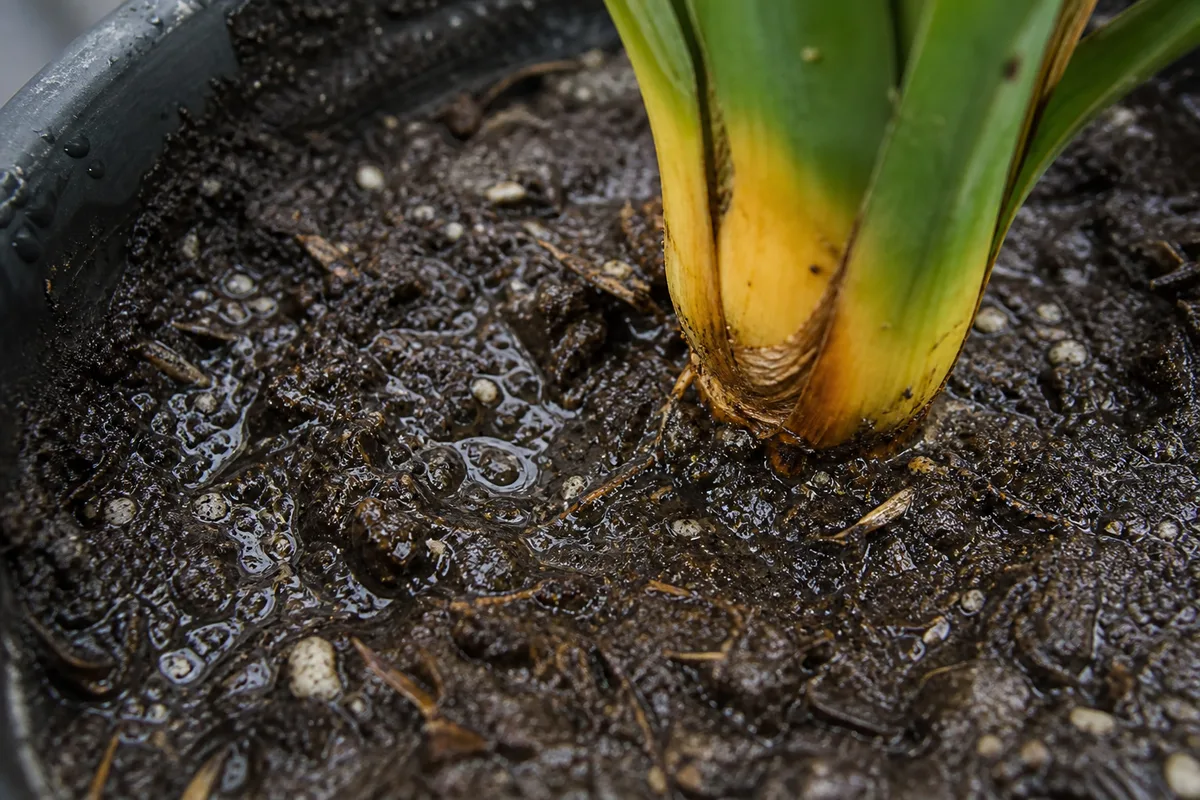
Poor Drainage symptoms on Yucca Plant - compare with healthy tissue on the same plant.
Early signs:
- Soil surface stays dark and cool for many days after one watering
- Pot feels unusually heavy when lifted
- Lower sword leaves turn yellow and droop while the mix is still moist
- No new leaf tips emerge for weeks during what should be active growth
Advanced signs:
- Sour or musty smell from the soil when you stick a finger in
- Soft, spongy tissue at the trunk base where canes meet the mix
- Fungus gnats hovering near the pot-overwatering and poor drainage can encourage fungus gnats
- White or gray mold on the soil surface after prolonged sogginess
On a healthy yucca, the woody trunk feels firm all the way to the soil line. If the base gives when you press it and the mix is wet, poor drainage has likely progressed into root or stem rot.
Why Yucca Plant gets poor drainage
Yucca elephantipes is a drought-tolerant desert-adapted species with a small root mass relative to its tall cane. It needs fast-draining, mineral-heavy mix-not the moisture-retentive peat blend most houseplants prefer.
Heavy potting mix without amendments. Standard indoor potting soil holds water for days. Yucca roots sit in that wet zone with nowhere to go-wet soil lacks air and roots need oxygen-especially in winter when the plant uses almost no water.
Oversized pots. A pot much wider than the root ball holds a large volume of wet soil the sparse roots never reach. That excess mix stays saturated around the trunk base where rot starts first.
Blocked or missing drainage holes. Decorative cachepots, plugged holes, or roots matting over the hole trap water at the bottom. Saucers left full re-wet the mix from below.
Low light slows water use. Yucca in a dim corner transpires less and dries the pot slowly. The same watering that worked in a bright window becomes excessive in shade.
Compacted old mix. Peat-based soil breaks down after one to two years, collapsing air pockets. Even a once-good mix can turn into dense, slow-draining muck.
How to confirm the cause
Work through these checks before repotting:
- Drainage test - Water until it runs from the hole. Water should exit within a minute or two. Pooling on the surface or a blocked hole confirms poor drainage.
- Pot weight test - Lift the pot three days after watering. A heavy, cold pot means mix is still wet.
- Finger probe - Insert a finger 5 cm into the mix. If it comes out wet and clumpy while lower leaves are yellow, roots are likely stressed.
- Knock-out inspection - Slide the plant out. Crumbly, airy mix with firm pale roots is healthy. Dense wet clumps with brown mushy roots confirm damage from chronic wetness.
- Trunk base check - Press the cane at soil level. Firm wood is good; give or squish means rot may already be spreading.
- Setup review - Note pot size relative to roots, hole count, saucer water, and whether the mix contains sand, perlite, or pumice.
If the mix is dusty dry, leaves are only slightly limp, and roots are firm, you may be looking at underwatering instead-do not repot into drier mix based on yellow leaves alone.
First fix for Yucca Plant
Stop all watering and empty any standing water from the saucer or cachepot.
This single step halts further saturation while you diagnose. Yucca tolerates dry mix far better than wet mix. Let the root zone begin drying before you run the drainage test or unpot the plant.
Do not repot on impulse, fertilize, or prune yellow leaves as your first move. Do not add gravel to the pot bottom-that does not improve drainage and can raise the wet zone closer to roots.
Step-by-step recovery
Once you have confirmed poor drainage:
- Unpot carefully - Knock the plant out and brush away wet soil so you can see root condition.
- Trim damaged roots - Cut away brown, mushy roots with clean scissors. Leave firm, pale tissue intact.
- Air-dry if needed - If roots were very wet, let the root ball sit in bright indirect light for 24–48 hours before repotting.
- Repot into fast-draining mix - Use a cactus or sandy blend with roughly 30% perlite, coarse sand, or pumice. Avoid straight peat potting soil.
- Right-size the container - Choose a pot only slightly larger than the root mass, with at least one open drainage hole.
- Discard old wet mix - Do not reuse soggy soil or add it to compost.
- Wait before watering - Give the plant five to seven days in fresh dry mix, then water lightly and confirm water exits freely.
- Move to brighter light - More light helps the plant use water so the new mix dries between drinks.
If the trunk base is soft throughout, salvage firm cane sections above the rot line for propagation rather than trying to save the whole plant.
Recovery timeline
Correcting drainage shows results over weeks, not days. The pot should feel noticeably lighter within three to five days after repotting into gritty mix. Yellow lower leaves will drop or stay yellow-they do not re-green.
Watch for new sword leaves pushing from rosette tips. That usually appears within two to six weeks once roots stabilize in dry mix. A firm trunk base is the best sign the plant is out of danger.
If the base continues softening or black patches climb the cane after repotting, rot is still active and recovery is unlikely for the whole plant.
Lookalike symptoms to rule out
Overwatering on a well-draining setup - You may water too often even with good mix. If water runs through quickly and the pot is light between waterings, the habit-not the mix-is the issue.
Underwatering - Dusty dry mix, crispy leaf tips, and a light pot point to drought. Yucca leaves droop from root rot when soil is wet, not when it is bone dry.
Low light alone - Leggy, pale growth without chronic wetness suggests insufficient light rather than drainage failure. Check soil moisture before moving pots.
Salt buildup - White crust on the soil surface can accompany poor drainage but also occurs with tap water and fertilizer in otherwise draining pots. Flush or top-dress if crust is thick, but fix drainage first if mix stays wet.
Scale or mealybugs - Sticky residue on leaves comes from pests, not wet soil. Inspect stems and leaf bases if stickiness is the main symptom.
Mistakes to avoid
Do not add rocks or gravel at the bottom of the pot. That creates a perched water table that keeps the root zone wetter, not drier.
Do not repot into regular garden soil or dense peat mix hoping to “hold more moisture” for a desert plant.
Do not jump to a pot twice the size of the root ball. Excess soil volume is one of the most common drainage mistakes on yucca canes.
Do not keep watering because leaves look wilted when the mix is already wet-damaged roots cannot move water, and more water makes drainage failure worse.
Do not mist or use humidity trays. Yucca problems here are about excess soil moisture, not dry air.
How to prevent poor drainage next time
Use a mineral-heavy cactus or succulent mix amended with coarse sand or perlite. Terracotta pots dry faster than glazed ceramic, but any container works if holes are open and mix is gritty.
Size pots to root mass, not canopy height. A tall yucca with a small root system does not need a large decorative pot.
Water only when the top several centimeters of mix are dry. Reduce frequency in winter when growth slows and the plant uses less water.
Empty saucers within 30 minutes of watering. Never let the pot sit in standing water.
Repot every two to three years-or sooner if mix compacts and drains slowly-to refresh structure before peat breakdown causes chronic wetness.
Place the plant where it gets bright indirect to direct light so it transpires actively and the mix cycles between wet and dry.
When to worry
Treat poor drainage as urgent when the trunk base softens, black discoloration spreads up the cane, or most roots are mushy on inspection. Mild root trimming on a firm trunk has a fair recovery chance once drainage is corrected.
If the entire base collapses, focus on propagating firm cane sections above the rot. Yucca stores energy in its trunk, but base rot from chronic wet soil moves faster than new roots can form in still-soggy conditions.
Related Yucca Plant guides
- Yucca Plant overview
- Yucca Plant watering
- Yucca Plant light
- Overwatering on Yucca Plant
- Root Rot on Yucca Plant
- Yellow Leaves on Yucca Plant
- All Yucca Plant problems
Conclusion
Use this page to confirm poor drainage on Yucca Plant by pattern and pot checks-not by treating every houseplant the same. When symptoms overlap with sibling pages, follow the linked guide for the matching cause before stacking fertilizer, repotting, or pesticide.