Wrong Soil Mix on Yucca Plant: Causes, Checks & Fixes
Quick answer
Wrong soil mix on Yucca Plant means peat-heavy potting soil without enough sand or perlite-the mix stays wet and suffocates drought-adapted roots. First step: knock the plant out and check whether the root ball stays soggy for days and roots are firm or mushy.
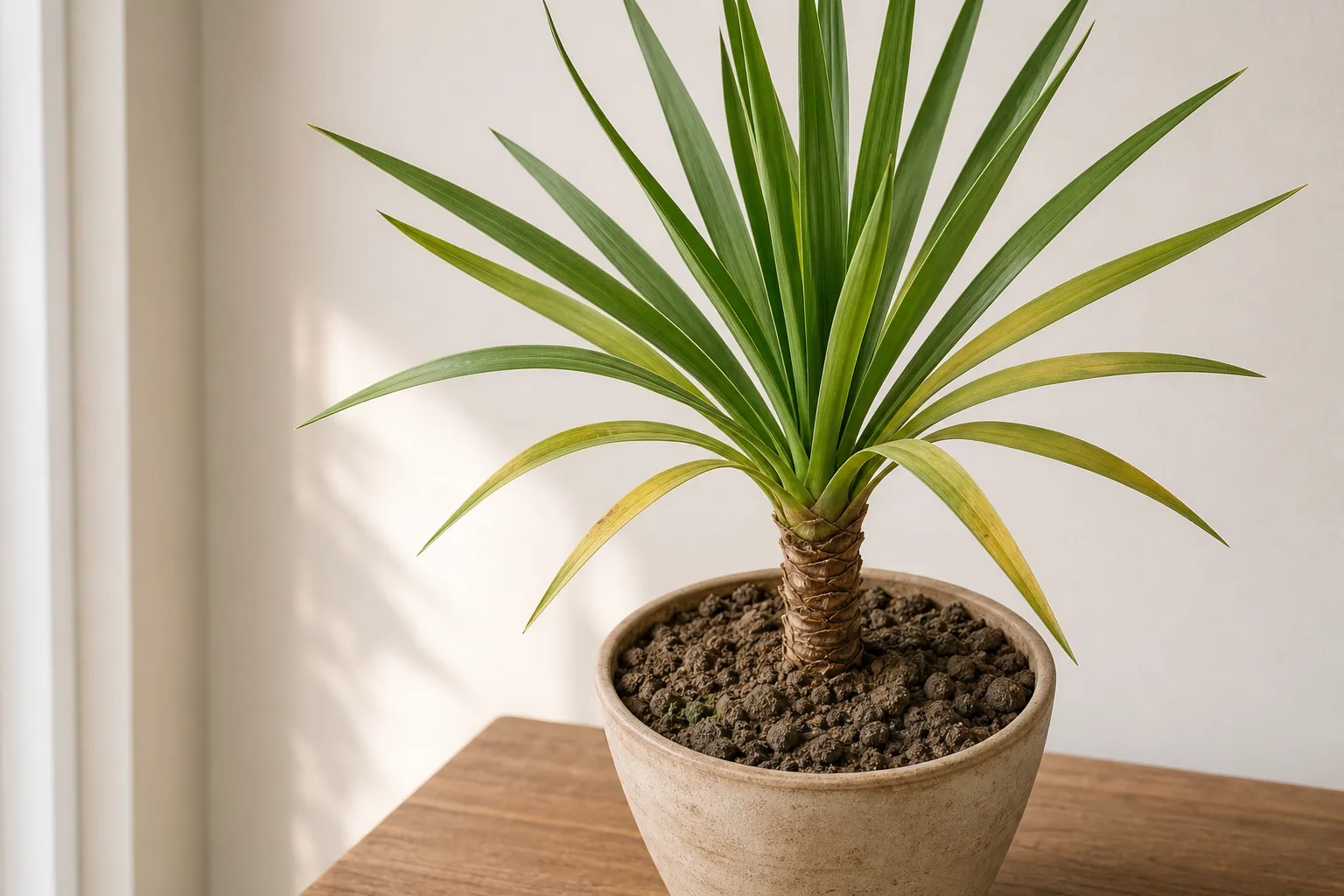
Wrong Soil Mix on Yucca Plant: Causes, Checks & Fixes
This guide covers wrong soil mix on Yucca Plant. See also the general Wrong Soil Mix guide, watering, and light pages for this plant.
Wrong Soil Mix on Yucca Plant: Causes, Checks & Fixes
Quick answer
Wrong soil mix on Yucca Plant (Yucca elephantipes, spineless yucca) almost always means standard bagged potting soil without enough grit. That peat-heavy blend holds moisture around sparse roots for days indoors-exactly what this desert-adapted species cannot tolerate. Missouri Botanical Garden recommends growing spineless yucca in a well-drained sandy soil mix and allowing soil to dry between waterings.
First step: knock the plant out of its pot and inspect the root ball. You need to know whether the mix stays soggy for days and whether roots are firm or mushy before Yucca Plant repotting guide, trimming, or changing your Yucca Plant watering guide. A yucca in the wrong mix often looks overwatered even when you water carefully-the soil structure, not your calendar, is the problem.
What wrong soil mix looks like on Yucca Plant
Above soil, chronic drainage failure shows up as slow, vague decline rather than one dramatic day. Watch for these patterns on spineless yucca:
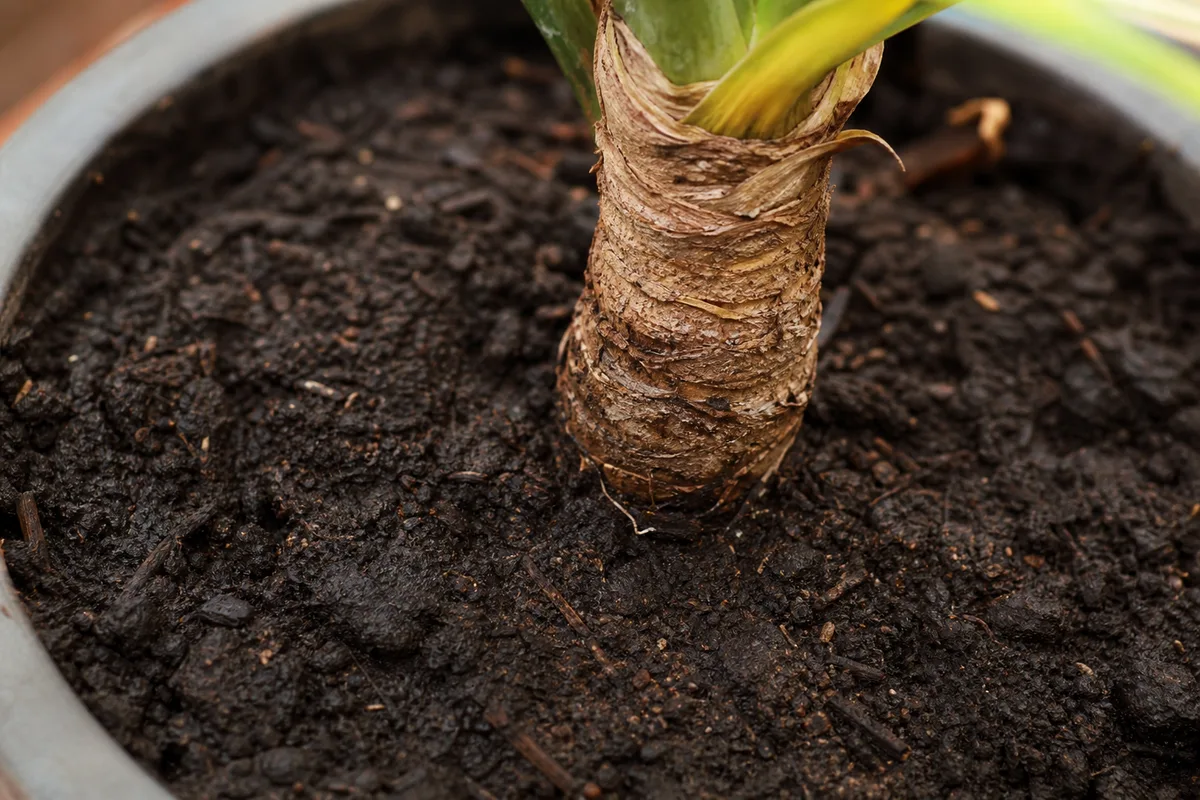
Wrong Soil Mix symptoms on Yucca Plant - compare with healthy tissue on the same plant.
- Pot stays heavy for a week after a single watering while lower sword-shaped leaves yellow
- Drooping foliage even though the mix feels damp-not the stiff curl of drought
- Fungus gnats hovering near the surface because organic peat stays moist
- Soft, discolored tissue at the trunk base where rosettes meet soil
- Water runs straight through dry pockets in old, compacted peat while the center stays wet
- White crust on the soil surface from fertilizer salts trapped in dense mix
- Stalled new growth at cane tips despite bright light
Below soil, the tell is texture and root color. Wrong mix feels dense and spongy, not crumbly. Healthy yucca roots are firm and pale; roots in failing mix turn brown, translucent, or mushy. UF/IFAS notes that root rot occurs in soils kept too moist-the disease follows waterlogged conditions, not bad luck.
Normal lookalikes: Dry mix with curled, stiff leaves means underwatering on Yucca Plant. Uniform brown tips on an otherwise firm plant often trace to fluoride or salt buildup, not necessarily the whole mix. Leggy pale growth in deep shade is a light problem first.
Why Yucca Plant gets wrong soil mix problems
Spineless yucca evolved for sharp drainage and dry-down cycles. It tolerates drought but not roots sitting in stagnant wet organic matter. Indoors, three setup mistakes repeat:
Using straight potting soil. Most bagged “indoor” or “all-purpose” mixes are peat-based and designed for moisture-loving foliage plants. On yucca, that formula stays wet too long between your waterings-especially in cool dim rooms where the plant drinks slowly.
Skipping drainage amendments. UF/IFAS lists well-drained soil as a requirement and warns: “Do not plant Yucca unless drainage is superior.” A handful of perlite on top does not fix a peat core. You need grit mixed throughout-perlite, coarse sand, pumice, or commercial cactus blend.
Oversized pots. A tall yucca cane in a decorative pot three times the root mass creates a large wet zone the roots never colonize. Extra soil volume holds moisture for days, mimicking chronic overwatering on Yucca Plant even when you wait between drinks.
Other contributors include old broken-down peat that compacts and loses air pockets after two to three years, pots without drainage holes, and low light plus heavy mix-slow growth uses less water, so the same soil stays saturated longer.
Wrong soil and overwatering overlap, but the fix differs: if the mix itself is the problem, adjusting water alone will not restore oxygen to dense peat. You need better structure.
How to confirm the cause
Work through these checks in order:
- Pot weight test - Lift the container three days after watering. Still heavy? The mix is retaining too much water for yucca.
- Finger probe at depth - Push into the center of the root ball, not just the surface. Soggy deep mix with a firm trunk suggests soil failure; dry throughout with limp leaves points to underwatering.
- Knock-out inspection - Slide the plant out. Crumbly mix with firm white roots is acceptable. Dense wet muck, sour smell, or mushy roots confirms wrong mix plus likely root stress.
- Texture squeeze - Grab a handful. If it clumps like wet cookie dough and holds shape, it is too moisture-retentive. Good yucca mix falls apart and drains fast.
- Repot history - Did the nursery use straight peat? Was grit ever added? Fresh store-bought “yucca cane” in decorative cache pots often ships in the wrong blend.
- Trunk firmness - Press the base above soil. Hard wood-like tissue supports recovery; soft dented base means rot has started and repotting is urgent.
If the mix dries within two to three days, roots are firm, and only leaf tips are brown, suspect salt or fluoride before tearing apart a healthy root system.
First fix for Yucca Plant
Knock the plant out and inspect the root ball and mix texture.
That single inspection tells you whether you are dealing with dense peat, compacted old mix, oversize pot syndrome, or advanced rot-everything else follows from what you find. Do not repot blindly on day one without looking; you might trim healthy roots or miss a soft trunk base that needs immediate surgery.
If the mix is clearly peat-heavy and wet while roots are still mostly firm, plan to repot into gritty blend within the next day or two. If the trunk base is already soft or roots are mostly mushy, move straight to trimming decay before repotting dry.
Do not fertilize, mist heavily, or “flush” dense peat expecting it to behave like fast-draining mix-flushing helps salt buildup but does not fix structure.
Step-by-step recovery
Once inspection confirms wrong mix, work in this order:
- Trim decay if present - Cut mushy roots back to firm tissue with clean scissors. If the trunk base is soft, slice away rotten wood until you hit hard cane. Sterilize blades between cuts.
- Discard old mix entirely - Reusing soggy peat reintroduces the problem. Do not shake only half the root ball and backfill with grit around dense core.
- Choose the right blend - Use commercial cactus or succulent mix, or amend standard potting soil with 30–50% perlite, coarse sand, or pumice mixed through. Missouri Botanical Garden specifies sandy, well-drained mix; UF/IFAS accepts clay, sand, or loam only when well-drained.
- Right-size the pot - Move up only one size, or repot into a smaller container if the old pot was far too large. Drainage holes are non-negotiable.
- Repot dry and wait - Set the plant in fresh mix without watering immediately if you cut roots or the old mix was saturated. Let cut surfaces callus one to three days in Yucca Plant light guide.
- First water lightly - When you do water, moisten once and let the mix dry fully before the next drink. Damaged roots cannot move water normally-overcompensating with heavy watering repeats the failure.
- Bright light and airflow - Place in full sun to part shade so foliage and mix dry predictably. Hold fertilizer until new growth looks healthy for two weeks.
If the lower trunk is hollow but upper cane sections are firm, you can often propagate the healthy stem into dry mineral mix after the cut calluses-yucca cane cuttings root from firm wood.
Recovery timeline
Stabilization often takes two to four weeks after repotting into correct mix-the pot should feel noticeably lighter within several days of the first proper dry-down cycle.
New leaf unfurling at cane tips is the best success signal; expect it in four to eight weeks during warm active growth, longer if recovery started in a dim winter room. Old yellow leaves will not green up-remove them once the plant stops declining.
Full root mass rebuilds over several months, not days. A yucca may shed lower leaves while reallocating energy to roots; that is normal if the trunk stays firm and tips eventually push growth.
Worsening signs: trunk base softens further after dry repotting, black streaks climb the cane, or no new growth appears by mid-spring-those suggest tissue that cannot be saved.
Lookalike symptoms
- Overwatering in good mix - Same yellow leaves, but knock-out shows fast-draining gritty blend and firm roots; fix the schedule, not necessarily the soil.
- Underwatering - Light pot, dry mix throughout, stiff curled leaves; deep soak once, then resume dry-down timing.
- Salt or fertilizer burn - Brown tips with firm trunk and fast-draining mix; flush surface salts or top-dress rather than full repot.
- Low light - Leggy pale canes with otherwise healthy roots; move to brighter exposure before blaming soil.
- Root-bound stress - Very tight root spiral in otherwise appropriate mix; root prune and same-type gritty blend in slightly larger pot.
What not to do
Do not add gravel at the pot bottom instead of fixing the mix-a perched water table forms where fine mix meets coarse gravel. Do not repot into garden soil or moisture-retentive African violet blend. Avoid watering on a fixed weekly schedule before confirming how fast the new mix dries in your room.
Do not jump to a pot much larger than the root ball “because the yucca is tall.” Skip fungicide alone without removing mushy roots and replacing dense mix. Do not keep misting leaves to fix a root-zone drainage problem.
When handling cut cane or sap, wear gloves and keep plants away from pets-Yucca is toxic to cats and dogs.
How to prevent wrong soil mix next time
Use fast-draining sandy or cactus mix from the start, amended with perlite or coarse sand if the bag still feels heavy. Match pot diameter to root mass, not canopy width. Refresh tired peat that has compacted every two to three years indoors.
Water only when the mix is dry throughout during active growth, and reduce watering during indoor winter months when the plant drinks less. Empty saucers after every drink. Quarantine new yucca canes and knock them out within the first month if the nursery mix feels dense-early repotting beats emergency trunk surgery.
When to worry
Escalate immediately if the trunk base dents under light pressure, stems blacken upward from soil line, or inspection shows mostly mushy roots. Slow yellowing on a firm trunk can wait for a scheduled repot.
If more than half the root system is mushy after trimming, or the base collapses despite dry gritty mix, propagate firm upper cane sections while tissue is still healthy.
Conclusion
Wrong soil mix on Yucca Plant is a setup problem, not a mystery disease. Confirm it by knocking the plant out, checking whether peat stays wet for days, and inspecting root firmness. Replace dense mix with gritty, fast-draining blend, right-size the pot, and let the plant dry down between waterings. Spineless yucca forgives drought far more willingly than it forgives soggy peat-and the trunk will tell you which mistake you made.
When to use this page vs other Yucca Plant guides
- Yucca Plant watering guide - Use for routine moisture checks before assuming wrong soil mix is the main issue.
- Yucca Plant problems hub - Browse all 29 common issues on this species.