Overfertilization on Yucca Plant: Causes, Checks & Fixes
Quick answer
Overfertilization on Yucca Plant builds fertilizer salts that brown leaf tips and slow growth-yucca needs light feeding only in spring and summer. Flush soil with plain water and stop feeding until new growth looks healthy.
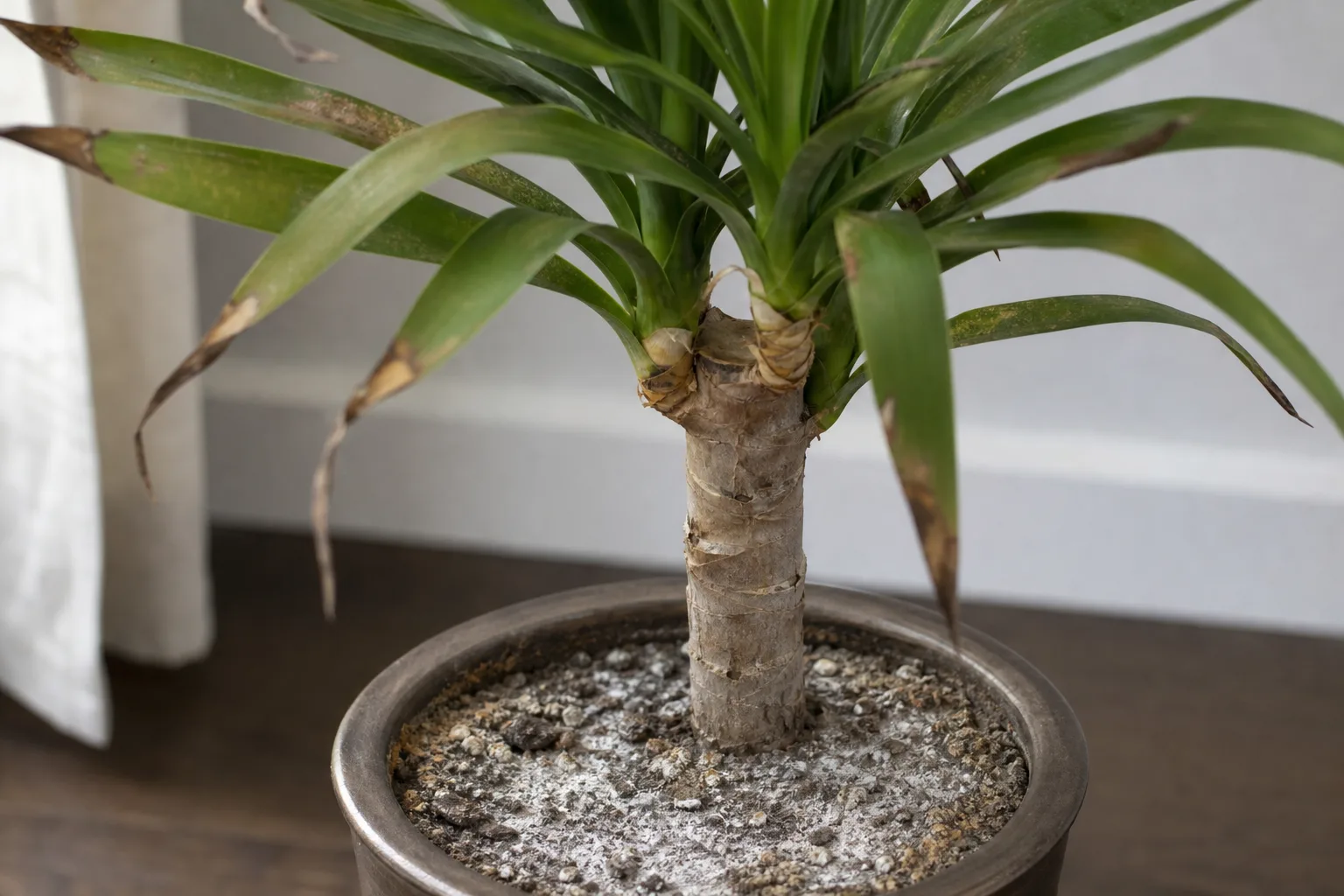
Overfertilization on Yucca Plant: Causes, Checks & Fixes
This guide covers overfertilization on Yucca Plant. See also the general Overfertilization guide, watering, and light pages for this plant.
Overfertilization on Yucca Plant: Causes, Checks & Fixes
Quick answer
Chronic overfertilization on spineless yucca (Yucca elephantipes) is a salt buildup problem, not a hunger problem. This drought-tolerant cane yucca grows slowly indoors and uses little nitrogen compared with leafy tropicals. When you feed too often, too strong, or through winter rest, unused fertilizer salts accumulate in the pot and scorch leaf margins. The first fix is to flush the pot with plain water until excess runs freely, then stop all fertilizer until spring growth resumes. Do not add more feed hoping to push recovery.
For routine feeding norms, see the Yucca Plant fertilizer guide. This page covers chronic feeding-schedule excess-not a single heavy dose (fertilizer burn) or tap-water mineral crust alone (salt buildup).
| Your pattern | Best guide |
|---|---|
| Gradual tip burn + white crust after regular feeding through winter | This page - chronic overfertilization |
| Crispy tips within days of one heavy dose | Fertilizer burn |
| White crust with modest feeding; hard tap water | Salt buildup |
| Brown tips without crust; gradual onset | Brown tips (fluoride/humidity) |
| Yellow leaves + heavy wet pot | Overwatering |
| Soft base + mushy roots | Root rot |
Why Yucca Plant gets overfertilization
Yucca elephantipes evolved on poor, fast-draining sandy soils and needs modest nutrition only during active growth. The Old Farmer’s Almanac notes yucca “don’t need many nutrients” and that fertilizer is optional-applied only in spring and summer if you want slightly faster growth. Indoors, a cane often sits in the same pot for years while fertilizer salts build with each application. Unlike fast-growing pothos or ferns, yucca cannot burn through excess nutrients quickly-salts stay in the mix and pull moisture from root tips.
Several habits push yucca past its tolerance:
- Feeding on a tropical schedule - monthly full-strength doses meant for lush foliage plants oversupply a slow cane grower.
- Winter feeding in dim rooms - short days and cool rooms slow growth; fertilizer that the plant cannot use concentrates as salts.
- Slow-release pellets plus liquid feed - Penn State Extension warns against combining slow-release with soluble fertilizer; stacking products doubles the salt load without obvious warning until tips crisp.
- Hard tap water plus fertilizer - fluoride and mineral salts from water add to fertilizer buildup at leaf margins, especially on the sword-shaped tips yucca is known for.
- Feeding stressed plants - dry soil, recent repotting, or root damage from overwatering makes salt uptake more damaging.
The trunk usually stores enough reserves that overfertilization shows at leaf tips before the cane collapses-but only if you catch it before salts damage roots in wet soil. A yucca in the same container for three or more years hits salt thresholds faster than a recently repotted cane because every feed adds to what is already in the mix.
What overfertilization looks like on Yucca Plant
Symptoms cluster around salt stress rather than random leaf loss:
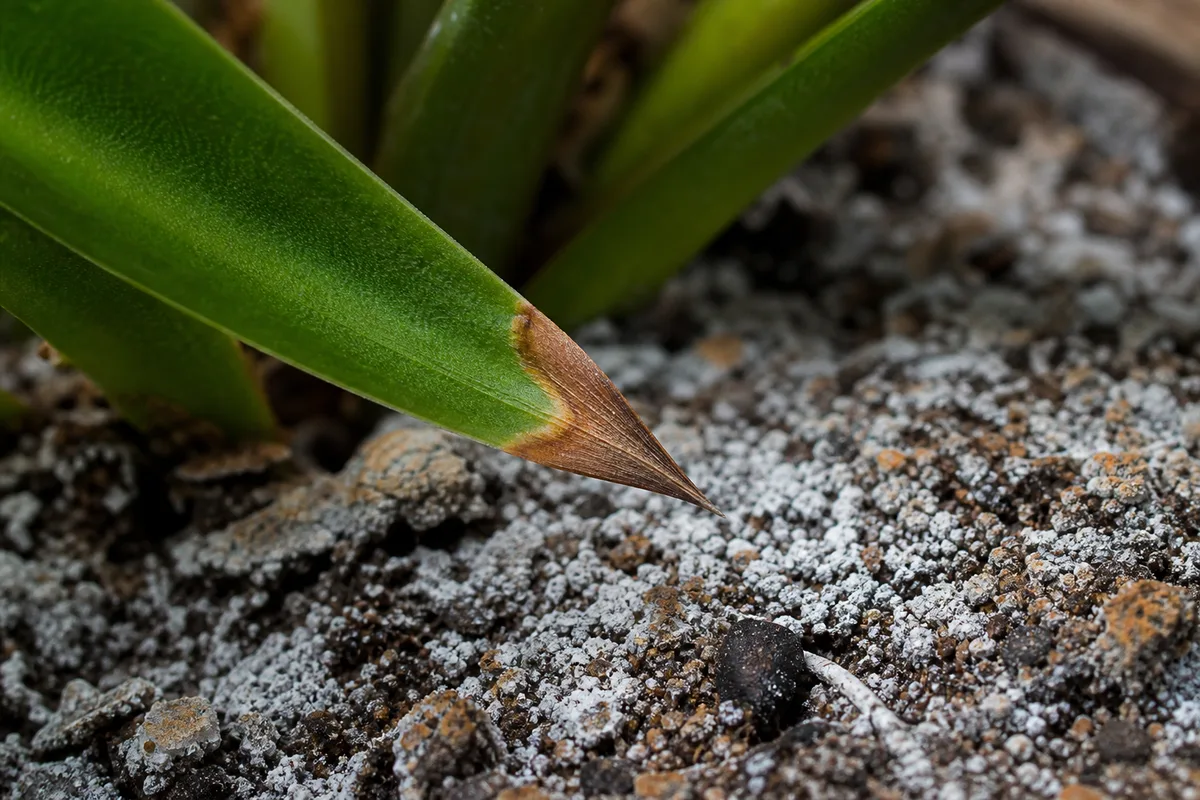
Overfertilization symptoms on Yucca Plant - compare with healthy tissue on the same plant.
- Crispy brown tips and margins on multiple leaves, often uniform rather than one-sided
- White or tan crust on the soil surface or pot rim
- Darkened leaf edges that feel dry, not soft like rot
- Slow or stalled new growth despite regular feeding-the plant looks “fed but tired”
- Lower leaf yellowing in advanced cases when root tips die back
- Firm trunk in early overfertilization; soft base only if root damage overlaps with overwatering
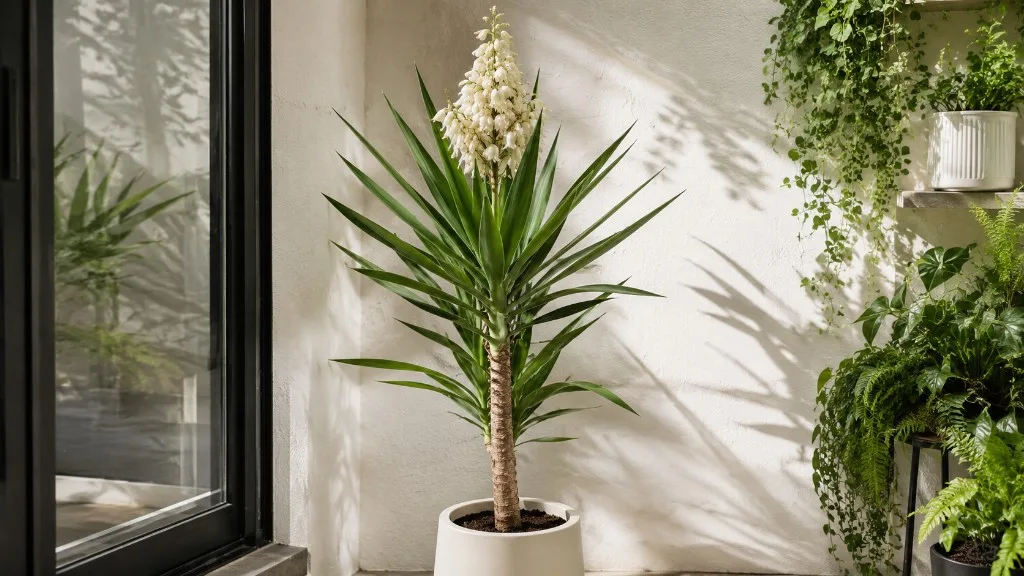
Normal aging drops the lowest leaves on a yucca cane over time. Overfertilization browns tips on newer and middle leaves at once, especially after a recent fertilizer application or a winter feed in a dim room. Burned tissue will not re-green-judge recovery by clean margins on fresh rosette leaves, not by old tips healing.
How to confirm the cause
Work through these checks before repotting or trimming heavily:
- Review your feeding log - note product, strength, and dates for the past three months. Overfertilization often follows a schedule change, slow-release pellets forgotten while adding liquid feed, or an “extra boost” after repotting. Compare your routine with the Yucca Plant fertilizer guide.
- Inspect the soil surface - scrape lightly with a finger. White crystalline crust that returns after watering points to salt accumulation, not mold.
- Check pot weight and smell - a heavy pot with sour smell suggests overwatering overlap; a firm trunk with dry-ish mix and crusty soil fits salt stress better.
- Compare leaf pattern - fluoride from tap water often browns tips gradually on many houseplants; see brown tips on yucca when crust is absent. Sudden tip burn right after one heavy dose fits fertilizer burn more than chronic buildup on this page.
- Knock the plant out if tips worsen despite flushing - brown, dead root tips with otherwise firm cane tissue confirm salt damage; black mushy roots point to root rot instead.
If only one lower leaf is brown and the rest are clean after months without feed, you are likely seeing normal senescence-not overfertilization.
First fix to try
Flush the pot with plain water until excess runs freely from the drainage hole, and discard all saucer water. Repeat two or three times over the next day, using a volume at least equal to the pot size each round-Colorado State recommends filling the pot to the top with water a couple of times and letting it drain well between rinses. This leaches soluble salts from the mix before they burn more tissue.
After flushing:
- Stop all fertilizer for at least six to eight weeks-or until you see clean new growth in spring.
- Resume normal yucca watering: let the mix dry completely between waterings per the Yucca Plant watering guide.
- Do not repot on day one unless crust is severe or roots show dead tips; flushing alone is often enough for medium cases.
This single step addresses the root cause (excess salts) without stacking repotting, pruning, and feeding changes at once.
Step-by-step recovery
Once you have flushed, follow this sequence based on severity:
Mild case - firm trunk, tip burn only
- Flush as described above.
- Scrape the top quarter-inch of crusty soil if a white layer persists; top-dress with dry cactus mix.
- Trim fully brown tips for appearance only-damaged tissue will not re-green.
- Wait for new leaves; judge recovery by clean margins on fresh growth.
Moderate case - stalled growth, crusty soil, some root-tip browning
- Flush repeatedly over 48 hours.
- If crust returns within a week, repot into fresh fast-draining sandy or cactus mix, brushing old salts from roots gently. See Yucca Plant soil for mix guidance.
- Hold fertilizer through the rest of the dormant season.
- Resume diluted feed at half label strength every four to eight weeks in spring and summer only-matching the fertilizer guide.
Severe case - wilting with crust, dead root tips, or soft lower trunk
- Unpot and rinse roots with plain water.
- Trim black mushy roots; keep firm white or tan roots.
- Repot into dry gritty mix in an appropriately sized pot-avoid oversizing, which holds moisture.
- No fertilizer for three to four months minimum.
- If the trunk base is soft and spreading upward, salvage firm cane sections as cuttings rather than saving the whole plant-see Yucca Plant propagation.
Recovery case study - dim winter feeding on a multi-year pot
A common indoor failure: a spineless yucca in the same 10-inch pot for four years receives monthly liquid feed copied from a pothos routine, including December and January in a north-facing room. By late February, uniform brown tips appear on middle and upper sword leaves, white crust rings the pot rim, and new growth stalls despite “regular feeding.” After three flush rounds over 48 hours and a complete feeding pause, tip spread stops within two weeks. At week six, a new rosette spear opens with clean green margins while old burned tips stay brown-a normal cosmetic outcome. The trunk remained firm throughout; no repot was needed because crust did not return after the second flush week.
Recovery timeline
Overfertilization recovery is slow because yucca produces new leaves infrequently indoors.
- Days 1–14: No new damage after flushing means salts are dropping; old brown tips stay brown.
- Weeks 3–8: New leaf spears should emerge with cleaner margins if the trunk is firm and watering is correct.
- Months 2–4: Full cosmetic recovery depends on how many leaves need replacing; a sparse cane may look uneven until several new rosettes open.
If tips keep browning on fresh growth after two flushes and a feeding pause, look for overwatering, poor drainage, or continued winter feeding-not a nutrient deficiency.
Lookalike symptoms
Several yucca problems mimic overfertilization:
| What you see | Likely cause instead | Quick check |
|---|---|---|
| Brown tips, no white crust, gradual onset | Fluoride or low humidity | Tips on oldest leaves first; no recent heavy feeding - brown tips |
| Yellow leaves with brown halos, heavy wet pot | Overwatering / root rot | Sour smell; mushy roots - overwatering |
| Pale stretched canes, sparse rosettes | Not enough light | Plant leans toward window; weak new leaves |
| Brown tips after moving to hot south window | Sun scorch | Damage on sun-facing side only |
| Crispy tips right after one heavy feed | Acute fertilizer burn | Timeline matches single application - fertilizer burn |
| White crust with little fertilizer use | Tap-water minerals | Hard water or softener salts - salt buildup |
Chronic overfeeding is this page’s focus. Acute single-dose burn and tap-water crust have dedicated guides above so you do not stack the same flush advice across three URLs without a clear diagnosis path.
Mistakes to avoid
- Feeding more to “green up” a stressed yucca - salts worsen the problem when roots are already compromised.
- Using full-strength outdoor or lawn fertilizer indoors - concentration is far too high for container yucca.
- Combining slow-release pellets with monthly liquid feed - two sources stack without you noticing until tips burn.
- Fertilizing dry soil - dry roots take up concentrated salts quickly; always water lightly before feeding if the mix is fully dry.
- Misting or humidity fixes for salt burn - tip damage from fertilizer will not resolve with humidity trays.
- Repotting into standard peat-heavy mix - poor drainage traps salts and worsens root stress after flushing.
Keep fertilizer runoff out of pet reach: Yucca spp. are toxic to cats and dogs. Saucer water after flushing can concentrate salts and plant compounds-discard it rather than leaving it accessible.
Yucca Plant care cross-check
Overfertilization fixes work only when baseline care is stable:
- Light: Bright indirect to direct light supports the modest growth that justifies summer feeding.
- Water: Allow soil to dry out between waterings; wet roots plus salt stress invite rot.
- Soil: Fast-draining sandy or cactus mix lets flushing actually move salts out-see Yucca Plant soil.
- Season: Feed lightly every four to eight weeks from spring through early fall; skip winter in typical indoor conditions.
If light is too low, even correct feeding produces leggy growth and salt buildup because the plant uses nutrients slowly.
How to prevent overfertilization next time
- Feed at half label strength every four to eight weeks during active growth only-details in the Yucca Plant fertilizer guide.
- Pause all fertilizer from late fall through winter unless the plant sits in very bright supplemental light and is actively producing new leaves; do not fertilize dormant plants.
- Flush the pot each spring with plain water before the first feed of the season-Maryland Extension recommends leaching every four to six months in containers.
- Use filtered or rainwater if tap fluoride also browns tips-reducing total salt load at the margins.
- Repot every one to two years into fresh gritty mix so salts do not accumulate indefinitely in old soil.
- Never feed immediately after repotting; wait until new growth shows the roots have settled.
When to worry
Escalate beyond flushing when:
- The trunk base softens or blackens at soil line-salt-damaged roots in wet mix can progress to stem rot. Read root rot on yucca before the cane collapses.
- New leaves emerge already burned after two flushes and a two-month feeding pause.
- Wilting persists with wet soil and dead root tips-unpot and assess for rot.
- Most of the root system is mushy-propagate firm cane sections if any remain.
Yucca can survive cosmetic tip burn for years if the trunk stays firm. Once the base rots, recovery is unlikely without cutting back to healthy tissue.
Conclusion
You have restored balance when three checks pass together: the trunk base stays firm when pressed, the mix dries on your normal schedule between waterings, and new rosette leaves open without crispy margins. Old burned tips will stay brown-that is cosmetic, not failure. If crust returns after spring flushing or tips burn on fresh growth despite a feeding pause, route to salt buildup or overwatering before feeding again.
Related Yucca Plant guides
- Yucca Plant fertilizer - routine feeding schedule and product choice
- Fertilizer burn on Yucca Plant - acute single-dose salt scorch
- Salt buildup on Yucca Plant - tap-water and mineral crust
- Brown tips on Yucca Plant - fluoride and humidity lookalikes
- Overwatering on Yucca Plant - wet-soil crossover
- Root rot on Yucca Plant - soft base escalation
- Yucca Plant watering - dry-down rhythm after flush
- Yucca Plant soil - gritty mix for repot recovery
- All Yucca Plant problems
FAQ
Why does my yucca have brown tips if I only feed twice a year?
Slow-release pellets in the mix keep releasing salts for months, and hard tap water adds minerals on top. A cane in the same pot for years can hit a salt threshold even with modest feeding-check for white crust and compare with the salt buildup guide if tap water is the main driver.
Can I save a yucca with a soft trunk base from overfertilization?
A soft base usually means salt-damaged roots sat in wet soil and rot has started. Salvage firm cane sections as cuttings rather than trying to save the whole plant. If the trunk is still hard when you press it, flushing and a long feeding pause often stabilizes the cane.
How do I tell chronic overfeeding from one heavy fertilizer dose?
Chronic overfeeding shows gradual tip burn, returning white crust, and stalled growth over weeks or months-often after winter feeding or copying a pothos schedule. A single overdose browns tips within days of one application; see the fertilizer burn guide for that acute pattern.
When is overfertilization urgent on Yucca Plant?
Urgent when the trunk base softens, black patches climb the stem, or roots are mushy on inspection-salt-damaged roots combined with wet soil can trigger rot. Yucca stores reserves in its trunk, but base decay spreads fast once it starts.
How do I prevent overfertilization on Yucca Plant?
Feed at half strength every four to eight weeks during active growth only, skip winter feeding in dim rooms, flush the pot each spring, and never fertilize a stressed, dry, or recently repotted plant. Match routine feeding to the fertilizer guide rather than generic houseplant schedules.