Salt Build Up on Yucca Plant: Causes, Checks & Fixes
Quick answer
Salt buildup on Yucca Plant shows as white crust on the soil surface and gradual brown leaf tips from accumulated fertilizer and tap-water minerals. First step: scrape the surface crust and flush the pot with plain water until runoff is clear, then pause fertilizer.
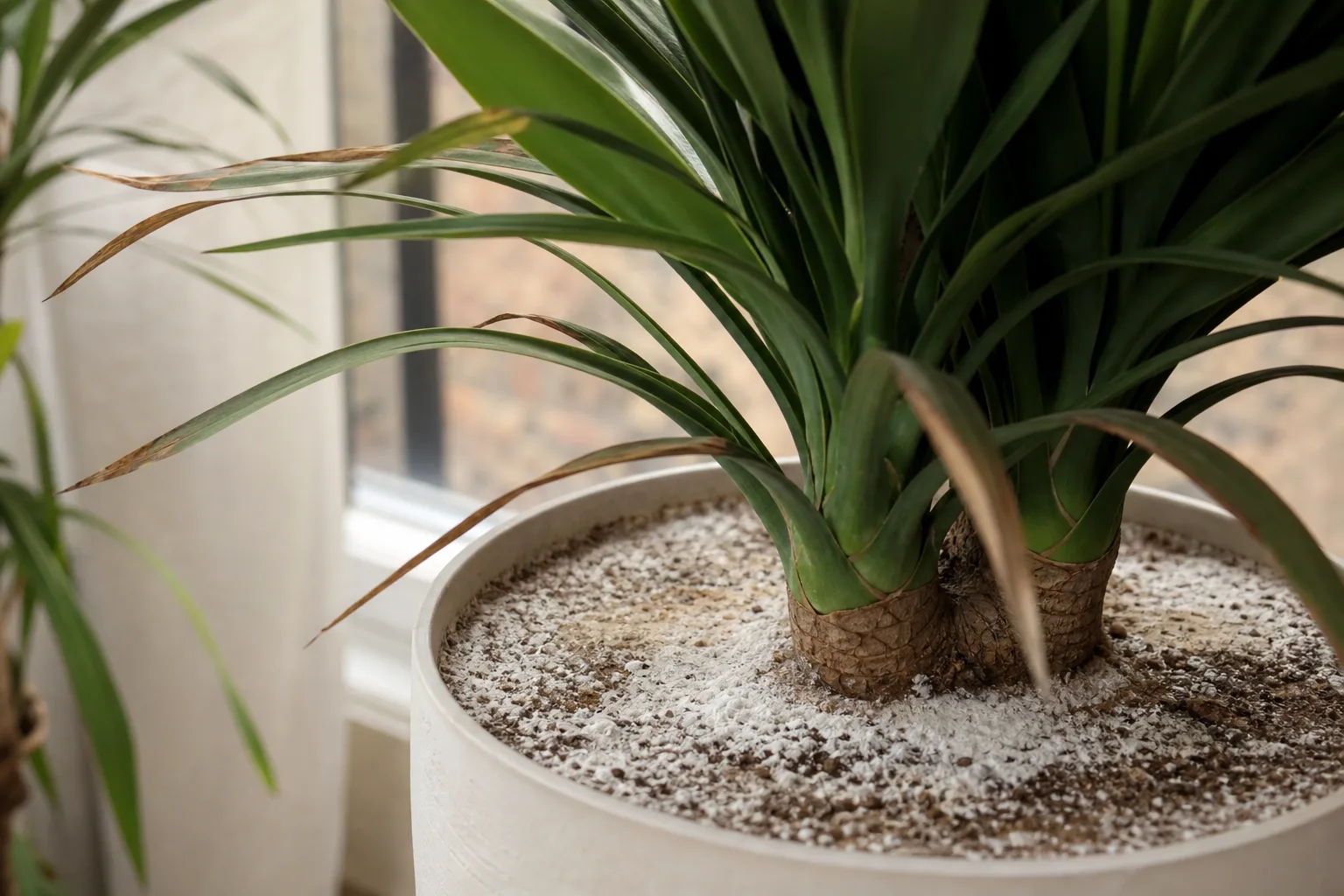
Salt Build Up on Yucca Plant: Causes, Checks & Fixes
This guide covers salt build-up on Yucca Plant. See also the general Salt Build-up guide, watering, and light pages for this plant.
Salt Build Up on Yucca Plant: Causes, Checks & Fixes
Quick answer
Chronic salt buildup on spineless yucca (Yucca elephantipes) is a slow mineral accumulation problem-not sudden disease and not a single heavy fertilizer dose. Fertilizer salts and minerals from tap water concentrate in the small root zone of a slow-growing indoor cane. They rise to the soil surface as a white or tan crust and pull moisture from leaf margins, producing gradual brown tips on multiple sword-shaped leaves.
First step: scrape visible surface crust, then flush the pot with plain room-temperature water until it runs freely from the drainage holes-discarding all runoff. Pause fertilizer until new rosette leaves show clean margins. Yucca stores water in its trunk but cannot shed excess salts indoors the way outdoor rain would leach them through open soil.
Scope note: This page covers chronic crust that builds over months from feeding plus tap water. For crispy tips within days of one heavy dose, read fertilizer burn on Yucca Plant. For tip damage without white crust, start with brown tips on Yucca Plant. For feeding-schedule excess with returning crust after winter feeds, compare overfertilization on Yucca Plant.
| Your pattern | Best guide |
|---|---|
| White crust returning over weeks/months; modest feeding + hard tap water | This page - chronic salt buildup |
| Crispy tips within days of one heavy fertilizer dose | Fertilizer burn |
| Gradual tip burn + white crust after regular winter feeding | Overfertilization |
| Brown tips, little or no crust; gradual onset | Brown tips (fluoride/humidity) |
| Yellow leaves + heavy wet pot, soft base | Overwatering / root rot |
What salt buildup looks on Yucca Plant
Salt stress on spineless yucca has a recognizable indoor pattern that differs from acute fertilizer burn or simple old-leaf aging.
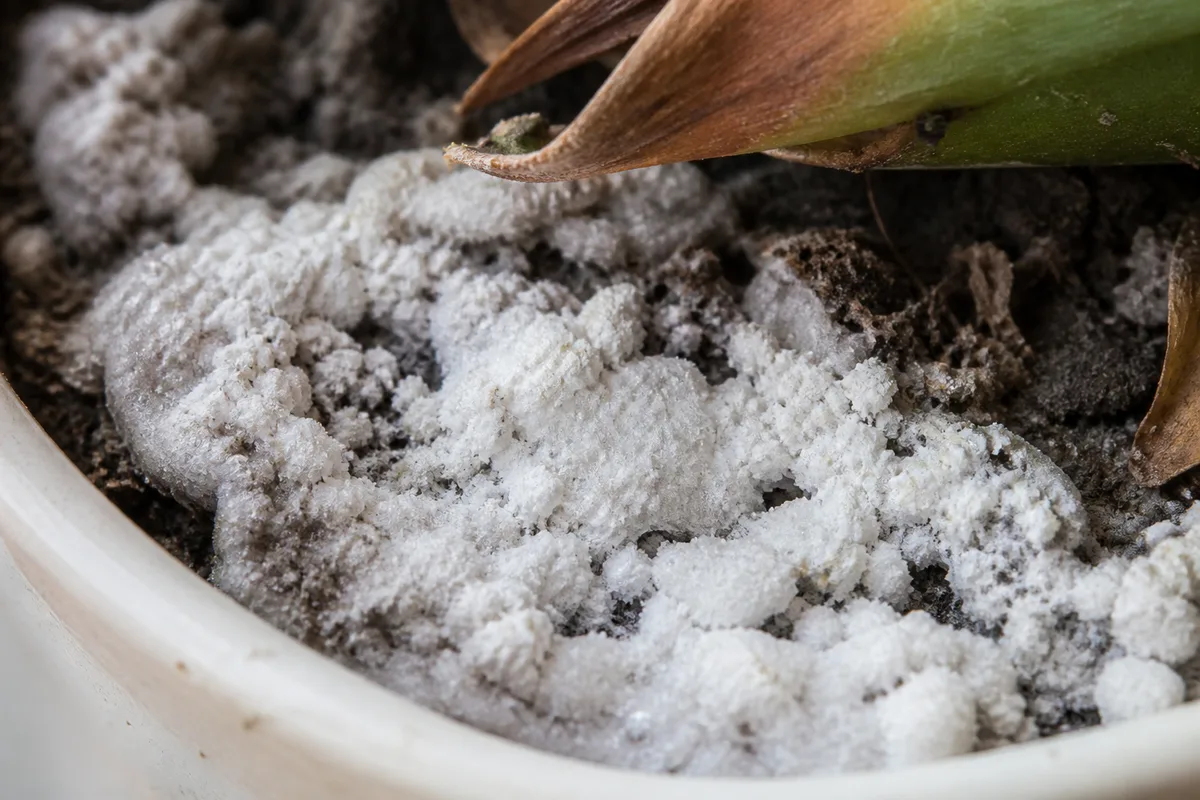
Salt Build-up symptoms on Yucca Plant - compare with healthy tissue on the same plant.
Typical salt buildup signs:
- White, tan, or yellowish crystalline crust on the soil surface, pot rim, or drainage-hole edges
- Gradual brown, dry tips or margins on several leaves at once-not isolated to one lowest blade
- Stunted or pale new growth despite regular feeding
- Crust that returns within days after surface scraping
- Firm trunk and cane tissue with neutral-smelling (not sour) soil
- Slow growth in an otherwise bright, seemingly well-fed plant
What healthy yucca looks like by comparison:
- Blue-green stiff leaves with only occasional tip browning on the oldest lowest leaves
- Clean soil surface without chalky deposits
- Predictable dry-down between waterings in a gritty mix
- New rosette leaves opening with pointed green tips
Burned tip tissue does not re-green. Recovery is measured by new leaves emerging with clean margins, not by old swords healing.
Why Yucca Plant accumulates salts
Spineless yucca evolved for bright, dry conditions with sharp drainage and infrequent deep watering. Indoors it grows slowly in a confined pot, so every dissolved mineral from fertilizer and irrigation stays in the mix unless you deliberately leach it out.
Fertilizer salts in slow containers
Yucca needs light feeding during active growth only. Unused fertilizer salts from monthly full-strength doses, slow-release pellets applied too often, or winter feeding when the plant is idle concentrate in potting mix. Fertilizers are soluble salts that can desiccate leaf tissue when they accumulate; repeated applications without flushing let them build faster than this slow cane can use them. Match routine feeding to the Yucca Plant fertilizer guide-half strength every four to eight weeks in spring and summer only.
Hard tap water and water softeners
Municipal water carries calcium, magnesium, and often fluoride. Hard water leaves mineral deposits on soil surfaces as water evaporates-the white crust you see is often those dissolved minerals left behind. Sodium-based water softeners add another salt load that is especially harsh on drought-adapted roots.
Yucca is listed among plants sensitive to fluoride toxicity, which accumulates at leaf margins and causes tip necrosis. Fluoride and chloride from tap water compound fertilizer salts, so tip burn may appear even when feeding seems modest. Standard pitcher or charcoal filters remove chlorine but do not remove fluoride-use reverse-osmosis, distilled, or rainwater when fluoride is the main suspect.
Infrequent leaching indoors
Outdoor yuccas receive rain that washes minerals through the soil profile. Indoor pots rarely get that natural flush. Salts concentrate when water evaporates from the potting mix surface; saucers that hold runoff let the plant reabsorb leached minerals if you do not discard the water.
Bottom watering and large pots
Bottom watering alone can leave salts concentrated at the surface when no top rinse ever moves them through the profile. Oversized pots hold excess mix that stays wet longer than yucca roots can use, keeping dissolved minerals in contact with feeder roots for weeks. Heavy peat-based mixes retain salts longer than gritty cactus blends-see Yucca Plant soil for repot escalation.
How to confirm the cause
Work through these checks in order. Two matching signs are enough to start treatment.
- Soil surface - Scrape lightly with a spoon. Thick white or tan crust that crumbles like chalk confirms mineral accumulation. Crust returning after scraping means salts remain deeper in the mix.
- Feeding and water history - Do you feed year-round, use full label strength, or rely on hard or softened tap water? Chronic buildup fits months of both feeding and tap irrigation without flushing.
- Tip pattern - Multiple leaves with uniform dry tips plus crust points to salts. One old lowest leaf browning alone may be normal aging.
- Timing vs. fertilizer burn - Sudden tip damage within days of one heavy feed suggests acute fertilizer burn. Gradual crust over months fits chronic salt buildup on this page; both need flushing, but prevention differs.
- Trunk and root check - Press the cane above soil level. Firm wood supports salt stress. Soft, dented base tissue with sour wet mix suggests root rot-do not flush repeatedly into waterlogged soil.
- Pot weight - A heavy pot that stays wet for seven to ten days after watering means poor drainage may compound salt stress. Lift before and after watering to judge dry-down per the Yucca Plant watering guide.
- New growth - Inspect the youngest leaves at rosette centers. Tip burn on brand-new foliage confirms ongoing root-zone chemistry problems.
If crust is absent and tips browning gradually with no feeding history, check fluoride sensitivity and water quality on the brown tips page before assuming salt buildup alone.
First fix for Yucca Plant
Scrape visible surface crust, then flush the pot with plain water until it runs freely from the drainage holes-discarding all runoff.
Move the plant to a sink or tub. Remove white crust from the soil surface without taking more than one quarter-inch of mix if roots are shallow near the top-Nebraska Extension notes you need not remove more than that to clear a salt layer. Water slowly with room-temperature plain water-reverse-osmosis, distilled, or rainwater if your tap is very hard-using at least twice the pot volume per flush round. Colorado State recommends filling the pot to the top with water a couple of times and letting it drain well between rinses. Do not allow the plant to stand in drainage water-reabsorption puts salts back into the mix.
Warning: If the trunk base is soft or soil smells sour and stays wet for a week or more, fix overwatering and drainage before repeated heavy flushing. Pouring large volumes into waterlogged mix worsens root rot even when salts are also present.
After flushing, return to normal yucca watering: allow the soil to dry out between waterings. Pause all fertilizer for four to six weeks minimum. Do not repot on day one unless crust extends through the root ball or soil stays wet for weeks.
For heavy buildup, repeat the full flush protocol two more times over the next 48 hours-this is the canonical leaching sequence; later recovery steps assume you have completed it once.
Step-by-step recovery
Once you have scraped and flushed, work through these steps based on severity:
Mild case - firm trunk, crust and tip burn only
- Stop feeding - Remove visible slow-release pellets from the surface. Hold all liquid fertilizer until two new leaves show clean tips.
- Switch water if needed - In hard-water or fluoridated areas, use reverse-osmosis, distilled, or rainwater for routine watering-not a basic pitcher filter.
- Water from the top periodically - Even if you usually bottom-water, occasional top watering helps wash salts through so minerals do not only rise to the surface.
- Trim cosmetic damage - Cut fully brown tips with clean scissors, following the leaf curve and leaving a thin brown margin to avoid wounding green tissue.
Moderate case - crust returns within a week, stalled new growth
- Repeat the full flush protocol over 48 hours.
- If crust persists, scrape the top quarter-inch and top-dress with dry cactus mix.
- Hold fertilizer through the rest of the dormant season; resume at half strength every four to eight weeks in spring per the fertilizer guide.
Severe case - tip burn on every new leaf, dead root tips, or crust through the root ball
- Unpot and rinse roots with plain water.
- Trim dark shrunken root tips; keep firm white or tan roots. Black mushy tissue points to root rot instead.
- Repot into fresh fast-draining sandy or cactus mix with perlite or coarse sand-no added fertilizer in the mix.
- If the trunk base is soft and spreading upward, salvage firm cane sections as cuttings per Yucca Plant propagation.
Repot vs. flush-only decision: Flush alone is enough when the trunk stays firm, crust does not return after the second flush week, and new growth shows cleaner margins within six to eight weeks. Repot when crust reappears within days despite two flush cycles, root tips are brown and shrunken on inspection, or the mix has been unchanged for three or more years with layered salt crust throughout.
Recovery case study - hard tap water on a multi-year pot
A typical indoor pattern: a spineless yucca in the same 8-inch pot for three years receives modest liquid feed twice yearly plus weekly hard tap water from the bottom saucer only. By March, white crust rings the pot rim, crust returns four days after scraping, and uniform brown tips appear on middle sword leaves while the trunk stays firm. After scraping the surface layer and three flush rounds over 48 hours-with all saucer water discarded-tip spread stops within ten days. At week five, a new rosette spear opens with a clean green tip; old burned margins stay brown. No repot was needed because crust did not return after the second flush week.
Recovery timeline
Salt buildup clears slowly on a slow-growing yucca. Expect four to eight weeks after a thorough flush before you can fairly judge new foliage.
Signs you are winning:
- New rosette leaves open with green tips
- Soil surface stays free of fresh crust
- Trunk remains firm; pot weight drops predictably between waterings
- Growth resumes at the plant’s normal indoor pace
Signs the problem is deepening:
- Crust returns within days despite flushing
- Tips burn on every new leaf after water-quality changes
- Wilting with constantly wet soil and soft trunk base
- Yellow leaves spreading with sour-smelling mix
Old burned tips stay brown until trimmed or shed. Botanical recovery is new growth, not old blades turning green.
Lookalike symptoms
| What you see | Likely cause instead | Quick check |
|---|---|---|
| Crispy tips within days of one heavy feed | Acute fertilizer burn | Timeline matches single application - fertilizer burn |
| Gradual tip burn + crust after regular feeding | Chronic overfertilization | Winter feeds, stacked products - overfertilization |
| Brown tips, no white crust, gradual onset | Fluoride or low humidity | Little crust; tap water only - brown tips |
| Yellow leaves with brown halos, heavy wet pot | Overwatering / root rot | Sour smell; mushy roots - overwatering |
| Curled, less rigid leaves, very light pot | Underwatering | Soil dusty dry throughout - underwatering |
| One or two oldest lowest leaves brown at tips | Normal aging | New growth stays perfect; no culture change |
Chronic salt buildup is this page’s focus. Acute burn, feeding-habit excess, and fluoride-only tip damage have dedicated guides so you do not stack the same flush advice across multiple URLs without a clear diagnosis path.
Mistakes to avoid
Do not feed again to “green up” burned leaves-that adds more salts. Avoid letting flush runoff sit in the saucer for the plant to reabsorb. Do not water on a fixed weekly schedule regardless of pot weight; yucca needs dry-down cycles. Skip deep repotting into standard peat-heavy mix without grit-poor drainage turns salt stress into trunk rot. Do not mist heavily as the main fix; wet leaf bases in stagnant air invite rot on a drought-adapted plant. Do not flush repeatedly into soggy soil when the base is soft-address drainage first.
Wear gloves when handling scraped soil or trimming-Yucca is toxic to cats and dogs if ingested.
How to prevent salt buildup next time
Leach houseplant soil with clear water every four to six months if you use tap water and fertilizer-even with light feeding. Do an annual spring flush before the first feed of the season. Feed at half strength every four to eight weeks in spring and summer only per the Yucca Plant fertilizer guide; skip fall and winter unless the plant sits under strong grow lights and actively pushes rosettes.
Use reverse-osmosis, distilled, or rainwater in hard-water or fluoridated areas-not a basic pitcher filter if fluoride browns tips. Grow in bright light with a fast-draining sandy or cactus blend, and allow soil to dry between waterings. Empty saucers after every watering. If surface salt accumulation becomes too heavy to manage with flushing alone, scrape off the surface soil and replace it with fresh mix without injuring roots.
When to worry
Salt buildup is usually reversible when the trunk stays firm. Treat it as urgent when:
- Leaves wilt persistently while soil stays wet
- The trunk base softens, blackens, or smells sour
- Root inspection shows extensive dark, mushy, or shrunken tissue
- New tip burn continues after two thorough flushes and a water-source change
In those cases, repot into fresh unfertilized gritty mix after trimming damaged roots, or propagate firm cane sections if the base is failing. Cosmetic crust on a firm plant is a maintenance issue, not an emergency-flush, adjust water and feeding, and watch new leaves.
Related Yucca Plant guides
- Yucca Plant overview
- Yucca Plant watering - dry-down rhythm after flush
- Yucca Plant fertilizer - feeding schedule after recovery pause
- Yucca Plant soil - gritty mix for repot escalation
- Fertilizer burn on Yucca Plant - acute single-dose salt scorch
- Overfertilization on Yucca Plant - chronic feeding-schedule excess
- Brown tips on Yucca Plant - fluoride and humidity lookalikes
- Overwatering on Yucca Plant - wet-soil crossover before flushing
- Root rot on Yucca Plant - soft base escalation
- All Yucca Plant problems
FAQ
Is white crust on yucca soil always salt buildup?
White or tan crystalline crust that crumbles like chalk and returns after scraping usually means mineral or fertilizer salts-not mold. Mold tends to be fuzzy, gray or green, and often follows constantly damp soil. If crust sits on a firm cane with dry-ish mix and multiple brown-tipped leaves, treat as salt buildup and flush.
Can bottom watering alone cause salt crust on Yucca Plant?
Yes. Bottom watering without occasional top leaching lets dissolved minerals rise to the soil surface as water evaporates from the top. A slow indoor cane in the same pot for years is especially prone-the salts never get rinsed through the way outdoor rain would.
How do I tell chronic salt buildup from acute fertilizer burn on yucca?
Chronic buildup shows gradual crust over weeks or months, crust that returns after scraping, and tip burn on several leaves without a recent heavy feed. Acute burn browns tips within days of one strong dose-see the fertilizer burn guide for that timeline.
Can I use tap water after flushing a yucca?
In hard-water or fluoridated areas, switch to reverse-osmosis, distilled, or rainwater for routine watering after the flush. Standard pitcher or charcoal filters remove chlorine but not fluoride, which yucca accumulates at leaf margins.
When is salt buildup urgent on Yucca Plant?
Urgent when wilting persists despite wet soil, the trunk base softens, or roots show dark mushy tissue on inspection-severe salt injury overlapping with overwatering can damage roots fast. Cosmetic crust on a firm cane can wait for a thorough flush.