Fertilizer Burn on Yucca Plant: Causes, Checks & Fixes
Quick answer
Fertilizer burn on Yucca Plant scorches leaf tips within days of a heavy or full-strength dose-especially on a slow indoor cane. Flush the pot with plain water until runoff is clear, then pause all fertilizer until spring growth resumes.
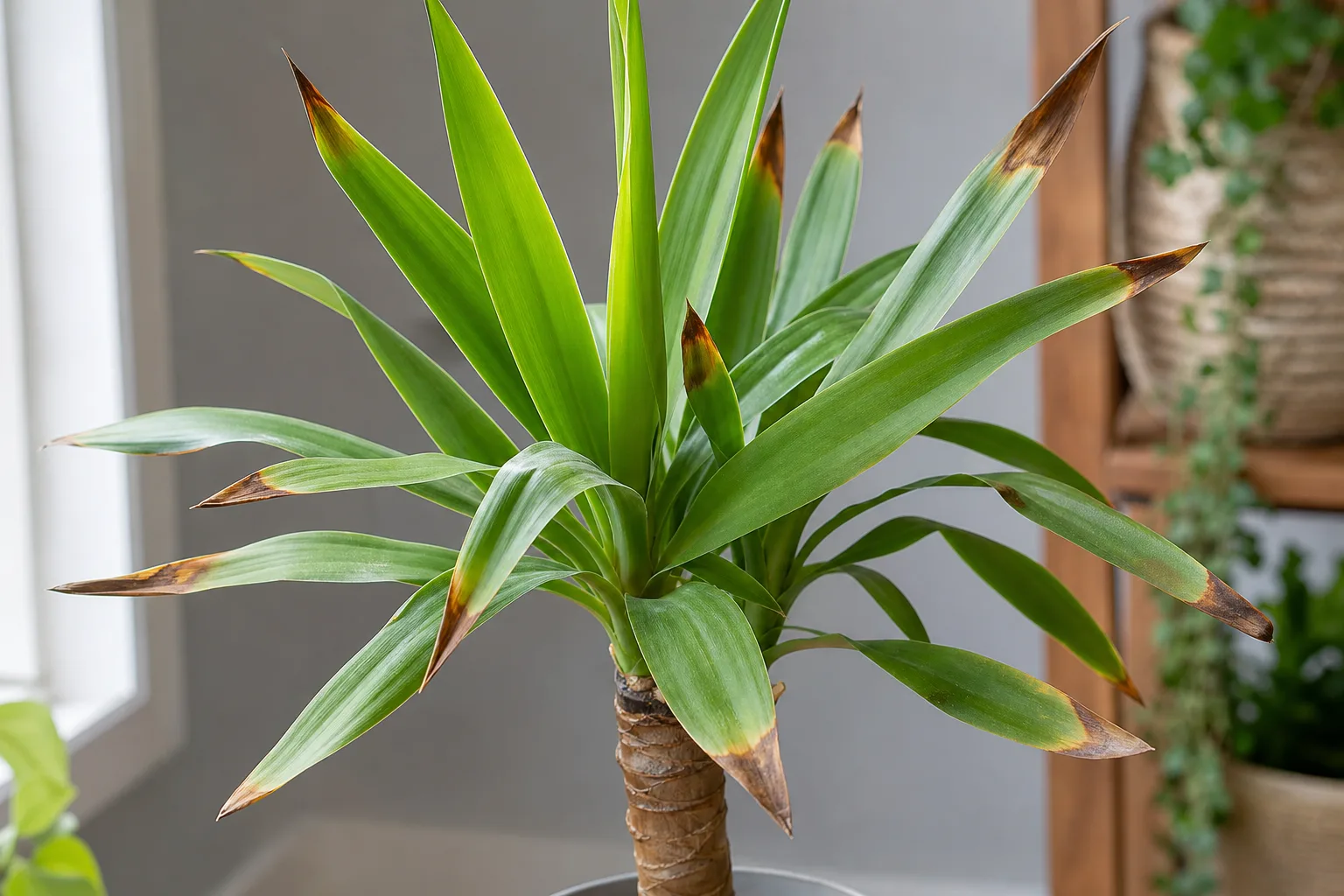
Fertilizer Burn on Yucca Plant: Causes, Checks & Fixes
This guide covers fertilizer burn on Yucca Plant. See also the general Fertilizer Burn guide, watering, and light pages for this plant.
Fertilizer Burn on Yucca Plant: Causes, Checks & Fixes
Quick answer
Acute fertilizer burn on spineless yucca (Yucca elephantipes) is salt shock from one concentrated dose-not gradual mineral buildup and not a hunger problem. This drought-adapted slow cane uses little nitrogen indoors. A single full-strength application, fertilizer poured onto dry soil, or a winter feed when growth has stalled can scorch leaf tips and margins within days as excess salts pull moisture from tissue faster than roots can compensate.
First step: flush the pot with plain room-temperature water until it runs freely from the drainage holes-discarding all runoff-then stop all fertilizer until you see healthy new spring growth. Do not add more feed to “help” a stressed plant, and do not repot on day one unless roots show severe salt damage.
Scope note: This page covers crispy tips within days of one heavy or mis-timed dose. For gradual tip burn and returning crust after months of regular feeding, read overfertilization on Yucca Plant. For white crust from tap water with modest feeding, see salt buildup on Yucca Plant. For brown tips without crust or a recent feed, start with brown tips on Yucca Plant. Routine feeding norms live in the Yucca Plant fertilizer guide.
| Your pattern | Best guide |
|---|---|
| Crispy tips within days of one heavy or full-strength dose | This page - acute fertilizer burn |
| Gradual tip burn + white crust after regular winter feeding | Overfertilization |
| White crust with modest feeding; hard tap water | Salt buildup |
| Brown tips, little or no crust; gradual onset | Brown tips (fluoride/humidity) |
| Soft base + mushy roots after wet soil | Root rot |
What fertilizer burn looks like on Yucca Plant
Acute burn has a fast, post-feed signature on sword-shaped yucca leaves that differs from chronic salt buildup or simple old-leaf aging.
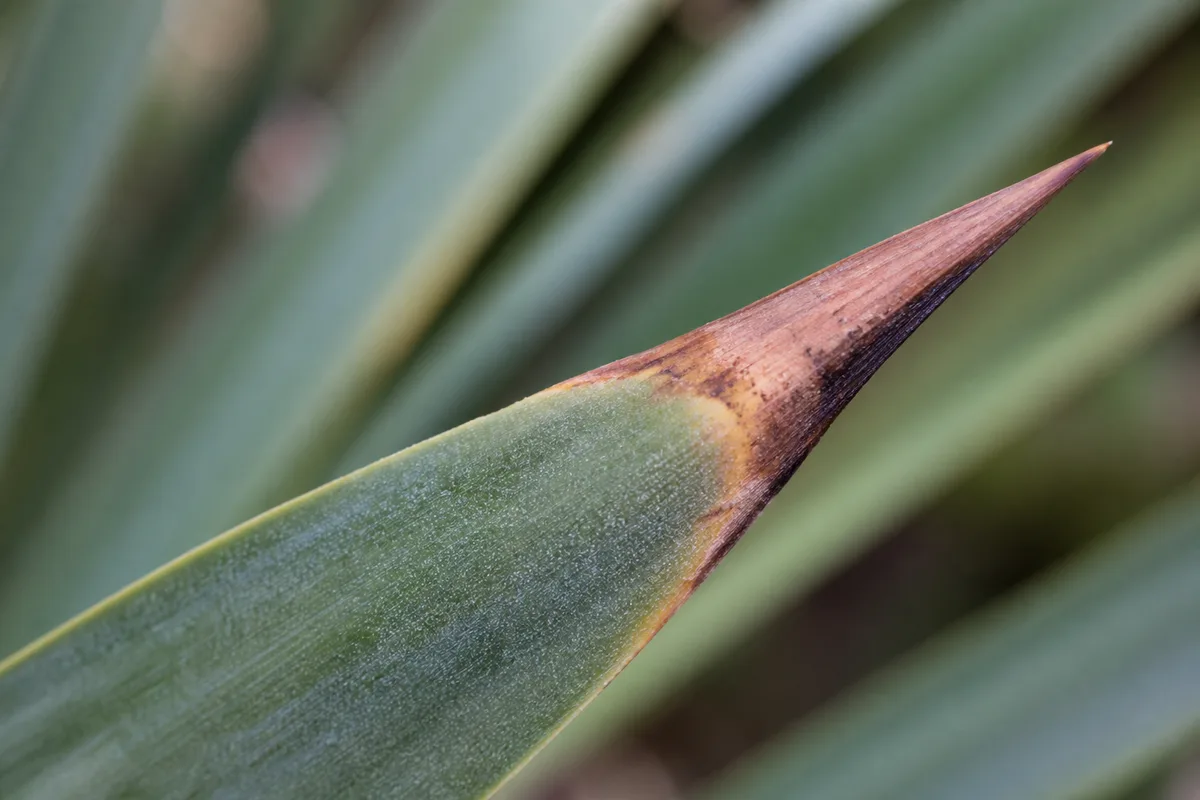
Fertilizer Burn symptoms on Yucca Plant - compare with healthy tissue on the same plant.
Typical acute burn signs:
- Uniform brown, dry tips or margins on multiple leaves at once-not isolated to one lowest blade
- Crispiness that appears within three to ten days of a fertilizer application
- White or tan crystalline crust on the soil surface or pot rim after the heavy dose
- Newest rosette leaves showing tip burn when the feed was recent and strong
- Wilting leaves even though soil feels moist-only in severe cases when root tips are damaged
- Firm trunk and cane in mild-to-moderate burn; soft base suggests root rot overlap instead
What stays normal:
- Trunk tissue remains hard and woody when pressed
- Soil smells neutral, not sour or rotten
- No soft black tissue climbing the stem base
- A single old lowest leaf browning at the tip after months without feed is usually normal senescence-not acute burn
Burned tissue does not heal. Recovery is measured by new leaves emerging with clean margins, not by old tips turning green again. For cane biology and normal indoor growth pace, see the Yucca Plant overview.
Why one heavy dose burns Yucca Plant
Yucca elephantipes evolved on poor, fast-draining sandy soils where nutrients arrive in small pulses. In a container, every fertilizer application adds soluble salts. Because yucca grows slowly-especially in dim winter rooms-it cannot metabolize a concentrated dose the way a fast pothos or fern can. As salt concentration spikes in the soil, water moves toward the salty zone rather than into root cells, and leaf tips and margins-where transpiration is highest-desiccate first.
Common acute-burn triggers on indoor cane yucca:
- Full-strength liquid feed copied from a tropical houseplant label
- Fertilizer applied to bone-dry soil-dry roots take up concentrated solution unevenly
- Winter feeding in a dim room when short days slow growth and unused salts concentrate instantly
- Stacking products-slow-release pellets in the mix plus a heavy liquid dose on the same week
- “Extra boost” after repotting before roots have settled
Yucca is not hungry. Light feeding during active growth supports new rosettes per the fertilizer guide-half strength every four to eight weeks in spring and summer only. One heavy dose cannot force faster growth and often does the opposite within a week.
How to confirm acute fertilizer burn
Work through these checks in order. Post-feed timing plus crust is the strongest confirmation pair for this page.
- Timing - Did brown tips appear within three to ten days of fertilizing? Sudden multi-leaf damage right after feeding strongly suggests acute burn-not chronic overfertilization.
- Dose and method - Note product, dilution rate, and whether soil was dry when you applied. Full label strength or undiluted concentrate on yucca is a common cause.
- Soil surface - Scrape lightly with a finger. Fresh white crust after a recent feed confirms salt shock. Crust returning weeks later without a new dose points to chronic salt buildup instead.
- Leaf pattern - Multiple sword leaves with uniform dry margins at once fits burn. Gradual tip browning on many leaves over months without a feed event fits fluoride-see brown tips.
- Trunk check - Press the cane above soil level. Firm wood with dry-ish mix supports salt burn. Soft, dented base with sour wet soil suggests root rot-flush alone may not be enough.
- Compare lookalikes - Sun scorch shows bleached or tan patches after a sudden move to harsh direct sun, not uniform tip necrosis after feeding. Underwatering curls leaves inward and leaves the pot very light-usually without fresh crust.
If timing matches a recent heavy feed and two or more burn signs align, treat as acute fertilizer burn confirmed.
Lookalike decision table
| What you see | Likely cause instead | Quick check |
|---|---|---|
| Crispy tips within days of one heavy feed | Acute fertilizer burn | Timeline + crust after dose - this page |
| Gradual tip burn + crust after months of regular feeding | Chronic overfertilization | Winter feeds, stacked products - overfertilization |
| White crust, modest feeding, hard tap water | Tap-water mineral buildup | Little recent fertilizer - salt buildup |
| Brown tips, no crust, gradual onset | Fluoride or low humidity | No post-feed spike - brown tips |
| Yellow leaves + heavy wet pot, soft base | Overwatering / root rot | Sour smell; mushy roots - root rot |
| Bleached patches after window move | Sun scorch | Sun-facing side only; no recent feed |
First fix for Yucca Plant
Flush the pot with plain room-temperature water until it runs freely from the drainage holes, empty the saucer, and do not fertilize again until spring growth resumes.
Move the plant to a sink or tub. Water slowly and steadily until water drains from the bottom-use at least the volume of the pot per round. If a thick white crust covers the soil, scrape off the top quarter-inch before flushing. Discard all runoff; do not let the pot sit in drained water, which reabsorbs salts.
For moderate acute burn, repeat the full flush two more times over the next 48 hours-this three-round leaching sequence is the canonical rescue protocol; later recovery steps assume you have completed it once.
After flushing, return to normal yucca watering: allow the mix to dry completely between waterings. Hold all fertilizer for four to six weeks minimum, longer through winter rest. When you resume, follow the Yucca Plant fertilizer guide-half strength every four to eight weeks during active spring and summer growth only. That is the normal routine schedule; the longer pause here is recovery-specific, not a contradiction.
Do not fertilize to “correct” the burn. Do not repot immediately unless flushing fails and roots show dark, shrunken tips when you inspect them.
Step-by-step recovery
Once you have flushed, work through these steps based on severity:
Mild case - firm trunk, tip burn only
- Stop feeding - Remove any visible slow-release pellets from the soil surface.
- Scrape crust - Remove white salt layer from the top of the mix without taking more than one quarter-inch of soil.
- Complete the three-round flush over 48 hours if you have not already.
- Trim dead tips - Cut only fully brown tissue with clean scissors for appearance; burned margins will not spread rot on yucca.
- Wait for new growth - Watch the center rosette for fresh leaves with clean margins.
Moderate case - wilting with moist soil, some root-tip browning
- Complete the three-round flush protocol.
- If crust returns within a week, unpot and rinse roots with plain water.
- Trim dark shrunken root tips; keep firm white or tan roots. Black mushy tissue points to root rot instead.
- Repot into fresh fast-draining cactus mix with no added fertilizer.
- Hold feed for at least six to eight weeks, then resume per the fertilizer guide schedule.
Severe case - soft lower trunk or extensive root decay
- Unpot and assess roots immediately.
- If the base is soft and spreading upward, salvage firm cane sections as cuttings rather than saving the whole plant.
- If the trunk stays firm but most roots are damaged, repot into dry gritty mix and pause feed for three to four months minimum.
Recovery case study - full-strength dose copied from pothos
A common indoor failure: a spineless yucca beside a pothos receives the same monthly full-strength liquid feed in January in a north-facing room. Within eight days, uniform brown tips appear on middle and upper sword leaves, a white crust rings the pot rim, and the center rosette stalls-but the trunk stays firm when pressed. After scraping surface crust and three flush rounds over 48 hours with all saucer water discarded, tip spread stops within ten days. At week six, a new rosette spear opens with a clean green tip while old burned margins stay brown. No repot was needed. Feeding resumes in late spring at half strength on the four-to-eight-week interval from the fertilizer guide-not the pothos schedule that caused the burn.
Recovery timeline
Acute burn recovery is faster than chronic salt buildup because the salt spike is recent-but yucca still produces new leaves slowly indoors.
- Days 1–14: No new tip damage after flushing means the salt spike is dropping; old brown tips stay brown.
- Weeks 3–8: New leaf spears should emerge with cleaner margins if the trunk is firm and watering is correct.
- Months 2–4: Full cosmetic recovery depends on how many leaves need replacing; a sparse cane may look uneven until several new rosettes open.
Signs you are winning: new rosette leaves with green tips, no spreading edge burn on fresh growth, stable firm trunk, normal dry-down between waterings.
Signs the problem is deepening: persistent wilting with wet soil, blackening at the stem base, or new burn on fresh leaves after you already flushed and stopped feeding-route to root rot or overfertilization before feeding again.
Mistakes to avoid
- Feeding again at full strength to “green up” burned leaves-adds more salts to an already shocked root zone
- Fertilizing during winter dormancy or right after repotting
- Applying fertilizer to dry soil without watering first
- Using the same schedule as fast-growing tropicals-match the fertilizer guide, not pothos
- Overwatering after flush to “wash away” damage-yucca still needs dry periods between waterings
- Repotting into fertilized potting mix while recovering from burn
- Ignoring white crust because the trunk still feels firm-salts accumulate before severe root damage shows
- Stacking repot, prune, and feed on the same weekend after a burn event
Keep fertilizer runoff out of pet reach: Yucca spp. are toxic to cats and dogs. Discard saucer water after flushing rather than leaving it accessible.
Yucca Plant care cross-check
Acute burn often follows a single care mistake on an otherwise stable plant. Bright light during the growing season helps the small amount of feed yucca actually needs get used efficiently. Fast-draining sandy or cactus mix lets flush water carry salts out instead of pooling. Letting soil dry completely between waterings prevents a wet, salty root zone from compounding damage.
If you corrected the dose but tips keep browning without crust and without a recent feed, switch to filtered or rainwater-fluoride from tap water mimics fertilizer burn at leaf edges and is covered on the brown tips page.
How to prevent acute fertilizer burn
Prevention is simpler than rescue: feed lightly, seasonally, and never on impulse.
- Follow the Yucca Plant fertilizer guide: half-strength balanced liquid every four to eight weeks from mid-spring through early fall, then stop completely in winter unless the plant sits under strong grow lights and actively pushes rosettes.
- Water lightly before feeding if the mix is fully dry-never pour concentrate onto dry roots.
- Never exceed half label strength on container yucca; slow growers tolerate less than the bottle assumes.
- Do one plain-water flush each spring before the first feed of the season to clear residual salts-even after a careful year.
- Use filtered or rainwater if hard tap water also browns tips, reducing total salt load at margins.
Match the pot and mix to the plant: oversized pots hold excess wet soil where salts concentrate, and heavy peat mixes retain minerals longer than gritty cactus blends.
When to worry
Acute fertilizer burn is usually reversible when the trunk stays firm and roots remain mostly healthy. Treat it as urgent when:
- Leaves wilt persistently while soil is wet
- The trunk base softens or blackens
- Root inspection shows extensive dark, mushy, or shrunken tissue
- Burn spreads rapidly to new leaves after you already flushed and stopped feeding
In those cases, flushing alone may not be enough-repot into fresh unfertilized mix after trimming damaged roots, or propagate firm cane sections if the base is failing. Read root rot on yucca before the cane collapses.
Conclusion
You have confirmed acute burn and started recovery when three checks pass together: tip damage appeared within days of a heavy dose, the trunk base stays firm when pressed, and new rosette leaves stop showing fresh crispy margins after the three-round flush and feeding pause. Old burned tips stay brown-that is cosmetic, not failure. When growth resumes in spring, return to the half-strength, four-to-eight-week routine in the fertilizer guide-not the dose that caused the burn.
Related Yucca Plant guides
- Yucca Plant overview - cane biology and indoor growth habits
- Yucca Plant fertilizer - routine feeding schedule and product choice
- Overfertilization on Yucca Plant - chronic feeding-schedule excess
- Salt buildup on Yucca Plant - tap-water and mineral crust
- Brown tips on Yucca Plant - fluoride and humidity lookalikes
- Root rot on Yucca Plant - soft base escalation
- All Yucca Plant problems
FAQ
How soon after feeding does fertilizer burn show on yucca?
Tip and margin necrosis often appears within three to ten days of a heavy or full-strength application on spineless yucca. The strongest diagnostic clue is crispy brown edges on multiple sword leaves right after you fed-especially if you used label strength, fed dry soil, or copied a pothos schedule.
Can I use the same fertilizer schedule as my pothos for yucca?
No. Pothos and other fast tropicals tolerate monthly full-strength feed; yucca is a slow cane grower that needs half strength every four to eight weeks in spring and summer only per the fertilizer guide. One heavy dose meant for a lush foliage plant can burn yucca tips within a week.
How do I tell acute fertilizer burn from fluoride brown tips on yucca?
Acute burn follows a recent feed, often with white soil crust, and hits multiple leaves at once within days. Fluoride from tap water browns tips gradually over months without crust and without a feeding event-see the brown tips guide when crust is absent.
Will burned yucca leaf tips turn green again?
No. Scorched margins are dead tissue and stay brown until you trim them or the leaf is shed. Judge recovery by new rosette leaves opening with clean green tips four to eight weeks after flushing and stopping feed-not by old swords re-greening.
When is fertilizer burn urgent on Yucca Plant?
Urgent when wilting persists despite wet soil, the trunk base softens, or roots show dark mushy tissue on inspection-severe salt injury overlapping with overwatering can progress to rot. Cosmetic tip burn on a firm cane is not an emergency; flush and pause feed.