Leaf Spot Disease on Yucca Plant: Causes, Checks & Fixes
Quick answer
Fungal leaf spot on Yucca Plant shows as brown or black circular spots with yellow halos on sword-shaped leaves-often after misting, overhead watering, or stagnant humid air. First step: remove spotted leaves with clean scissors and stop wetting foliage.
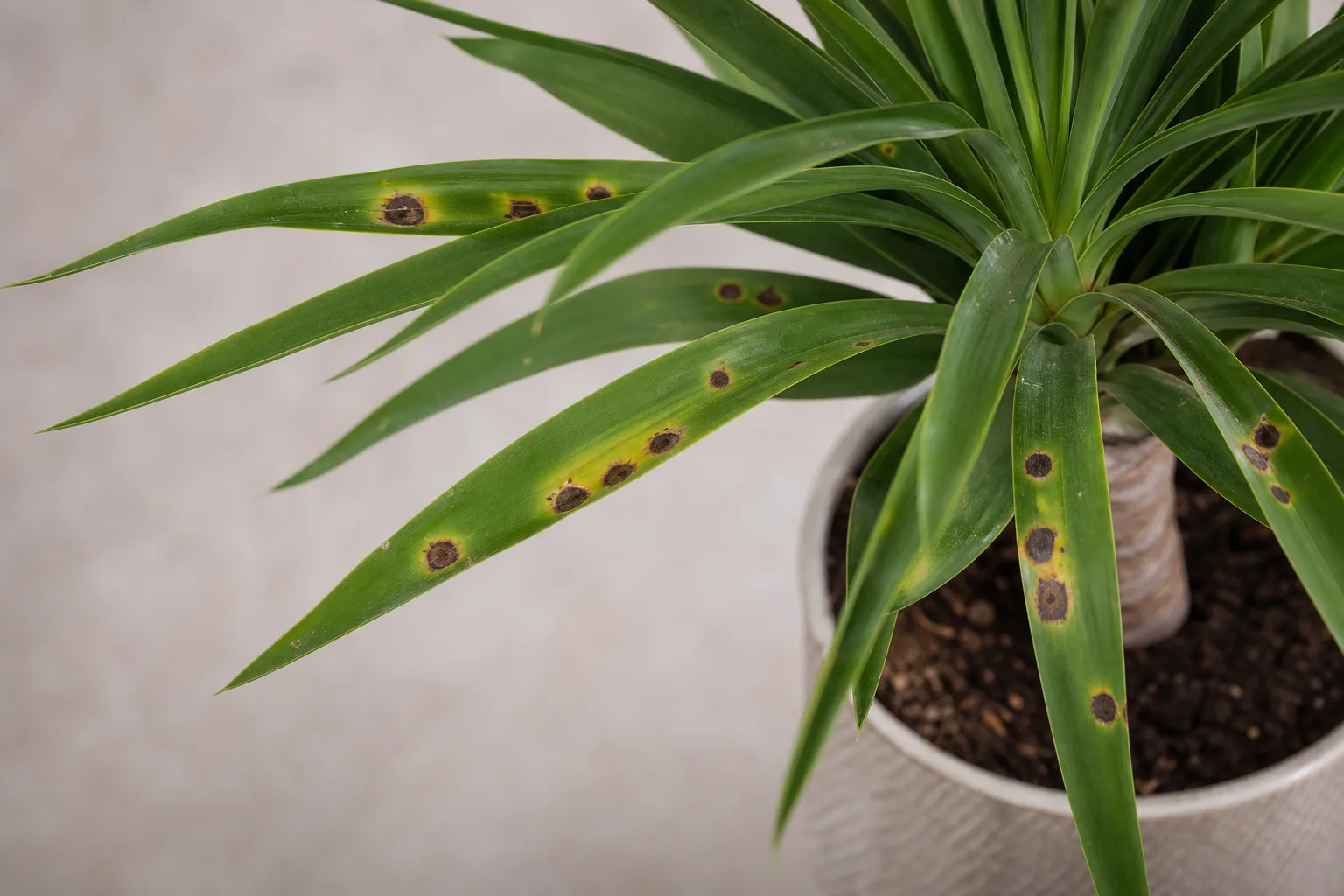
Leaf Spot Disease on Yucca Plant: Causes, Checks & Fixes
This guide covers leaf spot disease on Yucca Plant. See also the general Leaf Spot Disease guide, watering, and light pages for this plant.
Leaf Spot Disease on Yucca Plant: Causes, Checks & Fixes
Quick answer
Leaf spot on Yucca Plant is usually a fungal infection-not a normal part of aging. On spineless yucca (Yucca elephantipes), it appears as brown or black circular spots, often with yellow halos, scattered across the flat faces of sword-shaped leaves. The pattern differs from the gradual yellowing of old lower leaves or the crisp brown tips caused by fluoride and dry air.
Indoor yucca is built for dry leaf surfaces and sharp drainage. When foliage stays wet overnight from misting, splashed water, or stagnant humid corners, fungi that cause houseplant leaf spots can take hold. overwatering on Yucca Plant at the root zone weakens the plant at the same time, making spots spread faster.
First step: remove every spotted leaf with clean scissors and stop wetting foliage. Do not reach for fungicide until you have improved airflow, confirmed the spots are fungal rather than pest or cold damage, and let the remaining leaves stay dry for several days.
What leaf spot looks like on Yucca Plant
Yucca elephantipes carries long, stiff, sword-shaped leaves in rosettes at the top of a woody cane. Leaf spot shows up on the leaf blade itself-not confined to tips or margins.
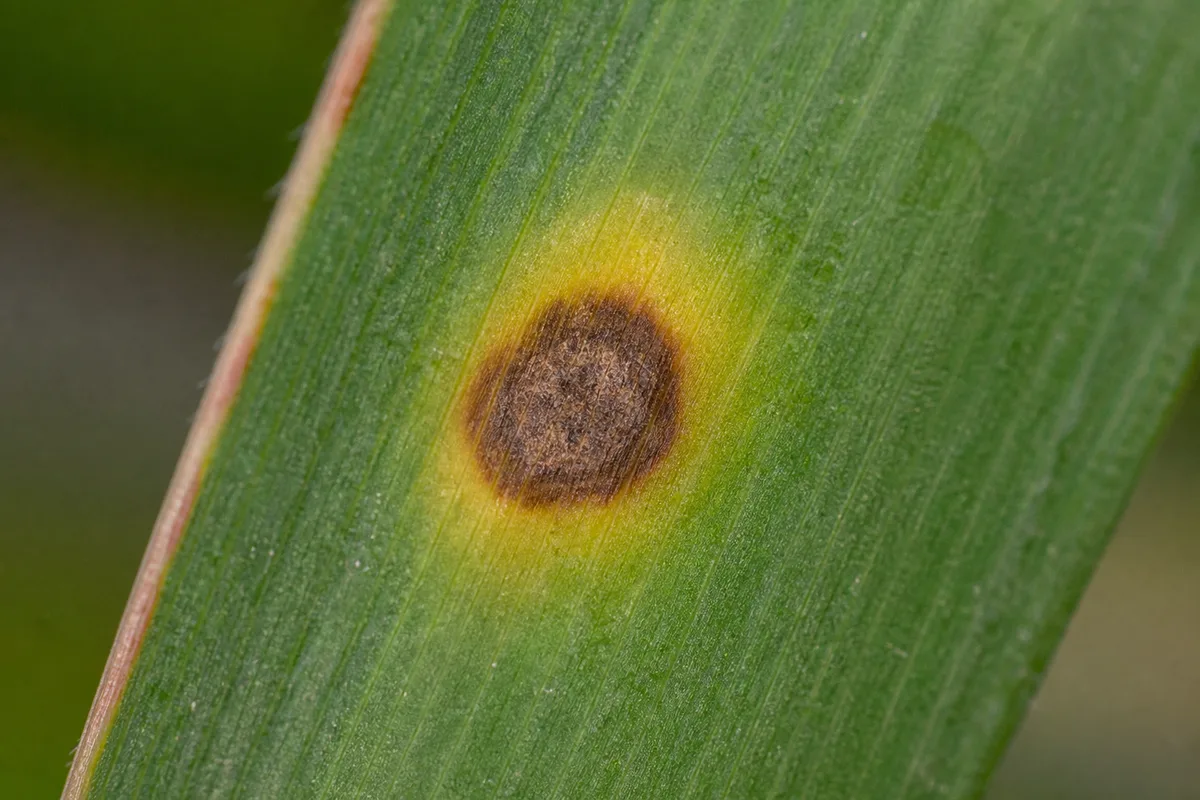
Leaf Spot Disease symptoms on Yucca Plant - compare with healthy tissue on the same plant.
Typical fungal leaf spot signs on yucca include:
- Circular to irregular brown or black spots on the leaf face, sometimes with a yellow halo around the lesion
- Spots that enlarge or multiply over several days, especially after leaves were wet
- Lower or inner leaves affected first where airflow is poorest in a crowded display
- Dry, papery spots that do not wipe off-unlike sooty mold or honeydew from pests
Severe infections cause spots to merge into larger dead patches. Heavily spotted blades will not recover; the tissue is necrotic. The plant survives by pushing clean new leaves from the rosette top while you remove damaged blades.
This is not the same as normal lower-leaf yellowing. Yucca sheds oldest leaves over time as a single yellow blade that dries and hangs before you pull it off. Leaf spot creates multiple discrete lesions on otherwise green tissue.
Why Yucca Plant gets leaf spot disease
Yucca is a desert-adapted plant that prefers well-drained soil and tolerates low household humidity. That drought tolerance works against it when culture mimics a humid greenhouse instead of dry desert air.
Wet leaves in stagnant air
Fungal leaf spot on houseplants spreads when leaf surfaces stay wet and air movement is poor. Misting yucca leaves, overhead watering, or splashing water onto blades during refills leaves moisture in the tight folds where leaves meet the stem. In a crowded plant shelf or closed corner, that moisture persists for hours-the conditions fungi favor.
Yucca does not need foliar humidity. Its thick, leathery leaves evolved to limit water loss. Adding moisture to leaf surfaces creates risk without benefit.
Overwatering and heavy soil
Overwatering is the most common indoor yucca problem. When roots sit in wet peaty mix, the plant weakens-lower leaves yellow, the pot stays heavy, and stressed tissue becomes an easier target for pathogens. Leaf spot and root stress often appear together, but fixing culture addresses both.
Heavy potting mix without perlite or sand holds water around sparse yucca roots for days. Even if you water correctly, slow-drying mix keeps humidity high at the soil surface and base of leaves.
Cold exposure with moisture
Prolonged temperatures below about 7°C (45°F) damage yucca foliage. Cold-damaged tissue can develop dark water-soaked patches that resemble leaf spot. If your plant sits near a drafty window in winter and spots appeared after a cold spell, check whether tissue feels mushy and smells off-that points to cold injury or rot more than classic fungal spot.
Weakened plants after Yucca Plant repotting guide or low light
Yucca in deep shade grows slowly and holds moisture longer in the mix. A recently repotted plant with disturbed roots is also more vulnerable until new root growth resumes. Leaf spot on a stressed yucca often means environmental conditions invited fungi-the infection is the symptom, not the sole cause.
How to confirm the cause
Work through these checks before treating:
- Spot pattern - Scattered circular lesions with halos on leaf faces suggest fungal leaf spot. Uniform brown tips only point to salts, fluoride, or low humidity. Hard brown bumps on stems suggest scale, not spot disease.
- Moisture history - Were leaves misted, showered, or splashed in the last week? Did the plant sit in a humid bathroom or closed terrarium? Wet-leaf history strongly supports fungal spot.
- Spread rate - Mark one spot with a pen and check in three days. Enlarging or new spots confirm active disease. Static marks that do not grow may be old physical damage or healed lesions.
- Airflow and spacing - Can air move around all sides of the cane? Plants pressed against walls or packed on shelves trap humidity.
- Soil and root check - Push a finger deep into the mix. If soil is wet and the pot heavy while spots spread, root stress is contributing. Knock the plant out only if the trunk base feels soft or soil smells sour.
- Pest inspection - Flip leaves and scan stem joints. Sticky residue, cottony clusters, or scraping bumps that reveal insects mean honeydew or scale-not primary leaf spot. Sooty mold from pests wipes off; fungal spots do not.
- Temperature - Note if the plant was near a cold window or AC vent when spots appeared. Cold injury often affects leaf edges and tips on exposed blades first.
If spots are few, dry, and unchanged for weeks with dry leaves and gritty soil, you may be seeing old damage rather than active infection-still remove those leaves, but aggressive fungicide is unnecessary.
First fix for Yucca Plant
Remove all spotted leaves with sterilized scissors, cutting close to the trunk without damaging the crown.
Bag the cuttings and discard them-do not compost infected yucca tissue indoors. Wipe blades with rubbing alcohol between cuts if spots are widespread. This single step stops spores from reinfecting wet surfaces and tells you within a week whether new growth stays clean.
Do not mist or shower the plant afterward. Do not apply fungicide on day one if you have not stopped wetting leaves and improved airflow-chemicals will not fix culture that keeps foliage damp.
Step-by-step recovery
After removing spotted foliage:
- Relocate for airflow and light - Move the yucca to a bright spot with space on all sides. A south or west window with several hours of direct sun suits spineless yucca indoors. Good light helps leaves dry quickly and supports new growth.
- Water only the soil - Pour water at the base until it drains freely. Empty the saucer within 30 minutes. Let the mix dry thoroughly before the next watering during active growth; reduce further in winter.
- Space neighboring plants - Pull crowded shelves apart so air circulates. A small fan on low in the room helps during humid months.
- Check the trunk base - Press the cane where it enters the soil. Firm wood is a good sign. Soft, discolored tissue means stem or crown rot-stop watering, trim rotten sections with sterile tools, and repot firm cane in dry cactus mix only if rot is limited.
- Apply fungicide only if spots return on new leaves - After two weeks of dry culture, if fresh lesions appear on new growth, use a houseplant-labeled copper fungicide per label directions. Treat in a ventilated area; many labels recommend moving plants outdoors in shade during warmer months.
- Hold fertilizer - Do not feed until new leaves open clean and green. Fertilizer on stressed roots adds salt load without helping spot recovery.
Isolate the yucca from dense groupings until no new spots appear for at least two weeks.
Recovery timeline
Removed leaves will not regrow on the same blades-expect a thinner rosette until new leaves emerge from the center. With corrected watering and airflow, clean new tips usually appear within two to four weeks during spring and summer growth.
Existing spots on leaves you kept will not heal; only watch that they do not expand. If expansion stops within a week and new foliage stays spot-free, cultural fixes worked.
Full canopy recovery on a tall multi-head cane can take several months because yucca grows slowly indoors. Judge success by clean new growth and a firm trunk, not by old spotted blades greening up.
Lookalike symptoms to rule out
Brown tips without face spots - Fluoride in tap water, fertilizer salts, and dry air scorch margins and tips. Damage stays at edges; the leaf face stays green. Flush salts and switch to filtered water if tips brown uniformly.
Scale insects - Hard brown or tan bumps on stems and leaf bases, often with sticky honeydew on blades below. Scrape a bump-if it lifts off revealing a soft insect underneath, treat for scale, not leaf spot fungus.
Cold damage - Blackened water-soaked patches after cold nights near windows. Tissue may feel mushy. Move to stable temperatures above 7°C and trim dead areas.
Sun scorch - Pale bleached patches or crisp brown zones on leaves moved suddenly into harsh direct sun outdoors. Acclimate gradually; scorch does not spread as round fungal spots.
Overwatering yellow leaves - Whole lower leaves turn yellow with soft drooping, often without discrete circular spots. Check wet soil and root firmness first.
Normal old-leaf drop - A single oldest leaf yellows and dries at the bottom of the rosette. No multiplying spots on green tissue.
Mistakes to avoid
Do not mist yucca leaves to raise humidity-it encourages fungal issues on a plant that tolerates dry air well.
Do not shower the whole plant weekly as pest prevention unless you can dry foliage in bright air the same day. Wet blades in dim corners invite spot diseases.
Do not leave fallen spotted leaves on the soil surface. Fungi survive on decaying plant debris in the pot.
Do not reach for fungicide while still overhead watering or keeping the plant in a stagnant humid corner.
Do not ignore a soft trunk base while treating leaf spots. Surface spotting with rotting roots or stem tissue is a different, more urgent problem.
Keep cut leaves away from pets-yucca is toxic to cats and dogs if ingested.
How to prevent leaf spot next time
Water at soil level only. Use fast-draining cactus or sandy mix with open drainage holes. Let the pot dry between waterings-yucca stores water in its trunk and thick leaves.
Give bright light and room to breathe. Avoid cramming the cane into corners or terrariums where leaves cannot dry.
Skip misting entirely on yucca. If you run a humidifier for other plants, keep the yucca in a drier, brighter zone with good air movement.
Sterilize pruning tools between plants when trimming yucca leaves. Quarantine new plants before placing them beside your yucca.
Reduce winter watering when growth slows and light drops. Cool, wet, dim conditions are the classic indoor setup for fungal leaf problems on drought-adapted plants.
When to worry
Escalate care when:
- Spots enlarge daily despite dry leaves and removed tissue
- Most leaves show merging lesions and the rosette thins rapidly
- The trunk base softens, smells sour, or blackens at soil level
- New growth emerges spotted within days of cultural fixes
- Roots are brown and mushy on inspection
A firm cane with slowing spot spread and clean new tips is a good prognosis. A collapsing base with widespread rot may not be saveable even if upper leaves look partially healthy-prioritize saving firm cane sections via cuttings only if rot has not entered the trunk.
Conclusion
Leaf spot on Yucca Plant is manageable when you treat it as a cultural problem first. The plant wants dry leaves, gritty soil, and bright airy placement-not the humid, wet-foliage routine many houseplants prefer. Remove spotted blades, keep water off leaves, and let the mix dry. Watch new growth at the rosette top; that is your scoreboard. Fungicide is a backup for persistent infections on clean new leaves, not a substitute for stopping the moisture that invited fungi in the first place.
When to use this page vs other Yucca Plant guides
- Yucca Plant watering guide - Use for routine moisture checks before assuming leaf spot disease is the main issue.
- Yucca Plant problems hub - Browse all 29 common issues on this species.