Spider Mites on Yucca Plant: Causes, Checks & Fixes
Quick answer
On spineless yucca, spider mites often stay hidden on rigid sword-leaf undersides until lower blades stipple and drop-webbing is a late warning, not an early one. First step: isolate the plant and rinse every leaf underside thoroughly before applying insecticidal soap on repeat intervals.
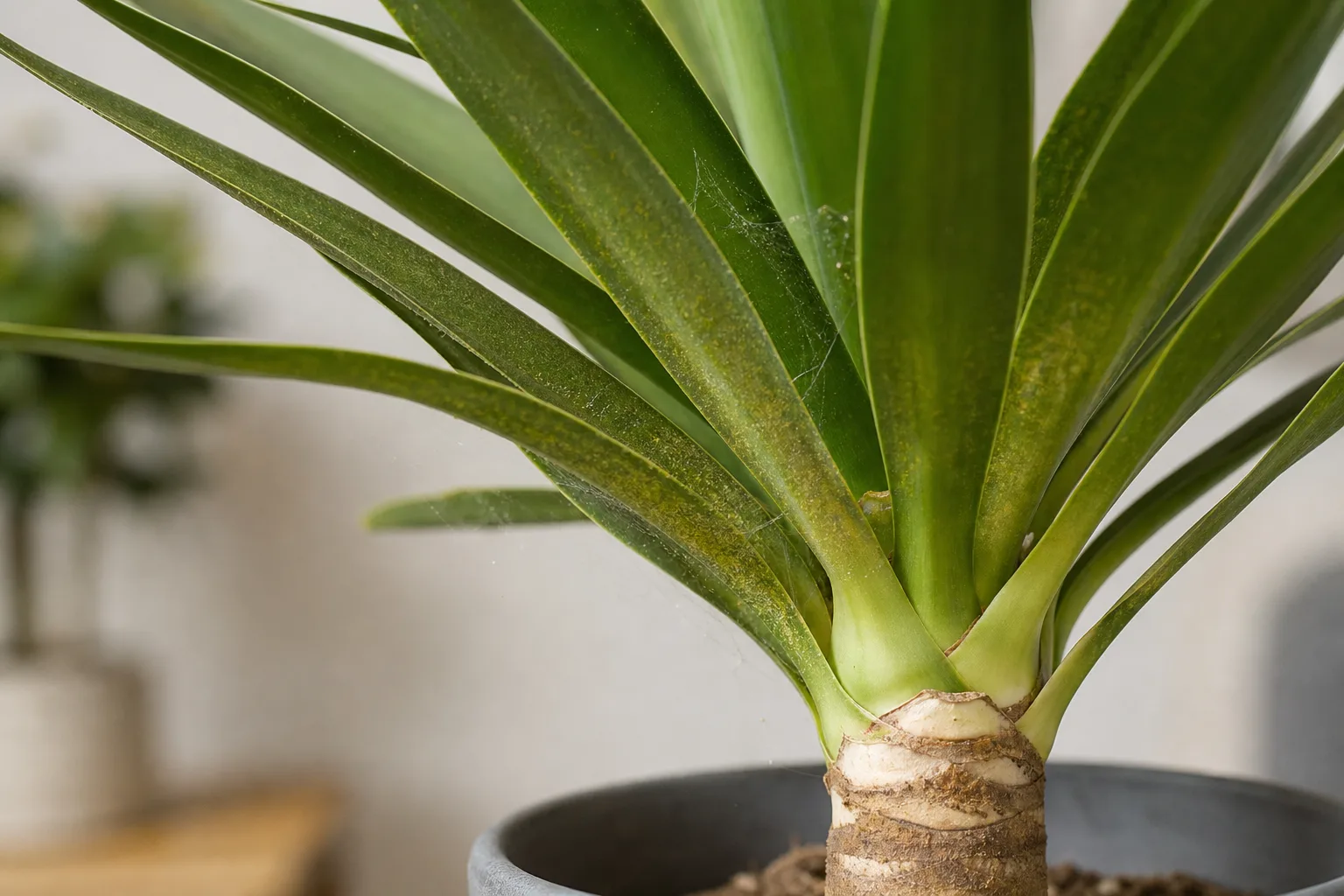
Spider Mites on Yucca Plant: Causes, Checks & Fixes
This guide covers spider mites on Yucca Plant. See also the general Spider Mites guide, watering, and light pages for this plant.
Spider Mites on Yucca Plant: Causes, Checks & Fixes
Quick answer
On spineless yucca (Yucca elephantipes), spider mites often colonize the undersides of rigid sword leaves for weeks before you notice damage on upper rosettes. Lower blades may stipple, bronze, and drop while the cane still looks upright-webbing at leaf bases is usually a late sign, not an early one. That slow, hidden buildup is the main reason yucca mite cases feel sudden even though the colony started on dusty, warm foliage long before.
First step: isolate the plant and rinse every leaf underside thoroughly with lukewarm water. Isolate infested plants from others before treatment. Yucca’s whorled rosettes trap dust and mites at leaf bases and trunk joints. A forceful spray of water knocks down adults and webbing before you confirm the pest and start repeat spray treatments.
Stippling with fine dots differs from the uniform brown tips caused by low humidity or fluoride in tap water-see brown tips on Yucca Plant if tips alone are browning without speckles or webbing.
What spider mites look like on Yucca Plant
Spider mite damage on yucca follows a predictable pattern on the plant’s stiff, arching blades:
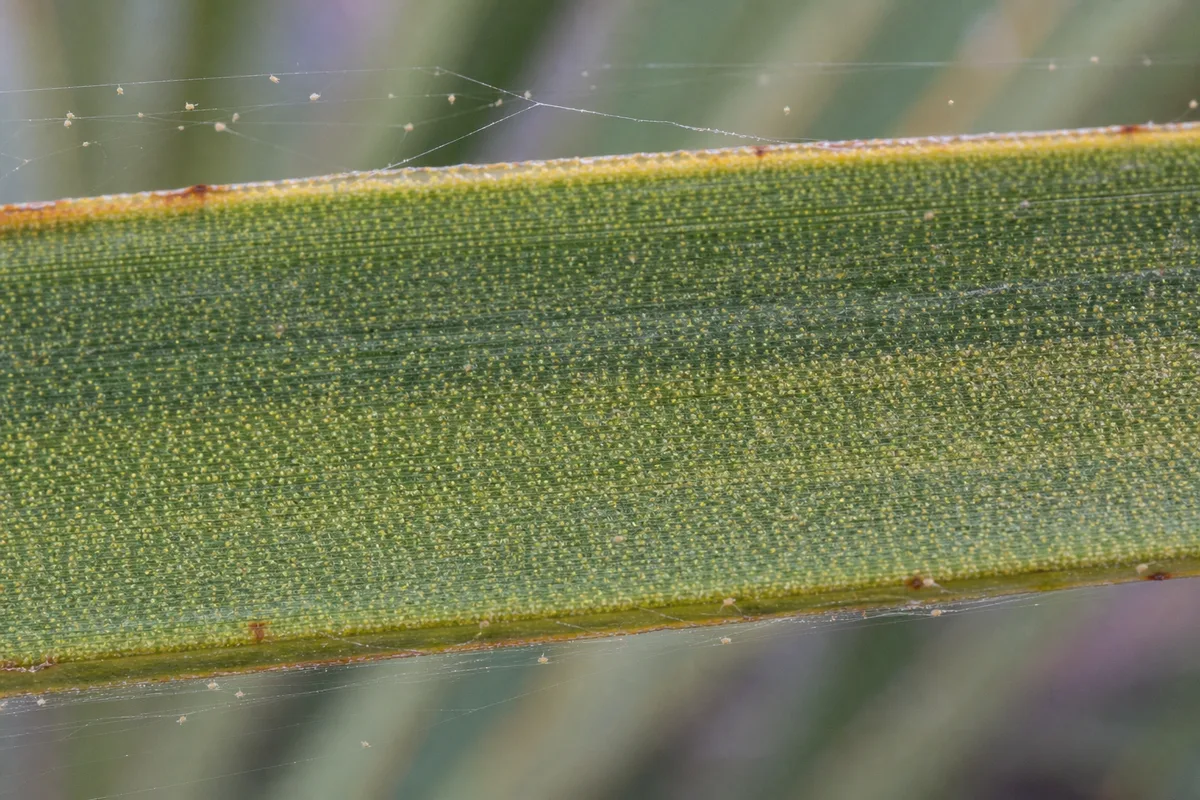
Spider Mites symptoms on Yucca Plant - compare with healthy tissue on the same plant.
- Early stage: Tiny pale yellow or white speckles scattered across individual sword leaves, often starting on the side facing the window or heat source
- Mid stage: Leaves turn dull gray-green or bronze; stippling covers large sections of a blade
- Late stage: Fine silk webbing at leaf tips, between blades in a rosette, or where leaves meet the woody cane
- Population sign: Shaking a suspect leaf over white paper produces moving specks barely visible to the naked eye-spider mites are arachnids, not insects
Yucca grows slowly indoors compared with softer-leaved houseplants. That means a mite colony can defoliate several lower leaves before you notice stippling on upper rosettes-by which time the infestation is already established. Webbing is a late warning, not an early one.
Unlike mealybugs on Yucca Plant, spider mites do not form cottony white clusters. Unlike scale insects, they do not leave hard immobile bumps on stems. The stippling-plus-webbing combination is the key visual signature on yucca’s thick foliage.
Collection note: A common indoor pattern is autumn patio-to-indoor reinfestation-a multi-cane yucca that looked clean on the balcony develops stippling on lower rosettes within two to three weeks after move-in, often beside a radiator or south window. Natural predators stay outdoors; dry heated air inside lets surviving mites multiply on leaf undersides you rarely inspect. Catching it at the first lower-leaf stipple and rinsing before soap usually saves the cane; waiting for obvious webbing across several rosettes means a longer recovery on slow-growing blades.
Why Yucca Plant gets spider mites
Yucca elephantipes tolerates the same dry indoor conditions that favor spider mites. Spider mites thrive in dry, warm conditions-heated winter rooms near radiators or south-facing glass accelerate population growth. Homes often drop to 30–40% relative humidity, well within yucca’s comfort range but ideal for mite reproduction.
Several yucca-specific factors raise risk:
Low-humidity tolerance works both ways. Yucca does not need humidifiers to stay healthy, but that same dry air lets mites complete life cycles quickly. A plant that never struggles from dry tips can still harbor a thriving mite colony on leaf undersides-see low humidity on Yucca Plant for tip-burn patterns that are not mites.
Dusty foliage. Yucca’s broad blades collect household dust, especially on lower leaves that rarely get rinsed. Dusty, drought-stressed plants are more vulnerable to pest pressure than clean, well-watered specimens.
Indoor placement patterns. Yucca is often kept in bright, warm rooms-the same microclimates mites prefer. Multi-trunk specimens with overlapping rosettes create sheltered pockets where mites spin webbing undisturbed.
Outdoor summer exposure. Yucca moved to patios or balconies in summer can pick up mites from nearby plants. Infestations often explode after the plant returns indoors in autumn, when natural predators are gone and dry heated air favors reproduction.
Collection spread. Mites walk between touching plants. A tall yucca cane placed beside infested palms, figs, or philodendrons-plants that commonly carry mites-can acquire them without obvious contact on upper leaves.
How to confirm the cause
Work through these checks before treating:
- White-paper tap test - Hold white paper under a stippled leaf and tap the blade sharply. Watch for tiny moving creatures falling onto the paper. Static dust or mineral spots do not walk.
- Magnifier check - Examine leaf undersides with magnification, focusing on mid-blade veins and leaf bases. Look for mites, cast skins, and fine silk threads.
- Webbing location - Spider mite webbing appears at leaf tips and petiole joints. If you see fluffy cottony masses in trunk crevices, suspect mealybugs instead.
- Stem inspection - Run a finger along the cane. Hard brown bumps suggest scale, not mites. Mites stay on foliage, not embedded in bark-like stem tissue.
- Pattern versus environment - Uniform brown tips on many leaves without stippling or webbing usually mean fluoride, salt buildup, or dry air-not mites. Mite damage is speckled and localized before it spreads.
- Neighbor plants - Check plants on the same shelf or window line. Mites rarely affect only one plant in a shared warm, dry zone.
| What you see | Likely cause | How to tell apart |
|---|---|---|
| Uniform brown tips on many leaves | Low humidity, fluoride, or salt buildup | Tips only-not speckled; no webbing; no moving specks on paper |
| Hard bumps on cane or leaf bases | Scale insects | Bumps scrape off; sticky honeydew below; no stippling pattern |
| White cottony clusters in crevices | Mealybugs | Fluffy texture; slow movement when disturbed |
| Yellow leaves with brown halos, wet pot | Overwatering / root stress | Pot stays heavy; no mites on tap test; trunk may soften |
| Pale thin leaves, stretched cane | Not enough light | No stippling or webbing; gradual decline over months |
If stippling is present but the tap test shows no movement and no webbing appears after a week of monitoring, reconsider nutrient stress or old mechanical damage before committing to repeated pesticide sprays.
First fix for Yucca Plant
Move the plant away from other houseplants, then rinse every leaf and stem thoroughly with lukewarm water-especially undersides and leaf bases where rosettes meet the cane.
This single step achieves three things at once: it physically removes mites and webbing, it dislodges dust that harbors colonies, and it gives you a clean surface to inspect after the foliage dries. Take the pot to a shower, bathtub, or outdoor hose. Tilt the plant so water runs off blades without flooding the soil-keep the pot rim above standing water or wrap the soil surface in plastic during the rinse. Let the pot drain completely before returning the plant to its spot.
Do not apply oil or soap in the same session as the first heavy rinse unless label directions allow it-you want to confirm active mites remain after washing before starting chemical controls.
Step-by-step recovery
After isolation and the initial rinse, follow this sequence based on severity:
Light stippling, no webbing yet
- Rinse foliage every three to four days for two weeks.
- Apply insecticidal soap labeled for houseplants and spider mites to leaf undersides and stem joints, covering the entire plant.
- Repeat applications are usually necessary at five- to seven-day intervals for at least three cycles to catch newly hatched nymphs.
Visible webbing on multiple leaves
- Complete the isolation rinse described above.
- Prune heavily stippled lower leaves that are more than half bronzed-bag and discard them.
- Apply insecticidal soap or horticultural oil labeled for houseplants, coating undersides of every blade. Apply in evening or move the plant to bright indirect light during recovery if it normally sits in harsh south-window sun-oil on rigid blades in direct heat can scorch tissue.
- Repeat treatment at five- to seven-day intervals until no new stippling appears for two weeks.
- Inspect neighboring plants on the same schedule.
Severe defoliation or repeated failure
- If most rosette leaves are lost but the trunk is firm, continue rinse-and-spray cycles on remaining foliage and new shoots.
- For large multi-cane specimens with dozens of sword leaves, consider predatory mites (Phytoseiulus persimilis or Neoseiulus californicus are common commercial options). Release according to supplier rates on mite-free foliage after a thorough rinse-predators need humidity above roughly 60% and direct contact with prey; they work best in enclosed sunrooms or when you can mist nearby air without soaking yucca soil. One release rarely clears a heavy infestation alone-pair with contact sprays on the worst rosettes first.
- Discard the plant only if the trunk base softens or no clean new growth appears after six weeks of consistent treatment-rare on otherwise healthy yucca.
Choosing a contact treatment
For home use, stick to product categories extension services commonly recommend for houseplant mites:
- Insecticidal soap - potassium fatty acids; must wet mites directly; repeat at five- to seven-day intervals
- Horticultural oil or neem oil - smothers mites on contact; check the label for minimum interval between oil sprays and for temperature limits
- Predatory mites - biological option for large specimens when humidity and coverage allow
Always use products labeled for ornamental houseplants and spider mites. Read the label for plant sensitivity, re-entry intervals, and whether the product is safe on waxy or rigid foliage. Avoid broad-spectrum insecticides marketed for general bug control-many pesticide products can make the problem worse, especially during hot weather.
Avoid homemade dish-soap mixes unless you accept higher burn risk on yucca blades; do not mix homemade soap products as they can burn plants.
Recovery timeline
Yucca recovers from mite damage slowly because new sword leaves emerge from rosette centers one at a time, not in flushes like pothos or philodendron.
- Week 1–2: Active mites knocked down; webbing reduced; no new stippling on previously clean blades
- Week 3–4: First clean new leaf tips may appear at rosette centers if the trunk is healthy
- Month 2–3: Several fresh blades replace damaged lower leaves on a vigorous specimen
- Permanent marks: Stippled and bronzed old leaves never revert to solid green-remove them once new growth looks healthy
Signs of improvement: no fresh webbing after treatment, tap test shows few or no moving specks, new blades open without stippling. Signs the problem is worsening: spreading bronzing despite treatment, lower leaf drop accelerating, or webbing reaching upper rosettes.
Mistakes to avoid
- Stopping after one spray. Repeated applications will be necessary because mite eggs survive single applications. Plan for at least three treatments a week apart.
- Spraying only the top of sword leaves. Mites concentrate on undersides and in rosette crevices where spray runs off rigid blades.
- Ignoring nearby plants. Mites spread to anything sharing warm, dry air-even if those plants look fine today.
- Cranking humidity alone. Higher humidity slows reproduction but rarely eliminates an active colony without direct treatment.
- Using harsh oils in direct sun. Horticultural oil on yucca leaves in hot south-window sun can scorch blades. Treat in evening or move the plant to bright indirect light during recovery.
- Overwatering during recovery. Mite-stressed yucca still needs dry-down cycles between waterings per the Yucca Plant watering guide. Wet soil plus damaged foliage invites root problems.
Yucca care cross-check during recovery
While treating mites, keep baseline care stable:
- Water only when the fast-draining mix is dry throughout-do not increase watering because leaves look stressed
- Maintain bright light; a weakened yucca in deep shade will not push replacement leaves quickly
- Hold fertilizer until new growth appears unstippled; feeding stressed plants adds salt load to already damaged tissue
- Wear gloves when handling treated foliage-yucca sap irritates skin and the plant is toxic to pets if ingested
How to prevent spider mites next time
- Rinse blades occasionally during warm months-a light shower removes dust and early colonizers before populations build
- Scout when seasons change - inspect thoroughly when moving yucca indoors in autumn or placing it near a new heat source in winter
- Quarantine new plants for two weeks before setting them beside your yucca
- Maintain airflow around the canopy so rosettes do not create stagnant pockets
- Avoid plant crowding on shelves where leaves touch and mites walk between pots
- Check weekly in winter - tap-test a lower leaf whenever you water during heating season
Prevention on yucca is mostly about inspection rhythm in dry indoor air, not about transforming your home into a humid greenhouse.
When to worry
Escalate or consider discarding the plant if:
- Webbing covers most rosettes despite three weeks of consistent treatment
- Lower leaves yellow and drop faster than new blades emerge
- The trunk base softens-this suggests rot, not mite damage alone
- Mites reappear within days after completing a full treatment cycle, indicating reinfestation from an untreated neighbor plant
Most indoor yucca specimens recover from moderate mite outbreaks if you isolate early, rinse thoroughly, and repeat contact treatments until new growth stays clean. Severe defoliation is ugly but not always fatal on a firm-trunked cane-as long as you stop the mites before they stress the plant through a full winter without functional leaves. For persistent infestations on very large specimens, contact your local cooperative extension office for miticide options appropriate to your state.
Related yucca guides
- Yucca Plant watering - dry-down rhythm during recovery
- Low humidity on Yucca Plant - tip burn vs. mite stippling
- Brown tips on Yucca Plant - fluoride and salt lookalikes
- Scale insects on Yucca Plant - hard bumps on the cane
- Mealybugs on Yucca Plant - cottony clusters in crevices