Stem Rot on Philodendron Brasil: Causes, Checks & Fixes
Quick answer
Stem rot on Philodendron Brasil usually starts when wet mix suffocates roots and decay moves into soft, dark stems at the soil line. Stop watering, isolate the plant, and inspect the base before trimming or repotting.
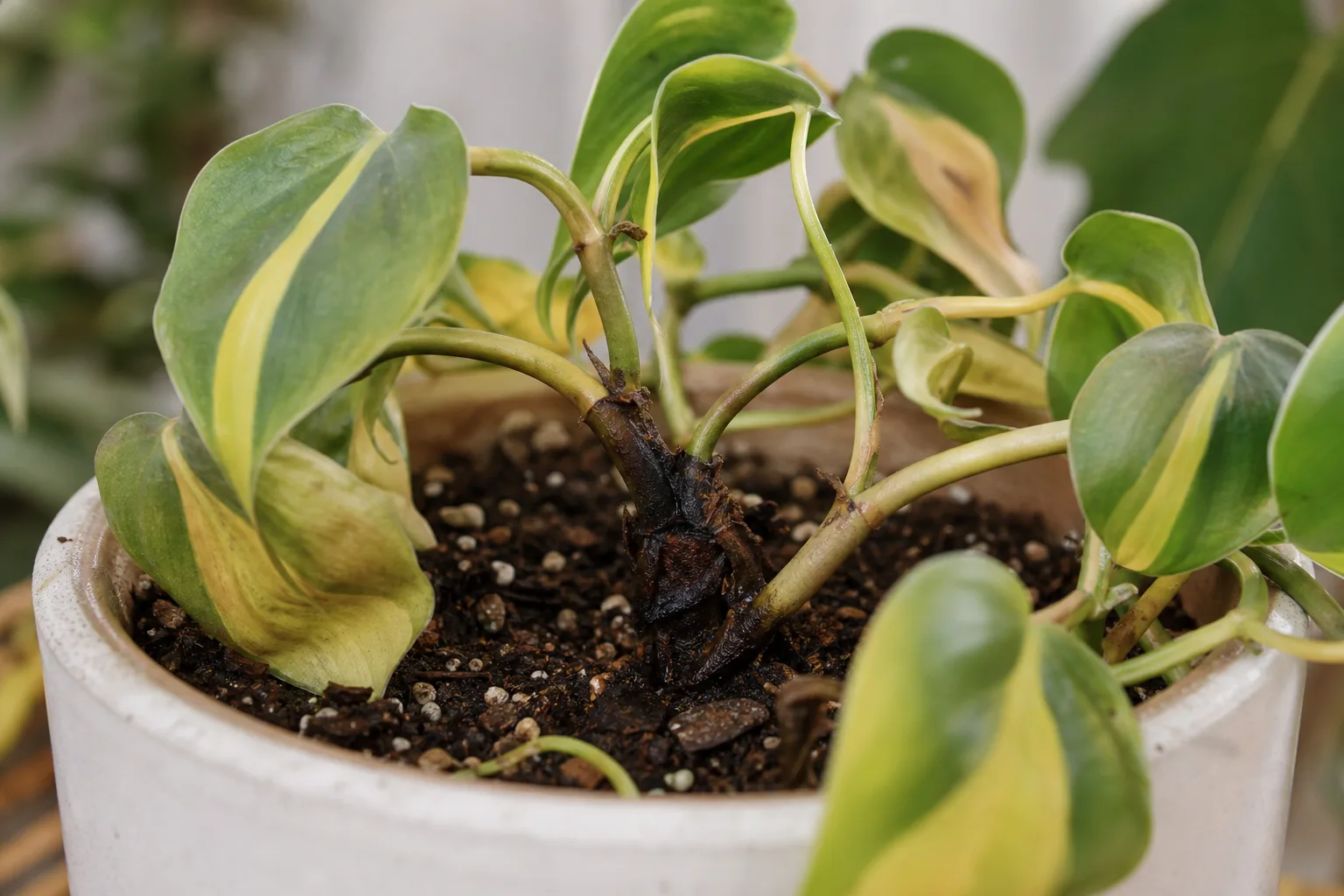
Stem Rot on Philodendron Brasil: Causes, Checks & Fixes
This guide covers stem rot on Philodendron Brasil. See also the general Stem Rot guide, watering, and light pages for this plant.
Stem Rot on Philodendron Brasil: Causes, Checks & Fixes
Quick answer
Stem rot on Philodendron Brasil is decay that usually starts in waterlogged roots and moves into the soft stems at the soil line. This cascading or climbing vine needs well-drained potting mix and time for the top few centimeters to dry between drinks. When mix stays wet-especially in dim corners or oversized pots-oxygen leaves the root zone, roots fail, and [the crown of the plant may rot](https://www.missouribotanicalgarden.org/gardens-gardening/your-garden/help-for-the-home-gardener/advice-tips-resources/insects-pests-and-problems/environmental/[overwatering on Philodendron Brasil](/plants/philodendron-brasil/overwatering/)). Stop watering immediately, isolate the plant, and inspect the base of the stems before trimming or Philodendron Brasil repotting guide.
Why Philodendron Brasil gets stem rot
Brasil is faster and more forgiving than many collector philodendrons, but that tolerance hides a common pattern: owners keep watering on a summer rhythm while light drops in fall or the pot stays oversized and slow to dry. Roots growing in waterlogged soil may die because they cannot absorb the oxygen needed to function normally. Once roots decay, fungi and bacteria in saturated mix-organisms such as Pythium and Phytophthora that spread in wet conditions-can girdle stems at or near soil level. Clemson HGIC notes that with stem rot, stems may show a ring of brown or black tissue at the soil line while infected roots turn soft and dark.
The most common indoor triggers match overwatering and root rot on Philodendron Brasil: watering before the top 3–5 cm dries, blocked drainage holes, dense peaty mix without enough perlite, and continuing summer frequency through winter when growth slows. Low light slows water use, so a pot that dried in a bright window may stay wet for a week in a dim corner. Trailing vines can look mostly healthy while the crown fails underground-that is why stem rot on Brasil is often caught late.
Philodendron species in the Araceae family can also develop bacterial stem rot under warm, damp conditions, which may appear as water-soaked, greasy patches that spread into petioles and stems. On Brasil, fungal rot from chronic wet soil is more common indoors, but the inspection and first fix are the same: stop water, isolate, and remove mushy tissue.
What stem rot looks like on Philodendron Brasil
Focus on the soil line and the first few inches of stem-not just the leaf tips far down the trail:
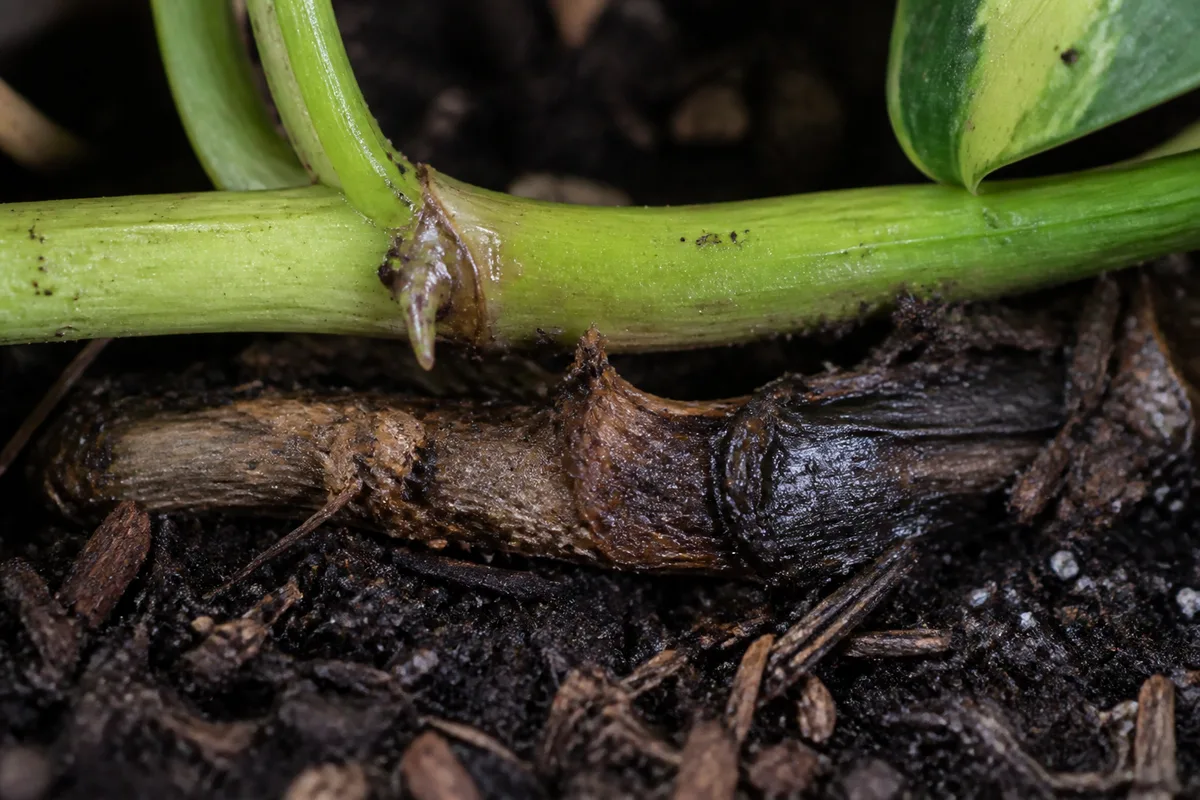
Stem Rot symptoms on Philodendron Brasil - compare with healthy tissue on the same plant.
- Stems turn dark brown or black at the base, sometimes with a slimy stripe inside the tissue
- Tissue feels soft, squishy, or hollow when pinched-not firm like a healthy vine
- Soil that has been too long without oxygen usually smells sour or rotten
- Mix stays visibly damp while heart-shaped lime-streaked leaves yellow or wilt on wet soil
- Lower leaves drop while upper vines still hang from the pot
- Vines may stay attached while the connection at the crown weakens-strands detach with a gentle tug
Early stem rot can mimic thirst: leaves droop or yellow even though the soil is wet, because damaged roots and stems cannot move water up the vine. On Philodendron Brasil, that pattern plus a soft black base on moist mix is stem rot-not underwatering on Philodendron Brasil.
How to confirm the cause
Work through this inspection order before cutting anything:
- Stem firmness at soil line - Pinch the lowest inch of stem. Firm green tissue is healthy; soft, dark, collapsing tissue confirms rot at the crown.
- Pot weight and smell - A heavy pot days after watering and a sour smell from the drainage hole support rot over simple thirst.
- Mix moisture - If the surface and center are wet while leaves look dehydrated, rotting tissue below is the likely blocker-not dry air.
- Unpot and inspect roots - Knock the plant out gently. Healthy roots are firm and white or tan; rotted sections are brown, translucent, or mushy. Wilted leaves may indicate soil that is too wet-rotting roots cannot take up water.
- Trace rot upward - Mark where firm stem begins above the mushy zone. Everything below that line is lost; healthy nodes above it may still propagate.
Lookalike symptoms to rule out
Root rot without obvious stem discoloration may show mushy roots first while stems still look normal-see the root rot guide if decay is mostly underground. Underwatering gives a light pot, dusty dry mix throughout, and thin flat leaves that plump after one drink-not chronic heaviness and sour smell. Cold damage after a draft usually affects exposed leaf sections, not a uniformly soft black base on wet soil. Physical stem breaks from handling feel dry and snapped, not waterlogged and mushy.
First fix for Philodendron Brasil
Stop all watering and move the plant away from healthy collections before you touch stems or soil. Wet rot spreads through contaminated mix, tools, and splash. Once isolated, unpot and inspect the crown and lowest stems-you need to see how far decay has moved before deciding to trim, repot, or propagate.
Do not repot into fresh mix on day one if roots are still mostly firm and smell is neutral; a dry-back period in Philodendron Brasil light guide may stabilize mild saturation. If the base is already soft and black, proceed to trim and salvage the same week rather than waiting.
Step-by-step recovery
- Unpot and rinse roots gently to separate firm tissue from mush.
- Cut all soft stem and root tissue back to firm green vine with clean, sterilized scissors. Plants with just a stem or small part with rot may be salvaged by pruning out the rotted part.
- Let cut surfaces air-dry for 24–48 hours before repotting.
- Repot surviving firm roots and stems into a smaller pot with open drainage holes and fresh standard potting mix amended with 20–25% perlite.
- Wait five to seven days before the first light watering-only if the mix is fully dry at the top and remaining tissue feels firm.
- If the main base is fully mushy but upper vines and nodes are firm, take stem cuttings with at least one node each and root in water rather than trying to save the collapsed crown. Brasil rebuilds easily from cuttings.
Sterilize tools between cuts with rubbing alcohol and discard infected tissue in the trash, not indoor compost. Philodendron contains insoluble calcium oxalate crystals that irritate skin and are toxic to pets-wear gloves when cutting.
Recovery timeline
Mild stem rot caught while most of the vine is firm often stabilizes within two to four weeks after trim, dry-back, and repot into airy mix. Moderate cases with yellowed leaves may need six to eight weeks before new lime-streaked growth appears along the vines. Advanced crown rot with a mushy base rarely produces a full plant again-propagation from firm nodes above the rot line is usually the realistic salvage path.
Damaged yellow leaves and limp lower stems do not fully green up again. Judge success by firm new stems at the soil line, neutral-smelling mix, lighter pot weight between waterings, and new heart-shaped leaves with Brasil variegation.
What not to do
- Do not keep watering because trailing vines look wilted when the mix is already wet.
- Do not mist leaves hoping humidity helps-the problem is excess moisture in the root zone and crown, not dry air.
- Do not fertilize a rotting plant; wait until new growth appears in improved conditions.
- Do not repot into standard dense mix without perlite or into a pot without drainage holes.
- Do not assume every soft spot is salvageable-black mushy base tissue usually will not firm up again.
- Do not return the plant to a crowded shelf until the mix dries predictably and smell is gone.
How to prevent stem rot next time
Match container, mix, and watering to Brasil’s vining aroid biology:
- Use well-drained potting mix with 20–25% perlite so the root zone breathes between drinks.
- Water when the top 1–2 inches of soil has dried-roughly every 7–10 days in active growth, less in winter when the pot stays heavy longer.
- Choose pots with open drainage holes sized to the root mass-not the full trailing canopy width.
- Empty saucer runoff within 30 minutes of every drink; never let the pot sit in standing water.
- Keep the plant in bright to medium indirect light so the mix dries on a predictable rhythm.
- Refresh compacted mix every one to two years before drainage silently fails at the crown.
When to worry
Treat stem rot as urgent when stems collapse at the base, the mix smells sour despite stopping water, or soft tissue spreads upward within days. These signs mean crown decay is advanced and salvage windows are short.
Lower urgency applies when the base is still mostly firm, smell is neutral, and the main issue is slow-drying mix-correct drainage before softness appears. If only upper nodes remain firm, take cuttings promptly before rot reaches them.
Conclusion
Stem rot on Philodendron Brasil is crown and base-stem decay that follows wet mix around failing roots-not a mystery leaf disease on trailing vines. Confirm with soft black tissue at the soil line, sour-smelling saturated mix, and yellow wilting leaves on wet soil; fix by stopping water, isolating the plant, trimming mushy tissue back to firm vine, and repotting into perlite-amended mix after a dry-back period. Prevent recurrence with dry-down watering checks, winter cutbacks, open drainage, and mix refresh before the root zone stays soggy for days.
When to use this page vs other Philodendron Brasil guides
- Philodendron Brasil watering guide - Use for routine moisture checks before assuming stem rot is the main issue.
- Philodendron Brasil problems hub - Browse all 46 common issues on this species.