Propagating Philodendron Brasil: Cuttings, Nodes & Timeline
Propagating Philodendron Brasil: Cuttings, Nodes & Timeline
Propagating Philodendron Brasil: Cuttings, Nodes & Timeline
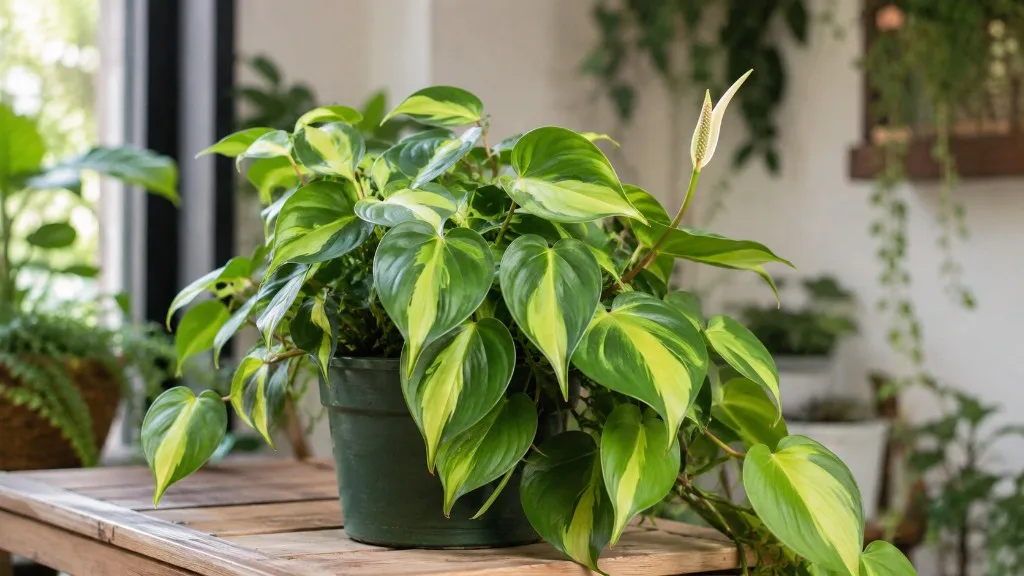
Philodendron Brasil propagation is one of the easiest projects in houseplant care - because Philodendron hederaceum ‘Brasil’ is a trailing heartleaf philodendron that roots readily from stem cuttings at nodes, the same biology that makes the species a beginner staple. Success means clean cuts below nodes, bright indirect light, and patience through one pot-up - not hormone stacks or greenhouse humidity domes. Brasil adds one decision most green heartleaf guides skip: choose variegated nodes so new vines keep lime streaks instead of reverting to plain green.
Quick answer: Propagate Philodendron Brasil from stem cuttings with at least one node and one leaf. Cut 10–15 cm sections just below a node, root in water or moist airy mix in bright indirect light, and pot when roots reach 5–8 cm - usually 2–4 weeks in a warm room. Select parent stems showing clear lime variegation; NC State Extension notes ‘Brasil’ carries a yellow-to-light-green center stripe with dark green borders and unstable variegation that plain-green cuttings will copy.
Quick Answer: What Brasil Propagation Requires
Every valid Brasil propagation starts with node tissue - the swollen joint on the vine where leaves emerge and adventitious roots can form. Iowa State Extension recommends 3–6 inch stem sections with lower leaves removed for trailing philodendrons, rooted in water or perlite until roots are several inches long before potting. Brasil vines produce nodes every few centimetres along the stem; each node is a potential new plant. A detached leaf without a node may produce water roots but cannot grow a new vine - the most common propagation myth on social media.
Node Anatomy on a Trailing Vine
On Brasil, look for the ring or bump where the leaf petiole meets the stem. That zone holds meristematic cells that form roots first, then a new shoot. Clemson HGIC propagation guidance stresses cutting at or just below a node with at least one leaf remaining above the cut for photosynthesis. Two nodes per cutting roots faster and produces a bushier start than a single-node segment, though one node is sufficient.
Photo reference (pending): Labeled close-up - scissors positioned just below a Brasil node with lime-streaked stem; lower leaf removed, upper leaf retained.
Water vs Soil: Which Method to Choose
Both methods work because Brasil is a fast-rooting trailing aroid. Your choice depends on how you like to monitor progress and how disciplined you are about moisture after transplant.
| Method | Best for | Typical root-ready time | Main risk |
|---|---|---|---|
| Water | Beginners who want visible progress | 2–4 weeks in warm bright light | Fragile water roots at soil transition if left too long |
| Soil / perlite mix | Growers who want soil roots from the start | 2–3 weeks with steady moisture | Stem rot from soggy mix or buried leaves |
| Sphagnum moss | Middle ground - airy moisture, less algae than water | 2–4 weeks | Moss drying out or staying waterlogged |
Water lets you see roots form and spot rot early. Soil and perlite skip the water-to-soil shock but demand tighter watering control. Wisconsin Horticulture notes heartleaf philodendron cuttings root easily in water or moist potting mix.
Water Propagation Steps
- Fill a clean jar with room-temperature water
- Place the cutting so at least one node sits submerged; leaves stay above the rim
- Position in bright indirect light - no direct hot afternoon sun on the jar
- Change water every 3–7 days to limit algae and bacteria (Iowa State advises frequent water changes until roots form)
- Pot when roots reach 5–8 cm (2–3 inches) with some branching - not when they circle the entire jar
Photo reference (pending): Water-rooted Brasil cutting at pot-up size - roots 5–8 cm, lime-variegated leaf above waterline, node clearly submerged.
Soil and Perlite Propagation Steps
- Fill a small pot with airy Brasil mix - potting soil plus 20–25% perlite
- Insert the cutting so the node is buried but leaves sit above the surface
- Water once to settle mix; keep lightly moist, never soggy
- Optional: cover with a clear bag 3–5 days for humidity, then ventilate daily
- Test with a gentle tug after 2–3 weeks - resistance means roots formed
Step 1 - Select Variegated Parent Stems
Choose stems with clear lime streaks on both leaves and internodes - not long runners that have reverted to solid green. NC State lists ‘Brasil’ as a cultivar with variegated center stripe and notes variegation can be unstable; vegetative clones inherit the tissue you cut. Plain-green parent sections produce plain-green offspring even when rooting succeeds perfectly.
Do not propagate from:
- Yellowing, wilted, or pest-infested vines
- Parents stressed from recent repotting (wait 2–4 weeks)
- Long all-green runners unless you accept a non-variegated result
Photo reference (pending): Side-by-side stems - left: variegated Brasil section with lime center stripe; right: reverted all-green runner labeled “do not use for striped clones.”
Prune the parent at a variegated node after taking cuttings - that encourages bushier variegated regrowth for future propagation stock.
Step 2 - Cut Just Below the Node
- Sterilize scissors or pruners with rubbing alcohol
- Cut 10–15 cm (4–6 inch) sections with at least one node; two nodes per cutting is ideal
- Slice just below the node at a slight angle - not through the node itself
- Remove leaves that would sit underwater or buried in mix
- Optional in very humid rooms: let cut ends callus 2–4 hours before water rooting
Node placement is non-negotiable. Leaves alone do not root; nodes do.
Step 3 - Root and Watch for Progress
Place cuttings in your chosen medium at 18–27°C (65–80°F) with bright indirect light. Rooting slows in cold dim corners below 16°C. RHS philodendron guidance notes cuttings root best during warm active growth - spring through early autumn indoors.
Timeline: Rooting Through First New Leaf
| Stage | Typical duration | What you should see |
|---|---|---|
| Root initiation (water) | 1–3 weeks | White nubs at node |
| Root-ready for potting | Roots 5–8 cm | Branching white roots, firm green stem |
| First new leaf after pot-up | 1–2 weeks | Small lime-streaked leaf unfurling |
| Fuller basket (3–5 cuttings) | 2–3 months warm season | Multiple trailing vines filling pot |
Grower vignette (March 2026)
Three 12 cm Brasil cuttings - each with two nodes and clear lime streaks - went into separate water jars on a northeast windowsill with bright indirect light and room temperatures near 22°C. Water was changed every four days. Day 9: first white root nubs on all three. Day 14: roots 2–3 cm on the fastest cutting. Day 18: all three had roots 5–7 cm with branching; potted together in one 15 cm hanging basket with airy mix. Day 26: first new lime-streaked leaf on the lead cutting. The slowest jar would have been fine another week - the lesson is pot at 5–8 cm, not when roots lace the entire jar.
Step 4 - Pot Up at 5–8 cm Roots
When roots reach 5–8 cm:
- Plant in well-draining Brasil mix with drainage holes
- Water once thoroughly; let top 3 cm dry before the next soak
- Keep in bright indirect light - avoid harsh sun on tender new roots
- No fertilizer for 4–6 weeks after potting
- Plant 3–5 cuttings in one hanging pot for a full basket faster than single vines
Iowa State Extension suggests potting water-rooted philodendron cuttings once roots are several inches long - Brasil’s fast metabolism tolerates the lower end of that range (5–8 cm) better than slow self-heading philodendrons because water roots transition quickly when mix is airy and watering is restrained.
Keeping Lime Variegation on New Vines
Variegation is a leaf and stem pattern, not a separate propagation method - but source tissue matters.
- Cut from variegated sections, not long reverted runners
- Provide adequate light after pot-up - dim shelves encourage plain green growth on variegated cultivars
- Prune reverted stems on the parent to encourage variegated side shoots for future cuttings
- Evaluate pattern on the second and third new leaves - the first leaf after pot-up can emerge pale before streaks develop
| Parent tissue | Expected clone outcome |
|---|---|
| Lime-streaked stem with patterned leaves | High chance of striped offspring |
| Mixed section (one green leaf, one striped) | Unpredictable - prefer cleaner variegated nodes |
| Long all-green runner | Plain-green vine - rooting succeeds, stripes do not |
In-Pot Filling and Moss Pole Propagation
In-pot filling: If the parent Brasil basket looks thin, root cuttings in water first, then insert directly into the same container - poke a hole beside existing stems, bury the node, firm mix gently, water once, and avoid tugging until tug-resistant. Filling in place is faster than waiting for one vine to branch.
Moss pole timing: Brasil on a moss pole can be propagated from side nodes while the plant climbs. Cut below a node on a lateral stem, root in water, and either start a new pole plant or tuck rooted cuttings at the base for a fuller column. Spring growth flushes integrate fastest; match watering carefully the first month so new roots do not rot against a wet pole.
Common Mistakes and Troubleshooting
| Mistake | Result | Fix |
|---|---|---|
| Cut without a node | No roots, ever | Always include node tissue |
| Leaves submerged | Rot at waterline | Strip lower leaves |
| Dark cold shelf | Slow or failed rooting | Warm bright indirect light |
| overwatering on Philodendron Brasil soil cuttings | Mushy stem | Lightly moist mix only |
| Months in water | Weak transition, transplant shock | Pot at 5–8 cm roots |
| Green parent tissue | All-green clone | Recut from variegated stem |
When a Cutting Fails vs Reverts
| Symptom | Likely cause | Next step |
|---|---|---|
| Mushy stem at node | Rot from submerged leaf or soggy mix | Fresh cut above rot; drier medium |
| No roots after 4 weeks | Too cold, too dim, or no node | Move warmer/brighter; recut with node |
| Roots but leaf yellows after pot-up | Low light or overwatering | Brighten; let top 3 cm dry |
| Firm stem, healthy roots, all-green new vine | Cut from reverted section | Reversion, not failure - propagate from variegated stem |
| Blackening node, wilting, no growth | Cultural failure | Discard; fix setup; retry |
First Month After Potting
Match watering rhythm to the parent plant once established - top 3–5 cm dry between soaks. No repot for 6–8 weeks unless roots circle heavily. Inspect for pests before combining with collection plants. Delay fertilizer until the cutting pushes a second hardened leaf.
Pet safety: Philodendron Brasil contains insoluble calcium oxalate crystals toxic to cats and dogs. Keep cuttings and jars off low surfaces pets reach. Call your veterinarian or ASPCA Poison Control at (888) 426-4435 if ingestion occurs.
When to use this page vs other Philodendron Brasil guides
- Philodendron Brasil overview - Start here for whole-plant context before deep-diving this topic.
- Philodendron Brasil problems hub - Jump to symptom-specific fix guides when this care topic does not resolve the issue.
- Stem Rot on Philodendron Brasil - Escalate here when propagation adjustments are not enough.
Related Philodendron Brasil guides
- Philodendron Brasil overview
- Philodendron Brasil watering
- Philodendron Brasil light
- Philodendron Brasil soil
- Philodendron Brasil fertilizer
- Philodendron Brasil repotting
- Stem Rot on Philodendron Brasil
- Philodendron Brasil problems
FAQs
Where do I cut Philodendron Brasil for propagation? Cut 10–15 cm sections just below a node - the swollen joint where roots and leaves emerge. Each cutting needs at least one healthy node and one leaf; two nodes per cutting roots faster and produces a bushier start.
Can I propagate Philodendron Brasil in water? Yes. Place cuttings so the node sits in water, not submerged leaves. Change water weekly, keep in bright indirect light, and transplant to well-draining mix when roots reach 5–8 cm - usually 2–4 weeks. Long water rooting beyond 6 weeks can make soil transition harder.
Will Brasil cuttings keep lime variegation? Choose cuttings from stems showing clear lime streaks - not long reverted all-green sections. Variegation follows the parent tissue; plain-green cuttings produce plain-green vines. Prune parent plants at variegated nodes to stock future cuttings.
When should I propagate Philodendron Brasil? Spring through early autumn is fastest when the parent plant is actively growing. Warm rooms (18–27°C) and bright indirect light speed rooting. Avoid propagating stressed, pest-infested, or recently repotted parents.
How long until a Brasil cutting is a full plant? Rooted cuttings push new growth within 1–2 weeks after potting. A trailing display from several cuttings in one pot fills in within 2–3 months in warm bright conditions - faster than most collector aroids, though not overnight.
Conclusion
Propagating Philodendron Brasil is node-based stem cutting in water or airy soil - choose variegated parent stems, give bright indirect light, pot at 5–8 cm roots, and plant several cuttings together for a full display. Use this escalation ladder when results disappoint:
If roots formed and new leaves show lime streaks: Continue normal light, watering, and delayed fertilizer care. Evaluate pattern on leaves two and three before assuming success.
If roots formed but new growth is all green despite good light: The clone copied reverted parent tissue - not a cultural failure. Take a fresh cutting from a variegated stem on the parent, or accept a plain-green heartleaf vine.
If the stem rotted, wilted, or never rooted after 4+ weeks in warm bright conditions: That is propagation failure. Discard, sterilize tools, fix water or moisture, and retry from healthier variegated tissue.
If the parent has only green runners left: Propagation cannot manufacture stripes the parent no longer expresses. Buy a new Brasil or propagate for a green backup vine.
Keep a small backup cutting rooting in water while you learn your room’s rhythm - Brasil is forgiving enough that one extra jar on the sill often becomes insurance against a sparse pot or reverted vine. For ongoing care after pot-up, use the Brasil care cluster linked throughout this page.
Revision note (2026-06-15): Expanded depth per E-E-A-T audit - rendered FAQs and authorship, How We Reviewed section, water-vs-soil decision table, reversion-vs-failure framework, dated March 2026 propagation vignette, in-pot filling and moss pole guidance, photo reference labels for future media pass, and cluster hub links. Original propagation photos pending for a future update.