Philodendron Brasil Repotting: When, How, and Mistakes
Philodendron Brasil Repotting: When, How, and Mistakes
Philodendron Brasil Repotting: When, How, and Mistakes
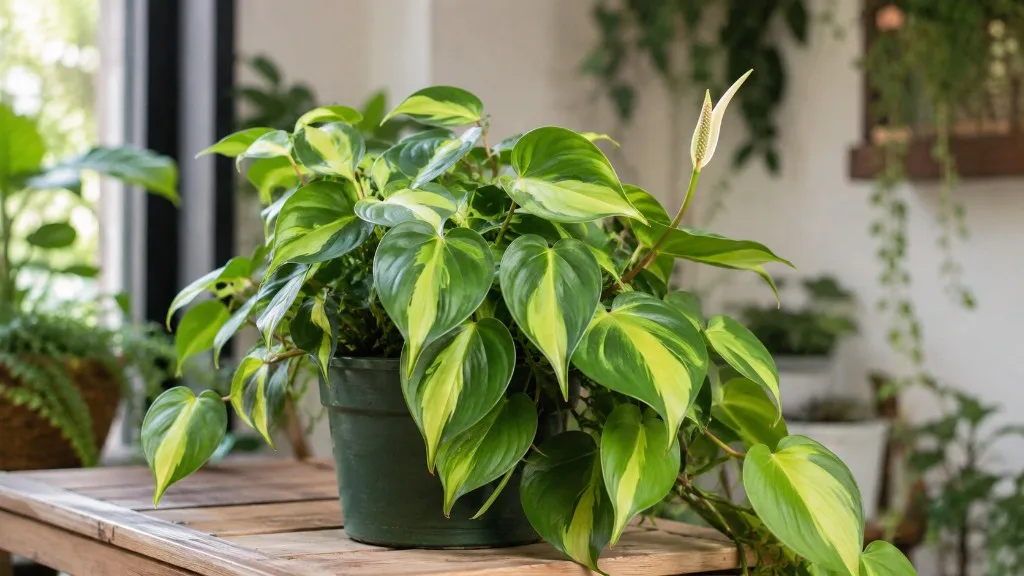
Philodendron Brasil repotting starts with a physical check, not a calendar reminder. Philodendron hederaceum ‘Brasil’ is a fast-growing trailing heartleaf philodendron whose root mass can circle a 15 cm nursery pot within 12–18 months while vines spill 1–2 metres from a hanging basket. That combination - dense roots below, heavy foliage above - makes repot timing and pot physics different from slow self-heading philodendrons like Birkin or compact upright types. Done in spring with one pot size up and fresh well-draining mix, a routine upgrade usually costs one afternoon and a few weeks of cautious watering. Done with an oversized pot, bare-root disturbance, or a winter repot in a dim room, the same job can trigger transplant shock, variegation fade, and a detour through root rot recovery.
This guide covers when Brasil actually needs more room, how Iowa State’s pot-bound tolerance applies to fast trailers, a numbered repot sequence for shelf pots and hangers, root-trim decisions, post-repot watering adjustments, and the mistakes that turn a simple upgrade into a multi-week setback.
Reviewed by LeafyPixels Review Board · Author: sai-ananth · Methodology: Recommendations checked against NC State Extension, Iowa State Extension, RHS, UF/IFAS, Missouri Botanical Garden, and ASPCA toxicity data, then aligned with LeafyPixels Philodendron Brasil cluster guides.
Quick Answer - When and How to Repot Brasil
Repot Philodendron Brasil when two or more of these appear during active growth: roots circling the pot bottom or exiting drainage holes, water running straight through without soaking in, mix drying so fast you cannot keep up with normal watering checks, or visible salt crust on the surface. Spring through early summer is the safest window. Move up only one pot size - about 2–5 cm (1–2 inches) wider in diameter - with fresh indoor potting mix plus 20–25% perlite. Water thoroughly once after repotting, then let the top inch dry before the next soak. Skip fertilizer for at least four weeks. Most plants show new growth within two to four weeks when light and drainage are correct.
Why Trailing Brasil Repotting Is Different From Upright Houseplants
Brasil is not a tree philodendron with a thick trunk anchoring a heavy crown. It is a vining aroid whose stems carry heart-shaped leaves along nodes that also produce aerial roots in humid air. NC State Extension describes heartleaf philodendron (Philodendron hederaceum) as a rapidly growing vine with a rapid growth rate suited to hanging baskets and vertical spaces. Missouri Botanical Garden notes that indoors, heartleaf philodendron is more often seen in the 4-foot range even though vines can grow much longer in habitat. The ‘Brasil’ cultivar adds lime-green variegation that shifts from leaf to leaf - NC State lists ‘Brasil’ as having a variegated center stripe with unstable patterning, so stress from root disturbance plus dim light can push plain-green revert shoots faster than on solid-green heartleaf.
Repotting Brasil therefore involves two weight centres: a root ball that may be tightly wound in a shallow hanging basket, and trailing stems that tug the pot sideways if the new container is too tall or top-heavy without re-hanging support. Upright houseplants mainly need a stable base; trailing Brasil needs drainage holes, balanced hanger hardware, and a mix that dries predictably because wet peat in a dense root mat is the fastest route to damaged roots.
How Fast Trailing Vines Fill a Pot
Young Brasil in a 10–12 cm pot may need its first upgrade within 12 months in bright light. Mature hangers that have been trimmed and propagated still rebuild root mass quickly because every node can root when in contact with mix. Iowa State Extension notes philodendrons do well when slightly pot-bound because soil dries more quickly between waterings - a useful tolerance that means you should repot on observed root and drainage signals, not because a date on the calendar passed. Fast trailers simply hit those signals sooner than slow cultivars.
When roots explore most of the volume, dry-down time shrinks: you water more often not because the plant suddenly “likes” water, but because there is less mix per root length. That shift is often the earliest repot cue before roots visibly exit the hole. Track how many days pass between thorough waterings for two cycles; if the interval halves while light and room temperature stayed stable, slide the pot out and inspect the bottom third of the rootball before assuming the plant needs more fertilizer.
When to Repot Philodendron Brasil
Treat repotting as a response to root-zone and mix failure, not a yearly chore. RHS guidance recommends staying in the original container at least a couple of years until roots become densely packed, then repotting in spring into a pot only a few centimetres larger than the rootball. Brasil in active growth often reaches that density sooner than large-leaf upright species - especially in 15–18 cm hangers - but the decision logic stays the same: repot when the current container limits healthy function.
Signs You Actually Need a Bigger Pot
Roots circling or matting at the bottom when you slide the plant partway out of the pot is the clearest sign. Roots emerging from drainage holes confirm the same pressure. Hydrophobic runoff - water channels down the sides without wetting the centre - usually means spent, compacted peat rather than healthy dry mix. Growth stall in good light during spring and summer, despite appropriate fertilizer and watering, suggests the root system cannot expand. Sour smell, persistent fungus gnats, or mold on soil point to mix breakdown; a full repot with trimmed rotten tissue beats repeated top-watering.
One yellow leaf or a week without new growth is not enough alone. Cross-check yellow leaves and overwatering before repotting a plant stressed for another reason.
When You Can Wait - Slight Pot-Bound Tolerance
Iowa State Extension states plainly that philodendrons do well when slightly pot-bound as the soil dries more quickly between waterings. Repot with fresh potting soil in a container one size larger when they become overcrowded or when soil dries out too quickly to keep up with regular watering. That wording matters for Brasil owners: a little root pressure is acceptable - even helpful for oxygen in peat-heavy mix - until drainage behaviour or root health crosses a line.
If the pot still dries on your normal check rhythm, roots are white and firm when you spot-check, and new variegated leaves keep appearing, waiting until spring beats an unnecessary winter disturbance. Top-dressing with fresh mix - replacing the upper 3–5 cm - can bridge one season when binding is mild and salt buildup is the main issue. Full repot when roots occupy more than roughly 70–80% of the visible rootball or circling is severe.
Best Time of Year to Repot Brasil
Spring through early summer aligns with active growth and gives roots the longest warm, bright season to explore fresh mix. RHS lists spring as the best time to repot philodendrons, before heat stress and while lengthening days support recovery. Early fall can work in warm homes if the plant still pushes visible new leaves; avoid repotting when room temperatures drop below about 18°C (65°F) for extended periods.
Winter repotting is justified only for emergencies: active root rot, a broken pot, severe root-bound collapse, or mix so compacted that water never absorbs. Use one size up, bright indirect light, minimal root disturbance, and a longer dry interval afterward. Do not combine winter repot with propagation experiments and fertilizer on the same day.
What You’ll Need: Pot, Soil, and Tools
New pot: Measure inner diameter of the current container. Choose a pot 2–5 cm (1–2 inches) wider with drainage holes. From a 15 cm pot, move to 17–18 cm - not 23 cm. RHS warns that if the pot is much bigger, compost stays wet longer and roots can rot. For hangers, pick a pot whose weight filled with moist mix your hook and ceiling anchor can support; upgrading from plastic to heavy ceramic may require a stronger bracket.
Soil: Pre-mix 75–80% peat-based indoor potting mix and 20–25% perlite by volume before you unpot. See the soil guide for chunkier bark upgrades in slow-drying baskets. UF/IFAS recommends lightweight, well-drained potting media for heartleaf philodendron.
Tools: Hand trowel, clean scissors or pruners, chopstick or pencil for settling mix, watering can with narrow spout, optional tarp or tray, gloves if sap irritates your skin. RHS notes philodendron sap can irritate skin; wear gloves when handling cut stems.
Step-by-Step: How to Repot Philodendron Brasil
Work on a stable table - not while the hanger is still suspended - with mix pre-mixed and the new pot ready.
Step 1 - Water the day before (if needed): If mix is dust-dry and crumbles, water lightly 24 hours ahead so the rootball holds together. If mix is already manageable, skip extra water; soggy balls slip and tear fine roots.
Step 2 - Prepare the new pot: Add enough fresh mix to the bottom so the plant will sit at the same depth as before - never bury the stem deeper to stabilize a wobbly trailer.
Step 3 - Remove the plant: For shelf pots, tip and slide. For tight nursery pots, squeeze flexible sides or run a knife around the rim. Support the rootball, not the vines - pulling stems snaps nodes.
Step 4 - Inspect roots: White, firm roots are healthy. Brown, mushy, sour-smelling tissue is rot - trim back to firm white with sterile scissors. Circling roots on the bottom and sides can be teased outward or lightly scored; do not bare-root the entire ball.
Step 5 - Place and backfill: Centre the plant, fill around the sides with fresh mix, and tamp gently with a chopstick to remove large air pockets without compacting perlite.
Step 6 - First watering: Water thoroughly until drainage runs clear, discard saucer water, and keep Brasil out of direct sun for 7–10 days. Hold fertilizer at least four weeks.
Step 7 - Re-hang or return to shelf: Adjust hanger height so vines are not kinked. Check hook rating if the wet pot is heavier.
Repotting a Hanging Brasil vs. a Shelf Pot
Hanging baskets add steps: unhook to a table, untangle vines from neighbouring plants, and note which direction stems were trained. After repotting, reattach with the pot level - a tilted basket dries unevenly. Liners and outer cachepots must not hold standing water; see overwatering if mix stays wet more than 10 days after a soak.
Shelf pots allow easier rotation for even light but may wobble when vines grow long. One size up in diameter often suffices without increasing pot height dramatically. If the plant is top-heavy after repot, a heavier ceramic pot beats burying stems deeper.
How to Inspect and Trim Roots Before Repotting
Use a simple decision tree at repot time:
White and firm, circling only: Tease outer circling roots outward with fingers; trim no more than 20–30% of the root mass if the ball is extremely dense. Brasil recovers well from moderate trim in spring.
Brown and mushy, sour smell: This is root rot rescue, not routine repot. Cut all soft tissue, optionally rinse only the rotten portion, repot into one size up at most with airy mix, and water lightly. Expect slower recovery.
Dry, tan, brittle: Dead material - remove. Do not confuse dried old roots with active white tips.
Salt-crusted surface, roots still healthy below: Top-dress may suffice; full repot if crust returns within weeks or water rejects the mix.
Never strip all old soil from a healthy Brasil. Bare-rooting removes fine root hairs that absorb water and extends repotting stress unnecessarily.
Choosing the Right Soil Mix for Brasil
Repot time is the right moment to match mix to container physics. Standard refresh: 75–80% indoor potting mix + 20–25% perlite. RHS suggests a loose, free-draining, slightly acidic mix - an example ratio is two parts orchid compost to one part peat-free ericaceous compost; the Brasil soil guide translates that into practical indoor blends.
Upgrade to 2:1:1 potting mix, perlite, orchid bark when hanging baskets stay wet longer than 10 days after watering in moderate light. Do not repot into straight cactus mix - it dries too fast for long trailing vines in typical rooms. Pre-mix dry in a tub; never pour dry perlite only into the gap around the rootball.
Signs Your Repot Worked
Within 7–14 days, slight leaf droop may appear and then stabilize - normal mild shock. Success looks like: firm stem bases, no spreading yellowing beyond one or two old leaves, new unfurling leaves within 2–4 weeks in spring, and pot weight dropping on a predictable cycle after the first thorough watering. New leaves that retain lime variegation in adequate light confirm roots are functioning.
Signs Something Went Wrong (and What to Do)
Sustained wilting past 2–3 weeks with wet mix suggests over-potting or overwatering - stop watering until the top 3–5 cm dries and review pot diameter. Spreading yellow leaves and sour soil point to rot; unpot, trim, and repot into smaller available pot if the current one is too large. Plain-green revert shoots after repot often mean light dropped or stress stacked with overwatering - stabilize brightness before heavy pruning. Leaf drop from the base while tips stay green can follow normal shock; if tips collapse too, inspect roots immediately.
Cross-link: wilting, repotting stress, damaged roots.
Recovery Timeline After Repotting
Days 1–7: Possible mild droop; keep bright indirect light, no fertilizer, cautious watering after initial soak. Weeks 2–4: Shock signs should plateau; first new leaf may unfurl. Weeks 4–6: Root exploration into fresh mix accelerates; dry-down time lengthens slightly as roots occupy new volume - adjust watering checks accordingly, do not revert to pre-repot calendar frequency automatically. Beyond 6 weeks: Resume diluted fertilizer if growth is active and soil is not waterlogged.
Damaged leaves do not heal; judge recovery by new growth size, colour, and node spacing.
Common Philodendron Brasil Repotting Mistakes
Bare-rooting a healthy plant strips absorbing root hairs - keep most original soil on the ball and tease only the bottom third. Repotting during stacked stress - new home, pest treatment, and repot the same week - compounds shock; fix the worst problem first. Repotting purely for variegation loss without improving light wastes a root disturbance; brighten placement, then prune revert after stability. Using a pot without drainage guarantees rot in trailing aroids; cachepots are display only. Fertilizing immediately burns disturbed roots; wait four weeks minimum.
Mistake - Jumping to a Pot That Is Too Large
An oversized pot holds mix the root system cannot use. Water sits in the outer zone, turns anaerobic, and causes rot before vines fill the space. Iowa State Extension recommends repotting into a container one size larger when overcrowded - not several sizes up for “future growth.” If you already overshot, water extremely sparingly, ensure maximum light without scorch, and consider down-potting if rot appears.
After Repot: Watering, Light, and Fertilizer Adjustments
Fresh mix and extra volume hold moisture longer until roots grow in. After the first thorough soak, let the top 2–3 cm dry before the next drink - often 7–10 days in spring, longer in cool rooms. UF/IFAS advises watering heartleaf philodendron when the top inch of soil is dry; apply the same check logic at reduced frequency post-repot.
Keep bright indirect light stable; do not move from dim corner to harsh west window the same week. Skip fertilizer four to six weeks; resume at half strength per the fertilizer guide only when new growth is obvious.
Propagation opportunity: Long vines trimmed during repot root easily in water or perlite - see propagation for node selection on variegated stems. Pet safety: Philodendron contains insoluble calcium oxalate crystals toxic to cats and dogs; wear gloves, bag trimmings, and contact your veterinarian or ASPCA Animal Poison Control at (888) 426-4435 if a pet ingests tissue. Keep repotting mess away from curious pets.
Conclusion
Repot Philodendron Brasil when roots or mix behaviour - not the calendar - tell you the current container is limiting health. Spring timing, one pot size up, 20–25% perlite refresh, gentle root handling, and a month without fertilizer solve most indoor repot goals for this fast trailer. Hang or shelf placement changes dry-down after the move; re-check weight weekly instead of assuming your old interval still applies. For mix recipes, daily watering rhythm, and variegated stem cuttings, continue with the soil, watering, and propagation guides - and treat root-bound or repotting-stress symptoms as separate diagnostics if problems persist past six weeks.
Reviewed by LeafyPixels Review Board · Author: sai-ananth · Reviewed: 2026-06-15 · Methodology: NC State Extension, Iowa State Extension, RHS, UF/IFAS, Missouri Botanical Garden, ASPCA.
When to use this page vs other Philodendron Brasil guides
- Philodendron Brasil overview - Start here for whole-plant context before deep-diving this topic.
- Philodendron Brasil problems hub - Jump to symptom-specific fix guides when this care topic does not resolve the issue.
- Repotting Stress on Philodendron Brasil - Escalate here when repotting adjustments are not enough.
- Root Rot on Philodendron Brasil - Escalate here when repotting adjustments are not enough.