Repotting Stress on Philodendron Brasil: Causes, Checks &
Quick answer
Repotting stress on Philodendron Brasil follows fine-root disturbance plus too many changes at once-often an oversized pot or watering too soon. First step: stop adjusting care, keep bright indirect light stable, withhold fertilizer for four weeks, and water only when the top 3–5 cm of mix dries.
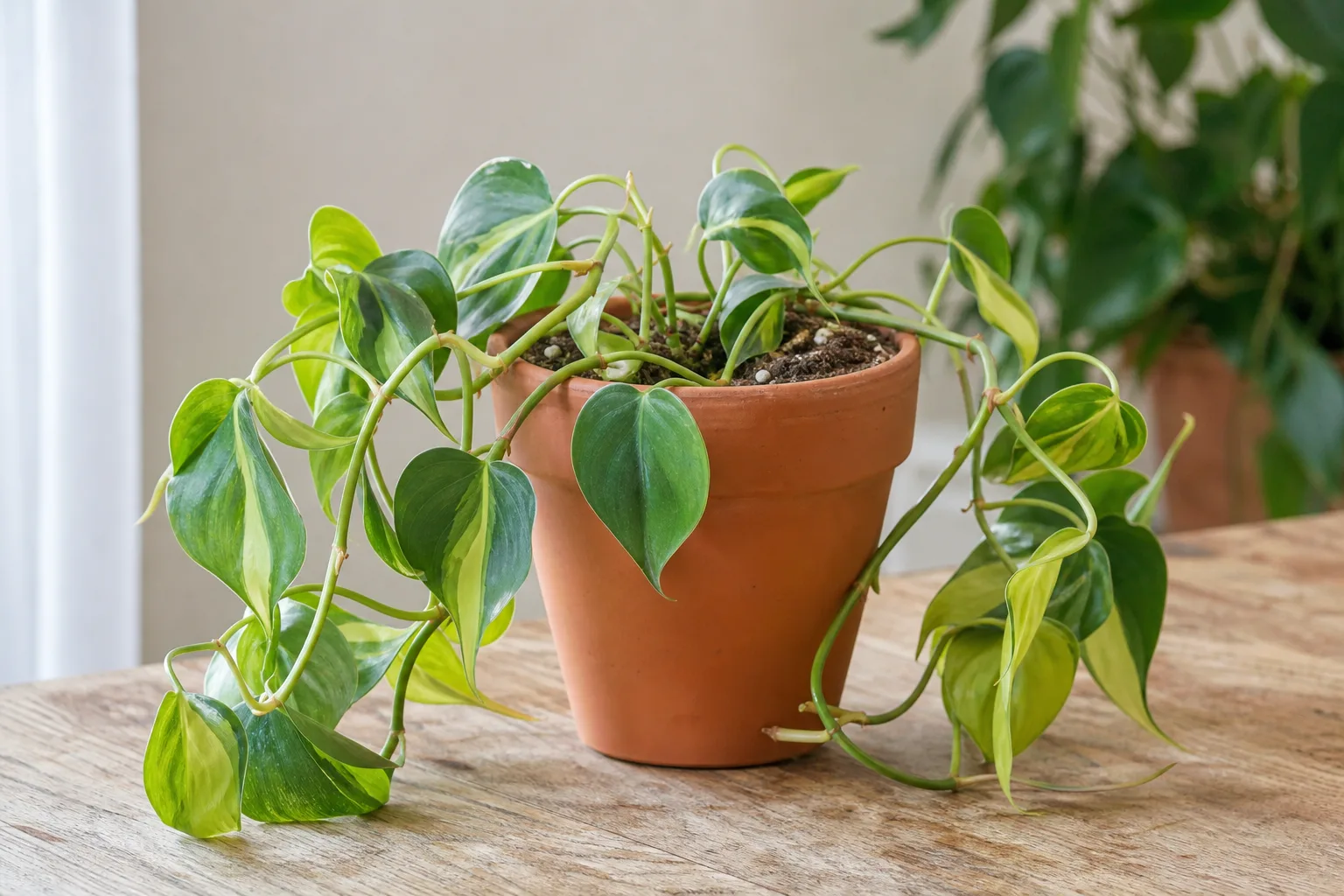
Repotting Stress on Philodendron Brasil: Causes, Checks & Fixes
This guide covers repotting stress on Philodendron Brasil. See also the general Repotting Stress guide, watering, and light pages for this plant.
Repotting Stress on Philodendron Brasil: Causes, Checks & Fixes
Quick answer
Philodendron Brasil repotting guide stress on Philodendron Brasil (Philodendron hederaceum ‘Brasil’) is the temporary setback this fast-growing vining heartleaf shows when fine roots are disturbed, soil texture changes, or you change too many variables at once. The plant redirects energy from its lime-streaked foliage to rebuilding root contact in fresh mix, so trailing vines droop, lower leaves yellow, or new growth pauses even when moisture looks adequate.
First step: stabilize the environment and wait. Leave the pot in the same Philodendron Brasil light guide, withhold fertilizer for at least four weeks, and water only when the top 3–5 cm of mix dries-not on a calendar meant to “help” a wilting plant. Do not repot again, move rooms, prune every limp leaf, or soak a heavy pot hoping vines perk up. That stacks stress onto already damaged roots.
What repotting stress looks like on Philodendron Brasil
Transplant shock on this vining heartleaf cultivar usually appears within three to fourteen days of repotting. Because Brasil grows as long cascading stems, stress often shows on the outermost trailing vines first while the crown near the pot still looks normal.
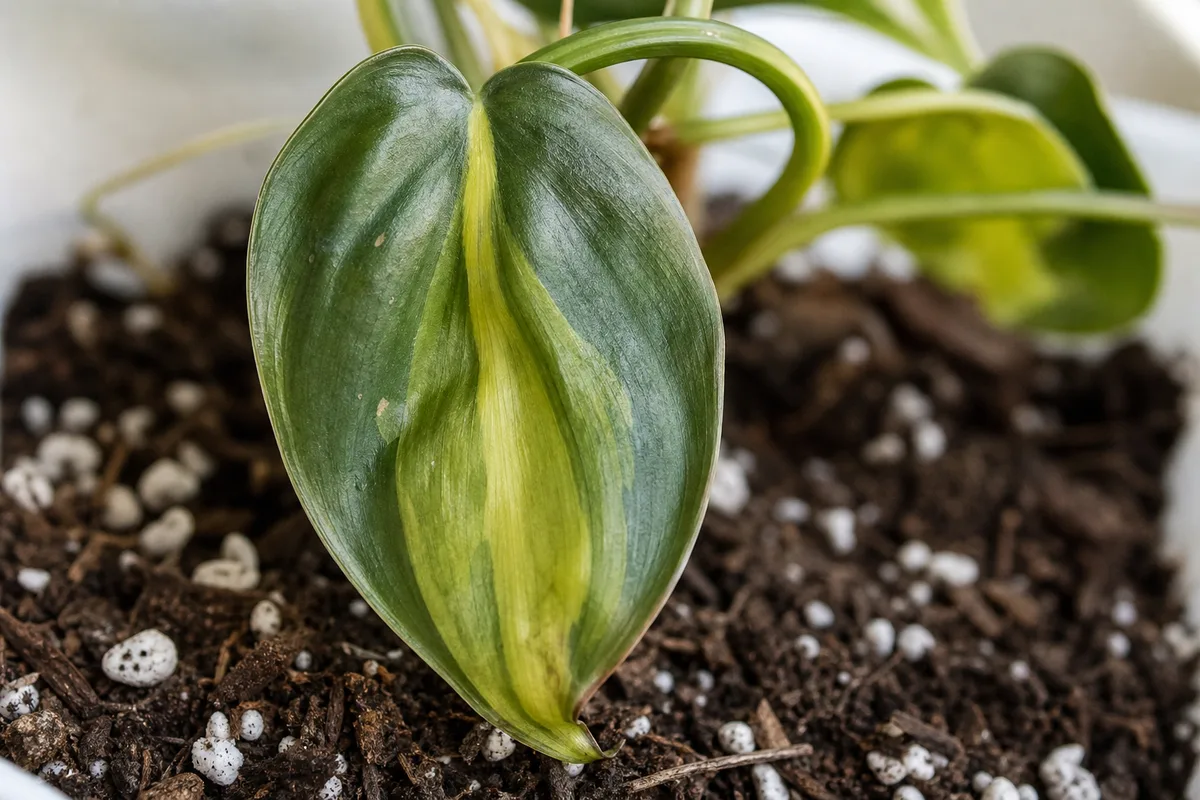
Repotting Stress symptoms on Philodendron Brasil - compare with healthy tissue on the same plant.
Early signs:
- Heart-shaped leaves hang limply on thin petioles, especially on the longest trailing sections
- One or two lower leaves turn pale yellow while newer growth at the vine tips stalls
- Lime-and-green variegation looks dull rather than crisp
- Pot feels heavier than before if you watered immediately after repot
- Plant wobbles slightly because fine roots have not re-anchored in fresh mix
Progressed stress:
- Multiple vines wilt together while mix stays wet longer than it did in the old pot
- Yellowing climbs up stems beyond the lowest one or two leaves
- Stems soften at the soil line and soil smells sour (stress has progressed toward rot)
- No new lime-streaked leaves for three or more weeks after repot in what should be active growth
Normal post-repot pause differs from failure: firm green stems at the base, neutral soil smell, and gradual re-rooting over two to four weeks without spreading yellowing or stem collapse.
Why Philodendron Brasil gets repotting stress
Fine-root disturbance
Repotting inevitably breaks the fine root hairs that absorb water. Until those connections rebuild in the new mix, leaves can droop even when the soil feels moist-the same water-balance problem that causes shock droop on healthy Brasil after any root disturbance. Illinois Extension lists transplanting shock among common causes of general defoliation on houseplants.
Brasil’s rapid growth rate means it pushes new vine length quickly when conditions are right, but that same metabolism increases water demand right when damaged roots cannot supply it. The mismatch shows up as dramatic limp vines within days.
Oversizing the pot
Jumping to a much larger container is a frequent trigger. RHS guidance recommends a pot only a few centimetres larger than the rootball-if the pot is much bigger, compost stays wet longer and roots rot. Iowa State Extension notes philodendrons do well when slightly pot-bound because soil dries more quickly between waterings; spare wet mix in an oversized pot after repot is a common Brasil failure mode.
Watering too soon or too often after repot
Many owners soak fresh mix immediately to “settle” the plant. On disturbed roots, that keeps cut surfaces wet and invites decay-the same pathway as root rot in overly wet soil on heartleaf philodendron. Clemson HGIC warns that philodendrons need evenly moist but not soggy soil and that root rot results from mix that does not drain quickly or from overly frequent watering.
Wrong season or stacked changes
Illinois Extension recommends repotting when the plant is actively growing-typically spring or early summer. Winter repotting in dim rooms leaves disturbed roots in mix that dries slowly. Stacking repot with relocation, heavy vine pruning, fertilizer, and a new watering routine the same week makes it impossible to read the plant’s response.
Unnecessary day-one repot after purchase
Brasil is forgiving, but new plants still need quarantine and observation. Unnecessary repot on arrival adds root handling to shipping stress, new light, and unfamiliar humidity-especially when nursery mix and drainage were already adequate.
How to confirm the cause
Work through these checks in order:
- Repot timeline - Did symptoms begin within two weeks of transplant? Was repot recent and otherwise unexplained?
- Pot size jump - More than one pot size (roughly 2–5 cm wider) increases wet soil volume disproportionately.
- Watering after repot - Heavy soak within 48 hours into fresh mix is a major stress trigger on disturbed philodendron roots.
- Root handling - Aggressive teasing of circling roots, removing most old soil, or trimming healthy roots raises recovery time.
- Stem firmness and smell - Pinch the main stem at the soil line. Firm and green suggests pause; soft, mushy tissue and sour odor suggest rot needing salvage steps.
- Pot weight vs moisture - Heavy pot with wet mix several days after repot supports overwatering on Philodendron Brasil stress; light dry pot with limp vines may mean underwatering on Philodendron Brasil on damaged roots that cannot drink efficiently yet.
- Recent stacked changes - Same-week moves, feeding, or major pruning alongside repot point to compounded shock.
Lookalike symptoms to rule out
Chronic overwatering before repot can persist if rot was not trimmed-wet soil plus soft stems is rot, not harmless pause. Simple thirst droop shows a light pot and dry mix 3–5 cm down without repot history. Low light alone stalls variegated growth without recent transplant. Pest-related limp vines usually show stippling, webbing, or cottony clusters on stem joints first.
First fix for Philodendron Brasil
If you repotted recently and the plant is wilting: stop changing care and stabilize one environment for two weeks.
Specifically:
- Keep the same bright indirect light-no hot west window, no dim corner shuffle.
- Withhold fertilizer for four to six weeks; fresh mix already holds nutrients and stressed roots cannot use salts safely.
- Water only when the top 3–5 cm of mix is dry, then soak until runoff and empty the saucer. Do not keep mix constantly wet to “support” limp leaves.
- Do not repot again unless stems soften and soil smells sour.
- Leave mostly green limp leaves attached; they may firm once roots heal. Remove only fully yellow or mushy foliage.
If the pot was upsized heavily and you soaked immediately: let the mix dry through the top half before the next drink. Brasil tolerates brief dry-down better than saturated disturbed roots.
If stems are soft or soil smells foul, escalate to root rot salvage-unpot gently, trim mushy tissue, and repot dry into a right-sized container with perlite-amended mix.
Step-by-step recovery
- Days 0–7 after repot: No fertilizer. Bright indirect light. Water only if the top 3–5 cm is dry-skip if mix is still moist from the repot drink.
- Days 7–14: Watch for firming stems and new lime-streaked leaf unfurling at vine tips. Resume normal depth-based Philodendron Brasil watering guide if mix dries predictably.
- Weeks 2–4: Mild yellow lower leaves may drop; that can be normal energy redirection. Confirm no spreading softness at the crown.
- Weeks 4–8: Resume half-strength balanced fertilizer only if new growth is active and the top 3–5 cm dries within about a week in moderate light.
- Beyond 3 weeks of persistent wilt: Unpot and inspect roots if stems stay firm but vines remain limp on wet mix-wrong soil texture or hidden rot may need correction.
Spring repots align with Illinois Extension timing guidance for active growth, when Brasil re-establishes fastest.
Recovery timeline
Mild repotting pause with firm stems often resolves in one to two weeks once watering matches dry-down at the top 3–5 cm. Moderate wilting on several trailing vines may need two to four weeks before confident new growth. Winter repots or heavily disturbed root balls can take longer.
Yellowed or dull leaves do not revert to perfect variegation. Success means firm crown stems, neutral-smelling soil, and new lime-streaked leaves or lengthening vines-not every old limp leaf standing upright again.
Mistakes to avoid
- Do not water on schedule “to help it settle”-disturbed roots need oxygen in mix that is moist, not saturated.
- Do not repot again within six weeks unless confirmed rot requires it.
- Do not fertilize stressed vines; salts burn compromised root tips.
- Do not move repeatedly between rooms while roots re-establish.
- Do not upsize to a large decorative pot immediately after a stressful repot.
- Do not prune every limp heart leaf on day one-some reinflate after roots heal.
- Do not stack repot with heavy variegation-pruning and relocation the same week.
Philodendron Brasil care cross-check
Brasil performs best with bright to medium indirect light, well-draining potting mix amended with 20–25% perlite, and watering when the top 3–5 cm dries. Humidity around 40–60% is comfortable; this cultivar tolerates average home air better than many tropicals but still wilts faster when post-repot moisture and light are mismatched.
Trailing baskets need the same crown checks as tabletop pots-long vines do not mean the root ball can sit wet for weeks after repot in an oversized container.
How to prevent repotting stress next time
Repot only when necessary-roots circling the pot, mix failing, or unstable watering-not on a calendar or purchase day. Best timing is spring through early summer when growth resumes. Water the plant an hour before repotting per Illinois Extension, use fresh perlite-amended mix, increase pot size by only one step (about 2–5 cm wider), and place the plant at the same depth as before.
After repot:
- Water once lightly if the mix is dry; otherwise wait until the top 3–5 cm dries.
- Withhold fertilizer four to six weeks.
- Keep bright indirect light stable; avoid cold drafts and hot glass.
- Make one change at a time-repot OR prune heavily OR relocate, not all three.
Clemson HGIC notes you can repot overcrowded philodendrons at any season, but spring remains safest for fast-recovering Brasil when you have a choice.
When to worry
Escalate when stems soften at the soil line, black tissue spreads, soil smells foul after repot, or multiple vines collapse within ten days. These indicate rot, not harmless pause.
Lower urgency applies when stems are firm, smell is neutral, and growth is simply slow-wait through a full dry-down at the top 3–5 cm before intervening again.
Conclusion
Repotting stress on Philodendron Brasil is usually self-inflicted: fine-root disturbance plus too many changes at once, often an oversized pot or watering too soon. Confirm by recent repot timeline and stem firmness at the crown; fix by stabilizing light, withholding fertilizer, and matching water to dry-down at 3–5 cm depth. Prevent by spring repotting into a modestly larger pot, perlite-amended mix, one careful drink if needed, and avoiding unnecessary transplant on arrival day.
When to use this page vs other Philodendron Brasil guides
- Philodendron Brasil watering guide - Use for routine moisture checks before assuming repotting stress is the main issue.
- Philodendron Brasil problems hub - Browse all 46 common issues on this species.
- Root Rot on Philodendron Brasil - Different entry point when symptoms overlap with repotting stress.