Best Soil for Philodendron Brasil: Mix & Drainage
Best Soil for Philodendron Brasil: Mix & Drainage
Best Soil for Philodendron Brasil: Mix & Drainage
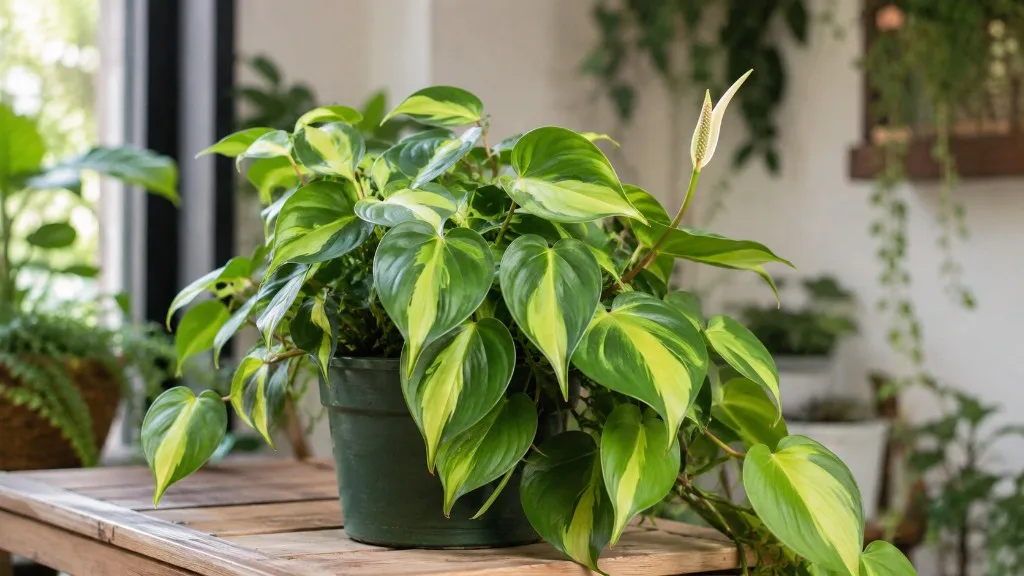
Philodendron Brasil soil decides whether Philodendron hederaceum ‘Brasil’ - the lime-streaked heartleaf trailer sold in hanging baskets everywhere - grows long, vivid vines or slowly yellows while you blame watering. Brasil shares the same semi-epiphytic root biology as other Araceae aroids: roots expect loose, oxygen-rich mix that dries partially between drinks, not dense peat that holds water at the bottom for two weeks while the surface looks merely “kind of dry.”
The practical default for most homes is 75–80% peat-based indoor potting mix plus 20–25% perlite by volume, in a pot with drainage holes, refreshed before fine peat collapses into anaerobic mud. Fast-growing trailing roots fill a 15 cm pot within 12–18 months, which changes how quickly mix compacts and how often you need to repot. This guide covers the core perlite blend, optional chunky aroid upgrade with orchid bark, commercial options, hanging-basket adjustments, pH targets, repot summary, and soil-failure diagnostics tied to Brasil’s variegated, fast-trailing habit.
Why Brasil Needs Airy, Well-Draining Mix (Not Heavy Peat)
Philodendron Brasil is a vining heartleaf cultivar - not a self-heading or velvet philodendron - with roots adapted to forest leaf litter, bark debris, and open organic pockets across Mexico to tropical America. NC State Extension lists good drainage and moist (not soggy) conditions for Philodendron hederaceum. Indoors, “moist” only works when the mix drains fast enough that roots still access oxygen between waterings.
Missouri Botanical Garden recommends a soil-based potting mix for heartleaf philodendron and notes root rot in overly moist soils. That pairing matters: Brasil tolerates more moisture than a succulent, but continuous wetness at the root zone - especially in dim corners where evaporation is slow - is the fastest route to root rot and yellow leaves.
Brasil’s fast growth (NC State describes rapid growth on heartleaf philodendron) means roots repeatedly explore the pot and break down peat structure. A mix that drained well at repotting can compact within a year even if your watering habit did not change. Variegated leaves add another soil interaction: when wet mix sits in low light, the plant pushes more chlorophyll and lime streaks fade - a signal often misread as fertilizer deficiency when the real issue is root-zone oxygen and placement. Pair soil fixes with the light guide when variegation washes out.
One worked comparison: a 15 cm plastic shelf pot with unamended store potting mix stayed wet 10–12 days after each watering in a north-facing room; lower leaves yellowed despite a conservative schedule. Repotting into 75% potting mix + 25% perlite with a confirmed drainage hole shortened dry-down to 7–8 days, and new variegated growth resumed within three weeks. The calendar did not change - the substrate system did.
The Core Mix: Standard Potting Mix + Perlite
Standard potting mix here means a peat- or coco-based indoor blend sold for houseplants - not garden soil, topsoil, or outdoor bed mix. Those bagged blends hold moisture and nutrients; they often lack enough pore space for a fast aroid trailer unless you amend them.
The best starting point for Philodendron Brasil in typical apartment conditions:
- 75–80% indoor potting mix - organic base, fine-root anchoring, starter nutrients
- 20–25% horticultural perlite - drainage, aeration, resistance to compaction
Mix dry ingredients in a bucket until perlite is evenly distributed. The finished blend should look speckled with white perlite, feel loose in your hand, and crumble after a gentle squeeze when moist - not pack like wet clay.
Iowa State Extension recommends all-purpose potting soil in containers large enough to support the plant without toppling, and notes philodendrons do well when slightly pot-bound because mix dries more quickly between waterings. That is why Brasil often performs better in a modest pot with amended mix than in an oversized decorative container filled with heavy peat.
Default 75:25 Blend for Most Indoor Setups
For a standard home with 40–60% humidity, bright indirect light, and temperatures around 18–27°C (65–80°F), the 75:25 blend supports the common rhythm: water when the top 3–5 cm of mix dries, roughly every 7–10 days in active growth and 10–14 days in cooler months per the watering guide. UF/IFAS advises using lightweight, well-drained potting media and watering when the top inch of soil is dry - the same moisture-check logic, scaled to your pot size.
Never use pure peat moss or pure coco coir without large fractions of perlite and bark. Both hold water beautifully and drain poorly alone. Never use garden soil indoors - it compacts, carries pests, and behaves unpredictably in a container.
Optional Upgrade: Chunky Aroid Mix with Orchid Bark
When the intro promises “chunky air pockets,” bark is how you deliver them. Orchid bark (medium fir or pine grade) adds macropores that resist collapse better than fine peat alone - closer to the debris epiphytic roots encounter in habitat.
Upgrade when:
- Mix stays wet more than 10 days in a typical watering cycle
- Fungus gnats persist after drying the top layer
- The plant lives in a hanging basket or humid bathroom where evaporation is slow
- You prefer less frequent watering in bright, warm rooms without risking anaerobic roots
A workable chunky aroid blend (by volume):
- 2 parts indoor potting mix
- 1 part perlite
- 1 part orchid bark
That 2:1:1 ratio is more open than the 75:25 default and suits fast trailers that outgrow small pots quickly. Some growers add 5–10% worm castings at repot for mild slow nutrition; skip if you fertilize regularly.
Perlite vs. bark trade-off: perlite speeds water exit; bark holds structure and air pockets longer as peat breaks down. For Brasil in low light, do not push bark so high that the mix dries in two days - variegation needs stable moisture, not desert conditions. In bright, warm rooms, lean chunkier.
DIY Recipe Table: Basic vs. Chunky
| Component | Basic blend (most homes) | Chunky aroid blend | Role |
|---|---|---|---|
| Indoor potting mix | 75–80% | 50% (2 parts) | Nutrients, fine structure |
| Perlite | 20–25% | 25% (1 part) | Drainage, aeration |
| Orchid bark | - optional 10% | 25% (1 part) | Long-lived air pockets |
| Worm castings | 0–5% optional | 0–5% optional | Mild organic boost at repot |
Batch example for a 15 cm repot: scoop 6 cups potting mix + 2 cups perlite (basic) or 4 cups mix + 2 cups perlite + 2 cups bark (chunky). Adjust proportionally for larger pots.
After mixing, run the squeeze test: moist handful holds briefly, then crumbles. If it clumps like clay, add perlite. If it falls apart instantly, add a little more base mix or coco coir.
Commercial Mix Options and What to Amend
Commercial aroid, jungle, or philodendron mixes can work if the ingredient list leads with peat or coco, perlite, and bark - not only fine peat and wetting agents. Quality varies: some “aroid” bags are still too dense for a dim-room Brasil; others are so chunky that dry-home growers fight constant wilt.
Standard indoor potting mix amended at home often beats an uninspected specialty bag. Read labels:
- Good sign: peat/coco, perlite, bark, limestone (pH buffering)
- Caution: “moisture control,” water-absorbing crystals, or outdoor/garden formulas - these keep mix wet longer
- Already has slow-release fertilizer: note the start date; avoid double-feeding at repot
If you buy commercial aroid mix and water pools on the surface, stir in extra perlite (10–15% of total volume) before potting. If cuttings or small pots dry in 48 hours under moderate light, add a handful of potting mix or coco coir per gallon of blend.
Cactus or succulent mix alone is too lean for Brasil unless blended 50/50 with indoor potting mix and still amended with bark for structure. Straight cactus mix in low light dries unevenly and offers little anchoring for long vines.
Drainage Speed: How to Test Your Mix
Drainage is how fast water moves through the pot after a full watering - not whether the surface looks wet. Brasil wants the root zone to approach partial dryness between drinks, not stay saturated for days.
After watering thoroughly until runoff:
- Excess should exit drainage holes within minutes, not sit in the saucer indefinitely
- The pot should feel lighter within your normal dry-down window (often 5–10 days in moderate light)
- The top 3–5 cm should dry first; the bottom should not remain cold and wet while the surface looks ready
The gravel layer myth persists: stones at the bottom do not improve drainage physics and can keep roots closer to a saturated zone. Fill the pot uniformly with the same amended mix from bottom to top.
One-Minute Drainage Check and Smell Test
Drainage check: After a full watering, watch whether water ** sits on top**, channels down the sides without wetting the core, or pools in a cachepot. Any of those means the soil system - mix, pot, or outer shell - needs correction before you change light or feeding.
Smell test: Fresh mix smells earthy. Sour, swampy, or stagnant odor at the root ball means roots may be losing oxygen even before leaves show full decline. When smell and slow drain appear together, plan a repot into fresh blend rather than another top-water cycle. See overwatering when multiple stems yellow while mix stays wet.
Pot Choice and Mix Volume for Trailing Brasil
Even perfect mix fails in a pot that traps water. Drainage holes are non-negotiable for long-term indoor culture (UF/IFAS emphasizes well-drained media in containers). One centered hole suffices on small pots; larger containers benefit from multiple holes.
Choose a pot only slightly larger than the root ball - typically 2–5 cm wider at repot. Iowa State Extension notes philodendrons tolerate slightly pot-bound conditions; oversized pots hold excess wet mix around roots that cannot use it, especially in low light.
Cachepots (decorative outer pots without holes) work only if the inner nursery pot drains freely and you empty standing water after every watering. Never let the bottom sit in a permanent puddle.
Trailing weight pulls mix toward the bottom of hanging baskets over time. A chunky blend resists compaction better than fine peat alone in elevated pots. Match pot depth to root mass, not only to how long you want the vines to hang.
pH, Minerals, and When to Flush the Mix
Philodendron Brasil prefers slightly acidic conditions. NC State Extension lists acid soil (pH below 6.0) and high organic matter for the genus; RHS recommends slightly acidic compost (pH 5–6) for philodendrons - a 2:1 orchid compost to peat-free ericaceous compost blend for repotting. In practice, most quality peat-based indoor mixes buffer near 5.5–6.5, which suits Brasil without obsessive tuning.
Obsessive pH chasing is rarely necessary. If new leaves unfurl with normal variegation and growth is steady, fresh mix at repot handles chemistry better than weekly additives. Test or refresh when:
- New growth is pale despite good light and conservative watering
- White crust forms on the soil surface (salt accumulation from fertilizer and hard tap water)
- Leaf tips brown while mix drains normally
Flush protocol: Water slowly with plain water until runoff runs clear, discard saucer water, and repeat once. If crust returns within weeks, refresh mix at repot rather than stacking fertilizer. SDSU Extension recommends replacing soil every two years to reduce salt and chemical buildup - a useful refresh interval even when roots are not yet crowded.
When to Refresh or Replace Soil
Refresh mix when structure fails - not on a reflex every spring. Repot or replace soil when:
- Roots circle heavily at drainage holes or rise to the surface
- Mix compacts - water channels down sides; pot stays heavy days after a light watering
- Sour smell or persistent fungus gnats after adjusting watering
- Growth stalls in good light despite regular feeding
- Dry-down time swings wildly (two days, then eighteen days) without seasonal explanation
Peat-based mixes decompose as microbes and roots work the structure. Signs of breakdown: mix feels dense and smooth when moist; bark chips are soft and fragmented; surface repels water after drought (hydrophobic peat).
Avoid repotting brand-new nursery plants on day one unless mix clearly fails or pests are obvious. Quarantine, learn the drying rhythm for two to three weeks on the overview hub, then repot if needed. Best timing is active growth - spring through early fall - when roots regenerate quickly.
Repotting Into Fresh Mix (Summary)
Repotting is when your soil strategy becomes physical. For the full seasonal workflow, see the dedicated Philodendron Brasil repotting guide. Summary:
- Water lightly one to two days before if mix is bone dry; slightly moist root balls release easier.
- Choose a pot one size up with drainage holes.
- Mix fresh blend (75:25 or 2:1:1) in a bucket until uniform.
- Remove the plant, loosen outer compacted mix, inspect roots - trim brown, mushy tissue; leave white, firm roots.
- Set the root ball at the same depth as before; backfill without compressing.
- Water thoroughly, discard saucer water, place in bright indirect light.
- Hold fertilizer for four to six weeks while roots establish.
Expect minor wilt for a week; new growth confirms success. If multiple leaves yellow rapidly, check oversized pot and oversaturated mix before moving the plant again.
Pet safety during repot: Philodendron contains calcium oxalate crystals toxic to cats and dogs (ASPCA). Wear gloves if sap irritates skin; keep discarded mix and trimmings away from pets that dig in pots.
Hanging Baskets vs. Shelf Pots: Soil Considerations
The same recipe behaves differently by container type.
Hanging baskets dry from all sides, including the exposed bottom, but trailing foliage can shade the pot and slow top drying. Warm air rises; baskets near ceilings may dry fast in summer and slow in winter when heat runs. Use the chunky 2:1:1 blend or push perlite toward 30% if mix stays wet more than 10 days. Confirm the liner or pot drains; never let runoff sit in a decorative shell.
Shelf or tabletop pots dry more slowly at the bottom - especially in glazed ceramic or plastic without terra-cotta wicking. The 75:25 default usually suffices. Avoid oversized pots “for trailing room”; roots fill the bottom first while upper mix stays unused and wet.
Worked scenario: A 20 cm hanging basket with 75:25 mix in a humid kitchen stayed wet 14 days; shifting to 2:1:1 with 30% perlite brought dry-down to 8 days without increasing underwatering stress. A 15 cm shelf pot in the same home kept the 75:25 blend with no change needed.
Common Philodendron Brasil Soil Mistakes
Repeated clinic patterns:
- Unamended bagged potting soil in low light - chronic wet roots despite ” careful” watering
- Oversized pots after propagation - excess wet mix, not faster trails
- Gravel drainage layers - do not work; uniform chunky mix does
- Garden soil or pure peat indoors - compaction and unpredictable water movement
- Cachepots holding standing water - negates well-draining mix instantly
- Moisture-control crystals - extend wet time when Brasil wants partial dry-down
- Repotting stressed plants on arrival - compounds shock unless roots are rotting
- Ignoring mix breakdown until half the vine yellows
- Blaming variegation loss on fertilizer while wet mix sits in a dim corner
- Using straight cactus mix - drought stress and weak vines in typical indoor light
Brasil survives many mistakes temporarily - that forgiveness hides substrate failure until one extra watering triggers collapse.
Troubleshooting: Wet Mix, Sour Smell, or Slow Drainage
Use this flow before changing three variables at once:
Water sits on the surface after watering: Mix may be hydrophobic (peat dried and repels water) or compacted. Submerge the pot briefly to rewet, then plan refresh at repot. Chronic channeling means structure collapse.
Pot feels heavy 10+ days after watering in moderate light: Mix too dense, pot too large, or blocked drainage. Slip the plant out - if lower mix is mud while top is merely cool, amend with perlite/bark or repot smaller.
Sour smell but leaves still look okay: Early anaerobic stress. Repot into fresh blend; trim mushy roots. Do not wait for full collapse.
Plant wilts while mix is wet: Roots may be dead or damaged - classic overwatering pattern. Inspect roots before watering again.
Fast growth then sudden decline after 12–18 months in same pot: Likely root crowding plus peat breakdown, not a mysterious pest. Refresh mix and move up one pot size.
Cross-check persistent symptoms on wrong soil mix, root rot, and mold on soil pages before stacking fertilizer, pruning, and repotting the same week.
Know Your Plant: Trailing Brasil Root Habit
Philodendron Brasil (Philodendron hederaceum ‘Brasil’) is a trailing heartleaf cultivar with lime streaks that vary leaf to leaf - faster and more forgiving than many collector philodendrons, but still sensitive to wet roots in dim corners. It is not a self-heading or velvet type; soil advice built for those forms does not apply here.
In habitat, heartleaf philodendron climbs and trails through Central and South American forests (NC State), sending roots into open organic material. Indoors, mature vines commonly reach 4–6 ft (NC State); that length reflects active root expansion that continuously reshapes mix structure. Prune long plain-green reverted vines back to a variegated node if color washes out - often a combined light and moisture signal, not a separate soil disease.
For propagation substrates after water rooting, see the propagation guide - cuttings need slightly faster-draining mix than established plants because small root systems stay wet longer.
How We Wrote and Verified This Guide
Author: sai-ananth · Reviewer: LeafyPixels Review Board · Reviewed: 2026-06-15
Recommendations were checked against NC State Philodendron hederaceum, NC State philodendron genus guidance, Missouri Botanical Garden P. hederaceum, Iowa State growing philodendrons, UF/IFAS heartleaf philodendron, RHS philodendron growing guide, SDSU philodendron houseplant guidance, and LeafyPixels Philodendron Brasil cluster data. Mix ratios reflect common aroid-houseplant practice synthesized into home-grower workflows rather than copied template blocks.
When to use this page vs other Philodendron Brasil guides
- Philodendron Brasil overview - Start here for whole-plant context before deep-diving this topic.
- Philodendron Brasil problems hub - Jump to symptom-specific fix guides when this care topic does not resolve the issue.
- Wrong Soil Mix on Philodendron Brasil - Escalate here when soil adjustments are not enough.
- Root Rot on Philodendron Brasil - Escalate here when soil adjustments are not enough.
Related Philodendron Brasil guides
- Philodendron Brasil overview
- Philodendron Brasil watering
- Philodendron Brasil light
- Philodendron Brasil propagation
- Philodendron Brasil fertilizer
- Philodendron Brasil repotting
- Wrong Soil Mix on Philodendron Brasil
- Root Rot on Philodendron Brasil
- Philodendron Brasil problems
Conclusion
The best soil for Philodendron Brasil is a well-draining aroid blend - typically 75–80% indoor potting mix plus 20–25% perlite, upgraded to 2:1:1 with orchid bark when baskets stay wet or roots outgrow the pot - in a container with drainage holes, refreshed before peat collapses. Target slightly acidic mix (roughly pH 5.5–6.5), adjust chunkiness for humid low-light versus bright dry rooms, and water when the top 3–5 cm dries, not on autopilot.
Soil is the system that decides how much air, moisture, and recovery time Brasil’s fast trailing roots get after every watering. When new variegated leaves unfurl regularly and the pot dries on a predictable rhythm, your mix is working. When smell, gnats, chronic yellow leaves, or water that never moves through the pot appear, fix the substrate before chasing fertilizer or moving the plant room to room. Get the mix right once, refresh on schedule, and pair it with the repotting guide when roots and structure - not the calendar - say it is time.