Overwatering on Philodendron Brasil: Causes, Checks & Fixes
Quick answer
Overwatering on Philodendron Brasil shows as yellow lower leaves, limp trailing vines on wet heavy soil, and dull lime variegation. First step: stop watering until the top 3–5 cm is fully dry, then check roots if decline continues.
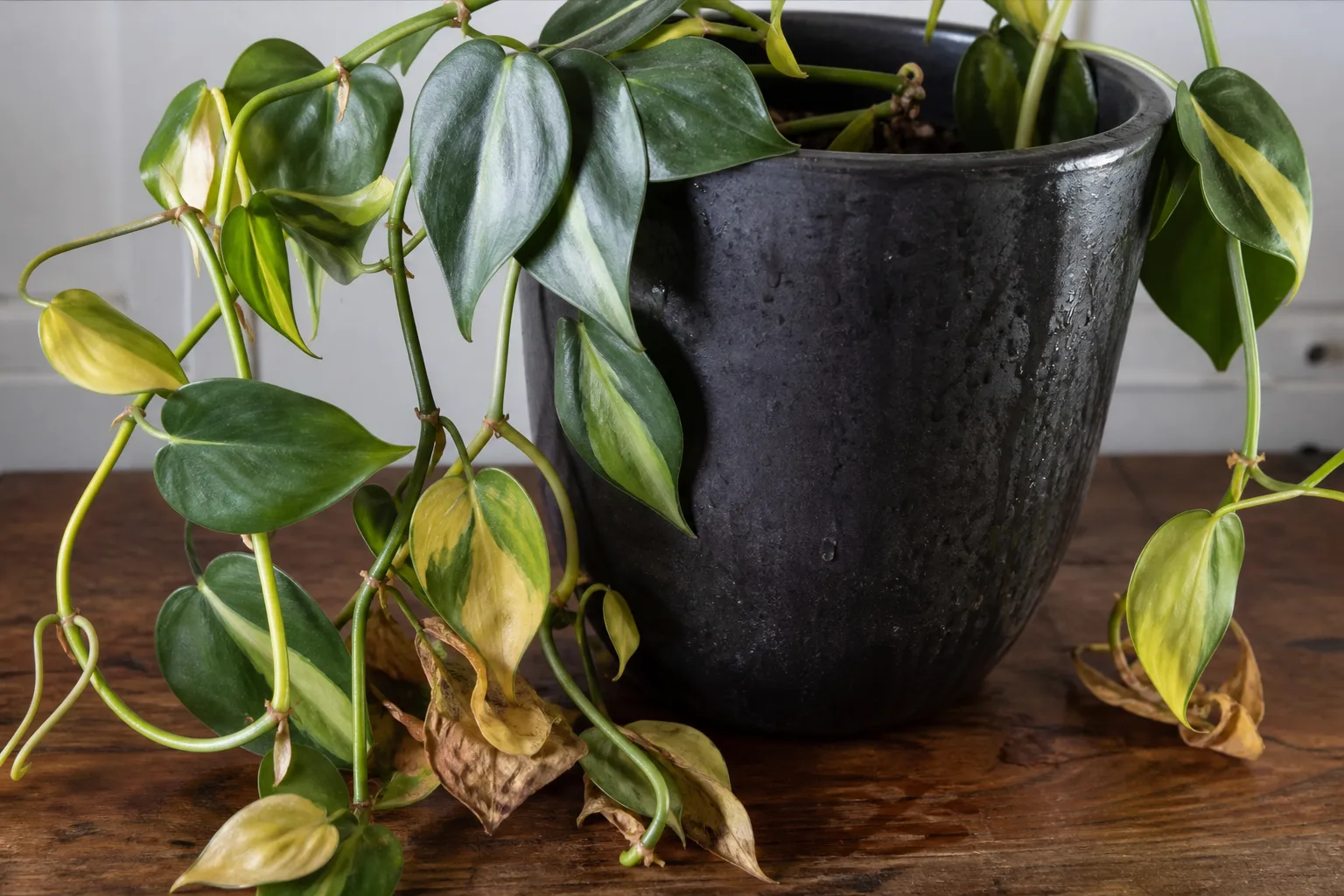
Overwatering on Philodendron Brasil: Causes, Checks & Fixes
This guide covers overwatering on Philodendron Brasil. See also the general Overwatering guide, watering, and light pages for this plant.
Overwatering on Philodendron Brasil: Causes, Checks & Fixes
Quick answer
Philodendron Brasil is a fast-trailing heartleaf philodendron with lime-green streaks-not a moisture-loving fern. When soil stays saturated, roots cannot absorb the oxygen they need and begin to fail; trailing vines wilt and lower leaves yellow even though the mix feels damp.
First step: stop watering until the top 3–5 cm of mix is fully dry. Do not add water to limp lime-streaked foliage when the pot is heavy and soil is cool-damp at depth-that worsens root decline, not thirst.
| What you notice | Soil at 3–5 cm | Pot weight | Likely cause |
|---|---|---|---|
| Limp trailing vines, yellow lower leaves | Wet, cool-damp | Heavy days after watering | Overwatering - use this guide |
| Limp vines, slightly curled leaves | Dusty dry | Very light | Underwatering - see underwatering guide |
| Limp vines, pale washed-out lime streaks | Moist but not soggy | Moderate | Low light slowing dry-down - check light guide |
| Limp vines, sour smell, soft stem base | Wet | Heavy | Root rot advancing - see root rot guide |
When to use this page vs. the watering guide
Use this troubleshooting page when you already suspect too much water-yellow lower leaves on a heavy wet pot, limp trailing vines despite damp soil, or a fixed weekly schedule that never checks dryness. The Philodendron Brasil watering guide covers normal dry-down rhythm, seasonal intervals, and how to soak and drain correctly. Start there if you are setting up care from scratch; return here when wet-soil symptoms appear and you need confirmation steps plus rescue paths.
What overwatering looks like on Philodendron Brasil
Brasil shows water stress through its trailing lime-variegated vines first. Symptoms often progress from the soil line outward along long stems because waterlogged roots cannot supply the farthest leaves.
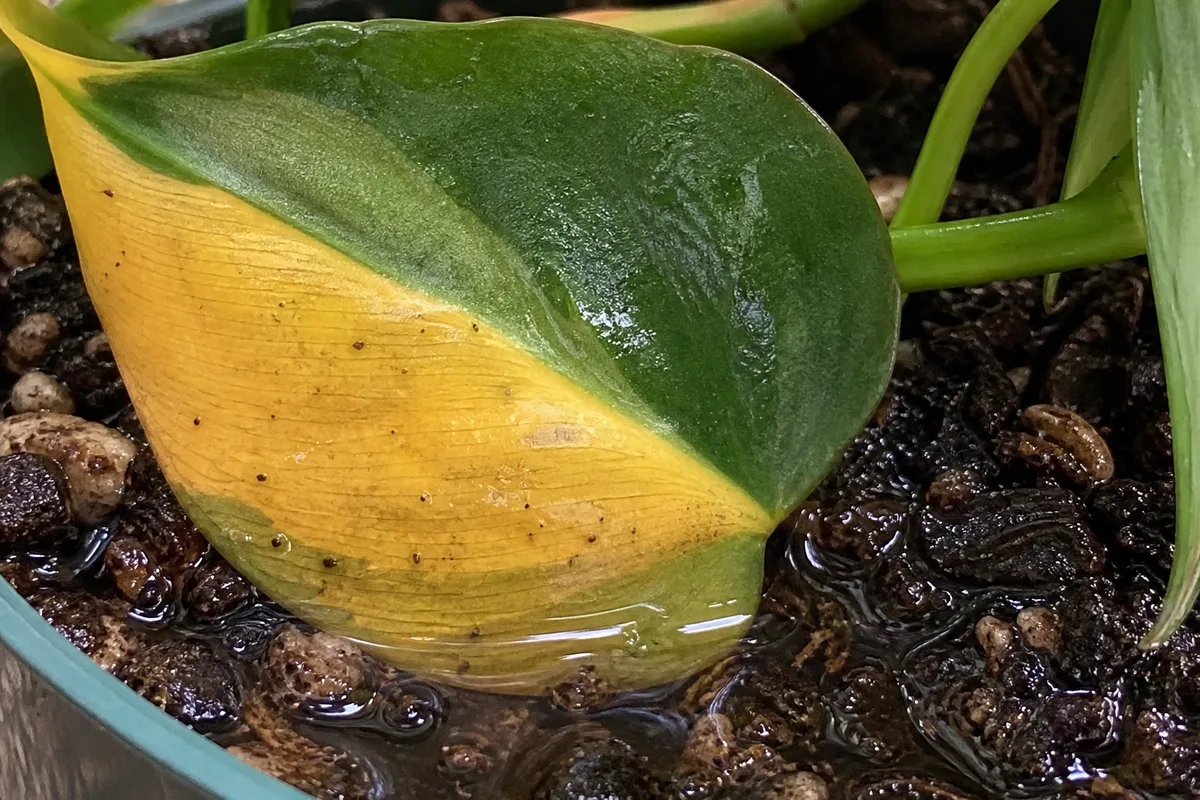
Overwatering symptoms on Philodendron Brasil - compare with healthy tissue on the same plant.
- Yellow lower leaves on older nodes near the pot, sometimes spreading up the vine if roots stay wet
- Limp, soft-feeling trailing vines while mix is wet-not the crisp curl of a thirsty plant
- Dull lime variegation on chronically wet mix; pale washed-out color across the whole plant with moist soil may also point to not enough light, but dull streaks on heavy wet pots fit overwatering
- Heavy pot that stays wet for a week or more after watering
- Stalled or smaller new leaves with weak lime striping during active summer growth
- White mold, algae, or green film on the soil surface under trailing stems
- Fungus gnats hovering when you water or disturb the top layer
- Sour or swampy smell from the mix when you lift the pot
- Stem base softening at soil line-a late sign that wet conditions have reached crown tissue
Unlike underwatering, stems at the soil line may stay firm early on-Brasil tolerates brief wet spells better than many succulents, which can mask chronic overwatering until sudden vine collapse. Yellow leaves that have fully chlorosed will not re-green; recovery shows up in new lime-streaked heart leaves.
Why Philodendron Brasil gets overwatered
Brasil grows as a rapidly climbing or trailing vine that can reach several feet indoors under bright indirect light. Fast summer growth tricks owners into watering too often while winter dim corners slow water use-but the same weekly habit continues.
Several Brasil-specific factors stack the odds:
Fast growth masking calendar overwatering. A trailing vine pushing new lime-streaked leaves every week looks thirsty even when roots sit in wet peat. Summer heat plus bright light increases transpiration, but dense store-bought mix without perlite may still hold water at the bottom while the surface looks merely “kind of dry.”
Low light plus fixed schedule. Brasil in a dim hallway uses little water, so the same Sunday watering keeps soil saturated for days. Philodendrons prefer evenly moist but not soggy soil-”moist” only works when mix drains fast enough that roots access oxygen between cycles.
Hanging baskets and cache pots. Elevated trailing displays expose more pot surface to airflow, which can dry the top layer faster than the root ball center-giving a false “ready to water” reading while the bottom stays wet. Decorative cache pots with no drainage pool runoff and keep inner mix anaerobic.
Oversized pots. Extra soil volume without matching root mass holds moisture around roots for days. Brasil looks best with full trailing vines, so owners often upsize too early.
Hydrophobic peat paradox. Old peat-heavy mix that has gone bone dry repels surface water while the center stays stale and wet-a pattern that invites both drought stress on outer roots and suffocation in the core.
Winter dry-down slowdown. Shorter days and cooler rooms reduce water use, yet many growers keep summer frequency. UF/IFAS notes heartleaf philodendron prefers average indoor humidity and tolerates typical home conditions when other needs are met-but cold slow-growing conditions extend dry-down time, so watering must stretch accordingly.
How to confirm overwatering
Work through these seven checks before repotting or pruning:
- Soil moisture at depth - Push your finger 3–5 cm into the mix near the root ball. Wet or cold-damp mix with yellow lower leaves supports overwatering. Bone-dry dusty mix with limp vines points to underwatering instead.
- Pot weight - Lift the container. A heavy, waterlogged feel days after watering confirms slow dry-down. A very light pot after several days without water does not fit overwatering.
- Drainage path - Confirm drainage holes exist and are not blocked by roots, pebbles, or a glued-in liner. Check whether the pot sits in a full saucer or sealed cache pot.
- Leaf and stem pattern - Yellowing starting on older lower leaves with wet soil fits overwatering. Outside-in collapse on long trailing stems while the pot stays heavy is classic for this cultivar.
- Smell test - Sour, anaerobic odor from the mix strongly suggests root decline.
- Pest clue - Fungus gnats breeding in constantly moist top layer support an overwatering diagnosis, though they are not the root cause.
- Light reality check - Note daily bright indirect hours. Brasil in less than a few hours of usable light plus frequent watering is the classic mismatch-soil dries slower than the owner expects.
If soil is wet, stems are firm, and only one old bottom leaf yellowed, you may be seeing natural senescence-not a watering crisis. The combination of wet mix + spreading yellow + limp trailing foliage confirms trouble.
First fix to try
Stop watering until the top 3–5 cm of mix is fully dry.
This single pause breaks the saturation cycle without shocking the plant further. Move Brasil to brighter filtered light-not direct afternoon sun-so remaining healthy roots can dry the mix faster. Tilt the pot to pour out any saucer water. Do not mist, do not fertilize, and do not repot on day one unless the mix smells sour or the stem base is already soft.
If vines are limp but soil is still wet, the problem is failing roots, not thirst. Wilting with wet soil can mean damaged roots-adding water makes root decline worse.
Step-by-step recovery
After the dry-down pause, choose a path based on severity.
Mild case: wet soil, firm stem, limited yellowing
- Let the top 3–5 cm dry before every future watering.
- Move to bright filtered light so the pot dries predictably.
- Empty the saucer within 30 minutes after each watering.
- Remove fully yellow leaves at the base-they will not recover.
- Watch for a new lime-streaked heart leaf over the next two to four weeks.
Moderate case: sour smell, persistent gnats, or wilt with wet soil
- Slide the plant out of the pot and inspect roots. Healthy aroid roots are firm and pale; rotted roots are brown, mushy, and may smell bad.
- Trim all mushy roots with clean scissors. Rinse away old wet soil.
- Repot into fresh mix: standard potting soil plus 20–25% perlite, in a pot with drainage holes sized to the root ball-not much larger.
- Water lightly once to settle the mix, then let the top layer dry before the next drink.
- Hold fertilizer until new growth appears.
Severe case: soft stem base or collapsing trailing crown
- Unpot immediately and remove all rotted roots and any soft stem tissue back to firm green.
- Repot the remaining healthy section into a small well-draining pot, or propagate firm stem cuttings with nodes if the base is gone-Brasil roots easily in water or moist mix per the propagation guide.
- Keep humidity moderate and light bright but indirect. Avoid sealed plastic bags that trap moisture around the stem.
- Accept that heavily damaged plants may lose most trailing length before pushing new variegated growth.
Wear gloves when handling cut tissue-Brasil sap can irritate skin, and all philodendron parts contain calcium oxalate crystals toxic to pets if ingested. Keep pets away while roots are exposed.
Recovery timeline
Mild overwatering often stabilizes within two to four weeks once watering and light are corrected. You should see the pot dry on a predictable rhythm and at least one new lime-streaked leaf.
Moderate root trimming usually needs four to eight weeks before trailing growth looks normal. Brasil’s fast summer habit can resume quickly once roots stabilize-do not overwater out of impatience waiting for new vines.
Severe crown or root loss can take a full growing season. If the stem base stays firm and you get one healthy new variegated leaf, the plant is recovering. If the base keeps softening or new leaves emerge plain green without lime streaks in adequate light, root damage may still be spreading-escalate to the root rot guide.
Worked rescue scenario: A hanging Brasil in bright summer light received water every Sunday regardless of dryness. By mid-August the pot felt heavy ten days after watering, lower leaves yellowed, and the longest trailing stems went limp while mix stayed damp. After stopping water for twelve days until the top 3–5 cm dried, unpotting revealed roughly 30% mushy roots. Trim, repot into fresh mix with 25% perlite, one light settling soak, then dry-down rhythm-first new lime-streaked leaf appeared about three weeks later.
Lookalike symptoms to rule out
Underwatering - Mix is light and dry several centimeters down. Vines may curl inward or feel crisp at edges. A thorough soak perks foliage within hours if roots are healthy. See the underwatering guide for the wet-vs-dry contrast.
Low light alone - Leggy trailing stems, smaller leaves, and fading lime streaks without constantly wet soil. Fix light first; watering more will not restore variegation and may cause overwatering.
Natural leaf drop - One or two older bottom leaves yellow and drop while soil dries normally and new growth looks good. No rescue needed.
Root rot as the next stage - Persistent wet soil eventually becomes rot. If mushy roots are already widespread, see the root rot guide-but the first intervention is still stopping water and inspecting roots.
Drooping from other causes - Drooping leaves and wilting pages cover cold drafts, heat stress, and pest pressure when soil moisture does not explain the pattern.
Cold draft stress - Darkened or limp leaves after exposure to AC vents or winter windows. Soil moisture may be normal; move the plant out of the draft.
Mistakes to avoid
- Watering on a calendar instead of checking whether the top 3–5 cm is dry
- Adding water to limp trailing vines when soil is already wet-this worsens root failure
- Repotting into a much larger pot “to help drainage”; excess mix stays wet longer
- Keeping Brasil in a cache pot that holds runoff water
- Misting leaves instead of fixing soil moisture-wet foliage can spot and does not dry the root zone
- Fertilizing a stressed plant hoping to push growth; wait until new roots form
- Placing in direct afternoon sun to “dry soil faster”-use brighter indirect light instead
- Assuming every yellow leaf means overwatering without checking soil depth-see yellow leaves for the full pattern guide
Philodendron Brasil care cross-check
Overwatering recovery sticks only when the rest of the setup matches Brasil’s needs:
- Light: Bright filtered or indirect light most of the day. Too dark slows drying and dulls lime streaks; too much direct sun scorches leaves.
- Soil: Well-draining mix with 20–25% perlite per the soil guide-not straight peat or garden soil.
- Water rhythm: Every 7–10 days in active growth when the top 1–2 inches of soil has dried-roughly the top 3–5 cm for Brasil in most homes; every 10–14 days in winter in bright indirect light.
- Pot type: Drainage holes mandatory; empty saucers promptly. Lift hanging baskets to judge weight, not just surface dryness.
- Temperature: Stable 18–27°C (65–80°F). Cold slow-growing conditions extend dry-down time-reduce watering accordingly.
How to prevent overwatering next time
Water when the top inch of soil becomes dry to the touch-not when the calendar says so. Use the finger test at 3–5 cm depth, or lift the pot to judge weight after you know how it feels when properly dry.
Use pots with drainage holes and empty saucers promptly. If you use a decorative cover pot, lift the inner pot out to water and drain, then return it only when dripping has stopped.
Refresh dense store-bought mix by adding perlite, or repot into a proper aroid blend when the plant is healthy-not as an emergency-only fix.
Match watering to season and light. Brasil in a bright east window in summer may need water weekly; the same plant in a dim winter room may need water every two weeks or longer.
Scout weekly during the first month after any rescue. Consistent dry-down between waterings is the best sign your schedule fits this trailing cultivar.
When to worry
Treat overwatering as urgent when:
- The stem base feels soft or mushy at soil line
- Trailing vines collapse while mix is visibly wet
- Soil smells sour or roots are brown and slimy on inspection
- Yellowing spreads to multiple leaves within a week despite pausing water
- Fungus gnats persist and soil surface stays constantly moist
The plant may not be saveable if the entire root system is mushy, the stem base has collapsed, and no firm tissue remains to propagate. Take healthy stem cuttings with nodes before discarding if any firm section still exists.
Related Philodendron Brasil guides
- Philodendron Brasil overview - hub page for the full care cluster
- Philodendron Brasil watering - normal dry-down rhythm and seasonal intervals
- Underwatering on Philodendron Brasil - wet-vs-dry contrast when limp vines confuse diagnosis
- Root rot on Philodendron Brasil - advanced rescue when mushy roots are widespread
- Drooping leaves on Philodendron Brasil - limp foliage when moisture is not the only factor
- Yellow leaves on Philodendron Brasil - full yellowing pattern guide beyond watering alone
- Wilting on Philodendron Brasil - collapse from drafts, heat, and pests
- Philodendron Brasil soil - perlite-amended mix that prevents chronic wet roots
- Philodendron Brasil light - placement that affects dry-down speed and lime streak color
Conclusion
Philodendron Brasil rewards owners who let the mix breathe between drinks. Its fast trailing lime-variegated vines look vigorous, but the real vulnerability is below soil-roots sitting in oxygen-poor wet peat. Catch overwatering early by pairing bright filtered light with a dry-top watering rule, and stop watering the moment limp trailing vines meet wet mix. Firm stems, predictable pot dry-down, and one new crisp lime-streaked leaf are the signs your Brasil is back on track. If mushy roots are already widespread, move to the root rot guide for advanced rescue steps.