Watering Philodendron Brasil: Schedule, Soil Checks &
Watering Philodendron Brasil: Schedule, Soil Checks & Mistakes
Watering Philodendron Brasil: Schedule, Soil Checks & Mistakes
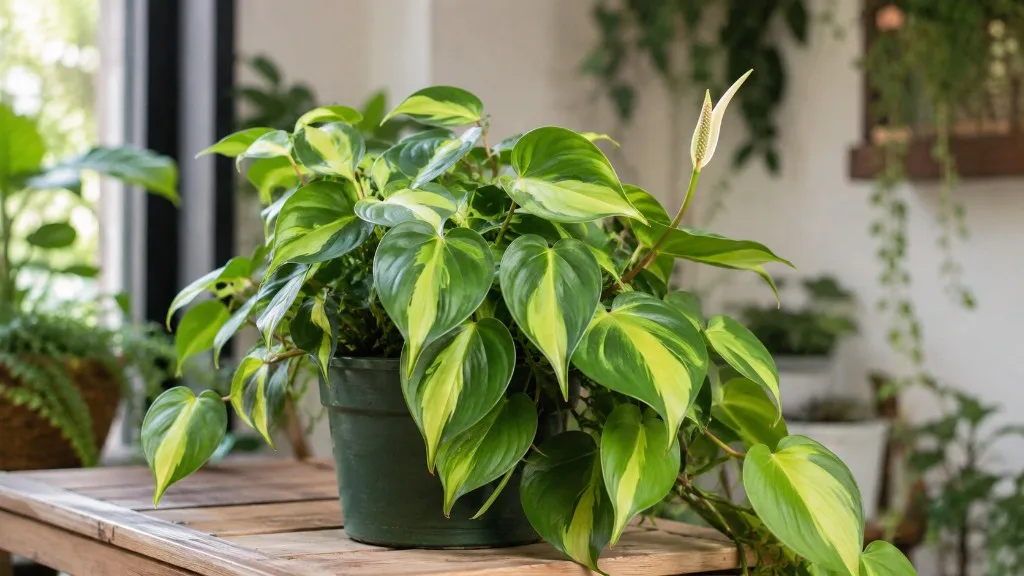
Philodendron Brasil watering succeeds when you treat the pot like a moisture meter, not the calendar like a command. Philodendron hederaceum ‘Brasil’ is a fast-growing trailing heartleaf philodendron with lime-green variegation that shifts from leaf to leaf - not a self-heading rosette like Birkin and not a drought-tolerant succulent. Its root zone expects moist, well-drained conditions in bright filtered indoor light, with enough oxygen between drinks that fine roots can breathe. The classic failure mode is watering every Sunday because the app said so while a dim corner and dense peat mix keep the bottom half of the pot soggy for two weeks.
North Carolina Extension describes heartleaf philodendron as a rapidly growing vine that can reach 4–6 feet indoors with good drainage and warm humid conditions. Iowa State Extension puts the practical indoor rule plainly: water when the top 1–2 inches of soil are dry and avoid soggy soil around the roots. UF/IFAS recommends lightweight, well-drained potting media and watering when the top inch of soil is dry - the same check logic scaled to your container depth.
This guide translates extension principles into a Brasil-specific routine: how trailing vine mass and hanging baskets change dry-down, how to soak and drain without crown splashing, how summer and winter shift the interval, what to do when leaves wilt on wet soil, and when to cross-check light, soil, propagation, and [problem pages](/plants/philodendron-brasil/plant-problems/overwatering on Philodendron Brasil/) before changing three variables at once.
Reviewed by LeafyPixels Review Board · Author: sai-ananth · Methodology: Recommendations checked against NC State Extension, Iowa State Extension, UF/IFAS, Missouri Botanical Garden, and University of Minnesota Extension houseplant guidance, then aligned with LeafyPixels Brasil cluster data.
Why Brasil Watering Is Not a Weekly Calendar Habit
A weekly reminder is useful only as a prompt to check the pot - not as permission to pour water. Brasil grows faster than many philodendron cultivars indoors. NC State lists rapid growth on heartleaf philodendron, which means active roots explore mix quickly and transpiration rises in bright rooms. In the same home, a Brasil near an east window may need water every seven to ten days during summer growth while a Birkin in a smaller pot on the same shelf might need half as many irrigations because its compact crown uses water more slowly.
The dim-light trap is where calendar watering hurts Brasil most. Low light slows photosynthesis and water uptake while surface evaporation can still look “normal,” so mix stays wet at depth long after you stopped thinking about it. University of Minnesota Extension describes the paradox every trailing aroid owner should know: a wilted plant with moist soil often signals root damage from chronically wet conditions, not thirst. Adding water makes the spiral worse - especially when variegation fades and plain-green revert shoots appear because the plant is producing more chlorophyll in shade while roots suffocate in stale mix.
Light and watering are coupled on Brasil more visibly than on solid-green heartleaf because variegation quality tracks both moisture rhythm and light level. Move brightness first, observe pot weight for two weeks, then adjust water - not the reverse.
The Core Rule: Check the Root Zone, Then Water Fully
The workable framework for Brasil is partial dry-down, full soak, complete drainage. You are not aiming for desert-dry soil from rim to base; you are waiting until the upper 3–5 cm (about 1–2 inches) loses enough moisture that air returns to fine roots, then giving one thorough irrigation that wets the entire root ball once. Partial top-ups every few days keep the upper profile chronically damp without flushing salts or refreshing deep roots - a common path to fungus gnats and sour mix.
Missouri Botanical Garden’s overwatering guidance explains the mechanism: roots in saturated soil cannot absorb the oxygen they need, die back, and leave the plant unable to take up water even when the mix is wet. Brasil’s glossy heart-shaped leaves hide early stress longer than thin-leaved plants, so by the time yellow leaves spread through a trailing vine, root damage may already be advanced. Checking before each watering prevents that lag.
Colorado State Extension summarizes the genus habit well: philodendrons should be watered frequently enough to keep soil moist but not soggy, wetting thoroughly and discarding excess drainage. “Moist” only works indoors when the mix drains fast enough that roots still access oxygen between cycles - which is why the soil guide matters as much as the watering can.
How Trailing Vine Mass Changes Dry-Down Timing
Trailing Brasil exposes long stems and many leaves to room air, which can accelerate surface drying compared with a tight self-heading rosette in the same pot diameter. But a mature hanging basket also carries more leaf area and root length exploring the mix, so a large trailer may drink faster than a young shelf pot once growth is active - even though the hanging basket’s elevated position increases airflow around the container walls.
NC State notes ‘Brasil’ is a cultivar with unstable variegation (NC State Extension), meaning pattern shifts leaf to leaf even in good conditions. When wet mix sits in dim corners, lime streaks fade and plain-green revert shoots dominate - often misread as a fertilizer problem when the real issue is root-zone oxygen plus insufficient light. Prune long reverted vines back to a variegated node per the pruning guide after you fix moisture and placement, not before.
How to Check Soil Moisture Before You Water
Surface color lies. Peat-heavy blends turn pale on top while staying cool and damp near the roots - especially in plastic pots and cachepots. Use at least one physical test every time at the same depth so you learn this container’s rhythm instead of guessing.
Finger, Skewer, and Pot-Weight Methods
Finger or knuckle test: Insert your finger to 3–5 cm depth (about 1–2 inches). Cool, clinging mix means wait. Dry at that depth means you can proceed. Iowa State’s top 1–2 inches dry guidance maps directly to this knuckle depth in standard indoor pots.
Skewer or chopstick test: Push a dry wooden skewer toward the pot bottom. Darkening or soil sticking means moisture remains. Clean, dry wood means the root zone has dried enough for another soak.
Pot-weight test: Lift the container after a fresh watering and again daily until it feels noticeably lighter. University of Minnesota Extension notes that a light pot is dry; a heavy pot is still moist - often the most reliable signal once you calibrate your specific basket or shelf pot.
Never water because the calendar says so. Never water because only the top millimeter looks dry while the pot still feels heavy.
How Often to Water Philodendron Brasil Indoors
There is no honest universal interval for how often to water Philodendron Brasil. What works as a starting check reminder - not a rule - in many bright, warm homes looks like this:
During active growth (roughly spring through early fall), many indoor Brasil plants in 15–20 cm pots need a full soak about every 7–10 days, but only after the top 3–5 cm dries. In cooler, dimmer months, the same plant may need water every 10–14 days or longer. Growers in warm, brightly lit apartments may water more often in summer; those in cool north rooms may water less year-round.
The interval is a consequence of dryness, not a cause. Your job is to check, not to obey a reminder. When the top 3–5 cm is dry and the pot has lightened, water fully. If any moisture remains at depth, wait. An extra four days dry rarely harms Brasil; four extra days wet at the root zone can trigger root rot.
Track two full dry-down cycles in your home. Note the date you watered, when the pot felt light again, and what new growth looked like. Within a month you will know your room’s rhythm better than any generic schedule.
Seasonal Watering: Summer vs. Winter Adjustments
Brasil metabolism follows light and temperature, not your watering app. During warm months with longer days, the plant produces vines and leaves faster, roots explore mix actively, and the pot dries more quickly in bright placements. As fall transitions to winter, growth slows even indoors. Cooler rooms, shorter days, and lower light all reduce water uptake. The same volume that worked in July can waterlog the root zone in January if you never adjusted checks.
Treat October through February (adjust for your hemisphere and heating habits) as a lower-water season. Check less often, irrigate less often, and prioritize dryness over generosity. Resume more frequent checks only when you see consistent new growth and rising indoor temperatures in spring.
Summer vs. Winter Check Reminders
| Season | Light / growth | Typical check reminder | What to verify before watering |
|---|---|---|---|
| Active summer | Bright indirect, fast vine extension | Every 7–10 days | Top 3–5 cm dry; pot lighter; no sour smell |
| Shoulder seasons | Moderate light, mixed growth | Every 10–12 days | Skewer dry at depth; weight down from peak |
| Winter | Cooler, shorter days, slower growth | Every 10–14+ days | Full dry-down at 3–5 cm; avoid wet heavy pots in dim corners |
These ranges are reminders to check, not mandates. A Brasil under a grow light in a heated room may dry faster in January than one in a cold north window in July.
How to Water Philodendron Brasil the Right Way
The goal is one full drink followed by an appropriate dry-down - not permanently damp soil. Partial daily sips train shallow roots and hide wet conditions at the pot bottom where rot begins first.
Five-Step Soak-and-Drain Sequence
- Confirm dryness at 3–5 cm depth with finger, skewer, or pot weight.
- Bring the pot to a sink or use a narrow-spout watering can. Water slowly and evenly across the surface until excess runs from drainage holes - typically until you see steady flow, not a quick splash.
- Let the pot drain completely for 15–30 minutes. Tilt to pour off trapped water in saucers or outer shells.
- Return the plant to its spot. Do not water again until the next dryness check passes - days later, not hours.
- Empty cachepots and saucers twice if needed - once immediately and again after ten minutes as more water exits.
Avoid splashing crowns and trailing foliage when possible. NC State warns that leaf spots can occur if leaves get wet during watering on philodendron - direct water to the soil surface and let foliage dry in warm airflow rather than leaving wet leaves stacked overnight in dim corners.
Signs You Are Overwatering Philodendron Brasil
Philodendron Brasil overwatering announces itself in layers, and early signs are easy to dismiss as “adjustment” or “old leaves.”
Watch for widespread yellowing beyond a single senescing bottom leaf - especially when lower leaves yellow while mix stays dark and cool. Soft stems near the soil line, sour or stagnant smell from the mix, and persistent fungus gnats hovering at the surface all point to chronically wet organic matter. Wilting or limp leaves despite wet soil is the paradox trap: roots cannot function in anaerobic mix, so foliage collapses even though you keep adding water.
Missouri Botanical Garden notes that heartleaf philodendron suffers root rot in overly moist soils. On Brasil, overwatering pairs dangerously with low light and dense peat-heavy mix without perlite - the combination behind many overwatering diagnoses on trailing vines in hanging baskets.
If several signs appear together, stop watering immediately. Do not “give it a little drink to perk it up.” Inspect the root zone, confirm drainage holes are clear, improve light if the plant has been dim, and read the root rot guide before feeding or repotting on panic.
Signs Your Brasil Needs Water Now
underwatering on Philodendron Brasil is less common than overwatering indoors but real - especially when Brasil sits in a hot window, small terracotta pot, or air-conditioned draft that accelerates dry-down.
Wilting, curling, or limp leaves with light pot weight and dry mix at 3–5 cm point to genuine thirst. UF/IFAS lists wilting and curling among stress responses on heartleaf philodendron. Dry, compacted mix pulling away from pot walls and crisp brown tips on older leaves can follow repeated drought cycles - though tip burn also comes from low humidity and salt buildup, so read context before blaming water alone.
A single dry episode rarely kills Brasil. Rehydrate with one full soak, let excess drain, then return to the dry-down cycle. Do not compensate with daily sips; that swings the problem to overwatering within a week. See underwatering when limp leaves pair with genuinely dry mix.
If leaves are limp and the mix is wet at depth, you are not underwatered - follow the troubleshooting section below instead.
Light, Pot Size, and Soil - What Changes the Schedule
Two Brasil plants in the same room can need water on different schedules because light, pot volume, and mix texture change how fast moisture leaves the root zone.
Light drives water use. A Brasil in bright filtered light transpires faster and dries mix more aggressively than one in a dim hallway - the same coupling described across extension houseplant guidance. Low-light Brasil needs less water, not the same schedule with weaker growth; yet low light plus frequent watering is the classic overwatering setup because the plant cannot use what you supply. Read the light guide before chasing a better calendar.
Pot size changes physics immediately. A freshly repotted Brasil sits in extra mix that roots have not colonized - it stays wet longer than expected. A rootbound plant in a small pot may dry in four days during summer heat. Oversized decorative pots hold dangerous volumes of wet soil relative to root mass. Size up only when roots clearly need room per the repotting guide, and never jump more than one to two inches in diameter at a time.
Soil texture decides forgiveness. Standard potting mix amended with 20–25% perlite drains faster than straight peat indoors - the blend detailed in the soil guide. Dense, compacted mix that has broken down after a year holds water at the bottom even when the surface looks ready. Fix the soil system before changing water volume alone.
Hanging Baskets vs. Shelf Pots: Dry-Down Differences
Brasil is sold most often in hanging baskets, and container geometry changes how you interpret checks.
A 20 cm hanging basket with a full trailing vine has more leaf area and root exploration than a 15 cm shelf pot with a young plant, so the basket may dry faster in bright summer light despite elevated placement increasing airflow around the pot walls. Conversely, a dense basket with broken-down peat in a dim kitchen can stay wet 14 days while the surface looks merely “kind of dry” - the worked scenario many growers report when shifting to airier mix or brighter light.
Shelf pots on furniture often live inside cachepots without drainage. Water pools in the outer shell, wicks back into mix, and recreates anaerobic conditions you just tried to avoid. Always remove the inner pot to water at the sink, drain fully, then replace - or drill drainage and empty saucers promptly.
For hangers, pot weight is especially useful because reaching finger depth through dense trailing stems is awkward. Lift the basket hook-side daily until you feel the rhythm. If one side of the basket dries faster because of uneven sun, rotate weekly after watering.
Water Quality, Humidity, and Temperature
Tap water at room temperature is acceptable for most Brasil plants. Cold water can shock warm roots in heated rooms; let it sit briefly if your tap runs icy. UF/IFAS notes heartleaf philodendron prefers average indoor humidity and tolerates typical home conditions when other needs are met (UF/IFAS heartleaf philodendron). Very hard water may leave white mineral crust and contribute to brown tips when combined with salt buildup - flush occasionally by watering heavily until runoff runs clear.
Humidity in the 40–60% range supports steady growth without replacing root-zone management. Misting leaves does not hydrate roots and can worsen leaf spots if foliage stays wet in stagnant air. If air is extremely dry, address humidity separately; keep the dry-down rule unchanged.
NC State lists heartleaf philodendron’s preferred indoor temperature range as roughly 65–85°F (18–29°C) with 50–60% humidity for best growth . UF/IFAS notes heartleaf philodendron prefers the same indoor temperature range as people and that temperatures below 50°F are too cool - pair winter placement away from cold window glass with reduced irrigation frequency.
Watering After Repotting or Moving
After repotting, water thoroughly once with fresh mix, then let the top inch dry before the next soak. Extra soil volume without new roots holds moisture longer, and disturbed roots are vulnerable to rot if kept constantly wet. Expect two to four weeks of slower dry-down before returning to your normal check rhythm - the same post-repot caution applies across the overview hub guidance.
After moving to a brighter window, transpiration may rise within days. Observe weight for a week before assuming the old interval still applies. After moving to a dimmer spot, extend dry-down before the next water even if leaves look soft - check depth first.
Do not repot, fertilize, and radically change watering the same weekend. Stabilize one variable at a time when troubleshooting repotting stress.
Common Philodendron Brasil Watering Mistakes
Watering on a fixed weekly schedule regardless of soil moisture. Fix: rename the reminder “check soil” instead of “water plant.”
Keeping Brasil in low light on a bright-window watering rhythm. Fix: improve light or extend dry-down; wet soil plus shade drives yellowing and revert.
Partial top-ups instead of full soaks. Fix: one thorough drink, then full dry-down - never daily sips.
Leaving hanging baskets in cachepots full of runoff. Fix: drain at the sink every time.
Misting to compensate for underwatering. Fix: soak and drain when mix is dry at depth; misting does not rehydrate roots.
Watering when leaves wilt without checking moisture. Fix: wet plus wilt equals overwatering; dry plus wilt equals thirst.
Using dense, unamended potting soil in dim corners. Fix: repot into airy mix per the soil guide.
Continuing summer frequency through winter. Fix: cut checks back; prioritize dryness in cool months.
Each mistake returns you to the same principle: check the root zone, soak fully, drain completely, then let the upper profile dry again.
Troubleshooting: Wet Soil but Wilting Leaves
This is the highest-anxiety Brasil scenario and the one most misdiagnosed as thirst.
If soil is wet at 3–5 cm and the pot is heavy: Suspect root damage, compacted anaerobic mix, or a blocked drainage hole. Stop watering. Move to brighter filtered light if the plant has been dim. Unpot only if yellowing spreads or smell worsens - then trim mushy roots, repot into fresh airy mix, and wait a week before careful rewatering. See wilting and root rot for recovery steps.
If soil is wet only at the surface but dry deeper: You may have been top-sipping. Water thoroughly once, drain, then adopt full soak cycles.
If soil is dry at depth and pot is light: Genuine thirst. Soak and drain; adjust future check frequency upward.
If you repotted within three weeks: Slow dry-down is normal. Wait for weight and skewer signals - not the calendar.
Missouri Botanical Garden emphasizes that overwatering damage is frequently misdiagnosed as pest damage - inspect roots before spraying pesticides on a wilting Brasil with sour mix.
Know Your Plant: Trailing Brasil vs. Compact Philodendrons
Philodendron ‘Brasil’ is a vining heartleaf cultivar in the arum family (Araceae), native to Central and South America from Mexico through tropical regions. Indoors it commonly trails 4–6 feet with glossy heart-shaped leaves 3–6 inches long and lime streaks that vary leaf to leaf. It is faster and more forgiving than many collector philodendrons, but it still loses variegation in dim corners and pushes plain-green revert shoots when light and moisture both drift wrong.
For watering, trailing Brasil differs from compact self-heading types like Birkin: more stem and leaf edge exposed to air, more root length exploring the pot, and faster dry-down in bright active growth - but also more total leaf mass in a mature hanger that can drink heavily in summer. Use the same 3–5 cm check depth, but expect more frequent checks in bright trailing displays and longer wet periods in dim hanging baskets until light or mix improves.
Pet and human safety: NC State lists low-severity oxalate poisoning with mouth pain, drooling, and vomiting if ingested, plus contact dermatitis from sap. Philodendron species are toxic to dogs and cats. Keep Brasil on elevated hangers or high shelves away from pets and children; contact your veterinarian or ASPCA Poison Control at (888) 426-4435 if ingestion is suspected.
Conclusion
Water Philodendron Brasil by confirming the top 3–5 cm of mix is dry and the pot has lightened, then give one full soak and empty all runoff. Use summer-vs-winter check reminders instead of a fixed weekly habit, pair every watering decision with honest light assessment, and keep mix airy per the soil guide. When trailing leaves wilt on wet soil, suspect roots first - not thirst. That check-based rhythm protects the lime-variegated vines this cultivar is grown for, without leaving fast-growing roots in stale, oxygen-starved mix.
When to use this page vs other Philodendron Brasil guides
- Philodendron Brasil overview - Start here for whole-plant context before deep-diving this topic.
- Philodendron Brasil problems hub - Jump to symptom-specific fix guides when this care topic does not resolve the issue.
- Overwatering on Philodendron Brasil - Escalate here when watering adjustments are not enough.
- Underwatering on Philodendron Brasil - Escalate here when watering adjustments are not enough.
- Root Rot on Philodendron Brasil - Escalate here when watering adjustments are not enough.
Related Philodendron Brasil guides
- Philodendron Brasil overview
- Philodendron Brasil light
- Philodendron Brasil soil
- Philodendron Brasil propagation
- Philodendron Brasil fertilizer
- Philodendron Brasil repotting
- Overwatering on Philodendron Brasil
- Underwatering on Philodendron Brasil
- Root Rot on Philodendron Brasil
- Philodendron Brasil problems