Philodendron Brasil Fertilizer: When, How, and Mistakes
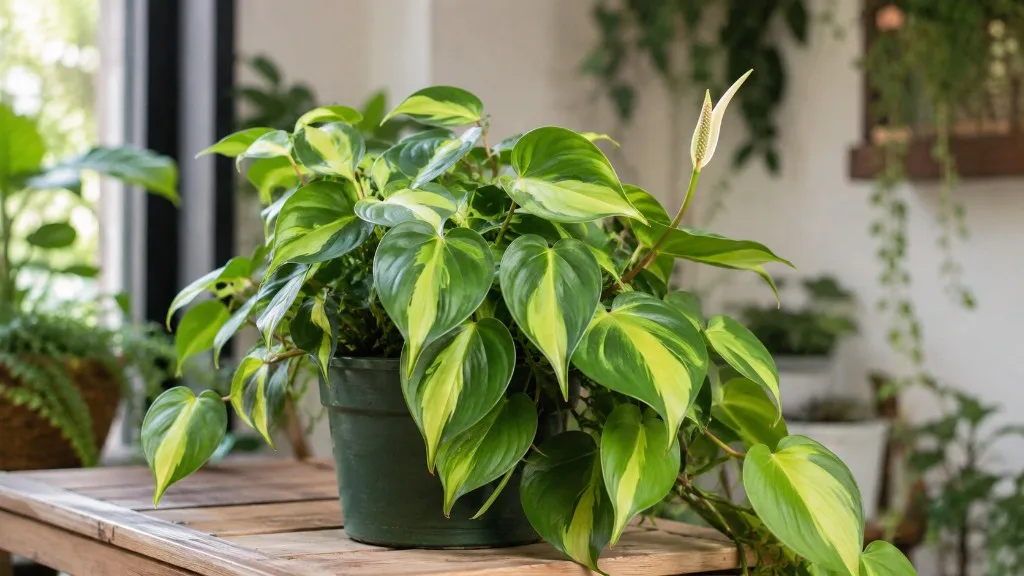
Philodendron Brasil Fertilizer: When, How, and Mistakes to Avoid
Philodendron Brasil Fertilizer: When, How, and Mistakes to Avoid
A Philodendron Brasil in a bright east window can push out a new heart-shaped leaf every week in midsummer - and scorch the chartreuse margin on that same leaf within days if you pour full-strength fertilizer onto dry peat. That contrast is the whole story behind Philodendron hederaceum ‘Brasil’ fertilizer: this cultivar is a fast trailing heartleaf with lime streaks that shift leaf to leaf, not a solid-green pothos clone where salt damage hides inside thick tissue. The goal is not to feed heavily; it is to replace what frequent watering leaches from a small container while keeping soluble salts low enough that new leaves keep crisp lime bands instead of washing out to plain green.
The practical default for most homes: a balanced water-soluble fertilizer at half the label strength, applied on a schedule you choose from the table below - monthly during active growth for fast trailers in bright indirect light, or every six to eight weeks if you prefer a conservative rhythm or the plant sits in fresh mix. Iowa State Extension describes heartleaf philodendron feeding as light fertilizer once or twice a month while actively growing in spring and summer; this guide labels monthly and twice-monthly as grower-choice options inside that extension range, not conflicting rules. Pause entirely in late fall and winter unless strong grow lights keep new leaves coming. Always apply to moist soil, never to a dry root ball. Skip feeding after repotting, during drought stress, or when white salt crust already rings the pot rim.
This guide covers timing, N-P-K choice, worked dilution math, hanging-basket versus shelf-pot frequency, how to read chartreuse margin burn on variegated tissue, what to do when new leaves show reduced lime streaking, and how to recover after salt buildup. For the rest of the care stack, see the Philodendron Brasil overview, light needs, soil mix, and propagation guides.
Reviewed by LeafyPixels Review Board · Author: sai-ananth · Methodology: Recommendations checked against NC State Extension Philodendron hederaceum profile, Iowa State philodendron guidance, UF/IFAS heartleaf page, RHS growing guide, University of Maryland Extension soluble-salt guidance, and LeafyPixels Brasil cluster data before publication.
Why Fertilizer Matters for Variegated Philodendron ‘Brasil’
Philodendron hederaceum ‘Brasil’ is a vining heartleaf cultivar in the arum family (Araceae) with a variegated center stripe of yellow to light green and dark green borders - the pattern NC State Extension lists under the ‘Brasil’ entry. Indoors it commonly trails 4–6 feet with glossy cordate leaves 3–6 inches long. NC State notes ‘Brasil’ is a cultivar with unstable variegation, meaning lime streak width and intensity change from leaf to leaf even when care is stable. That biology matters for feeding because pale chartreuse sectors carry less chlorophyll than solid-green heartleaf tissue, so margin burn and salt stress often show on the lime band before the dark-green center looks damaged.
Unlike heavy-feeding outdoor crops, container heartleaf philodendrons face a tight salt budget. Every watering session drains nitrogen, potassium, and micronutrients from peat-based mix. Root growth and microbial activity consume others. Fertilizer replaces that loss - but only at the rate roots can absorb without osmotic stress. UF/IFAS notes that too much fertilizer can cause leaf tips to brown and curl on heartleaf philodendron - a pattern that appears faster on thin chartreuse margins than on all-green pothos leaves beside it on the same shelf.
Think of feeding as maintenance for a plant already getting light and water right - not a rescue for a vine that is pale because it sits in a dim hallway or stays wet too long. Fix light placement and watering rhythm first, then add nutrients on a conservative schedule. Fresh potting mix often includes a starter charge that lasts weeks; a newly purchased Brasil may look fine without supplemental food at first. Eventually the reservoir depletes, especially in a 6-inch hanging basket you water every week, and growth slows unless you replace what leaches out.
How Lime Variegation and Trailing Growth Change Salt Risk
Brasil leaves split into dark-green zones with more chlorophyll and chartreuse to lime sectors with less. When soluble salts accumulate, marginal necrosis often starts on the pale band - a useful diagnostic that generic “brown tip” advice on solid-green heartleaf pages does not emphasize. University of Maryland Extension explains that high soluble salts reduce water uptake through osmotic stress, producing brown leaf tips and margins even when soil feels moist - and that white crust on the potting media surface signals fertilizer salt accumulation.
Fast trailing growth in bright light increases nitrogen demand because the plant is building stem length, nodes, and a steady queue of new leaves. NC State lists heartleaf philodendron as a rapidly growing vine suited to hanging baskets and moss poles. A mature hanger with three feet of stem in an east window metabolizes faster than a young shelf pot in moderate shade - but both remain salt-sensitive compared with succulents. The feeding plan should match actual growth form, light, and pot size, not a generic calendar copied from a pothos template.
Healthy Brasil in good conditions produces new leaves on a steady rhythm during warm months. Crisp lime streaks on the newest fully opened leaf - firm texture, no crispy chartreuse edges, no heavy white crust on soil - suggest your light, water, and nutrient balance is working. Stalled unfurling, shrinking leaves, or widening plain-green bands usually trace to light or moisture before hunger - especially because NC State documents unstable variegation on this cultivar even under good care.
When to Fertilize: Active Growth vs Rest
Timing follows the plant’s metabolism more than the calendar on your phone. Feed when Philodendron Brasil is actively producing new leaves and extending stems, and stop when that rhythm slows sharply. Outdoors in frost-free climates, growth can continue year-round. Indoors in temperate homes, heated rooms and short winter days still reduce new shoot production even when old foliage stays green - unused nutrients then accumulate as harmful salts.
Never feed a stressed, dry, newly repotted, or visibly salt-crusted plant. Fertilizer on damaged roots adds salt stress when tissue cannot absorb water normally. If you just flushed for burn, pause four to six weeks before resuming at half strength.
Spring and Summer Feeding Window
Start feeding when you see fresh growth at nodes - new heart leaves unfurling with lime streaks, side shoots filling in after pruning, and the pot drying on a predictable cycle as roots pull moisture. In temperate climates that usually means mid-spring through late summer, roughly April through September depending on latitude, room temperature, and whether the plant sits in bright indirect light or moderate shade.
During this window, pick one rhythm from the frequency table in the next major section. Iowa State Extension recommends fertilizing lightly once or twice a month while philodendrons are actively growing in spring and summer with a balanced all-purpose fertilizer - so monthly half-strength sits at the conservative end of that range, while twice-monthly half-strength sits at the upper end for fast growers in bright light with no salt crust. UF/IFAS suggests fertilizing heartleaf philodendron every three to four months for plants that already look great - a reminder that less frequent feeding is acceptable when mix is fresh and growth is moderate.
| Month (temperate climate) | Growth phase | Feeding guidance |
|---|---|---|
| March–April | Waking up, first new leaves | Start half-strength if active growth visible |
| May–August | Peak trailing growth | Monthly (conservative) or every 2–4 weeks (fast bright growth) |
| September | Slowing slightly | Stretch interval or give final light feed |
| October | Wind-down | Taper off; skip if growth has stalled |
| November–February | Low growth indoors | No fertilizer for typical setups |
The table is a framework, not a law. A small hanging basket in a warm room may grow steadily while a floor cachepot in a north window stays static - watch the plant, not the date.
Fall Taper and Winter Pause
Taper feeding in early to mid-fall as day length drops. One practical approach: give a final half-strength feed in early fall if new leaves are still appearing, then stop entirely from late fall through winter for most indoor Brasil. The RHS recommends feeding philodendrons during the growing season (April to September) with a general houseplant fertiliser - aligning with a winter pause in temperate indoor setups.
Winter rest is not full dormancy, but metabolic demand drops. University of Maryland Extension lists frequent or excessive fertilizer applications as a primary cause of soluble salt buildup with symptoms including brown leaf tips and lower leaf drop. Winter feeding on a plant that is not using nutrients is an easy way to create exactly that problem - and on Brasil, the first visible sign is often brown chartreuse margins on leaves barely three inches long.
Exception: if you grow under strong supplemental grow lights and the vine keeps producing new variegated leaves all winter, you may feed lightly at half strength every six to eight weeks - but watch closely for salt crust on the soil surface. Even then, skipping winter feeds is safer than forcing growth with nutrients the roots cannot process in cooler, dimmer conditions.
Best Fertilizer Type and N-P-K for Philodendron Brasil
The best Philodendron Brasil fertilizer for most homes is a complete, water-soluble, balanced houseplant formula with moderate nitrogen and modest phosphorus. You want nitrogen for green tissue and stem extension, phosphorus for root function at modest levels, and potassium for overall vigor. Micronutrients on the label - iron, magnesium, manganese - matter when pale new growth appears on otherwise well-watered plants. A standard balanced indoor formula used conservatively outperforms specialty products applied at full label strength.
Avoid shopping by the word “philodendron” on the bottle unless you trust the brand’s dosing guidance. Iowa State Extension specifies a balanced all-purpose fertilizer for philodendrons - equal N-P-K products like 10-10-10 or 20-20-20 keep feeding simple when your main goal is steady variegated foliage, not flowers.
Balanced Liquid Formulas and What to Skip
For home use, products labeled 10-10-10 or 20-20-20 work when diluted to half strength. What is not reasonable is a high-nitrogen lawn or bloom booster applied at full label strength on a variegated trailing cultivar - heavy nitrogen pushes faster leaf expansion, and growers often report wider dark-green bands on new leaves after aggressive feeds, especially when light is already marginal. Extension guidance emphasizes light, balanced feeding rather than nitrogen-heavy push; treat any variegation fade as a light-first diagnosis backed by NC State’s note that ‘Brasil’ variegation is unstable.
Liquid formulas win for control in small pots where precision prevents localized hot spots. Slow-release granules in a 4-inch hanging basket release unpredictably and stack with liquid feeds - skip liquid for two to three months if slow-release is already mixed into fresh repotting soil. Skip foliar feeding as a routine method; heartleaf philodendron absorbs nutrients through roots, not leaves, and fertilizer solution on chartreuse tissue can burn pale sectors unevenly. Skip fertilizer-pesticide combo products unless you have a diagnosed pest issue and follow label directions precisely.
Organic options like diluted fish emulsion work at half strength or weaker if you already use them; they release nutrients more gently with lower burn risk, though odor may matter indoors. Hard tap water adds mineral salts on top of fertilizer salts - if white crust appears quickly, lean toward less frequent feeding and periodic flushing rather than stronger doses.
Worked Half-Strength Dilution Example
If you remember one number, make it half strength - never full label strength on container-grown Brasil unless you leach salts regularly and know your water chemistry.
Example: if the bottle says 1 teaspoon per gallon of water for houseplants, mix ½ teaspoon per gallon for Philodendron Brasil on a monthly schedule. If it says 1 tablespoon per gallon for outdoor annuals, use 1½ teaspoons per gallon (half strength). Measure with a spoon or syringe - “eyeballing” concentrates errors because different products use different scoops.
For a typical 6-inch hanging basket in bright indirect light, apply slowly until a little water drains from the bottom, then discard saucer water within 30 minutes so roots are not sitting in concentrated runoff. A final fall feed at half strength is enough; go weaker still if salt crust, post-feed chartreuse burn, or an oversized pot that stays wet for days is already present.
How Often to Feed: Frequency Table Reconciled
Frequency should follow growth rate, light level, container size, and salt management - not guilt about whether you are “doing enough.” Philodendron Brasil rewards weak, consistent feeding during active growth far more than frequent full-strength doses.
This table reconciles the schedules that confuse growers when different pages use different defaults:
| Grower label | Interval | Half-strength dose | Best for | Extension alignment |
|---|---|---|---|---|
| Active / bright | Every 2–4 weeks | Yes | Fast trailer in east/west window, moss pole, no salt crust | Upper end of Iowa State once or twice monthly |
| Standard monthly | Every 4 weeks | Yes | Most shelf pots and hangers in moderate bright light | Within Iowa State monthly range |
| Conservative | Every 6–8 weeks | Yes | Fresh mix, low light, history of tip burn, winter grow-light exception | Matches UF/IFAS every 3–4 months spirit for low-demand setups stretched across season |
| Recovery | Pause 4–6 weeks after flush | None | Salt crust, chartreuse burn, repot stress | UMD leaching protocol before resume |
Pick one row and stay consistent for a full growing season before switching. Skipping a month is usually safer than doubling up after pale leaves. If new growth stays vigorous with lime streaks intact and no white crust, your row is working. If chartreuse margins brown or revert shoots dominate, drop one row lighter and check light before increasing food.
Step-by-Step: Feed Philodendron Brasil on Moist Soil
Follow this sequence every feeding cycle:
- Check the calendar and the plant. Confirm it is spring or summer active growth - or your grow-light winter exception - and that the plant is not dry, wilted, or newly repotted.
- Inspect soil moisture and salt crust. If the surface is white with crystallized salts, skip the feed and flush instead (see below). If mix is dry, water thoroughly first and feed the next day.
- Mix fertilizer at half label strength in a watering can with room-temperature water. Stir well.
- Apply slowly to moist soil, avoiding heavy splashing on chartreuse leaf tissue. Continue until a little water drains from open pots.
- Discard drainage water from saucers within 30 minutes. Never let Brasil sit in concentrated runoff.
- Log the date and watch the next two new leaves for margin color and streak width before the next feed.
The RHS philodendron guidance pairs feeding with letting compost dry slightly between waterings - the same moisture discipline that prevents applying fertilizer to a desiccated root ball. Dry-soil application concentrates salts at root tips and produces burn within days, often visible first on lime margins.
Signs You Are Feeding Correctly
Correct feeding shows up on new growth, not old leaves you cannot uncurl. Look for:
- Steady leaf production during warm months with internodes neither stretched nor stalled
- Lime streaks present on newest leaves - width may vary leaf to leaf because variegation is unstable, but streaks should not disappear entirely on every new leaf unless light dropped
- Dark-green borders firm and glossy without widespread chartreuse necrosis
- No white salt crust on soil surface or pot rim
- Soil dries on a predictable cycle matching your watering checks - neither perpetually soggy nor desert-cracked between feeds
Pale overall foliage with good lime pattern on new leaves usually means insufficient light, not hunger. Uniform pale green on every new leaf with wet soil and dim placement is almost never fixed by doubling fertilizer - move brightness first, then reassess in four weeks.
Over-Fertilizing, Chartreuse Margin Burn, and Salt Crust
Over-feeding is one of the most common Philodendron Brasil mistakes because the species tolerates neglect better than salt shock. UF/IFAS lists brown curled leaf tips from too much fertilizer on heartleaf philodendron. On Brasil, watch for these cultivar-specific patterns:
- Chartreuse or lime margins browning before dark-green centers - salt stress on chlorophyll-poor tissue
- White crystalline crust on soil surface or inner pot rim - soluble salt accumulation
- Sudden leaf drop on trailing stems despite moist soil - osmotic stress reducing root function
- Stunted new leaves that unfurl small and distorted after a heavy feed
- Sour or sharp smell from mix when salts and anaerobic conditions stack
These symptoms overlap brown tips and salt build-up problem pages - flush and pause before chasing pest sprays or extra food.
When New Leaves Lose Lime Streaking
Growers often ask whether fertilizer stripped their Brasil variegation. Separate three distinct patterns:
Pattern A - gradual fade in dim light: New leaves emerge mostly dark green with thin or absent lime streaks while internodes stretch. NC State notes philodendrons that do not get enough light become leggy and produce fewer, smaller leaves (RHS growing guide) . Fix light first; prune long plain-green revert vines back to a variegated node per the pruning guide.
Pattern B - wider green bands after heavy nitrogen feeds: New leaves show expanded dark-green sectors and narrower lime streaks for several nodes after monthly full-strength or high-N products - often alongside fast, soft growth . Reduce to half-strength balanced feed and verify light; do not escalate nitrogen to “bring color back.”
Pattern C - unstable streak width in good conditions: Lime band width shifts leaf to leaf even when care is stable - expected on a cultivar NC State documents as having unstable variegation. Do not chase every leaf with fertilizer adjustments.
If revert shoots dominate a hanger, fix light and feeding conservatively, then propagate variegated cuttings from the best-streaked nodes using the propagation guide rather than feeding harder.
How to Flush After Over-Feeding
When salt crust or chartreuse burn appears, stop fertilizing immediately and leach the soil:
- Move the pot to a sink, tub, or outdoor spot where copious drainage is acceptable.
- Water slowly with plain room-temperature water until water runs freely from drainage holes. Let it drain completely.
- Repeat two to three times over 30–60 minutes, allowing full drainage between passes. University of Maryland Extension recommends irrigating with clear water until it runs out the bottom and repeating several times with a volume at least that of the pot size.
- Pause all feeding for 4–6 weeks while you monitor new growth.
- Resume at half strength on the conservative (6–8 week) row of the frequency table only when new leaves emerge without burnt chartreuse margins and salt crust is gone.
Badly burned leaves will not green up again - judge recovery by new growth, not old damage. See salt build-up for ongoing prevention.
Hanging Baskets, Repotting, and Propagation Adjustments
Hanging baskets dry faster on pot walls because of airflow, but a mature trailer also carries more leaf area and root length exploring the mix - so a large bright hanger may need the active frequency row while a dense basket in dim light should stay on conservative feeding until light improves. Salt concentrates in small pots with limited leaching; hanging setups without saucer drainage still need runoff discarded at the sink every time you feed.
After repotting into fresh potting mix that already contains fertilizer or compost, wait four to six weeks before the first liquid feed. Many commercial mixes include starter charge; doubling up causes immediate chartreuse margin burn on the next unfurling leaf.
After stress - drought wilt, cold damage, pest infestation, or mechanical injury - hold food until the plant shows stable new growth. Fertilizer on damaged roots burns pale leaf sectors fast because the system cannot process concentrated salts.
Propagation cuttings in water or fresh mix need no fertilizer until roots are several centimeters long and new leaves appear; then use quarter to half strength at six- to eight-week intervals. See the propagation guide for timing.
Fertilizer and Other Philodendron Brasil Care
Fertilizer only works when light, water, humidity, and soil are already in range. Brasil in bright indirect light uses nutrients faster than one in deep shade, where plain-green revert growth is usually a light problem. Well-draining mix per the soil guide keeps uptake steady - waterlogging damages roots and makes salt stress worse. After pruning long revert vines, stay on your chosen frequency row rather than doubling doses to “support” new shoots.
Pair every feeding decision with honest assessment of the overview hub care triangle: if you changed watering, light, and fertilizer the same weekend, you will not know which variable caused the next leaf response.
Common Philodendron Brasil Fertilizer Mistakes
The failures that show up most often are predictable:
- Full label strength in small hanging baskets - chartreuse margins burn within days
- Feeding every watering or biweekly “just to be safe” - salts stack faster than trailing roots can use them
- Dry-soil application - concentrates salts at root tips; always water first
- Winter feeding on a plant that only looks active because old leaves remain green
- Ignoring white salt crust - crust today becomes leaf drop next month
- Feeding stressed or newly repotted plants - burns damaged roots
- Slow-release pellets plus monthly liquid in the same small pot - double salt load
- High-nitrogen formulas when lime streaks are already narrowing - check light, then reduce nitrogen push
- Adding more fertilizer when pale leaves mean too little light - move brightness first
- Treating every variegation shift as deficiency - ‘Brasil’ streak width is inherently unstable per NC State
A Brasil in a fresh bag of potting mix and a three-year-old hanger in depleted mix are not the same plant - match the frequency row to root zone age, light, and leaf response.
Pet and Child Safety Note
Philodendron Brasil contains calcium oxalate crystals toxic to cats and dogs if chewed, causing oral pain, excessive drooling, vomiting, and difficulty swallowing. NC State lists low-severity oxalate poisoning with similar symptoms plus contact dermatitis from sap. Concentrated fertilizer solution is not safe to ingest - keep bottles, runoff, and splashed leaves away from pets and children. Keep Brasil on elevated hangers or high shelves; contact your veterinarian or ASPCA Poison Control at (888) 426-4435 if ingestion is suspected.
Conclusion
Philodendron Brasil fertilizer success comes down to matching a light, balanced feeding plan to real growth - not to a rigid calendar that ignores your light, pot size, and season. Use a balanced water-soluble formula at half strength, pick monthly, twice-monthly, or every six to eight weeks from one reconciled table row that fits Iowa State’s once-or-twice-monthly spring-summer range, and stop or sharply reduce in late fall and winter unless strong grow lights keep new variegated leaves coming. Water onto moist soil, flush salts when crust appears, and pause feeding after repotting or stress.
When in doubt, less is more. Brasil tolerates a skipped month far better than it tolerates a double dose after fading lime streaks. Watch new growth: crisp chartreuse bands on the newest leaf mean your rhythm is working. Brown chartreuse margins, white crust, and plain-green revert shoots in dim corners mean pull back, flush, and fix light and watering before you reach for the bottle again. Variegated heartleaf rewards conservative salts - not aggressive nitrogen.
When to use this page vs other Philodendron Brasil guides
- Philodendron Brasil overview - Start here for whole-plant context before deep-diving this topic.
- Philodendron Brasil problems hub - Jump to symptom-specific fix guides when this care topic does not resolve the issue.
- Salt Build-up on Philodendron Brasil - Escalate here when fertilizer adjustments are not enough.
- No Flowers on Philodendron Brasil - Escalate here when fertilizer adjustments are not enough.