Philodendron Brasil Light Needs: Best Window, Sun & Warning
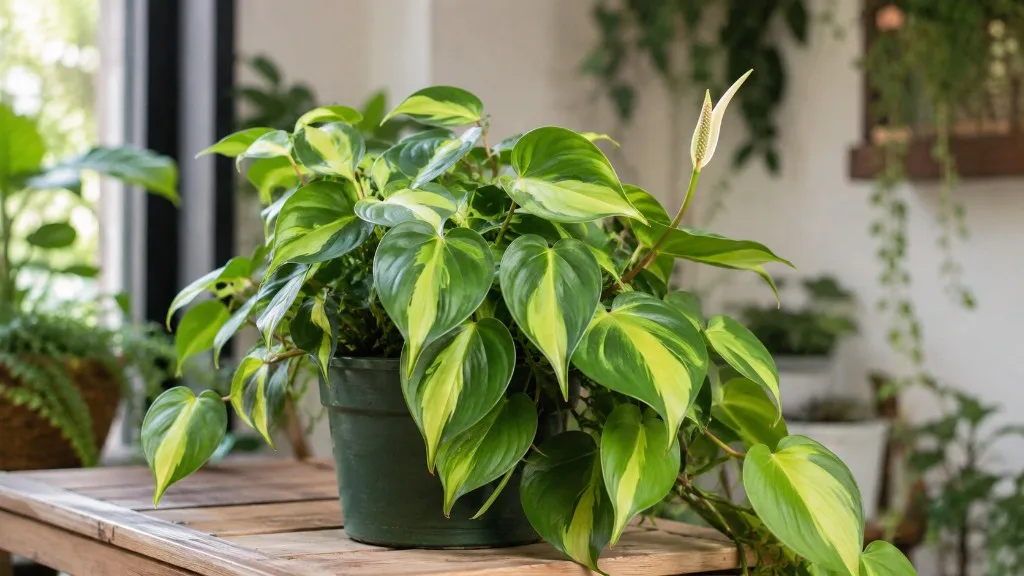
Philodendron Brasil Light Needs: Best Window, Sun & Warning Signs
Philodendron Brasil Light Needs: Best Window, Sun & Warning Signs
The most common Philodendron Brasil light mistake is judging by how bright the room feels instead of how much usable brightness reaches the leaves. A well-lit living room can still leave a hanging basket in a dark zone eight feet from the glass, and Philodendron hederaceum ‘Brasil’ responds on new growth long before you notice the whole vine looking tired. Lime variegation is not decorative paint the plant keeps out of politeness - it is a light-sensitive pattern that shrinks when photon supply drops, because green tissue photosynthesizes more efficiently than yellow-green sectors.
This guide covers how much light Brasil actually needs, where to place pots by window direction, when direct sun is safe, what low light can and cannot deliver, how to supplement with grow lights, how trailing displays create uneven light across the vine, and how to read warning signs before stretch, fade, or scorch becomes habit. For watering rhythm once light is set, see the Philodendron Brasil watering guide; for mix and drainage that pair with brighter placements, see soil guidance.
How this guide was reviewed: Recommendations were checked against NC State Extension, the Royal Horticultural Society, and Missouri Botanical Garden references, cross-read with LeafyPixels Philodendron Brasil care data, and reviewed by the LeafyPixels Review Board (June 2026). The framework prioritizes new-leaf response over calendar rules or room ambiance.
Why Window Exposure Matters More Than Room Brightness
Human eyes adapt to dim interiors; leaves do not. You can read a book in a north-facing room and still be sitting in 100 foot-candles or less at plant height - enough for survival in some heartleaf philodendrons, but weak for maintaining bold lime striping on ‘Brasil’. What matters is hours of useful brightness on the leaf surface and whether any of those hours are hot direct rays that bleach tissue.
Philodendron Brasil is a tropical trailing aroid in the Araceae family, climbing or cascading toward broken canopy light in nature rather than baking in all-day direct sun. The Royal Horticultural Society positions philodendrons in bright but indirect light, out of direct summer sun that can scorch leaves, and notes that insufficient light produces leggy growth and fewer, smaller leaves. (Royal Horticultural Society) NC State Extension lists the heartleaf species as preferring medium light while tolerating extremely low light for long periods - language that explains why solid-green heartleaf survives dim offices while variegated ‘Brasil’ often dulls in the same spot. (NC State Extension)
The operational test: after any placement change, inspect the newest leaf and the next node every ten to fourteen days. Old bleached or stretched leaves will not repair; new growth tells you whether the current exposure is working.
How Much Light Philodendron Brasil Actually Needs
Philodendron Brasil performs best in bright indirect light - strong ambient brightness on the foliage without sustained hot direct beams on leaves that formed in softer conditions. For most homes, that translates to roughly 200 to 400 foot-candles at the growing tips: bright enough to read comfortably near the plant without squinting at the leaf surface, with the pot within one to four feet of suitable glass rather than across the room where your eyes see daylight but leaves receive little flux.
Brasil sits between solid-green heartleaf and heavily variegated cousins in light demand. The species tolerates deep shade and very low light per NC State cultural notes, but the ‘Brasil’ cultivar carries a variegated center stripe of yellow to light green with dark green borders - patterning that needs brighter exposure to stay vivid. (NC State Extension) Think of three indoor bands: survival (roughly 50–150 foot-candles) keeps the plant alive with slower metabolism and fading lime sectors; steady growth (150–250 foot-candles) produces acceptable trailing habit with modest variegation; display quality (250–1,000 foot-candles of filtered brightness) supports compact nodes, firm leaves, and clear lime striping on fresh foliage. (UF IFAS)
Light quality beats a single bright hour. A plant receiving ten to fourteen hours of moderate indirect brightness usually outperforms one that gets three hours of harsh sun followed by interior gloom, because total daily photosynthesis drives growth more reliably than brief peaks.
The Practical Light Range from Medium to Bright Indirect
NC State describes heartleaf philodendron cultural light as deep shade to partial shade outdoors - partial shade meaning direct sun only part of the day, two to six hours - which maps indoors to filtered window light, not a dark hallway. (NC State Extension) For ‘Brasil’, treat bright indirect as the target and medium indirect as the floor for color retention, not as the ideal.
Practical band guide for indoor Brasil:
- Deep low light (50–100 foot-candles): far from windows, obstructed corners, some interior shelves - survival with leggy stems, smaller leaves, and lime fade toward green on new growth
- Medium indirect (100–250 foot-candles): several feet from east or west glass, bright north rooms in high-latitude summer - steady but soft variegation; watch for leggy growth if internodes lengthen
- Bright indirect (250–1,000 foot-candles): within one to four feet of east or filtered south/west windows, or under a well-placed grow light - firm new leaves, short node spacing, visible lime patterning on the youngest foliage
- Unfiltered hot direct sun: especially afternoon west and south - bleaching and scorch risk on leaves formed in lower light; see sunburn guidance if patches appear after a move
The short rule: place Brasil where new leaves every two to three weeks look firm, adequately sized, and still show lime variegation. If the newest leaves are the problem, light is the first dial - not fertilizer, not Philodendron Brasil repotting guide.
Species Medium-Light Tolerance vs. ‘Brasil’ Variegation Demand
Solid-green Philodendron hederaceum can survive for long periods in extremely low light - a genuine strength NC State highlights for the species. (NC State Extension) ‘Brasil’ inherits that forgiving metabolism but cannot afford the same variegation budget in dim conditions, because yellow-green sectors photosynthesize less efficiently than dark green margins. In chronic shade, the plant edits new leaves toward green - phenotypic adjustment, not necessarily permanent genetic revert.
NC State notes ‘Brasil’ is a cultivar with unstable variegation, meaning pattern shifts leaf to leaf even in good conditions; bright light and pruning reverted stems back to variegated nodes matter more than with solid-green heartleaf. (NC State Extension) Do not expect Lemon Lime or solid-green heartleaf to behave identically in the same corner - Lemon Lime’s chartreuse palette has its own light curve, while green heartleaf tolerates dim rooms Brasil cannot color-match.
Best Window Placement by Direction
Window compass is a starting guess, not a verdict. A “south window” blocked by a porch roof may deliver less usable light than an open east window. What matters is leaf-level flux and heat load through glass.
Place Philodendron Brasil within 12 inches (30 cm) of suitable glass when you want vigorous trailing growth - not on a distant shelf where human eyes register daylight but leaves starve. Hanging baskets are often mounted too high or too far from windows; the wall above the frame can still be a dark zone. Rotate the pot a quarter turn weekly so vines do not permanently lean toward one light source, as the RHS recommends wiping dust and ensuring sufficient light absorption for philodendrons. (Royal Horticultural Society)
East, North, West, and South Windows Compared
An east-facing window is the most reliable default for Brasil in most homes. Morning sun delivers one to three hours of gentle direct light - cooler and lower-angle than afternoon exposure - followed by bright indirect brightness the rest of the day. East supports compact growth and strong lime variegation without the scorch risk unfiltered west windows carry in summer.
A north-facing window rarely supplies enough brightness for vivid variegation year-round, though high-latitude summer north light can maintain slow acceptable growth. Expect stretching and green-dominated new leaves unless you add a grow light. North is workable for survival; it is weak for display-quality lime striping - a common trigger for not enough light diagnoses.
A south-facing window provides the strongest winter sun in the northern hemisphere and can excel for Brasil pulled back slightly from the pane or behind a sheer curtain. In summer, south glass intensifies heat and UV enough to bleach leaves touching hot panes even when the room feels comfortable. Watch for one-sided fade on the window-facing leaf surface; add diffusion or move the pot a foot farther into the room when outdoor angles sharpen.
A west-facing window delivers strong afternoon rays - the highest scorch risk for unacclimated Brasil. West can work with sheer curtains, outdoor tree filtering, or a position that catches softened late-day light only. If west is your brightest option, treat afternoon diffusion as mandatory, not optional.
Can Philodendron Brasil Take Direct Sun?
Philodendron Brasil is not a full-sun houseplant indoors. The RHS warns that direct summer sun can scorch philodendron leaves, and heartleaf forms in nature receive dappled canopy light rather than all-day beams. (Royal Horticultural Society) That said, trailing aroids in habitat intercept some direct sunflecks when climbing; the indoor problem is sustained, hot, unfiltered radiation on leaves that developed under softer light.
Short periods of gentle morning direct sun through an east window often cause no damage and may even speed growth on acclimated plants. Problems cluster around midday and afternoon direct exposure through south and west glass, where photobleaching outruns repair capacity.
Morning Sun vs. Afternoon Heat Load
Morning east exposure differs from afternoon west exposure in ways that matter for leaf tissue. East delivers lower-angle, cooler radiation; west and south afternoon combines high intensity with heat load from glass and sills. Brasil acclimated gradually on an east sill typically tolerates one to two hours of direct morning rays; the same plant moved without acclimation to an unfiltered west window may show bleached patches within a day.
Acclimation protocol when increasing exposure:
- Move one step brighter - pull back a sheer curtain one hour earlier into gentle east rays, or shift one foot closer to filtered south light - not from a dim interior shelf to full afternoon sun in one jump
- Wait 7 to 14 days at each step while watching new leaves only
- Increase watering checks slightly as brightness rises because transpiration increases
- If bleaching or crisping appears, step back to the last safe position and hold until clean new growth resumes
Leaves pressed against hot window panes in summer are a common scorch vector even when the exposure seemed “indirect” to you.
Low-Light Limits and Variegation Loss
Philodendron Brasil may survive low light longer than many variegated houseplants because heartleaf genetics built shade tolerance - but survival is not maintaining cultivar character. In chronic dim conditions, expect longer internodes, smaller new leaves, lime sectors shrinking until fresh growth looks like plain green heartleaf with a memory of stripe, and slow recovery from stress even after you improve placement.
Set expectations when low light is non-negotiable: slower growth, softer stems, duller patterning, higher overwatering on Philodendron Brasil risk, and a trailing silhouette that needs regular pruning to stay tidy. Brasil in a dim corner can still soften a room aesthetically; it simply will not produce the fast, vividly striped trails shown in nursery photos unless light improves or you supplement with a grow light.
The Dim-Light Overwatering Trap
Low-light tolerance hides a care trap. A dim Brasil uses water slowly because photosynthesis and transpiration both drop - the same coupling noted for shade-tolerant vines across extension guidance. Growers who keep the weekly watering rhythm that worked near a bright window often see yellow leaves and sour soil while blaming “overwatering” alone. The root issue frequently starts with insufficient light slowing dry-down.
Fix light and watering together: move toward brighter exposure or add a grow light, then extend the interval before watering. Light sets the pace for the whole care system, including how fast the soil mix should dry between drinks.
Warning Signs: Too Much vs. Too Little Light
Philodendron Brasil reports light stress on new tissue first. Make one light change, then wait ten to fourteen days before also changing water, fertilizer, or pot size - overlapping edits make diagnosis guesswork because wilt, fade, and edge crisping overlap across stress types.
Too Little Light - Stretch, Fade, and Slow Growth
Long internodes and visible stretching toward the window or bulb mean the plant is escaping shade. On a trailing Brasil, you may see bare stems with leaves clustered at the ends - temporarily attractive, then stringy. Smaller new leaves than older ones confirm chronic deficit. Loss of lime variegation on fresh foliage, with new leaves approaching solid green, indicates insufficient photon flux - distinct from a single plain-green revert shoot at one node (see variegation section). Hard lean to one side shows directional starvation on single-window placements without rotation. Slow or absent new growth through spring and summer despite adequate water often traces to light before disease.
Fixes: move closer to glass, remove obstructions, shift to a brighter exposure, add or lower a grow light, extend photoperiod on the timer, rotate weekly, and pinch vine tips after light improves so side shoots emerge compact. If symptoms match leggy growth or not enough light, treat light as primary.
Too Much Light - Bleach, Scorch, and Curl
White or tan bleached patches on sun-facing zones indicate photobleaching - tissue damage from excess light flux. Crisp, dry brown areas appearing suddenly after a move closer to glass suggest scorch, especially on leaves formed in softer light. Curling or folding during peak hours can be a protective response to excess light or leaf heat. Sudden leaf drop after relocation to harsh exposure without acclimation is a common acclimation failure.
Fixes: pull back from glass, add sheer diffusion, shift to east or filtered exposure, shorten direct sun hours, acclimate gradually over 7 to 14 days, and avoid leaves pressed against hot panes. Old damaged foliage can be trimmed once new growth under safer light looks clean. Persistent scorch patterns belong in the sunburn troubleshooting guide.
How Light Affects Lime Variegation and Revert Risk
‘Brasil’ variegation is a stable cultivar pattern that shifts leaf to leaf - NC State explicitly describes unstable variegation, so uneven striping alone is not always a crisis. (NC State Extension) Lime sectors contain less chlorophyll than dark green margins, which makes them beautiful and slightly less efficient at capturing light. In bright indirect conditions, the plant can afford generous striping because green tissue plus total photon flux still meets energy demand. In chronic low light, new leaves edit toward green - phenotypic greening that usually reverses on subsequent leaves after you brighten exposure, though recovery speed depends on season and overall health.
Genetic revert is different: a shoot produces entirely plain-green leaves from a node even after light improves, reflecting unstable variegation rather than temporary shade response. When revert appears, cut the plain-green stem back to a node with visible lime striping on the remaining vine - the same propagation-friendly habit covered in the Brasil propagation guide. Bright light alone will not recolor an all-green revert shoot; pruning redirects growth to variegated tissue.
Do not confuse natural aging with light fade. Older leaves yellow and drop from the base over time regardless of light; light problems show on new growth first. Check the top of the vine and the newest unfurling leaf before diagnosing the whole plant.
Using Grow Lights for Philodendron Brasil
When windows cannot deliver enough brightness for compact growth and sustained lime variegation, a full-spectrum LED grow light is the most reliable upgrade. Brasil responds well to artificial light in winter rooms, interior shelves, and offices - the same flexibility that makes heartleaf philodendron a long-lived houseplant, provided photon supply is adequate.
Choose a horticultural full-spectrum white LED rated for plant growth, not a standard room bulb optimized for human lumens. Heartleaf philodendron uses photosynthetically active radiation in the same general bands as most foliage aroids; expensive purple panels are optional for basic health.
Workable starting setup:
- Position the fixture 10 to 18 inches (25 to 45 cm) above the top of the trailing canopy - close enough for intensity, far enough to avoid leaf heat spots on small setups
- Run the light 12 to 14 hours daily on a timer for consistent photoperiod
- Choose 5000–6500 K white full-spectrum LEDs for general foliage growth
- Combine overhead LED with a nearby window when possible so growth stays balanced rather than leaning hard toward one side
Adjust using new-growth signals after two weeks. If stems still stretch and new leaves pale or shrink, lower the fixture 2 inches or add one hour to the timer - not both at once. If leaf edges bleach or curl only under the lamp, raise the fixture 2 to 3 inches or reduce hours slightly. Winter supplementation maintains steady photosynthesis through short days; pair added light with reduced watering if temperatures and growth slow seasonally.
Hanging Baskets vs. Shelf Pots: Uneven Light
Trailing displays introduce a light gradient most flat care charts ignore. In a hanging basket, top vines and outer leaves intercept more brightness than shaded inner stems resting against the pot rim or neighboring foliage. The result is often vivid lime striping on new tips while lower inner leaves fade or drop - not necessarily wrong, but a signal to rotate the basket, trim dense outer canopy to let light penetrate, or shorten inner plain-green sections after improving exposure.
On a high shelf or moss pole, the growing tip at the top usually receives the strongest light while lower nodes age in shade. For larger climbing leaves, the RHS notes smaller-leaved climbing philodendrons suit high shelves or hanging containers where stems trail or climb toward brightness. (Royal Horticultural Society) Brasil on a pole may show bigger green leaves with narrower lime sectors on lower shaded nodes even when the top looks perfect - another reason to judge light by newest active growth, not the oldest leaf in the cascade.
How to Move or Acclimate Brasil Safely
Sudden light jumps cause more damage than gradual steps. Brasil may react to harsh moves with leaf drop, curling, scorch, or stalled growth depending on how large the exposure gap is. When relocating from a dim shop to a bright windowsill, use the 7 to 14 day step protocol in the direct-sun section rather than a single overnight shift.
Seasonal moves matter too. Winter short days at higher latitudes can drop effective window brightness 30 to 50 percent even without moving the pot; a placement that worked in July may fade variegation by February. Slide the plant closer to glass, remove winter window obstructions, or add grow-light hours before assuming the cultivar “reverted.” Summer moves outdoors follow the same logic: start in open shade or dappled morning light for a week before any bright patio exposure.
After any move, pause other care experiments. Read the Brasil overview for how light fits the full care picture before stacking repotting, fertilizer, and placement changes in the same week.
Light and Watering: Why They Move Together
Every light change changes transpiration and root oxygen demand. A Brasil moved from a dim corner to an east window will dry the pot faster; one shifted into a dark winter nook will dry slower even if your watering calendar stayed the same. Missouri Botanical Garden and NC State both emphasize moist but not saturated culture for heartleaf philodendron - a balance that only works when light and drainage match. (Missouri Botanical Garden; NC State Extension)
Brighter light without adjusted watering produces crisp leaf margins and wilt cycles that look like underwatering on Philodendron Brasil but stem from roots unable to keep up with new transpiration demand - or the reverse trap in dim light where soil stays wet and roots suffocate. Tie moisture checks to top 3–5 cm dry-down as described in the watering guide, not to weekday habit alone.
Pet and handler safety: Heartleaf philodendron carries low-severity oxalate toxicity - oral irritation, drooling, and vomiting in pets if chewed, plus contact dermatitis from sap on sensitive skin per NC State. (NC State Extension) Position Brasil out of reach of cats and dogs on shelves or hangers, wear gloves when pruning if sap irritates you, and contact a veterinarian promptly if a pet ingests foliage.
Conclusion
Philodendron Brasil light needs center on bright indirect exposure with new-leaf lime striping as the proof - not room ambiance or tag-line survival claims. Philodendron hederaceum ‘Brasil’ inherits heartleaf shade tolerance but demands more brightness than solid-green forms to hold variegation, and NC State’s note on unstable variegation reminds you that pruning and consistent light beat hoping a plain-green shoot recolors on its own. (NC State Extension)
Place pots close enough to suitable glass that leaves receive real flux, default to east or filtered south and west exposures, treat hot afternoon direct sun as a risk, and run 12 to 14 hours of full-spectrum LED when natural light cannot carry the plant through winter or back-room placements. Read new leaves, move exposure in steps, pair brighter light with adjusted watering, and cut revert shoots back to variegated nodes when light alone is not enough. Get the band right and Brasil becomes one of the fastest, most forgiving variegated trailers you can grow - vivid when you give it the brightness it has been reaching for all along.
When to use this page vs other Philodendron Brasil guides
- Philodendron Brasil overview - Start here for whole-plant context before deep-diving this topic.
- Philodendron Brasil problems hub - Jump to symptom-specific fix guides when this care topic does not resolve the issue.
- Not Enough Light on Philodendron Brasil - Escalate here when light adjustments are not enough.
- Leggy Growth on Philodendron Brasil - Escalate here when light adjustments are not enough.
- Sunburn / Scorched Leaves on Philodendron Brasil - Escalate here when light adjustments are not enough.
Related Philodendron Brasil guides
- Philodendron Brasil overview
- Philodendron Brasil watering
- Philodendron Brasil soil
- Philodendron Brasil propagation
- Philodendron Brasil fertilizer
- Philodendron Brasil repotting
- Not Enough Light on Philodendron Brasil
- Leggy Growth on Philodendron Brasil
- Sunburn / Scorched Leaves on Philodendron Brasil
- Leaf Drop on Philodendron Brasil
- Philodendron Brasil problems