Sunburn & Scorched Leaves on Philodendron Brasil: Causes
Quick answer
Sunburn on Philodendron Brasil happens when thin variegated heart leaves take too much direct sun-especially hot afternoon glass or a sudden move from a dim corner without acclimation. First step: pull the pot back to bright indirect light or filter the window; leave watering, trimming, and repotting alone until scorch stops spreading.
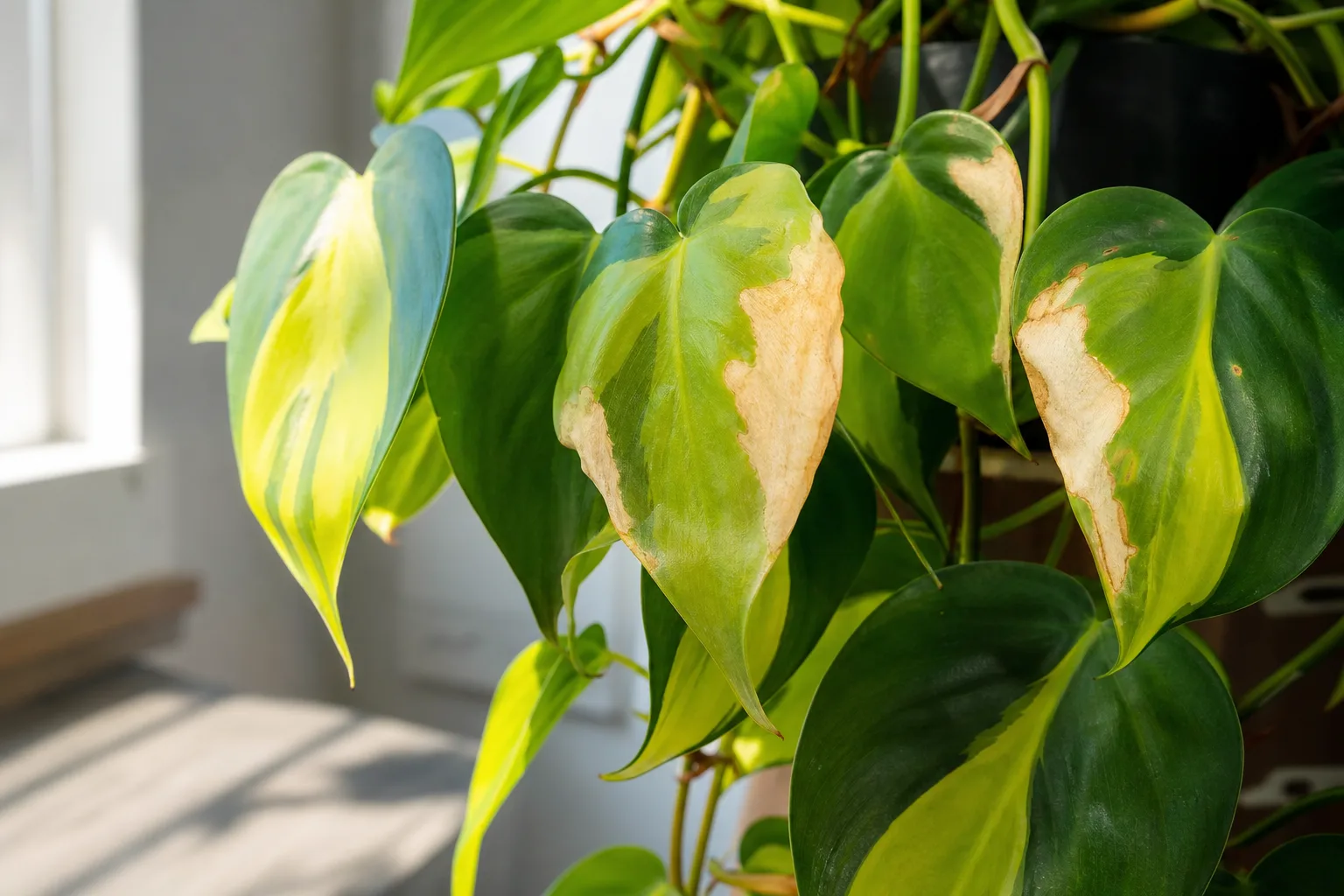
Sunburn & Scorched Leaves on Philodendron Brasil: Causes, Checks & Fixes
This guide covers sunburn / scorched leaves on Philodendron Brasil. See also the general Sunburn / Scorched Leaves guide, watering, and light pages for this plant.
Sunburn & Scorched Leaves on Philodendron Brasil: Causes, Checks & Fixes
Quick answer
Sunburn on Philodendron Brasil (Philodendron hederaceum ‘Brasil’) happens when thin, variegated heart leaves take more direct sun than they can handle-usually after a sudden move to hot afternoon glass, an unfiltered south or west window in summer, or an outdoor placement without gradual acclimation. The cultivar needs bright indirect light or filtered sun; direct sunlight should be avoided because it can scorch the delicate leaves.
First step: pull the pot back from harsh direct beams-or add sheer filtering-and leave watering, trimming, and Philodendron Brasil repotting guide alone until you see no new bleaching for several days. Brasil is a fast-growing vining philodendron, but sunburn is a light problem, not a humidity crisis. Fix exposure before you change anything else.
What sunburn looks like on Philodendron Brasil
Healthy Brasil hearts are glossy, heart-shaped, and splashed with lime-to-yellow variegation on dark green borders. Sunburn damage stands out because it is directional and dry, not mushy or evenly scattered across the whole pot.
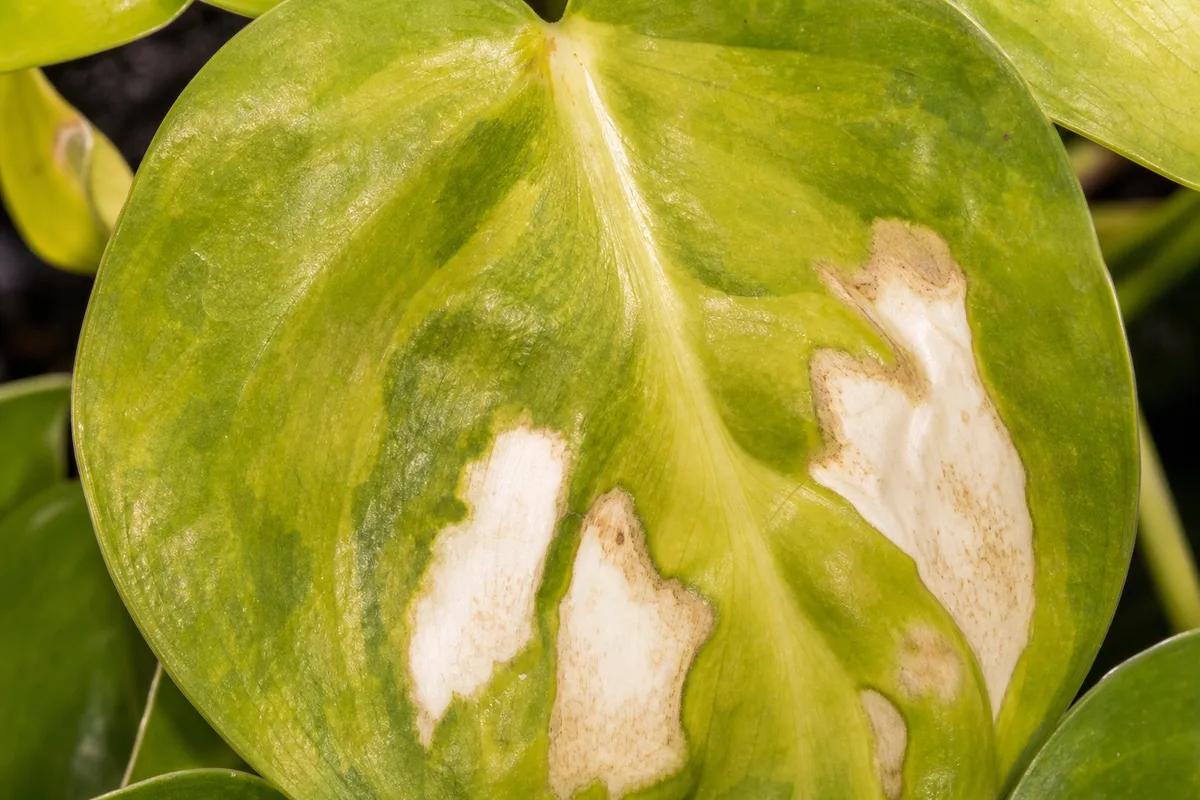
Sunburn / Scorched Leaves symptoms on Philodendron Brasil - compare with healthy tissue on the same plant.
Typical sunburn pattern:
- Bleached white, silvery, or pale tan patches on leaves facing the window or hottest side of the pot
- Dry brown or tan crispy margins, especially on the lime streaks that contain less chlorophyll
- Damage concentrated on outer trailing vines or the top leaves closest to glass before inner shaded foliage
- Sudden appearance within one to three days after moving closer to a south window, removing curtains, rotating the hanger, or placing outdoors
- Firm stems and normal-smelling soil despite ugly leaf tissue
- Older lower leaves may stay green while newest sun-facing hearts show the worst bleaching
The ‘Brasil’ variegation is unstable by nature, but sunburn is not the same as plain-green reversion. Reversion produces solid green new leaves without dry bleached patches. Scorch leaves tissue papery and brown on the sun-exposed side only.
Sunburn rarely starts at the soil line. If stems blacken and roots turn mushy with sour-smelling mix, suspect root rot on Philodendron Brasil or cold injury instead.
Why Philodendron Brasil gets sunburn
Heartleaf philodendron evolved scrambling through Central and South American tropical forests under filtered canopy light-not hours of unbroken midday rays on a windowsill. Missouri Botanical Garden recommends bright indirect light or filtered sun indoors, which matches the dappled conditions this aroid expects.
Brasil is more light-sensitive than solid-green heartleaf forms because variegated tissue carries less chlorophyll. NC State notes that while the green form tolerates extremely low light, the variegated cultivar needs brighter exposure to hold color-yet direct sunlight should still be avoided at all costs because it scorches delicate leaves. That narrow window is where most Brasil sunburn stories start.
Common Brasil-specific triggers include:
- South- or west-facing windowsill in summer - window glass concentrates heat; a vine that tolerated spring morning sun may scorch once afternoon intensity rises
- Sudden indoor upgrade - moving from a dim corner to unfiltered glass to fix leggy growth without gradual acclimation
- Outdoor move without transition - houseplants moved outside need to be acclimated gradually to stronger light to prevent sunburn
- Curtain or shade removal - cleaning windows or pulling sheers lets in more direct rays than the vine was adapted to
- Hanging basket rotation - turning the hanger so a previously shaded outer strand now faces the beam
- Reflective heat - white walls, metal shelving, or patio surfaces bouncing extra light onto one side of the pot
University of Maryland Extension notes that when a plant gets too much direct light, the leaves become pale, turn brown, and die-the same progression on thin tropical leaves that cannot dissipate excess energy quickly.
Low light causes stretch and variegation fade-not bleached crispy patches. The paradox for Brasil growers: the plant needs bright light to hold lime streaks, but jumps to harsh direct sun burn tender tissue before the vine hardens off.
How to confirm sunburn is the cause
Work through these checks in order before repotting, fertilizing, or increasing water:
- Light history - Did scorch appear within one to three days of a window move, outdoor placement, curtain change, or basket rotation?
- Damage pattern - Is injury on the sun-facing outer leaves only, with inner shaded hearts still green? Asymmetric bleaching strongly suggests scorch.
- Leaf texture - Dry, papery, bleached tissue supports sunburn. Soft, translucent, water-soaked patches after a cold snap point to chill injury instead.
- Stem firmness - Pinch vines near the soil line. Firm green or pinkish stems with normal-smelling soil fit light stress; soft mushy stems with sour odor points to rot.
- Soil moisture - Push your finger 3–5 cm into the mix. Bone-dry soil with crisp leaves scattered on inner and outer vines fits drought-not one-sided bleaching on the window side. Damp mix days after watering with soft stems fits root failure.
- Spread rate - Sun-scorched tissue browns and stops once light is corrected. Active rot keeps yellowing and softening from the base upward in stable room conditions.
If every check matches sunburn and stems are firm, skip fungicides and root surgery. The fix is light management.
First fix for Philodendron Brasil
Move the pot immediately to bright indirect light-several feet back from hot south- or west-facing glass, behind a sheer curtain, or to an east-facing window with gentle morning sun only.
Do not jump to a dim hallway; Brasil still needs usable light for recovery and variegation, just not direct beams. Do not water heavily, mist for humidity, fertilize, or repot while leaves are still crisping. Sun-stressed vines do not need extra moisture-follow your normal rhythm of allowing the top 3–5 cm to dry before watering once the plant stabilizes.
Leave the plant in safer light for at least five to seven days. Watch for no new bleached spots, existing crispy leaves drying but not spreading to adjacent green tissue, and firm stems throughout.
Step-by-step recovery
Once scorch has stopped spreading, work through recovery in this order:
Stabilize light
- Keep bright indirect exposure with optional one to two hours of gentle morning sun-not midday glass.
- If the only good window is south- or west-facing, use sheer curtains or place the pot three to four feet back from the pane.
- Rotate the pot weekly so one outer vine is not permanently sacrificed as a sun shield.
Trim damaged tissue (optional)
- Remove fully dead, brown, papery hearts with clean scissors if they bother you aesthetically.
- Leave any leaf with green tissue intact-it can still photosynthesize while new growth forms.
- Do not strip entire vines unless stems are clearly dead; you lose diagnostic clues and stress the plant unnecessarily.
Re-acclimate to stronger light (only if needed)
If you moved the plant to fix leggy growth and it now sits too dim, increase light gradually over one to two weeks:
- Start with current safe placement for one week after scorch stops.
- Add an hour or two of stronger exposure every few days-filtered afternoon light, not raw midday sun.
- Watch new hearts at vine tips; stop increasing intensity if any emerge bleached or crispy.
- When summering outdoors, start in bright shade and increase exposure gradually-bring indoors before frost.
Resume normal watering
Water only when the top 3–5 cm of mix feels dry, then soak thoroughly until a little runs from drainage holes. Sunburn does not change Brasil’s basic watering needs-overwatering in low light raises root stress if you compensate with extra drinks while the plant sits stressed.
Recovery timeline
Isolated sun scorch often stops spreading within three to seven days once light is corrected. New hearts should emerge with clean lime variegation within two to four weeks during active spring or summer growth.
Old bleached or crispy leaves never turn green again-that is permanent tissue death. Recovery means the pattern stops and new leaves stay clean.
Winter dormancy slows visible improvement even when care is correct. Hold expectations until longer days return if the plant is growing slowly in cooler months.
If new growth continues to bleach while soil stays wet, or stems keep softening, the underlying problem may be rot-not repeat sunburn.
Lookalike symptoms to rule out
Crispy leaves from underwatering on Philodendron Brasil affect scattered hearts on inner and outer vines with very dry mix and a light pot-not one-sided bleaching on the window side only.
Overwatering yellows lower leaves while soil stays wet. Sunburn and overwatering can overlap if a bright-window move increased evaporation and you overcompensated with extra water.
Not enough light causes leggy vines with fading lime streaks and long internodes-not dry bleached patches on sun-facing leaves only.
Brown tips from low humidity usually affect leaf margins broadly in dry winter rooms rather than large bleached zones on one sun-facing side.
Fertilizer burn often follows a heavy feed and may affect leaf margins broadly rather than directional scorch after a window move.
Cold damage follows exposure below about 13–16°C (55–60°F) for prolonged periods and can show water-soaked translucent spots-not dry bleaching after a sunny window move.
Spider mites leave fine webbing, stippled yellow dots, or orange specks when you shake a leaf over white paper-especially in warm dry winter rooms.
Normal leaf renewal drops an occasional older lower heart on a long vine while the rest pushes healthy new growth. Firm stems and a stable pattern-not an emergency.
Mistakes to avoid
Do not move a low-light Philodendron Brasil straight into summer midday sun to fix legginess. Gradual acclimation prevents repeat scorch.
Do not assume scorched leaves mean the plant needs more water. Extra moisture on an already wet root zone worsens rot.
Do not fertilize burned tissue to “green it up.” Feed only after light and Philodendron Brasil watering guide are stable and new growth is firm.
Do not pull every crisp heart before fixing light-you lose clues about which side burned and stress the vine unnecessarily.
Do not repot on day one while troubleshooting sunburn. Repot only if mix is failing or roots are clearly damaged.
Do not reach for a humidifier as the first fix. Low humidity alone rarely causes sunburn on Brasil; fix exposure first.
How to prevent sunburn next time
Place Brasil where it receives bright indirect light with optional gentle morning sun, filtered from harsh afternoon rays. East-facing windows work well; south and west windows need distance or sheer curtains per extension guidance on protecting houseplants from excessive direct sunlight.
When upgrading light to prevent leggy growth or variegation loss, acclimate over one to two weeks rather than jumping straight to hot glass.
If you summer the plant outdoors, start in bright shade and increase exposure gradually-then bring indoors before frost.
Rotate the pot occasionally so outer vines share sun exposure instead of one curve taking all the burn.
Track seasonal intensity: a spot that was safe in winter may scorch in June when the sun angle shifts and days lengthen.
Keep trailing stems on elevated shelves or hangers out of pet reach when you chase brighter window placement-Brasil is toxic to cats and dogs if chewed.
When to worry
Treat as urgent when crispness spreads quickly with yellow mushy leaves, blackening stems at the soil line, soft roots, or a sour smell from the pot. That combination suggests rot or advanced root failure-not cosmetic scorch alone.
Isolated bleached hearts on firm stems after recent sun exposure are not urgent. Adjust light; wait for clean new growth before drastic action.
Replace or heavily cut back a vine only if stems keep rotting after corrected watering and most new hearts continue to bleach or crisp for more than two months in warm active-season conditions.
Conclusion
Sunburn on Philodendron Brasil means thin variegated hearts took too much direct sun-usually after a sudden move to hot glass or outdoor light without acclimation. Pull the pot back to bright indirect light or filter the window first; leave soil, fertilizer, and repotting alone until scorch stops spreading. Judge recovery by firm stems and new hearts with clean lime streaks, not by old tissue that will stay crispy forever.
When to use this page vs other Philodendron Brasil guides
- Philodendron Brasil watering guide - Use for routine moisture checks before assuming sunburn / scorched leaves is the main issue.
- Philodendron Brasil problems hub - Browse all 46 common issues on this species.
- Brown Leaves on Philodendron Brasil - Different entry point when symptoms overlap with sunburn / scorched leaves.
- Brown Tips on Philodendron Brasil - Different entry point when symptoms overlap with sunburn / scorched leaves.