Brown Leaves on Philodendron Brasil: Causes, Checks & Fixes
Quick answer
Brown leaves on Philodendron Brasil are a late stress signal from watering extremes, harsh light, or failing roots-not a mystery fungus. First step: feel the soil 3–5 cm deep and note whether browned leaves face a hot window before you trim or repot.
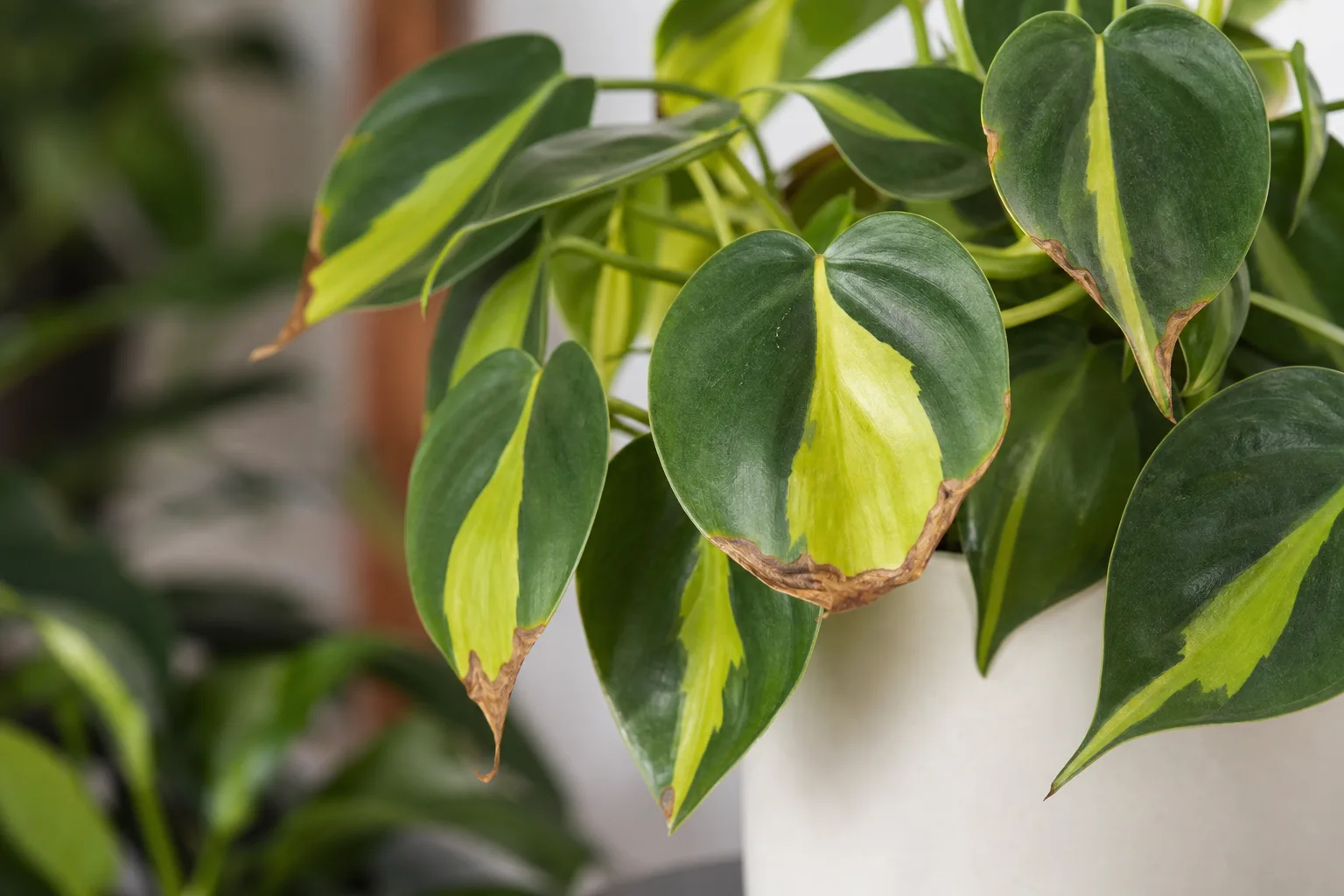
Brown Leaves on Philodendron Brasil: Causes, Checks & Fixes
This guide covers brown leaves on Philodendron Brasil. See also the general Brown Leaves guide, watering, and light pages for this plant.
Brown Leaves on Philodendron Brasil: Causes, Checks & Fixes
Quick answer
Brown leaves on Philodendron Brasil (Philodendron hederaceum ‘Brasil’) mean leaf tissue has died-usually from water extremes, harsh light, or failing roots, not a random leaf spot disease. The heart-shaped cordate leaves with lime-and-green variegation are thinner than many aroids; they brown fully when roots cannot supply moisture, when intense sun burns exposed tissue, or when chronic wet soil suffocates roots.
First step: feel the soil 3–5 cm deep and note whether browned leaves sit on the sun-facing side of the trailing vine. Philodendron hederaceum prefers bright indirect light and water when the top 1–2 inches of soil has dried. [Roots growing in waterlogged soil may die because they cannot absorb the oxygen needed to function normally](https://www.missouribotanicalgarden.org/gardens-gardening/your-garden/help-for-the-home-gardener/advice-tips-resources/insects-pests-and-problems/environmental/[overwatering on Philodendron Brasil](/plants/philodendron-brasil/overwatering/)), which can brown leaves even when the surface looks merely damp.
What brown leaves look like on Philodendron Brasil
On healthy vines, each heart shows lime streaks on deep green with glossy texture along pinkish trailing stems. Brown-leaf damage stands out because entire leaves or large sections turn tan, brown, or crispy-not just the pointed tip.
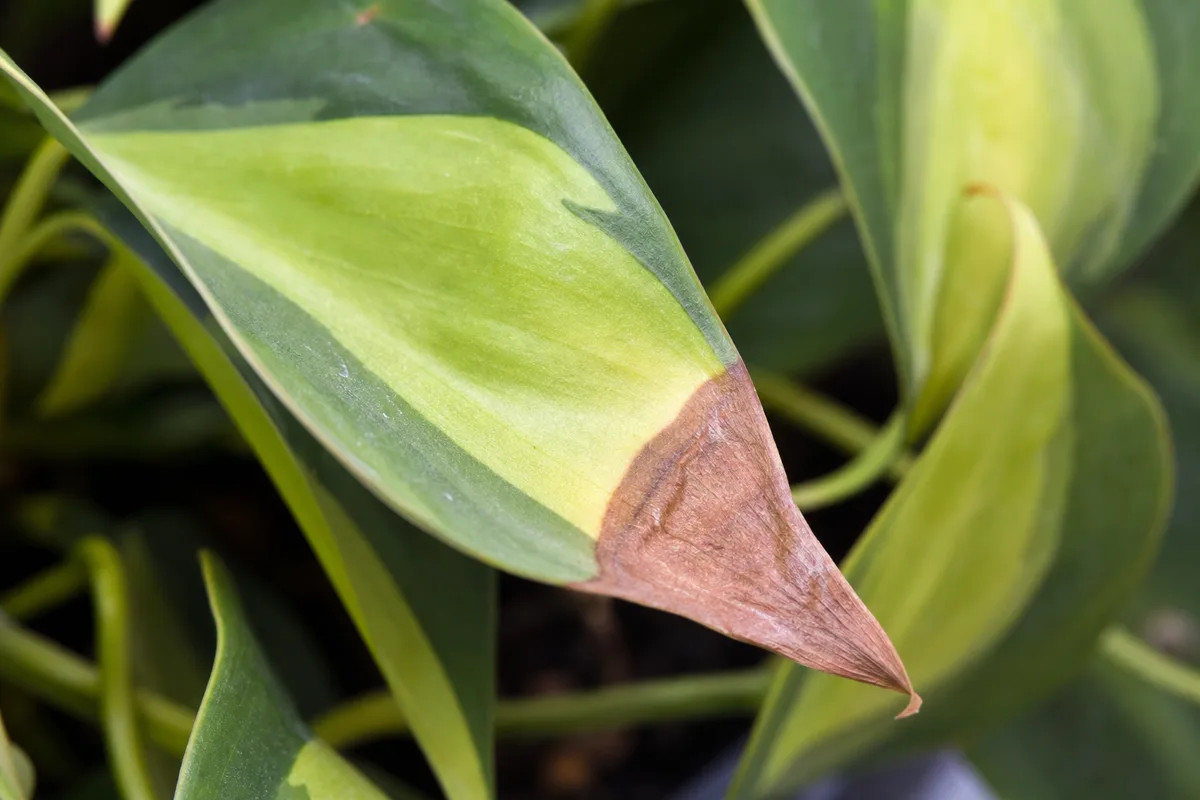
Brown Leaves symptoms on Philodendron Brasil - compare with healthy tissue on the same plant.
Sun scorch pattern:
- Dry brown or bleached patches on leaves facing the window or hottest side of the basket
- Papery, crisp texture; stems usually still feel firm
- Often appears days after moving closer to glass or into direct afternoon sun
- Variegated lime sections may bleach first because they lack protective chlorophyll
underwatering on Philodendron Brasil pattern:
- Whole leaves turn brown and crisp; leaves feel thin or papery
- Pot feels very light; mix is dry through several centimeters
- Long trailing stems may wilt before leaves fully brown
- Browning may start at margins and spread inward on multiple leaves
Root-stress pattern (often from overwatering):
- Leaves turn yellow first, then brown, even though you have been watering
- Soil stays damp for days; stems near the soil line may soften
- Stunted slow growth with yellowing leaves is a symptom of over-watering
- Leaves may look slightly limp rather than firmly crisp before browning
Cold or draft damage:
- Brown patches appear after nights near cold glass or AC blasts
- Damage may affect outer trailing leaves touching the window
- Stems stay firm if cold was brief; prolonged chill slows recovery
A few fully brown leaves on the oldest lower stems, with firm vines and steady new lime-streaked growth elsewhere, are often normal aging-not an emergency.
Why Philodendron Brasil gets brown leaves
Philodendron Brasil is a fast-growing trailing tropical vine that moves water quickly through thin heart leaves when conditions are right. Full-leaf browning usually means stress persisted long enough to kill tissue-not a quick tip scorch alone.
Overwatering and root rot on Philodendron Brasil are the most dangerous indoor trigger. An oversized pot, dense mix, or dim corner keeps soil wet for days while the vine still looks thirsty. Philodendrons prefer evenly moist but not soggy soil; when roots lose oxygen, they cannot move water upward-leaves brown despite wet mix.
Underwatering dries leaves faster than roots can resupply them during active summer growth. Long dry spells in bright light pull moisture from thin hearts; repeated drought episodes can brown entire leaves rather than just tips.
Harsh or sudden direct sun burns variegated tissue. Lime streaks lack the chlorophyll density of solid green sections, so scorch often shows as tan patches on the exposed side after a window move. Grow in bright indirect light-not hot midday rays on glass.
Low humidity and dry heat from radiators or vents can push edge browning into full-leaf necrosis on long trailing stems farthest from the pot. Philodendrons appreciate moderate humidity around 40–60%.
Salt buildup from hard tap water or heavy fertilizer can push patch necrosis on sensitive leaves. Never feed a stressed vine showing brown leaves-that adds salt stress on top of existing damage.
Leaf spot progression is less common indoors but can merge into large brown sections if lesions spread on damp foliage in weak light with poor airflow.
How to confirm the cause
Work through these checks in order:
- Soil moisture at depth - Insert a finger 3–5 cm into the mix, not just the surface. Bone dry throughout with thin, crisp brown leaves points to underwatering. Damp mix days after watering with soft stems points to root stress.
- Pot weight - Lift the pot. A very light pot with browning leaves fits drought; a heavy pot that stays wet fits overwatering.
- Light history - Did you move the plant, rotate the hanger, or place it in direct sun in the last one to two weeks? One-sided brown patches on the exposed side strongly suggest scorch.
- Stem firmness at the soil line - Soft, dark stems with sour smell is rot. Firm stems with dry soil is likely drought or sun.
- Leaf texture - Crispy dry brown tissue fits drought or scorch. Soft dark brown with yellowing and wet soil fits rot.
- New growth condition - Browning on newest lime-streaked leaves with wet soil is urgent. Browning only on oldest lower leaves with healthy tips often fits aging or a past stress episode.
- Pest scan - Spider mites leave stippling and webbing; mealybugs leave cottony wax. Whole-leaf browning without pests on inspection is usually care-related.
If overwatering and underwatering both seem possible, texture and soil depth beat appearance: soft leaves plus wet soil means stop watering; crisp leaves plus dry soil means rehydrate slowly.
First fix for Philodendron Brasil
Stop guessing and verify soil moisture 3–5 cm deep plus light exposure before you water, trim, or repot.
Push your finger into the mix or lift the pot. At the same time, pull the vine back from hot south- or west-facing glass if browned leaves cluster on one sun-exposed side. This single step prevents watering an already wet root zone and stops further scorch.
Do not remove all browned leaves immediately, repot on day one, or fertilize a stressed vine. Do not assume every brown leaf needs more water-check soil first.
Step-by-step recovery
Once you know whether light, drought, salts, or roots are driving the browning, work in this order:
Sun scorch
- Move to bright indirect light without harsh midday sun on variegated leaves.
- Acclimate gradually when increasing light-add exposure slowly over two to three weeks rather than jumping straight to hot glass.
- Trim fully dead leaves with clean scissors if you prefer appearance; leave any remaining green tissue intact.
- Resume normal watering only when the top 3–5 cm is dry, then water thoroughly and discard saucer water.
Underwatering
- Water deeply so moisture reaches the whole root ball-not a light surface sprinkle on dry mix.
- Wait until the pot feels noticeably heavier, then let the top 3–5 cm dry before the next watering.
- Expect limp vines to firm within one to two days; brown tissue already dead will not re-green.
- Reduce frequency in winter when growth slows.
Root stress from overwatering
- Stop watering immediately and unpot only if stems feel soft or the mix smells sour.
- Cut away mushy roots with clean scissors; repot into fresh airy mix with 20–25% perlite in an appropriately sized pot-not much larger.
- Repot dry, wait several days, then give one moderate drink-do not soak a recovering root system.
- Keep in bright indirect light while the vine re-establishes; judge success by firm stems and clean new lime-streaked leaves.
Salt buildup
- Stop fertilizing until new growth emerges clean.
- Flush the pot with plain room-temperature water, letting several pot-volumes run through the mix; empty the saucer so the plant is not sitting in runoff.
- Resume half-strength fertilizer only during active growth and only after browning stops on new leaves.
Recovery timeline
Isolated sun scorch or mild underwatering often stops spreading within one to two weeks once light and water stabilize. New hearts should emerge without browning within two to four weeks during active spring or summer growth.
Brown leaf tissue never turns green again-that is permanent necrosis. Recovery means the pattern stops and new leaves stay clean.
Root-related browning takes longer: four to eight weeks or more if roots were damaged. If new growth continues to brown while soil stays wet, or stems keep softening, the underlying rot may be advanced.
Winter dormancy slows visible improvement even when care is correct. Hold expectations until longer days return.
Lookalike symptoms to rule out
Brown tips only on otherwise green heart leaves usually mean early humidity or water-quality stress-see the brown-tips guide if damage has not spread across whole leaves.
Yellow leaves without browning often appear earlier in overwatering stress. Yellowing with wet soil and soft stems is the urgent rot pattern.
Spider mites or mealybugs leave stippling, webbing, or cottony wax at nodes. Whole-leaf browning without pests on inspection is not an insect problem alone.
Not enough light causes long gaps between nodes and plain-green reversion-not scorched brown patches. Variegation fades before leaves fully brown from dim corners alone.
Normal leaf aging affects a few oldest hearts on lower stems while the vine pushes healthy new growth at the tips. No care change needed if stems are firm and the pattern is stable.
Mistakes to avoid
Do not assume all browning means underwatering. Wet soil with brown leaves almost always means stop watering, not add more.
Do not move a low-light plant straight into summer midday sun. Gradual acclimation prevents repeat scorch on lime variegation.
Do not water on a calendar without checking dryness. Summer may need drinks every 7–10 days; winter may need 10–14 days between thorough soaks.
Do not increase fertilizer to “green up” browned leaves. That often worsens salt burn.
Do not strip every browned leaf at once-partially green leaves still support recovery.
Do not repot into a much larger container while troubleshooting. Oversized pots stay wet longer around philodendron roots.
When pruning damaged tissue, remember heartleaf philodendron is toxic to cats and dogs; wear gloves and keep cuttings away from pets.
How to prevent brown leaves next time
Place the vine where it gets bright indirect light without harsh afternoon rays on variegated leaves. Rotate the pot occasionally so one outer strand is not the only sun shield.
Water when the top 3–5 cm dries, then soak thoroughly and empty the saucer. Track pot weight through a full dry-down cycle in your home before locking into a schedule.
Use well-drained potting mix with perlite so roots stay oxygenated between drinks.
Keep humidity around 40–60% in heated winter rooms-group plants or use a pebble tray if air is very dry.
Feed lightly during active growth only after basics are stable; never fertilize a stressed vine.
When moving to a brighter spot, acclimate gradually over two to three weeks.
When to use this page vs other Philodendron Brasil guides
- Philodendron Brasil watering guide - Use for routine moisture checks before assuming brown leaves is the main issue.
- Philodendron Brasil problems hub - Browse all 46 common issues on this species.
- Brown Tips on Philodendron Brasil - Different entry point when symptoms overlap with brown leaves.
- Yellow Leaves on Philodendron Brasil - Different entry point when symptoms overlap with brown leaves.
- Overwatering on Philodendron Brasil - Different entry point when symptoms overlap with brown leaves.
Related Philodendron Brasil guides
- Philodendron Brasil overview
- Philodendron Brasil watering
- Philodendron Brasil light
- Philodendron Brasil soil
- Brown Tips on Philodendron Brasil
- Yellow Leaves on Philodendron Brasil
- Overwatering on Philodendron Brasil
- Underwatering on Philodendron Brasil
- Black Spots on Philodendron Brasil
- Philodendron Brasil problems