Yellow Leaves on Philodendron Brasil: Causes, Checks & Fixes
Quick answer
Yellow leaves on Philodendron Brasil usually mean wet roots, dry roots, low light, or normal lower-leaf aging-not a fertilizer shortage. First step: check soil moisture 3–5 cm deep and pot weight, then match the pattern in the lookalike table before you water, repot, or move the plant.
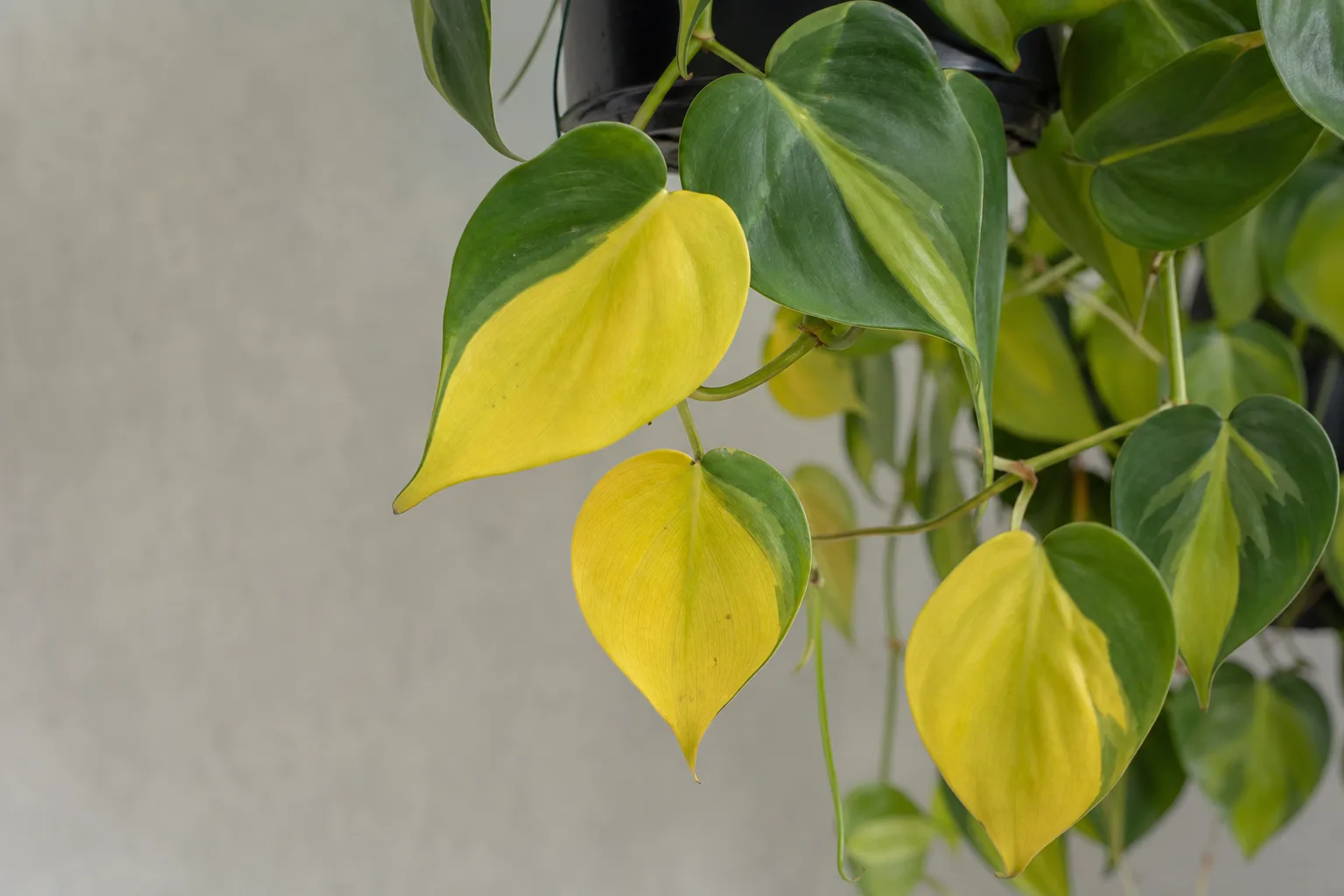
Yellow Leaves on Philodendron Brasil: Causes, Checks & Fixes
This guide covers yellow leaves on Philodendron Brasil. See also the general Yellow Leaves guide, watering, and light pages for this plant.
Yellow Leaves on Philodendron Brasil: Causes, Checks & Fixes
Quick answer
Yellow leaves on Philodendron Brasil (Philodendron hederaceum ‘Brasil’) are a symptom, not a single disease. This rapidly growing trailing vine with heart-shaped lime-and-green leaves yellows for five common indoor reasons-ranked by how often we see them on Brasil:
- overwatering on Philodendron Brasil / wet roots - most common; yellow lower leaves on heavy wet soil
- Normal lower-leaf senescence - one or two old leaves fading on an otherwise healthy trailer
- underwatering on Philodendron Brasil after dry cycles - less common; yellow follows limp vines and dusty dry mix
- Low light plus slow dry-down - pale lime streaks, plain-green reversion, soil stays damp in dim corners
- Advancing root rot on Philodendron Brasil - sour smell, soft stem base, yellowing on new growth
First step: push your finger 3–5 cm into the mix and lift the pot for weight. Do not fertilize, repot, or add water until you know which row in the lookalike table below fits. One or two yellow lower leaves with firm stems and neutral soil may be normal aging-not a crisis.
| What you notice | Soil at 3–5 cm | Pot weight | Likely cause | Deep dive |
|---|---|---|---|---|
| One or two yellow lower leaves, firm vines | Neutral, not soggy | Normal | Senescence - normal aging | Stay on this page |
| Yellow lower leaves spreading, limp vines | Wet, cool-damp | Heavy days after watering | Overwatering | Overwatering guide |
| Yellow after limp curled vines | Dusty dry | Very light | Underwatering | Underwatering guide |
| Pale lime streaks, plain-green tips, wide node gaps | Moist, slow to dry | Moderate | Low light | Not enough light |
| Sour smell, soft stem base, yellow on new leaves | Wet | Heavy | Root rot | Root rot guide |
This page is the yellow-leaf triage hub-cause ranking and lookalike exclusions. The Philodendron Brasil watering guide covers normal soak-and-drain rhythm; the overwatering and root rot pages carry advanced wet-soil rescue when you already know roots are failing.
Why Philodendron Brasil leaves turn yellow
Brasil yellows differently than a self-heading rosette or a succulent because water must travel through long thin vines to reach distant heart leaves. The same yellow blade can mean thirst, drowning, aging, or dim light-pattern and soil tell them apart.
Overwatering and wet roots (most common)
When soil stays saturated, roots cannot absorb the oxygen they need and begin to fail. Lower leaves yellow first because they are farthest from recovering roots and oldest. Trailing lime-streaked vines may wilt even though mix feels damp-the wilted plant with moist soil paradox that owners misread as thirst.
Brasil’s fast summer growth encourages frequent watering, but dense peat without perlite holds water at the bottom while the surface merely looks “kind of dry.” Calendar watering in winter-when trailing growth slows-keeps soil wet for weeks. Missouri Botanical Garden recommends watering when the top 1–2 inches of soil has dried in well-drained potting mix; Brasil in bright light often needs water every 7–10 days in summer and every 10–14 days in cooler winter months when you check depth, not the weekday.
Normal lower-leaf senescence
Heartleaf philodendron renews foliage as it trails. On a healthy Brasil, one or two lower heart-shaped leaves may yellow, brown at the tip, and drop over several weeks while new lime-streaked leaves keep emerging at vine tips. Stems stay firm. Soil smells neutral-not sour. No widespread limp collapse.
Senescence accelerates when a long trailer prioritizes new growth at the ends and sheds shaded lower leaves near the pot. That is not overwatering unless wet soil and spreading yellow accompany the drop.
Underwatering after repeated dry cycles
Brasil is not drought-tolerant. Repeated dry spells stress fine roots; older lower leaves yellow and drop after vines have been limp and mix dusty 3–5 cm down. Unlike overwatering, the pot feels light, stems stay firm, and a deep soak perks foliage within hours. See the underwatering guide when dry weight and perk-test confirm thirst.
Low light and variegation dulling
NC State notes the ‘Brasil’ cultivar has unstable variegation-lime streaks shift leaf to leaf even in good conditions. In dim corners, the plant produces more chlorophyll (plain-green revert shoots) because variegated tissue carries less photosynthetic capacity and needs brighter indirect light to hold vivid streaks.
Low light also slows water use, so soil stays wet longer at the root zone-yellowing and dull lime color can appear together with moist (not necessarily soggy) mix. That is often misread as fertilizer deficiency when the fix is brighter placement plus corrected dry-down. Cross-check the not enough light guide when pale washed-out color across the whole plant is the headline.
Nutrient stress (when soil is actually healthy)
Nitrogen shortage can yellow older leaves while new growth stays green-but on Brasil this is rare indoors when the real issue is wet or dry roots. Suspect nutrients only after moisture rhythm and light are stable for several weeks, growth is active, and you have not over-fertilized. Iowa State Extension advises feeding only during active growth and avoiding soggy soil; fertilizing yellow leaves on stressed wet roots adds salt injury without fixing yellowing.
Repot stress and pests (less common)
Recent Philodendron Brasil repotting guide can yellow a few leaves for one to two weeks while roots settle-hold watering until the top inch of fresh mix dries. Spider mites cause stippling and webbing more than uniform yellowing; confirm with a white-paper tap test under leaves before spraying.
What yellow leaves look like on Philodendron Brasil
Watch which leaves, soil, and vine tips together-Brasil’s lime variegation makes stress yellow harder to spot than on solid-green heartleaf.
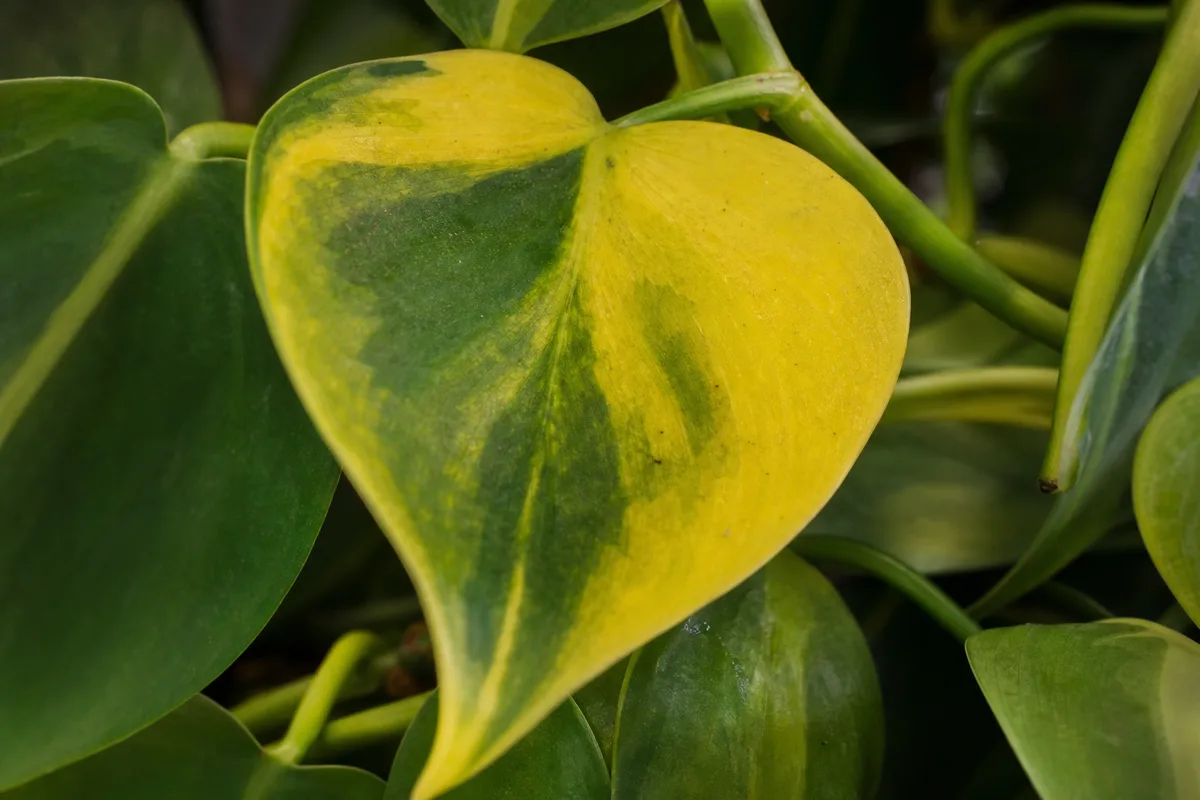
Yellow Leaves symptoms on Philodendron Brasil - compare with healthy tissue on the same plant.
Lower-leaf senescence vs. stress yellowing
Senescence: One or two bottom leaves turn evenly yellow, sometimes with a crisp brown tip, over days to weeks. Vine tips push new firm lime-streaked hearts. Pot weight and soil moisture feel normal.
Stress yellowing: Multiple leaves yellow along a stem or from the base upward. Lime streaks look dull or washed out. Vines limp on wet or bone-dry soil. New growth emerges small, pale, or yellow-tinged-that last sign is urgent.
Lime streak dulling and plain-green reversion
Stress and low light can fade chartreuse striping before blades go fully yellow. Plain-green revert vines growing faster than variegated sections is a Brasil-specific clue: the plant is prioritizing efficient green tissue in insufficient light, often while mix in a dim corner stays damp. Fix light and dry-down together-not fertilizer first.
How to confirm the cause
Work through these checks in order:
- Moisture at depth - Push your finger 3–5 cm into mix near the root ball, not just the surface. Iowa State’s indoor rule: water when the top 1–2 inches of soil are dry-roughly 3–5 cm for Brasil. Wet cool-damp soil with spreading yellow supports overwatering. Dusty dry soil with limp vines supports underwatering.
- Pot weight - Lift the container. Heavy days after watering means slow dry-down. Very light means drought. Senescence alone rarely changes weight sharply.
- Newest growth - Firm new lime-streaked leaves at vine tips suggest the plant is still functioning. Yellow or tiny new leaves on wet soil means escalate.
- Stem base - Pinch tissue at the soil line. Firm green fits senescence, early overwatering, or underwatering depending on soil. Soft mushy crown with sour smell means root rot.
- Light reality - Count usable bright indirect hours. Less than a few hours daily plus heavy wet pots is the classic dim-corner trap; see the light guide.
- Senescence count - Only one or two lower leaves yellowing per month on an otherwise vigorous trailer? Likely normal. Five or more yellow leaves in two weeks on wet soil is not aging.
Lookalike decision summary
Use the quick-answer table at the top as your primary triage tool. When two causes seem possible-wet soil in a dim room-address light and watering together: move to brighter filtered light, then let the top 3–5 cm dry before the next soak. Do not add water to limp vines when mix is wet at depth.
First fix for Philodendron Brasil
Match the first action to the confirmed row-not every yellow leaf needs the same response.
Mild cases: senescence or early overwatering
Pluck or snip the fully yellow lower leaf if it bothers you and stems are firm. For wet soil without sour smell or stem softness: stop watering until the top 3–5 cm is fully dry, move to brighter indirect light so remaining roots can dry the mix faster, and empty saucer water within 30 minutes. One thorough soak after dry-down-then return to checking depth, not a calendar.
Moderate cases: chronic wet soil or dim corner
Continue the dry-down pause. If the pot stays heavy for two weeks in brighter light, slide the plant out and inspect roots-white firm roots can stay; brown mushy sections need trimming and repot into fresh mix with 20–25% perlite per UF/IFAS guidance for lightweight, well-drained potting media. Full unpot-and-trim steps live in the overwatering and root rot guides.
Underwatering-confirmed cases
Water deeply until excess drains, discard saucer water, and resume when the top 3–5 cm dries-not daily top-ups. See the underwatering guide for bottom-watering hydrophobic mix.
Do not fertilize, repot into a larger pot, or mist leaves on day one unless roots are mushy or mix is hydrophobic and will not rewet.
Recovery timeline
Senescence: Old yellow leaves drop; new growth continues within days-no special recovery window.
Mild overwatering: After one correct dry-down cycle, yellowing often stabilizes within one to two weeks. Fully yellow blades will not re-green.
Root damage: Severe cases need several weeks to months before firm new lime-streaked leaves appear at vine tips. Judge success by new growth quality and predictable pot weight between waterings-not by saving every yellow leaf.
Underwatering: Vines perk within hours of a deep soak when roots are healthy; yellow leaves from drought may still drop but replacement foliage emerges in two to four weeks.
What not to do
Do not fertilize yellow leaves on wet soil-it stresses roots further. Do not repot into a much larger pot “to help recovery”; extra wet soil volume worsens oxygen loss. Do not assume every yellow lower leaf is overwatering when only one fades over months on a thriving trailer. Do not add water to limp vines when mix is wet 3–5 cm down-that deepens root failure.
Heartleaf philodendron is toxic to cats and dogs if chewed; wear gloves if sap irritates skin when removing yellow tissue. Contact your veterinarian or ASPCA Animal Poison Control at (888) 426-4435 if a pet ingests foliage.
How to prevent yellow leaves next time
Pair bright indirect light with well-drained mix and water on dry-down. Philodendrons prefer evenly moist but not soggy soil-”moist” only works when perlite-amended mix drains fast enough for roots to breathe between soaks.
Learn your pot’s weight when freshly watered versus ready to water again. Summer bright light often means every 7–10 days; winter dimmer growth may stretch toward 10–14 days-always verify at 3–5 cm depth. Empty saucers after every drink. Hanging baskets dry faster on exposed walls but dense trailers in low light still hold wet cores; weight beats calendar rules.
Refresh peat-heavy mix every one to two years before it turns hydrophobic or stays stale and wet at the center. Prune plain-green revert tips back to the last variegated node after light and watering stabilize-see the pruning guide.
When to worry
Escalate immediately when yellowing reaches new growth, soil smells sour, stems soften at the base, or vines collapse while the pot stays wet. Those patterns mean failing roots-not senescence and not simple thirst.
Brief yellowing on one old lower leaf with firm stems and neutral soil is rarely an emergency. Replace the plant only if the crown shrivels, stems turn brittle brown throughout, and no new nodes activate after four to six weeks of corrected care. Brasil propagates easily from firm cuttings if part of the vine survived-see the propagation guide before discarding the whole pot.
Conclusion
Yellow leaves on Philodendron Brasil reward a check-first habit: soil at 3–5 cm, pot weight, newest growth, and stem firmness tell you whether you are seeing normal lower-leaf aging, wet roots, dry roots, dim-light reversion, or advancing rot. Rank the cause, take one matched first fix, and use the cluster guides below when a single symptom page is not enough.
This page was reviewed by the LeafyPixels Review Board against NC State Philodendron hederaceum, Missouri Botanical Garden, Iowa State Extension, UF/IFAS, University of Minnesota Extension, Clemson HGIC, and ASPCA toxicity data, plus our watering, overwatering, underwatering, root rot, and not enough light guides, before publication. Author: sai-ananth. Reviewed: 2026-06-16. We lead with cause ranking and lookalike exclusions because yellow leaves is a broad symptom query-distinct from the wet-soil rescue depth on the overwatering page.
Related guides
- Watering - soak-and-drain rhythm, seasonal intervals, wilt-with-wet-soil context
- Overwatering - wet-soil confirmation and rescue paths
- Underwatering - dry-soil yellowing and rehydration
- Root rot - sour soil, mushy roots, crown failure
- Not enough light - lime fade and plain-green reversion
- Philodendron Brasil hub - full care cluster
When to use this page vs other Philodendron Brasil guides
- Philodendron Brasil watering guide - Use for routine moisture checks before assuming yellow leaves is the main issue.
- Philodendron Brasil problems hub - Browse all 46 common issues on this species.
- Overwatering on Philodendron Brasil - Different entry point when symptoms overlap with yellow leaves.
- Underwatering on Philodendron Brasil - Different entry point when symptoms overlap with yellow leaves.
- Not Enough Light on Philodendron Brasil - Different entry point when symptoms overlap with yellow leaves.