Underwatering on Philodendron Brasil: Causes, Checks & Fixes
Quick answer
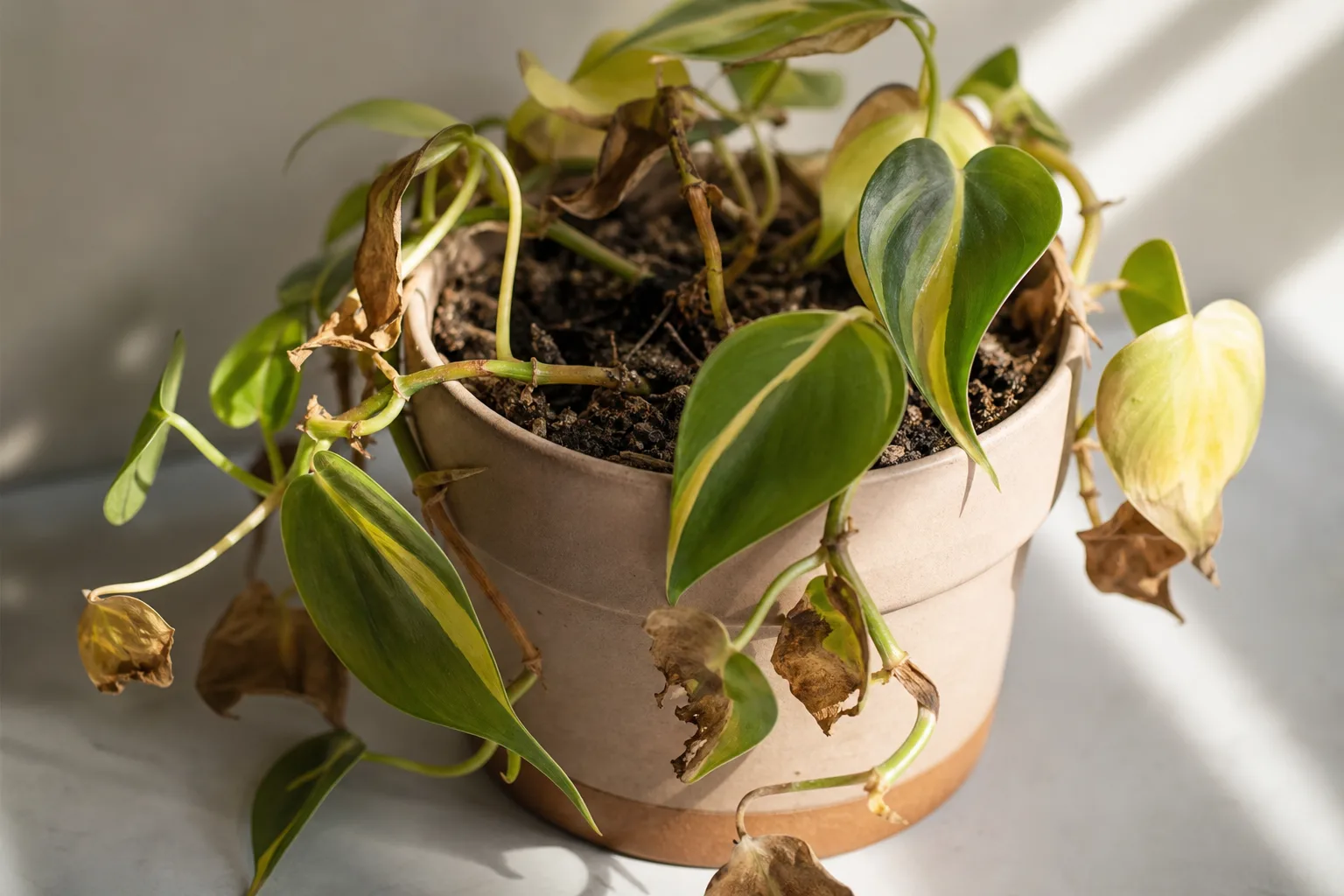
Underwatering on Philodendron Brasil shows as limp trailing vines, a very light pot, and dry mix several centimeters down. First step: water deeply until excess drains from the holes, then resume watering when the top 3–5 cm dries-not on a fixed calendar.
Underwatering on Philodendron Brasil: Causes, Checks & Fixes
This guide covers underwatering on Philodendron Brasil. See also the general Underwatering guide, watering, and light pages for this plant.
Underwatering on Philodendron Brasil: Causes, Checks & Fixes
Quick answer
Philodendron Brasil is forgiving, but it is not a succulent. This vining heartleaf philodendron with lime-green streaks loses turgor quickly when roots stay dry too long. Underwatering shows up as limp trailing vines, slightly curled glossy heart-shaped leaves, and mix that is dusty dry well below the surface-not soggy and heavy.
First step: water deeply until excess runs from the drainage holes, then discard saucer water within 30 minutes. Do not mist leaves, fertilize, or repot on day one. After the soak, wait until the top 3–5 cm of mix feels dry before watering again.
What underwatering looks like on Philodendron Brasil
Brasil wilts from the outside in. The longest trailing stems and outer leaves droop first because water has the farthest to travel through thin vines. You may notice:
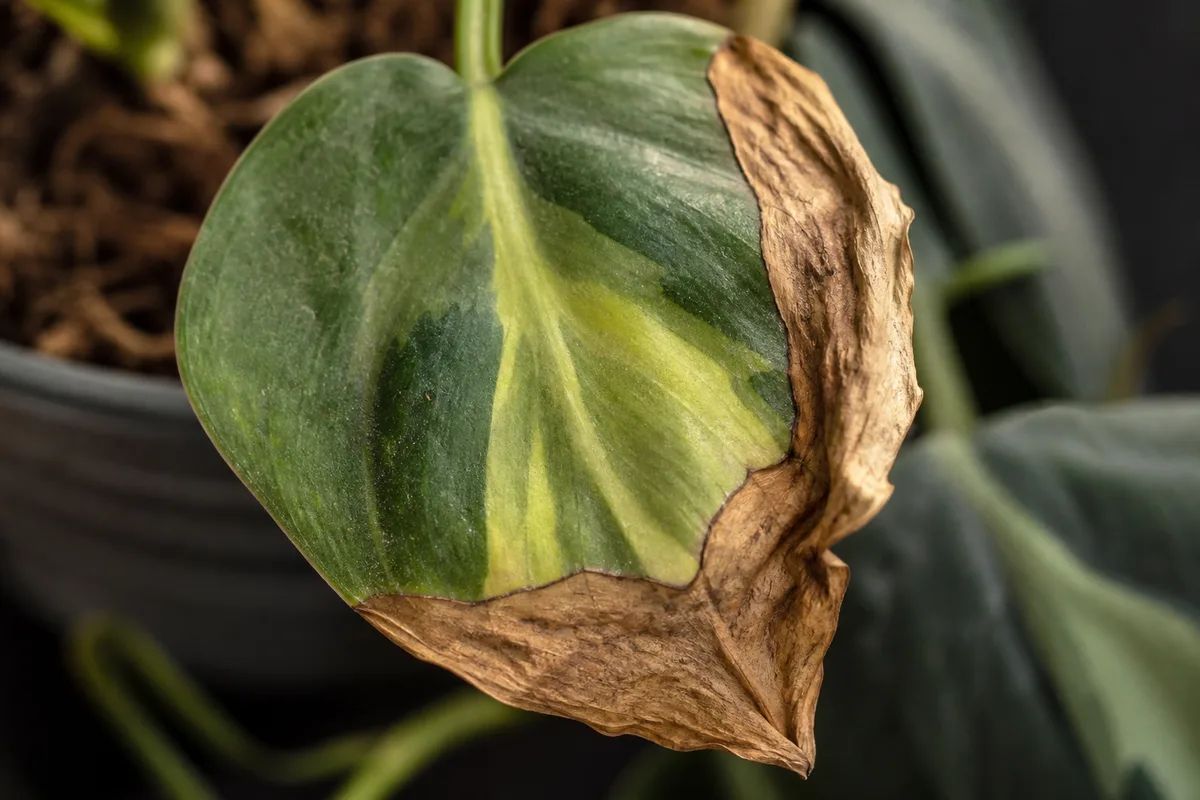
Underwatering symptoms on Philodendron Brasil - compare with healthy tissue on the same plant.
- Limp, soft-feeling vines that hang lower than usual
- Heart leaves curling slightly inward or feeling thinner than normal
- Dry, crispy brown edges on leaf margins if dryness persists several days
- Mix that is light tan and dusty 3–5 cm down, not cool and damp
- A pot that feels unusually light when lifted
- Older lower leaves turning yellow and dropping after repeated dry cycles
- Stalled new growth or smaller new leaves during prolonged drought
Unlike overwatering on Philodendron Brasil, stems at the soil line stay firm. Soil smells neutral, not sour. There is no mushy base or waterlogged saucer.
The lime variegation may look dull when the plant is thirsty, but pale washed-out color across the whole plant with moist soil usually points to light stress-not underwatering alone.
Why Philodendron Brasil gets underwatering
Brasil grows fast in Philodendron Brasil light guide and uses water faster than many slower philodendrons. A rapidly growing vine in a south-facing window or warm room can dry a small pot in just a few days during summer. Hanging baskets and narrow pots dry faster than floor containers because exposed mix surface area is larger relative to root volume.
Calendar watering is a common trigger. Watering every Tuesday regardless of soil moisture misses the point that philodendrons need water when the top soil dries, not on a fixed schedule. Cooler winter rooms and shorter days slow water use, but many growers forget to stretch intervals-and then swing the other way in spring heat.
Hydrophobic old mix causes a sneaky form of underwatering. Peat-heavy soil that has gone bone dry repels water on the surface while the root ball inside stays dry. Water runs down the gap between mix and pot wall and out the drainage hole without rewetting the center.
Heat and airflow accelerate drying. Heating vents, air-conditioning drafts, and sunny windowsills pull moisture from mix faster than the same plant in a stable corner. Brasil tolerates brief dryness better than many tropicals, but repeated drought cycles weaken fine roots and slow the variegated growth that makes this cultivar worth keeping.
How to confirm the cause
Work through these checks before you treat:
- Soil moisture at depth - Push your finger 3–5 cm into the mix near the root ball, not just the surface. Bone dry and dusty confirms drought. Cool damp mix means look elsewhere.
- Pot weight - Lift the container. A very light pot after several days without water strongly supports underwatering. A heavy wet pot with limp vines suggests root damage from overwatering.
- Stem firmness - Pinch the base of a trailing vine near the soil. Firm green tissue with dry mix fits underwatering. Soft mushy tissue at the crown with wet soil fits rot.
- Perk test - Water deeply once, then recheck vines in four to six hours. Wilting from dry soil often improves within hours when roots are healthy. No improvement after two thorough soaks warrants an unpot check.
- Drainage flow - Pour water slowly. If it races straight through and the surface stays dry while the pot stays light, suspect hydrophobic mix rather than simple forgetfulness.
- Recent care context - Travel, a new hanging location in brighter light, or switching from a cache pot to open drainage changes drying speed. Match diagnosis to the last two weeks, not last month.
If mix is wet and heavy, stop here-underwatering is unlikely. Treat as overwatering or root failure instead.
First fix for Philodendron Brasil
Water slowly and deeply until liquid runs freely from the drainage holes, then empty the saucer.
Use room-temperature water and wet the entire root zone-not a quick splash on the surface. For a standard 15–20 cm pot, that usually means adding water in two passes: once until it drains, wait five minutes, then water again so the mix absorbs fully.
If water channels through dry gaps and the pot still feels light, bottom-water for 30–45 minutes: set the pot in a basin of water up to the rim, let the mix wick moisture upward, then drain fully. Poke a few shallow holes into the surface with a chopstick if the root ball has shrunk away from the pot sides.
Do not compensate for drought by keeping soil constantly wet-that invites the root rot on Philodendron Brasil Brasil is more vulnerable to than brief dryness. Do not fertilize a dry plant; rehydrate first. Do not prune heavily until turgor returns-you need leaves to tell you whether the fix worked.
Step-by-step recovery
After the initial deep soak:
- Recheck vines in four to six hours. Most mild underwatering cases perk the same day. Still limp with dry-feeling mix may need a second bottom-water session.
- Adjust your dry-down rhythm. Resume watering when the top 1–2 inches of soil has dried-roughly the top 3–5 cm for Brasil in most homes. Summer bright light may need water every 7–10 days; winter may stretch toward 10–14 days.
- Refresh hydrophobic mix if rewetting fails. If two deep soaks still leave a light pot and limp vines, slide the plant out. Crumbly dry root balls that resist water need Philodendron Brasil repotting guide into fresh potting mix with 20–25% perlite-not emergency surgery on day one, but within the week if drought persists.
- Trim only fully crisp tissue. Brown dead edges will not re-green. Remove leaves that are more brown than green if they bother you, but keep healthy foliage until new growth appears.
- Hold fertilizer until new growth looks normal. Philodendrons prefer evenly moist but not soggy soil during active growth; feeding drought-stressed roots adds salt stress without fixing the original problem.
- Monitor for two weeks. Track pot weight and leaf turgor after each watering. One change at a time makes it clear whether frequency or mix was the real issue.
If stems soften at the base or soil smells sour after rewetting, unpot and inspect for rot-chronic underwatering can kill fine roots, but mushy tissue with foul odor is a different problem.
Recovery timeline
Mild dehydration on a healthy Brasil often shows improvement within several hours of a deep watering. Vines that were limp but not crispy usually stand back up the same day. Leaf edges that turned brown during prolonged drought stay brown permanently; expect clean new heart leaves within two to four weeks once watering stabilizes.
A plant that has gone through multiple dry cycles may stall variegated growth for several weeks even after soil moisture returns. Judge success by firm stems, new nodes pushing leaves, and stable pot weight between waterings-not by old damaged foliage re-greening.
Severely shrunken root balls that required repotting may need three to six weeks before trailing length resumes. That is normal; avoid overwatering out of impatience.
Lookalike symptoms to rule out
Overwatering also causes limp vines, but soil stays wet and heavy for days. Yellow lower leaves on saturated mix, soft stems at the base, and sour-smelling soil point to too much water-not too little.
Low humidity browns leaf tips and edges on Brasil without necessarily making the whole vine limp. Check soil moisture first; misting will not fix dry roots.
Not enough light produces pale, stretched vines with wide node spacing. Soil may stay wet too long because the plant uses little water. Underwatering in bright light dries fast; underwatering in dim corners is less common unless you rarely water at all.
Root rot from past overwatering creates wilt with wet soil-the roots cannot supply water even though mix is moist. Stem softness and brown mushy roots confirm this; dry dusty mix does not.
Spider mites cause stippling and fine webbing, not typically whole-vine collapse from dry soil alone. Confirm with a white-paper tap test under leaves.
Mistakes to avoid
Do not assume every drooping Brasil is overwatered. Dry light pots with firm stems need water, not more drying time.
Do not mist instead of soaking roots. Surface humidity does not replace soil moisture for a vining aroid.
Do not water on a fixed weekly schedule without checking soil. Season, light, and pot size change drying speed every month.
Do not keep soil soggy for weeks after drought “to make up for it.” That pattern causes more Brasil losses than brief underwatering.
Do not fertilize or repot on day one unless mix is hydrophobic and will not rewet. Fix moisture first.
Do not discard a plant because old leaves have crisp edges-new lime-streaked growth can look excellent once watering stabilizes.
Philodendron Brasil care cross-check
Brasil performs best with bright indirect light, which increases water use compared with a dim corner. Pair your new Philodendron Brasil watering guide with how fast the pot actually dries in that spot-not how often a generic guide says to water.
Use well-draining mix with perlite so roots get oxygen between waterings. Dense water-retentive soil without structure makes it harder to tell whether you are underwatering or sitting in stale wet pockets.
Keep day temperatures around 18–27°C (65–80°F) and average room humidity. Extreme heat above a radiator dries hanging baskets fast; move the pot or check soil every few days during heat waves.
Remember Brasil is toxic to pets if chewed. Wear gloves if sap irritates your skin when handling wilted vines during recovery.
How to prevent underwatering next time
Learn your pot’s weight when freshly watered versus ready to water again. That hand-feel check beats any calendar.
Water when the top 3–5 cm is dry-typically every 7–10 days in active summer growth and every 10–14 days in cooler winter months for Brasil in bright indirect light. Adjust when you move the plant, upsize the pot, or change seasons.
Refresh peat-heavy mix every one to two years before it turns hydrophobic and repels water. Top-dressing alone rarely fixes a root ball that has shrunk from repeated drought.
Size the pot to the root mass. An oversized pot dries unevenly; an undersized crowded pot may need water every few days in summer heat. Match container to how often you realistically check plants.
For hanging baskets, set a reminder to lift the pot on hot weeks-not to water blindly, but to notice when weight drops sharply.
When to worry
Underwatering is rarely an emergency on Brasil, but act promptly when mix has pulled away from pot walls, two deep soaks fail to restore turgor, or brown crisp edges are spreading across most leaves during a heat wave. Fine roots die back during prolonged drought; recovery slows even after moisture returns.
Worry more if limp vines come with wet heavy soil and soft stems-that is not underwatering. Unpot immediately.
Replace the plant only if the crown is shriveled, stems are brittle and brown throughout, and no new nodes activate after four to six weeks of stable care. Brasil propagates easily from healthy cuttings if part of the plant survived-salvage firm vines before you discard the whole pot.
Conclusion
Underwatering on Philodendron Brasil is one of the easier problems to fix when you read the pot instead of the calendar. Dry mix deep in the container, a light pot, and limp firm-stemmed vines point to thirst-not rot. Water deeply once, confirm perk-up within hours, then return to a dry-down rhythm when the top 3–5 cm feels dry. Crisp old edges stay crisp, but new variegated growth tells you the plant is back on track.
When to use this page vs other Philodendron Brasil guides
- Philodendron Brasil watering guide - Use for routine moisture checks before assuming underwatering is the main issue.
- Philodendron Brasil problems hub - Browse all 46 common issues on this species.
- Brown Tips on Philodendron Brasil - Different entry point when symptoms overlap with underwatering.
- Yellow Leaves on Philodendron Brasil - Different entry point when symptoms overlap with underwatering.
- Leaf Drop on Philodendron Brasil - Different entry point when symptoms overlap with underwatering.
Related Philodendron Brasil guides
- Philodendron Brasil overview
- Philodendron Brasil watering
- Philodendron Brasil light
- Philodendron Brasil soil
- Brown Tips on Philodendron Brasil
- Yellow Leaves on Philodendron Brasil
- Leaf Drop on Philodendron Brasil
- Overwatering on Philodendron Brasil
- Brown Leaves on Philodendron Brasil
- Philodendron Brasil problems