Leaf Drop on Philodendron Brasil: Causes, Checks & Fixes
Quick answer
Leaf drop on Philodendron Brasil usually means roots cannot support the canopy-most often from overwatering, a recent move, or weak light. Check soil moisture 3–5 cm deep and pot weight before you change watering or repot.
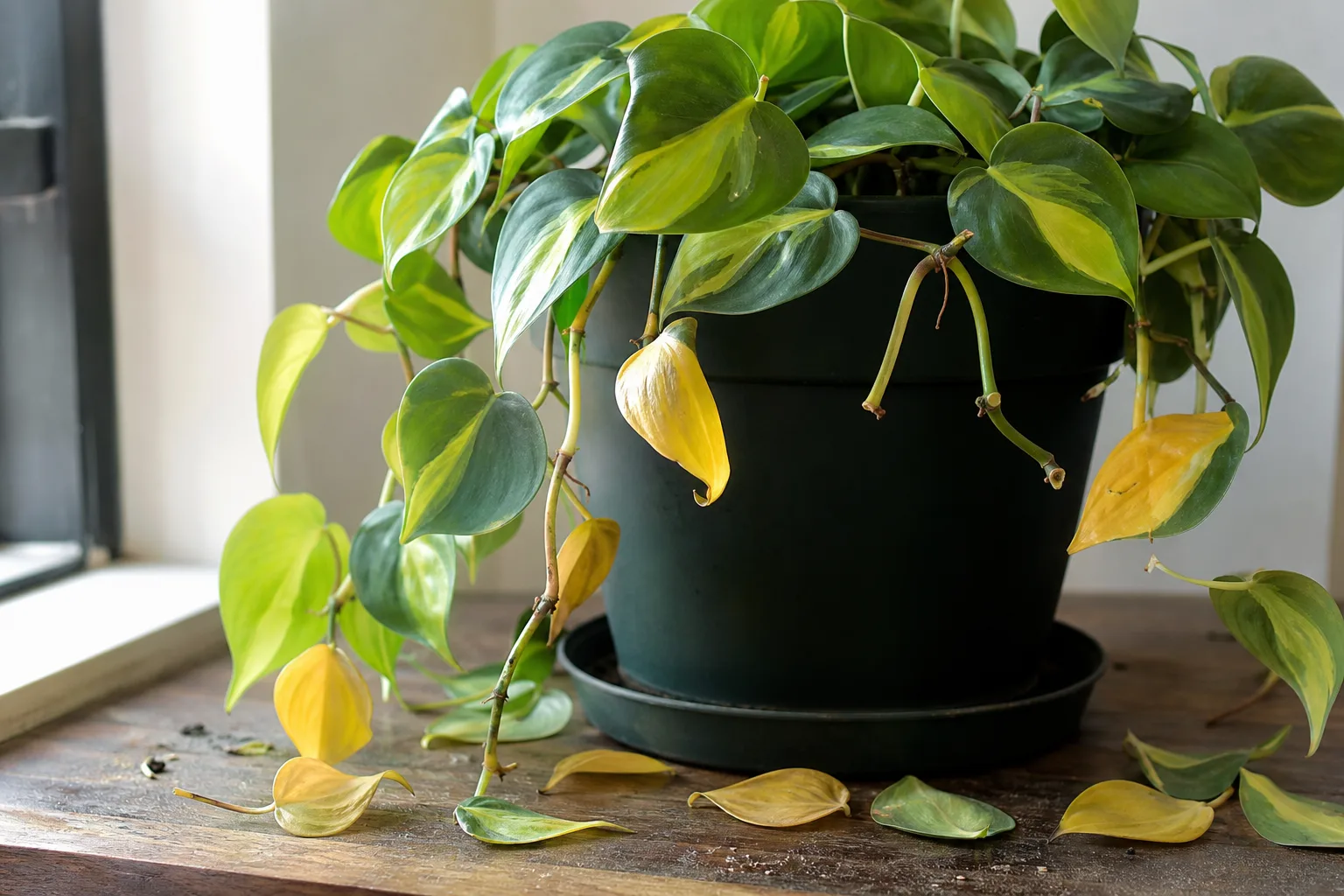
Leaf Drop on Philodendron Brasil: Causes, Checks & Fixes
This guide covers leaf drop on Philodendron Brasil. See also the general Leaf Drop guide, watering, and light pages for this plant.
Leaf Drop on Philodendron Brasil: Causes, Checks & Fixes
Quick answer
Some lower leaves falling from long trailing vines is normal on Philodendron Brasil. Problematic leaf drop is continuous shedding-especially of still-green heart-shaped leaves across multiple stems. On this rapidly growing vining heartleaf (Philodendron hederaceum ‘Brasil’), the most common triggers are overwatering on Philodendron Brasil that damages roots, insufficient light that forces the plant to shed foliage it cannot sustain, and environmental shock after a move or repot.
First step: lift the pot and check soil moisture 3–5 cm deep before you water again. A heavy, wet pot with yellowing lower leaves points to root stress. A light, dry pot with firm stems points to thirst. Treating both the same way is the fastest way to lose more leaves.
What leaf drop looks like on Philodendron Brasil
Normal aging shows a few dry brown hearts detaching from the oldest sections near the soil line on very long vines. Stress-related drop looks different: green or yellow leaves pop off with little resistance, sometimes several at once along the same trailing stem. The lime-and-green variegation may look dull before leaves fall.
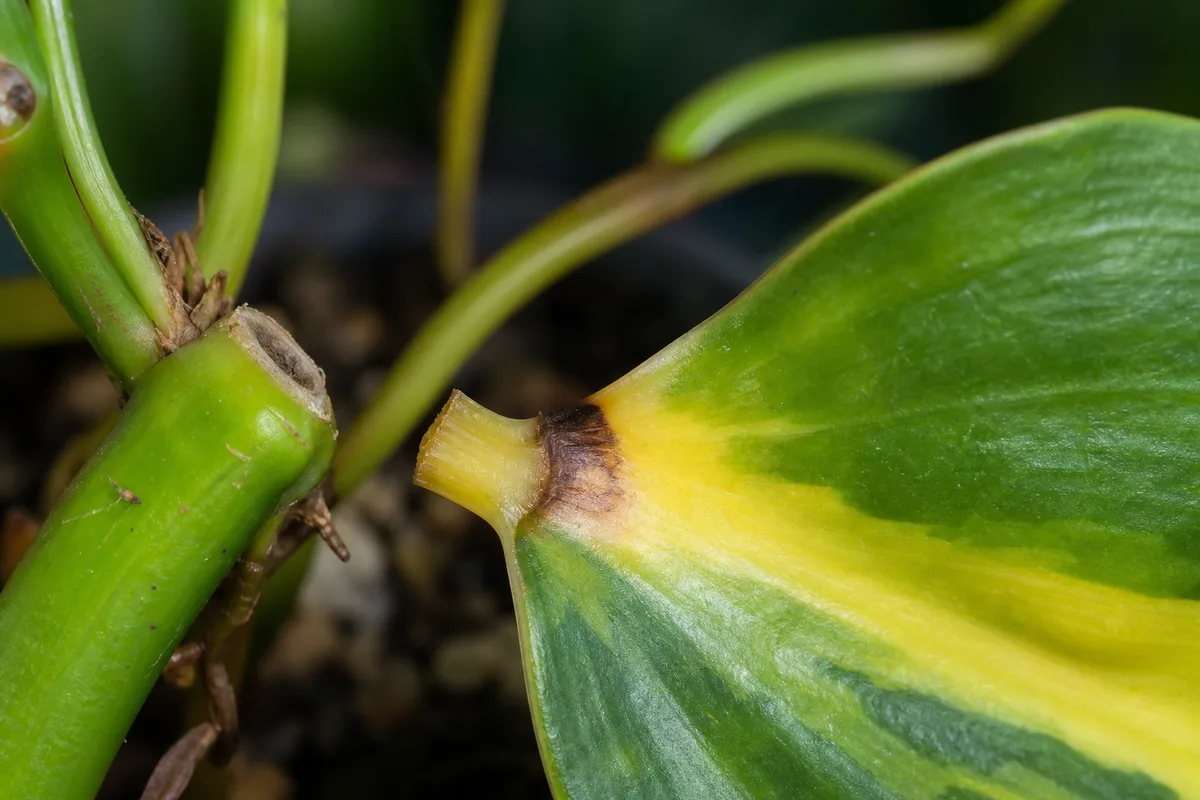
Leaf Drop symptoms on Philodendron Brasil - compare with healthy tissue on the same plant.
Typical patterns:
- Overwatering drop: Lower leaves yellow first, pot stays heavy for days, newer growth may look pale or limp, lime streaks fade
- underwatering on Philodendron Brasil drop: Less common, but pairs with a light pot, dry mix several centimeters down, and slightly curled leaves on long vines
- Low-light drop: Inner and lower leaves shed while vines stretch toward a window; new leaves may be smaller with less variegation
- Shock drop: Starts within days after Philodendron Brasil repotting guide or moving to a very different light level; moisture normal, stems still firm, no sour smell
- Draft drop: Sudden mass shedding near an AC vent, cold window, or heater blast in winter
Because Brasil grows as a cascading vine, the outermost trailing stems show stress first. A hanging basket can look fine near the pot crown while lower leaves detach along the longest strands-that uneven pattern is common when one side of the plant gets less light or dries faster.
Why Philodendron Brasil drops leaves
Overwatering and root failure
This is the most frequent cause of lower-leaf yellowing and drop on heartleaf philodendrons. Philodendrons prefer evenly moist but not soggy soil. When roots sit in saturated mix, they cannot absorb the oxygen needed to function normally. Damaged roots cannot take up water or nutrients, so the plant sheds leaves it can no longer support-even though the pot feels wet. Root rot can occur in overly wet soil on Philodendron Brasil overview.
Brasil’s fast growth rate in summer pushes owners to water more often, but low winter light slows water use and the same schedule keeps mix soggy for weeks. Oversized pots and dense peat-heavy mix without enough perlite hold water around roots longer than this vine needs.
Insufficient light
Brasil tolerates lower light better than many philodendrons, but variegated cultivars need brighter conditions to maintain their patterns. In dim corners, the plant produces more chlorophyll and sheds leaves it cannot fuel. Yellowing of lower leaves and death of growing tips can be caused by too little light or overwatering-so check soil moisture to separate the two. Plain-green reversion and leaf drop often appear together when light is the real issue.
Watering inconsistency and underwatering
Alternating long dry spells with heavy soaking stresses roots on a plant that prefers moist but well-drained soil. Extended drought during active growth depletes leaf turgor; hearts may yellow at the edges, then detach. Hanging baskets and small pots dry faster than floor pots, so the top may look slightly moist while the root ball is parched.
Environmental shock
Moving indoor plants between environments can cause leaf drop when light levels change sharply-common after bringing a Brasil home from a bright greenhouse or moving it from a stable shelf to a hot west window. Repotting disturbs fine roots and can trigger temporary shedding until the vine re-establishes. Cold drafts from AC vents or winter windows disrupt transpiration and promote sudden foliage loss.
Less common causes
Monitor for aphids, spider mites, mealybugs, and scale when drop is unexplained-sap loss weakens new growth enough to trigger shedding, but you usually see stippling, webbing, or sticky residue first. Severe pest infestations are less common than watering errors on healthy Brasil pots.
How to confirm the cause
Work through these checks in order:
- Pot weight - Lift the pot. Light and dry suggests underwatering; heavy and wet suggests root stress.
- Soil moisture at depth - Push your finger 3–5 cm into the mix, not just the surface. Wet several days after watering confirms overwatering. Dry throughout with firm stems confirms thirst.
- Which leaves are falling - Lower yellow leaves on a wet pot point to root stress. Green leaves dropping from multiple vines after a move point to shock. Inner leaves on leggy vines in a dim corner point to light.
- Stem firmness - Pinch the main stem at the soil line. Soft, mushy tissue means stop watering and inspect roots.
- Recent changes - Repot, new window, or seasonal shift to lower light within the last two weeks? Temporary drop with normal moisture and firm stems often resolves with stable care.
- Pest scan - Inspect leaf undersides and stem joints on shedding vines. No insects or sticky residue makes pests unlikely as the primary cause.
If the pot is heavy, mix is soggy, and lower leaves are yellowing, overwatering is the working diagnosis. If the pot is light, mix is dry, and stems are firm, underwatering fits. If vines are leggy with wide node spacing in a dim spot, Philodendron Brasil light guide is the fix-not more water.
First fix to try
Stop making multiple changes at once. Hold watering and check moisture before your next drink. If the mix is wet and stems are still firm, move to brighter indirect light with airflow and wait until the top 3–5 cm is dry before one thorough soak, then discard saucer water. If the mix is fully dry and stems are firm, water deeply once until excess runs from the drainage hole. If shedding started after a recent move with otherwise normal moisture, leave the plant in one stable spot for two to three weeks-do not repot, fertilize, or chase the plant around the room.
Do not repot on day one unless stems are softening, soil smells sour, or roots are clearly failing. Unnecessary repotting adds stress during an already unstable period.
Step-by-step recovery
Once the first fix matches the diagnosis:
- Overwatering path: Stop watering until the top 3–5 cm dries. Empty standing saucer water after every future drink. If yellowing continues on a heavy pot after a full dry-down cycle, unpot, trim mushy roots, and repot into fresh airy mix with 20–25% perlite.
- Underwatering path: Water thoroughly once, then resume checking moisture at depth rather than following a calendar. Hanging baskets may need more frequent checks in summer.
- Low-light path: Move to bright indirect light-near an east window or set back from a south or west window with sheer curtain. Hold watering steady for two weeks while the plant adjusts.
- Shock path: Keep light, temperature, and watering stable. Remove fallen debris from the pot surface but do not mass-prune healthy leaves.
- Pest path: Isolate the plant, rinse leaf undersides, confirm active insects, then treat before adjusting watering.
Judge recovery by new firm lime-streaked leaves at vine tips, fewer leaves dropping each week, and stable stem tissue at the base-not by whether every fallen leaf regrows on old bare sections.
Recovery timeline
Mild drop from one overwatering episode or a recent move may slow within one to two weeks once conditions stabilize. Severe root damage can take several weeks before new growth looks healthy. Full trailing density on a large hanging basket may take several months. Very long bare strands may never fully leaf out again; pin those back to a variegated node if you want fuller vines.
Lookalike symptoms
Leaf drop is easy to confuse with normal renewal, yellow leaves from chronic overwatering, or drooping from thirst. Normal renewal affects only the oldest lower leaves occasionally-not continuous green-leaf loss across multiple vines. Yellow leaves without detachment often mean the problem is still developing; active drop means the plant has already decided those leaves are unsustainable. Drooping with wet soil and leaf drop together strongly suggest root failure, not a one-day thirst event.
Mistakes to avoid
Do not increase watering because leaves are falling-wet roots are a more common cause on Brasil than drought. Do not fertilize a shedding plant to force new growth; fertilize philodendrons regularly only when the plant is actively growing and not stressed. Do not assume every dropped leaf is an emergency; a few lower leaves on mature vines is normal. Do not repot during active drop unless roots are rotting. Heartleaf philodendron is toxic to cats and dogs; wear gloves when handling cut tissue and keep fallen leaves away from pets.
How to prevent leaf drop next time
Pair bright indirect light with a well-drained potting mix and water when the top 3–5 cm dries-not on a fixed calendar. Reduce watering in winter when growth slows and light drops. Keep the plant away from AC vents and cold windows. Avoid sudden moves between rooms with very different light levels. Scout leaf undersides monthly during summer when vines push new growth quickly. Empty saucers after every drink so roots never sit in stale water.
When to worry
Treat as urgent when still-green leaves detach rapidly from multiple vines while soil stays wet, when stems soften at the base, or when the pot smells sour. Those patterns point to advancing root rot, not temporary shock. A dry pot with firm stems and occasional lower-leaf drop in winter is less urgent-stabilize light and watering and watch the trend for two weeks.
Replace or heavily trim a Brasil only when more than half the root mass is mushy and stems collapse at the base; otherwise trimmed roots and fresh mix often produce new trailing growth within weeks.
Conclusion
Leaf drop on Philodendron Brasil almost always traces to a root-zone or environment problem-too wet, too dry, too dim, or too much change at once. Lift the pot, check moisture at depth, and match your first action to what you find. That one diagnostic step separates a quick recovery from weeks of thinning vines.
When to use this page vs other Philodendron Brasil guides
- Philodendron Brasil watering guide - Use for routine moisture checks before assuming leaf drop is the main issue.
- Philodendron Brasil problems hub - Browse all 46 common issues on this species.
- Yellow Leaves on Philodendron Brasil - Different entry point when symptoms overlap with leaf drop.
- Root Rot on Philodendron Brasil - Different entry point when symptoms overlap with leaf drop.
- Not Enough Light on Philodendron Brasil - Different entry point when symptoms overlap with leaf drop.