Black Spots on Philodendron Brasil: Causes, Checks & Fixes
Quick answer
Black spots on Philodendron Brasil are usually fungal or bacterial leaf lesions that follow wet leaves and stagnant air. First step: remove the worst spotted leaves with clean shears and stop wetting foliage when you water.
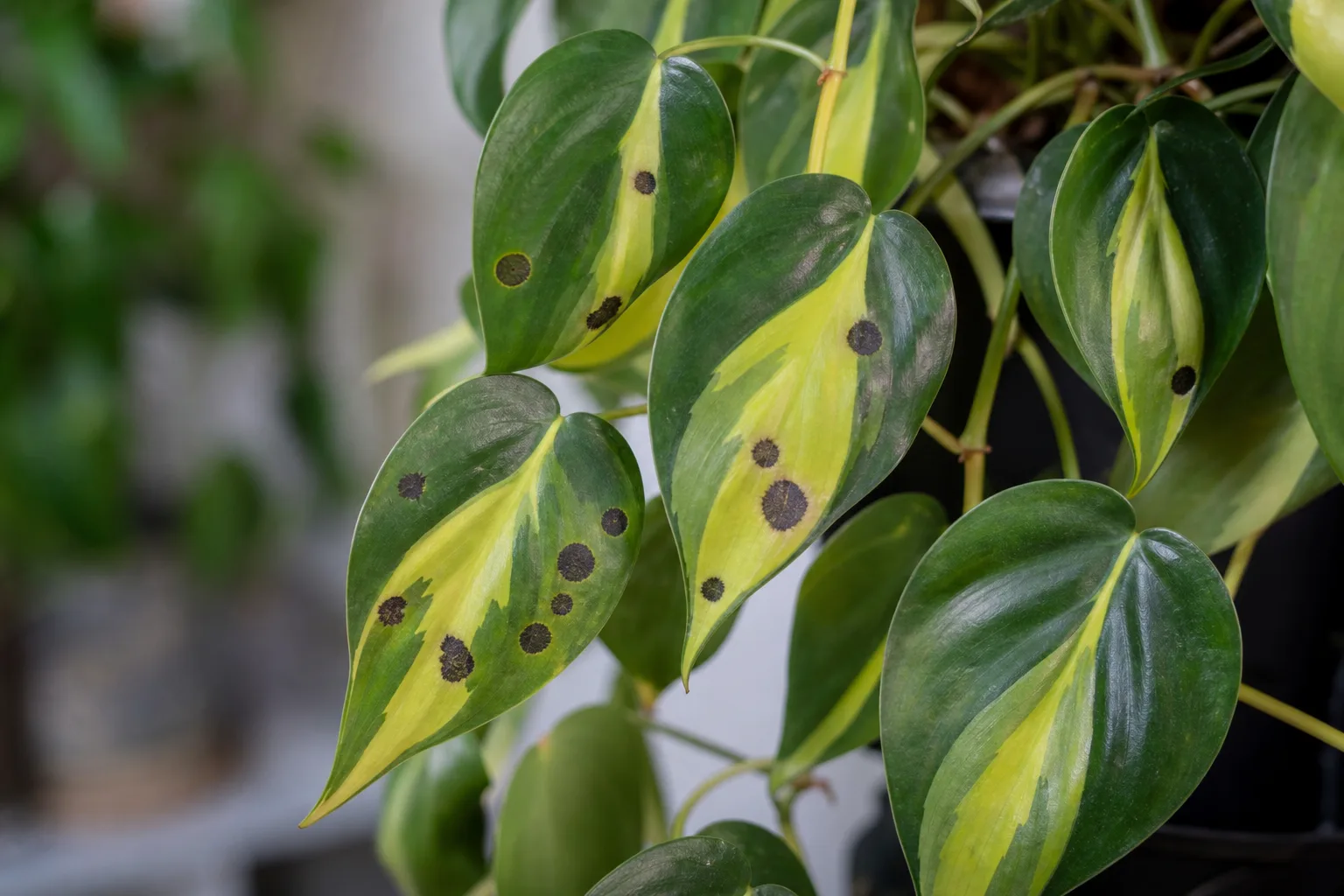
Black Spots on Philodendron Brasil: Causes, Checks & Fixes
This guide covers black spots on Philodendron Brasil. See also the general Black Spots guide, watering, and light pages for this plant.
Black Spots on Philodendron Brasil: Causes, Checks & Fixes
Quick answer
Black spots on Philodendron Brasil (Philodendron hederaceum ‘Brasil’) are usually fungal or bacterial leaf lesions that appear after foliage stays wet too long in humid, low-airflow corners. First step: remove the worst spotted leaves with clean shears and stop wetting foliage when you water.
This rapidly growing trailing vine with thin, heart-shaped variegated leaves dries slowly when vines mat together in a hanger-exactly the microclimate where leaf spots may occur on philodendrons. Black spots are rarely a fertilizer problem on an otherwise healthy Brasil; they are almost always moisture, airflow, or pathogen pressure on the leaf surface.
What black spots look like on Philodendron Brasil
On Brasil, black spots usually start as small dark brown to black lesions on the heart-shaped lime-and-green blades. Many fungal leaf spots show a yellow halo around the dead tissue and may develop a slightly sunken, papery center as the infection ages. Lower leaves on long trailing stems are often hit first because splash from saucers, crowded foliage, or mist runoff keeps them damp longest.
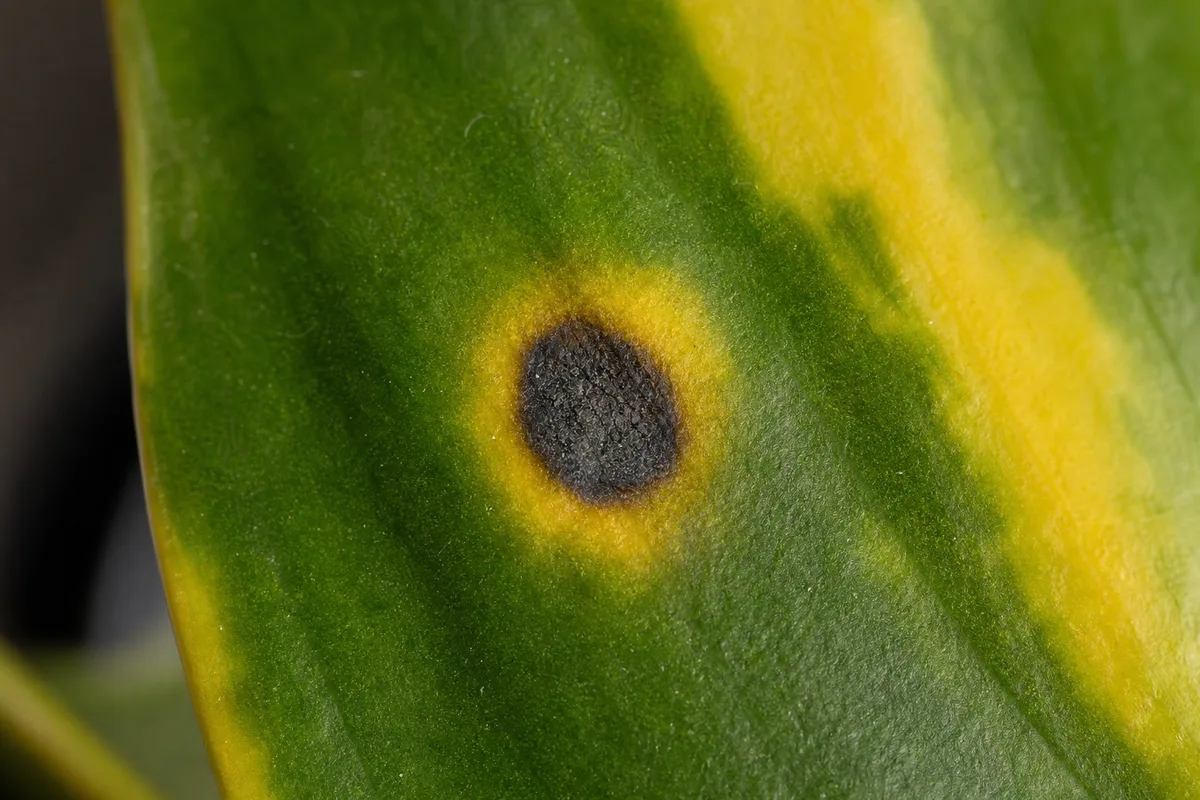
Black Spots symptoms on Philodendron Brasil - compare with healthy tissue on the same plant.
Fungal leaf spot typically produces round or irregular dark patches that enlarge slowly over days. Bacterial leaf spot (Erwinia spp.) can begin as tiny water-soaked dots that expand into tan-to-black lesions; when bacteria reach the petiole, the leaf may collapse and drop, and severely affected plants sometimes develop an unpleasant odor according to Connecticut’s plant pest handbook for philodendron.
Compare new growth with older vines. Spots confined to a few lower leaves on an otherwise vigorous plant differ from widespread spotting on pale, limp new tips-which may mean chronic overwatering on Philodendron Brasil or weak light is weakening defenses while pathogens spread.
Why Philodendron Brasil gets black spots
The most common trigger is water sitting on leaves too long. Overhead watering, evening misting, humidifier plumes hitting foliage, or showering the plant without drying leaves afterward keeps Brasil’s thin blades wet for hours. Anthracnose and related foliar fungi need extended leaf wetness to infect tissue-often four or more hours after watering or rain.
Poor airflow around hanging baskets traps humidity between overlapping heart-shaped leaves. Brasil tolerates 40–60% humidity, but stagnant damp pockets at the vine center favor spore germination more than moderate room humidity with a fan or open spacing.
Overwatering and soggy mix weaken roots and slow new growth, making the vine less able to outgrow minor infections. Root rot and general decline from overly moist soils do not cause black spots directly, but stressed Brasil in dim corners with wet crowns and wet leaves stacks two problems at once.
Splash and tool spread move bacteria and fungal spores from pot to pot. Shared misting bottles, unsanitized shears, and tight plant shelves accelerate outbreaks across a collection.
Less often, cold drafts or temperatures below about 13–16 °C (55–60 °F) can darken tissue on exposed leaves-usually on outer vines near windows-not the expanding halo pattern of active leaf spot.
How to confirm the cause
Work through these checks before reaching for spray:
- Lesion pattern - Round brown-black spots with yellow halos on firm stems suggest fungal leaf spot. Angular water-soaked patches that darken quickly may suggest bacterial spot.
- Leaf wetness history - Recent misting, shower rinses, or overhead watering on Brasil strongly supports disease over drought or nutrient issues.
- Stem and soil check - Firm vines on moderately dry mix rules out active stem rot; soft base on sour wet soil is a separate emergency (see root rot), not surface spotting alone.
- Spread speed - Spots enlarging over several days on multiple leaves indicate active infection; one or two static dark marks on old lower leaves may be old mechanical damage.
- Neighbor plants - Matching spots after shared watering or pruning points to splash spread-isolate suspects.
- Underside inspection - No webbing, honeydew, or insects rules out pest stippling; uniform necrotic spots without bugs fit disease.
- Nectary check - Small glossy amber dots at leaf joints that do not spread or yellow surrounding tissue are often harmless extrafloral nectaries, not leaf spot.
If more than a third of foliage is spotted and dropping, treat as moderate to severe and isolate the pot.
First fix for Philodendron Brasil
Remove heavily spotted or collapsing leaves with clean, sharp shears and stop wetting foliage. Bag trimmed tissue and discard in household trash-not compost near other houseplants. This single step cuts the inoculum load and is the safest first action before any fungicide.
After removal: water at the soil line only, early in the day so leaves incidental moisture dries quickly. Increase spacing or run gentle airflow past trailing vines. Empty saucers so splash does not re-wet lower heart-shaped leaves.
Hold fungicide unless spots keep spreading after seven to ten days of dry-leaf culture. Fungicides protect new growth but do not reverse existing necrotic spots-cultural fixes come first on this forgiving vine.
Step-by-step recovery
- Isolate spotted Brasil away from pothos, monstera, and other aroids in the same room.
- Cut every leaf with merged lesions, dark centers, or collapsed petioles.
- Clear fallen debris from the soil surface.
- Move to Philodendron Brasil light guide with airflow-avoid full sun, which scorches variegated philodendron leaves.
- Water only when the top 3–5 cm of mix is dry; never mist leaves during recovery.
- Sanitize shears with alcohol before touching other plants.
- If bacterial odor or rapid collapse appears, discard severely affected vines rather than treating repeatedly-severely infected philodendrons are often destroyed to limit spread.
- If fungal spread continues after cultural fixes, apply a labeled copper soap or biofungicide per product directions on remaining foliage.
- Hold fertilizer until new tips look firm and lime-streaked again.
Recovery timeline
Mild leaf spot often stabilizes within one to two weeks once leaves stay dry and infected tissue is removed. New clean heart-shaped leaves may appear within two to four weeks on a fast-growing Brasil in bright indirect light. Blackened tissue never re-greens-judge success by stopped spread and healthy new growth at vine tips.
Severe defoliation on a sparse pot may recover slowly; Brasil roots easily from stem cuttings if the main vine is too bare to look good after pruning.
Lookalike symptoms
| Pattern | Likely cause | Key difference |
|---|---|---|
| Round black spots with yellow halos, firm stems | Fungal leaf spot | Follows wet foliage; spreads leaf to leaf |
| Water-soaked spots turning black fast, fishy odor | Bacterial leaf spot | Collapsing leaves; rapid spread |
| Small glossy amber dots at nodes, no halos | Extrafloral nectaries | Stable size; not sunken necrosis |
| Flat dry brown marks on one old leaf only | Mechanical scrape or aging | No enlargement on new growth |
| Dark patches on outer leaves near cold window | Cold damage | Follows draft exposure, not misting |
| Brown mushy stems at base, wet sour soil | Root or stem rot | Whole vine collapses; not discrete surface spots |
What not to do
Do not mist Brasil to “boost humidity” while spots are active-wet leaves worsen both fungal and bacterial leaf spot. Do not shower the whole plant daily without drying foliage afterward. Do not compost infected leaves where drainage reaches other pots. Do not apply fungicide as the first step before removing spotted tissue and fixing watering. Do not fertilize a stressed vine to force recovery. Heartleaf philodendron is toxic to cats and dogs-wear gloves when pruning sap-exposing cuts.
How to prevent black spots on Philodendron Brasil
Water at soil level when the top 1–2 inches of mix has dried in a well-drained potting mix with perlite. Hang or shelf Brasil where bright indirect light and gentle airflow reach the inner vines, not only the outer show leaves. Avoid crowding with dense fern baskets that hold humidity against philodendron foliage.
Sanitize pruning tools between plants. Remove fallen leaves from the pot surface. Skip evening misting entirely if your room already runs above 40% humidity. Quarantine new Brasil cuttings for two weeks before mixing with established pots.
Philodendron Brasil care cross-check
Brasil is a low-maintenance indoor vine that forgives missed water better than chronic soggy roots-but it is not immune to foliar disease when culture drifts toward wet leaves, weak light, and stagnant hangers. Align watering with dry-down checks and bright indirect placement first; leaf-spot management is the second layer.
If black spots appeared alongside yellow lower leaves and a heavy wet pot, address root moisture before expecting clean new foliage.
When to worry
Escalate if spots enlarge daily despite dry-leaf culture, if leaves collapse at the petiole with odor, if more than a third of leaves drop within a week, or if multiple aroids develop matching lesions after shared tools or misting. Replace or propagate from clean tip cuttings when the main vine is mostly necrotic and cultural fixes failed for two weeks.
Conclusion
Black spots on Philodendron Brasil are foliar fungal or bacterial problems driven by wet leaves, poor airflow, and sometimes splash spread-not a sign the plant needs more water. Confirm dark lesions with yellow halos on firm trailing stems, remove infected foliage first, keep Brasil dry and well lit, and reserve fungicide for persistent spread. Recovery shows in clean new lime-streaked leaves at the vine tips, not in healed old black tissue.
When to use this page vs other Philodendron Brasil guides
- Philodendron Brasil watering guide - Use for routine moisture checks before assuming black spots is the main issue.
- Philodendron Brasil problems hub - Browse all 46 common issues on this species.
- Overwatering on Philodendron Brasil - Different entry point when symptoms overlap with black spots.
- Leaf Drop on Philodendron Brasil - Different entry point when symptoms overlap with black spots.