Ants on Philodendron Brasil: Causes, Checks & Fixes
Quick answer
Ants on Philodendron Brasil rarely chew leaves; they climb trailing vines to harvest honeydew from aphids, soft scale, or mealybugs on new growth. First step: follow the ant trail to the highest point on the plant, confirm the sap-sucking pest there, isolate the pot, and treat that colony-not spray ants alone.
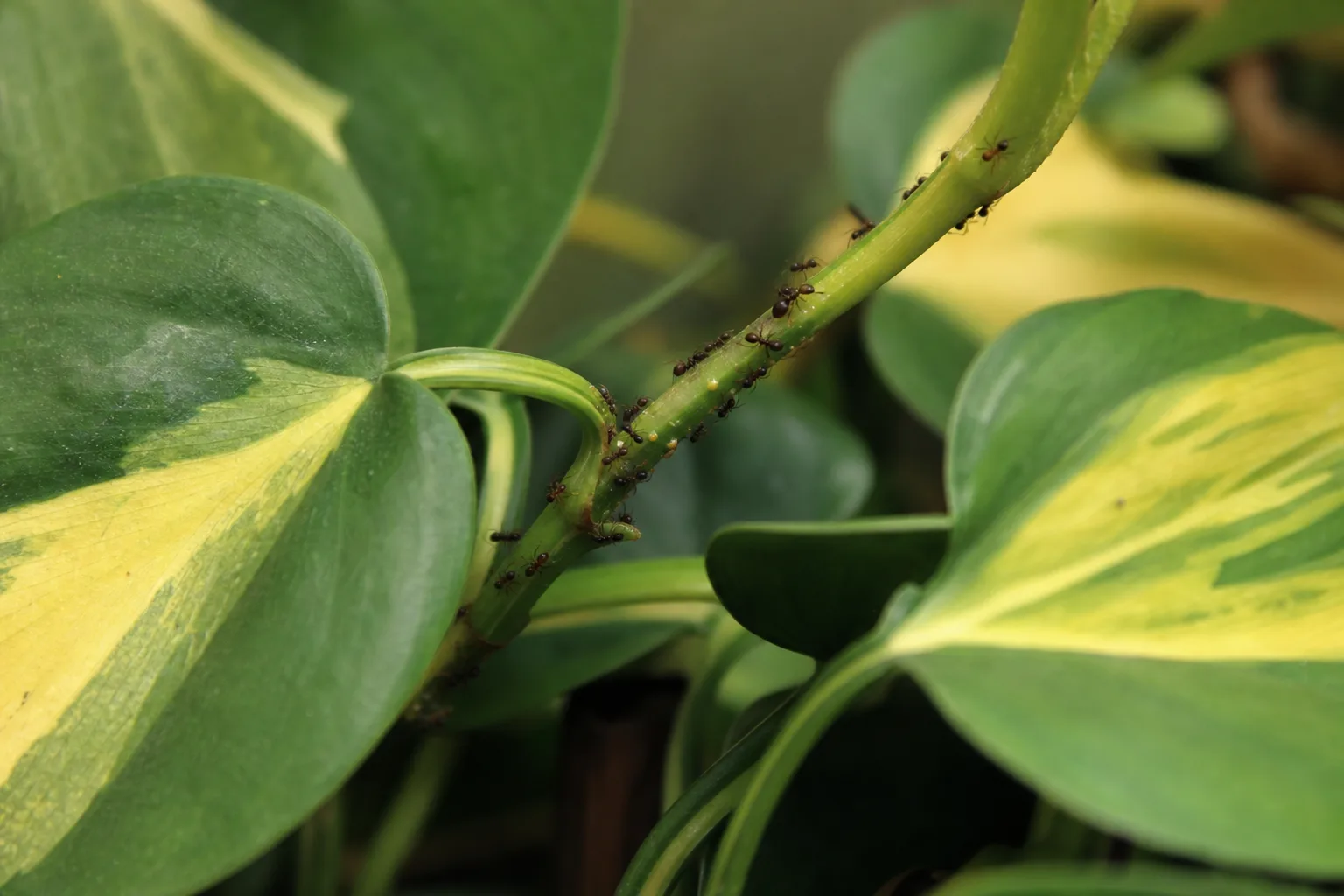
Ants on Philodendron Brasil: Causes, Checks & Fixes
This guide covers ants on plant on Philodendron Brasil. See also the general Ants on Plant guide, watering, and light pages for this plant.
Ants on Philodendron Brasil: Causes, Checks & Fixes
Quick answer
Ants on Philodendron Brasil (Philodendron hederaceum ‘Brasil’) almost never damage heart-shaped leaves directly. They march up pot rims, hangers, and trailing stems to collect honeydew from aphids, soft scale, or mealybugs feeding on tender vine tips and leaf axils. First step: follow the ant trail to where it stops on the plant, confirm the sap-sucking pest at that point, isolate the pot, and treat that colony-not spray ants while honeydew keeps flowing.
Philodendron Brasil is a fast-growing trailing aroid that pushes soft new vines in spring and summer. That growth window is when aphids multiply quickly indoors and when ants protect honeydew producers from predators. Catching the underlying pest before ants shield the colony across a whole hanging basket is far easier than rescuing a weakened plant coated in sooty mold.
Why Philodendron Brasil gets ants
Ants are after honeydew, not philodendron tissue. Many ant species feed on honeydew excreted by aphids and soft scales. On Brasil, the most common hidden pests are aphids on new vine tips, mealybugs tucked in leaf axils along cascading stems, and brown soft scale along slender green vines-all listed pests to monitor on Philodendron hederaceum.
Spring growth draws both pests and ants. Indoor Brasil grows most actively at 18–27°C (65–80°F) when aphids reproduce quickly and ants establish steady trails up hangers toward the softest tissue. A plant moved outdoors for summer, or a new nursery purchase placed near an open window, often introduces winged aphids that ants begin tending within days.
Trailing growth hides the farm. Heart leaves overlap along long vines, especially in hanging baskets. Aphids or mealybugs tucked on undersides and in axils can build honeydew for a week before ants on the pot rim or sticky shine on upper leaf surfaces gives them away. Ants traveling upward usually lead you to the pest-not to root problems below.
Indoor conditions lack natural enemies. Outdoors, lady beetles and lacewings help control aphids. Inside, without those predators, a few hitchhikers on one unfurling heart leaf can become a tended colony protected by ants during peak growth season.
Overwatered mix can confuse the picture. Ants sometimes forage around constantly wet saucers or damp organic mix at the pot base. That pattern pairs with soggy soil-a separate risk for Brasil roots-not necessarily sap feeders above. If ants stay at the saucer with no honeydew on foliage, inspect drainage and soil moisture before assuming a pest farm on vine tips.
What ants on Philodendron Brasil look like
- Steady ant trails along pot rims, saucers, hangers, and up reddish-green trailing stems
- Ants stopping at vine tips, leaf axils, or stem joints rather than chewing leaf edges
- Sticky, shiny honeydew on glossy lime-and-green heart leaves, pot surfaces, or nearby shelves
- Black sooty mold growing on untreated honeydew, dulling variegated leaf surfaces
- Pear-shaped aphids, cottony mealybug wax, or immobile scale bumps at the trail endpoint
- Newest heart leaves curling or yellowing while older trailing foliage looks otherwise normal
- No chew holes, webbing, or uniform stippling across hardened leaves (those point to other problems)
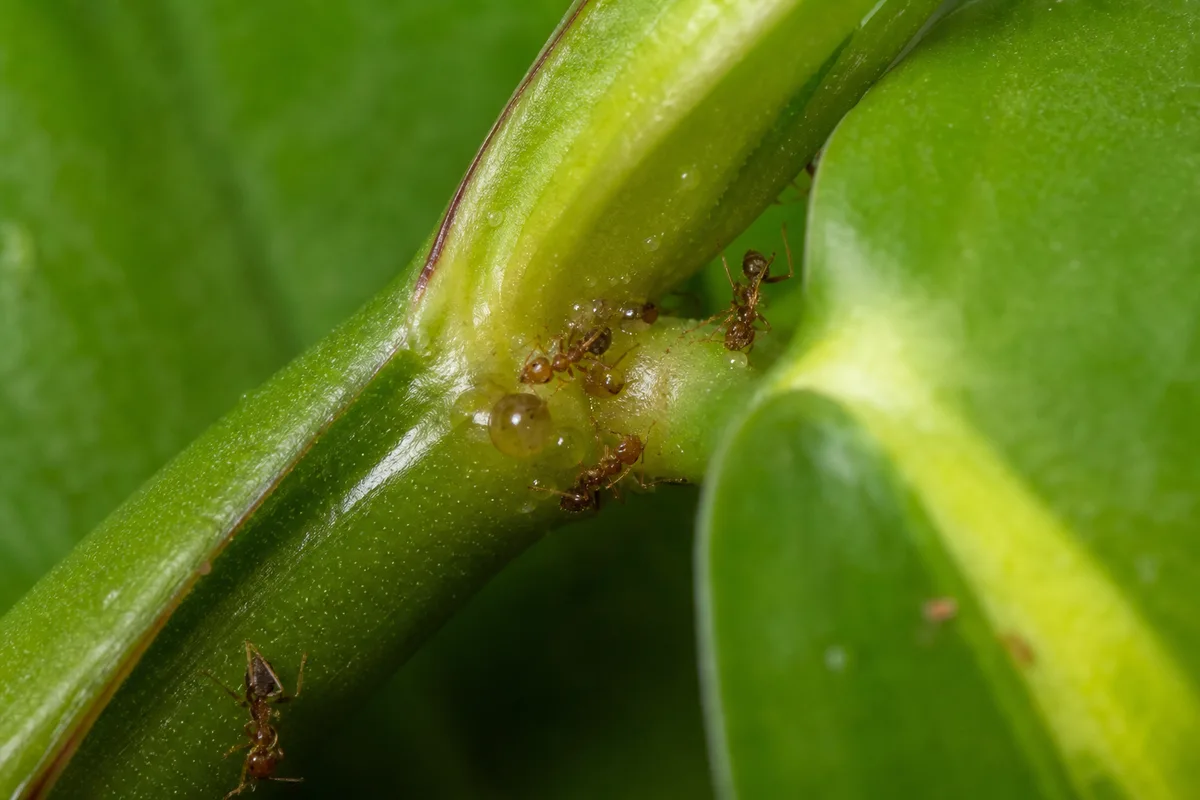
Ants on Plant symptoms on Philodendron Brasil - compare with healthy tissue on the same plant.
Unlike fungus gnats, ants do not swarm above wet soil as tiny flies. Unlike spider mites, they do not leave fine webbing in dry heated air. Unlike normal foraging, pest-linked ants return repeatedly to the same vine tips where honeydew is being produced.
How to confirm the cause
- Follow the trail - Watch where ants climb off the pot rim or hanger and stop on the plant.
- Honeydew check - Wipe a glossy upper heart leaf. Sticky residue that returns within a day confirms active sap feeders.
- Pest ID at the endpoint - Look for soft moving aphids, white cottony mealybug clusters, or brown or tan scale bumps that do not move when touched.
- Underside scan - Lift cascading vines and inspect below overlapping heart leaves pressed against stems.
- Soil moisture rule-out - Wet mix with yellow lower leaves and no insects points to overwatering on Philodendron Brasil, not ants farming pests. Brasil needs well-draining mix that dries at the top between waterings.
- Ant-only check - Ants on a dry saucer with firm stems and clean leaves may be foraging elsewhere; still inspect vine tips, but pest treatment may wait until honeydew appears.
Lookalike symptoms to rule out
Mealybugs without ants still need treatment-cottony wax in axils confirms them. Scale coats stems in immobile bumps with or without ant attendance. Aphids cluster on soft tips even before ants arrive. Overwatering yellows lower leaves and softens stems without any insects. Fungus gnats hover above chronically wet mix. None of these are solved by ant bait alone.
First fix for Philodendron Brasil
Follow the ant trail, identify the sap-sucking pest at the endpoint, and isolate the plant away from other houseplants until honeydew stops and you see no new pest activity for at least two weeks.
Treat the honeydew source first. For aphids on vine tips, rinse colonies off with a firm water stream in a sink or shower-wrap the soil surface in plastic so mix stays contained, tilt the pot to drain freely, and direct water along leaf undersides and stem joints. Brasil tolerates rinsing but hates chronically wet roots; do not let the mix stay saturated after showering.
For mealybugs in leaf axils, dab visible cottony clusters with a cotton swab dipped in rubbing alcohol before any spray. For soft scale along stems, scrape accessible bumps with an alcohol swab and follow with horticultural oil or insecticidal soap labeled for ornamentals-test one heart leaf first and wait 48 hours.
Once honeydew production stops, ants usually leave within days without direct ant spray on foliage. Keeping ants off plants helps beneficial insects control the underlying pest if you summer plants outdoors.
Wear gloves when handling infested vines-Philodendron Brasil is toxic to pets and contains calcium oxalate crystals that irritate skin. Do not repot, prune heavily, or fertilize on the same day you start pest treatment.
Step-by-step recovery
- Isolate - Move Brasil away from pothos, monstera, and other aroids until the pest cycle breaks.
- Trace and inspect - Follow ant lines to vine tips, unfurling leaves, and stem joints at the highest point on each trailing stem.
- Rinse or dab - Knock aphids into the drain with firm water, or alcohol-dab mealybugs and accessible scale.
- Spray if needed - After a 48-hour test leaf shows no burn, apply insecticidal soap or horticultural oil on all infested tissue. Repeat every five to seven days for two to three cycles.
- Wipe honeydew and sooty mold - Clean sticky residue from glossy leaves with a damp cloth once pests are controlled.
- Manage ant access - Place ant bait stations on the floor away from the pot-not inside the trailing crown or on leaves pets might reach.
- Monitor weekly - Inspect vine tips during each watering check. Ants returning to the same tips mean the pest colony is still active.
- Hold fertilizer - Skip feed until new growth looks clean for two weeks. Soft nitrogen-rich shoots invite reinfestation.
Recovery timeline
Ant traffic should drop within a few days once the sap feeder is controlled and honeydew stops. Judge long-term success by clean new lime-streaked growth along trailing vines-which can appear within two to three weeks on a vigorously growing Brasil. Distorted heart leaves on the current flush may keep slight curling once hardened.
Firm stems and stable older foliage throughout treatment are good signs. Yellowing across many lower leaves with soggy mix means overwatering-not ant-related pest damage-and needs a different response immediately. If stems stay coated in white immobile crust after treatment, reassess for scale rather than aphids.
What not to do
- Do not spray ant killer across trailing vines and heart leaves-treat the honeydew source instead.
- Do not ignore aphids or mealybugs while baiting ants; the colony will rebuild with ant protection.
- Do not increase watering because leaves look stressed-check soil moisture at the top 3–5 cm first. Brasil roots rot quickly in wet mix.
- Do not use homemade dish soap sprays; commercial insecticidal soaps are formulated for plant contact.
- Do not leave wet foliage in direct sun after rinsing; variegated leaves scorch easily.
- Do not return an isolated plant to the collection after a single treatment pass.
- Do not fertilize during an active infestation-that fuels more soft growth pests prefer.
How to prevent ants next time
Quarantine every new Philodendron Brasil for two weeks before placing it near other plants. Inspect vine tips weekly during spring and summer growth spurts-the same weeks Brasil pushes its longest trailing stems. Control aphids and mealybugs early with rinsing or tested sprays before ant trails establish.
Keep bright indirect light and let the top 3–5 cm of well-draining mix dry between waterings. Avoid heavy nitrogen fertilizer that produces soft vine shoots. When moving plants between indoors and outdoors for summer, inspect vine tips before they share a shelf again. Honeydew from scale indoors may attract ants-monitor stems during routine care even when leaves look healthy.
When to worry
Escalate if ants protect large aphid colonies on active spring vine tips after three full treatment cycles, if scale or mealybugs spread across most trailing stems before you can reach them, or if sooty mold covers heart leaves and blocks light needed for variegation. Chronic sap loss during a growth spurt can weaken trailing stems and distort lime streaking-even when roots have not rotted.
Ants alone rarely kill a mature Philodendron Brasil with firm roots, but they signal a pest problem that will worsen if you respond with extra water or fertilizer instead of removing the sap feeder. If you see only ants at a wet saucer with no honeydew on foliage, fix drainage and watering before escalating pesticides.
Conclusion
Ants on Philodendron Brasil are a warning sign, not the primary damage. Trace trails up hangers and trailing stems to aphids, mealybugs, or soft scale producing honeydew on vine tips and leaf axils. Isolate, treat the sap-sucking pest first, wipe honeydew and sooty mold, and judge recovery by clean new lime-streaked growth-not by spraying ants while the underlying farm keeps running.
When to use this page vs other Philodendron Brasil guides
- Philodendron Brasil watering guide - Use for routine moisture checks before assuming ants on plant is the main issue.
- Philodendron Brasil problems hub - Browse all 46 common issues on this species.