Wrong Soil Mix on Philodendron Brasil: Causes, Checks &
Quick answer
Wrong soil mix on Philodendron Brasil traps moisture around fast-growing aroid roots because this vine needs well-draining potting mix with 20–25% perlite, not heavy peat or garden soil. First step: stop watering, slide the plant out, and confirm whether the mix smears when wet - then repot into fresh amended blend.
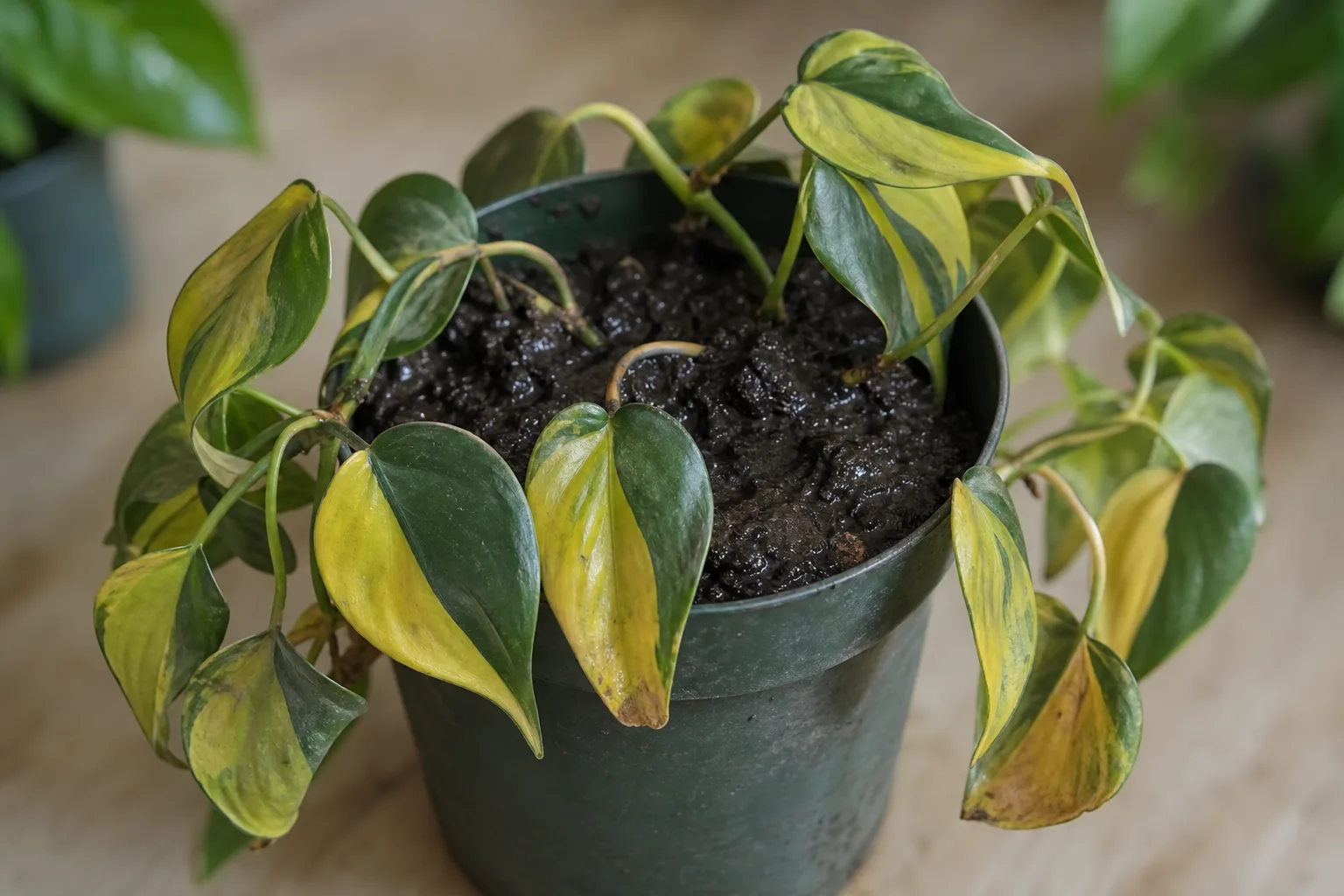
Wrong Soil Mix on Philodendron Brasil: Causes, Checks & Fixes
This guide covers wrong soil mix on Philodendron Brasil. See also the general Wrong Soil Mix guide, watering, and light pages for this plant.
Wrong Soil Mix on Philodendron Brasil: Causes, Checks & Fixes
Quick answer
Wrong soil mix on Philodendron Brasil traps moisture around fast-growing aroid roots because this vine needs well-draining potting mix with 20–25% perlite, not heavy peat or garden soil. First step: stop watering, slide the plant out, and confirm whether the mix smears when wet - then repot into fresh amended blend.
Philodendron hederaceum ‘Brasil’ is a trailing member of the Araceae family that evolved in tropical forest understory with loose, airy substrate around its roots. It grows quickly when happy, which makes dense or waterlogged mix fail fast even when you water carefully. The wrong potting mix keeps oxygen away from roots and sets up yellow leaves, fungus gnats, and root rot before you notice a single scheduling mistake.
What wrong soil mix looks like on Philodendron Brasil
Wrong mix problems show up as a pattern tied to substrate, not just one missed watering:
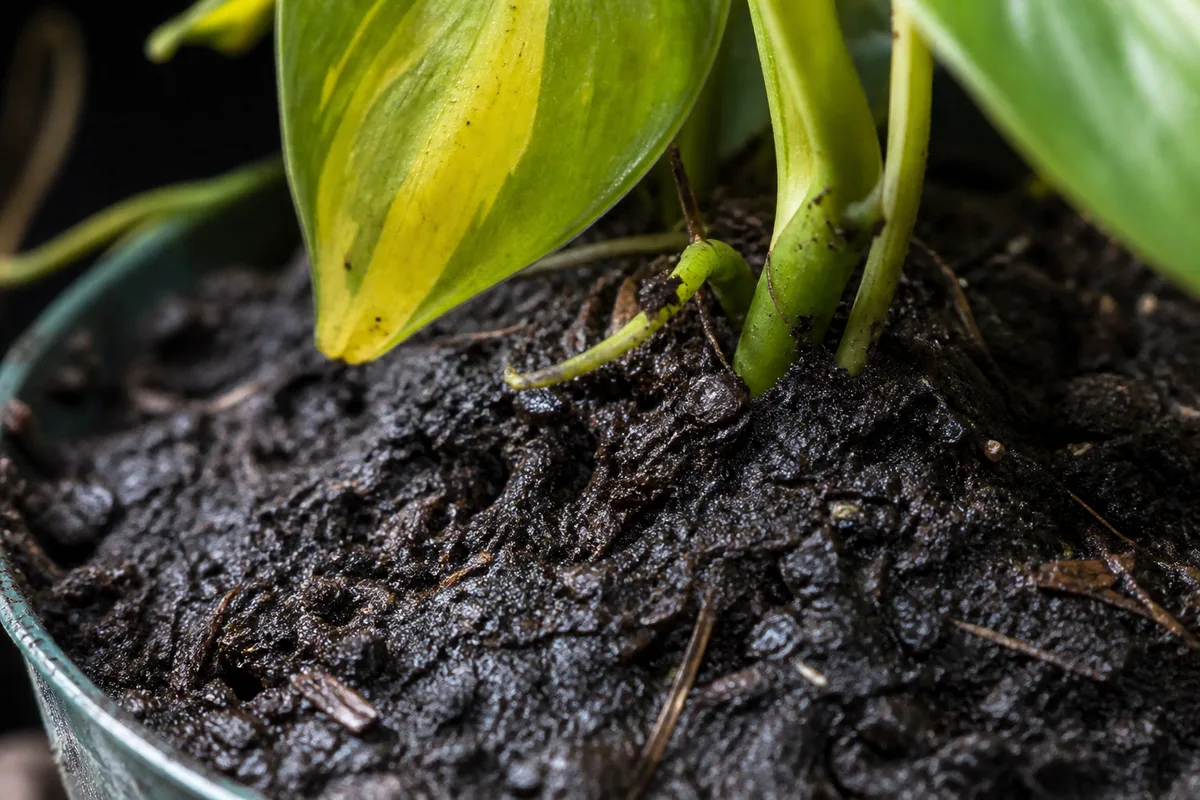
Wrong Soil Mix symptoms on Philodendron Brasil - compare with healthy tissue on the same plant.
- Soil surface stays damp three to five days after one moderate watering
- Pot feels heavy when lifted, even though you have not watered recently
- Lower heart-shaped leaves yellowing while mix is still moist
- Lime variegation dulling or reverting to plain green on weak new growth
- Fungus gnats hovering over persistently wet top inches
- Trailing vines drooping despite wet soil - a wilt paradox from damaged roots
- White crust on soil surface from fertilizer salts in dense peat
- Water pools on top or channels down pot sides without soaking evenly
- Crispy brown leaf tips when mix is too gritty and dries out between drinks too fast
On Brasil, soil mismatch often precedes obvious rot. Vines look limp long before stems soften at the base, which is why mix texture and pot weight matter as much as leaf color.
Why Philodendron Brasil fails in the wrong mix
Unamended peat-heavy potting soil. All-purpose indoor mix without perlite compacts and holds water too long in dim rooms and oversized plastic pots. Heartleaf philodendron prefers evenly moist but not soggy soil - dense peat turns every watering into a prolonged wet spell.
Garden soil or topsoil indoors. Adding soil to a potting medium often leads to poor drainage, overwatering, and root diseases. Garden soil compacts in containers, reducing the air pockets roots need. Brasil cannot tolerate the slow drainage garden soil provides indoors.
Pure cactus or orchid bark mix without a base. These blends drain fast - useful for succulents, too lean for a moisture-loving aroid. Unamended gritty mix dries between waterings faster than Brasil’s thin heart-shaped leaves can tolerate, showing crispy tips and stalled vine growth despite regular watering.
Moisture-control or water-retentive blends in low light. Products designed to hold extra moisture keep roots wet longer than Philodendron Brasil overview uses in winter or shaded corners. Low light slows water uptake while the same dense mix stays saturated.
Old, broken-down mix. Organic matter compacts over one to two years. A mix that started acceptable becomes a dense wet plug while the surface looks merely damp. Cool winter rooms and reduced growth slow evaporation, so a summer-adequate blend turns waterlogged by autumn.
Oversized pot with wrong mix. Extra wet soil volume beyond the root mass amplifies retention problems. Philodendron Brasil does well when slightly pot-bound because the soil dries more quickly between waterings - a huge pot full of dense peat is a common post-purchase mistake.
How to confirm the cause
Use this inspection order before Philodendron Brasil repotting guide:
- Mix texture test - Slide the plant out and squeeze a handful of moist mix. Perlite-amended blend should crumble with visible white specks; dense peat that smears when wet confirms wrong substrate.
- Ingredient check - Read the bag label or recall what you used. Garden soil, pure cactus mix, or unamended moisture-control blends are mismatches for Philodendron hederaceum ‘Brasil’.
- Pot weight timeline - Note how many days the pot stays heavy after watering. Good mix for Brasil should lighten noticeably within one to two weeks indoors in Philodendron Brasil light guide.
- Root firmness - Inspect roots after sliding the plant out. Firm white or tan roots are healthy; brown mushy roots suggest saturated roots in retention-heavy mix.
- Smell and drainage - Overwatered soil can smell sour or rotten when dense mix stays wet. Confirm drainage holes are open - blocked holes worsen any mix, but texture is the primary issue here.
Lookalike symptoms to rule out
Simple overwatering - adequate perlite-amended mix and open holes but watering before the top 3–5 cm dries. Poor drainage - holes blocked or saucer standing water; fix holes first, but wrong mix type still needs replacement. Not enough light - weak variegation and leggy vines with appropriately drying mix; light is the issue, not substrate. Root rot advanced - mushy black roots on most of the ball need salvage trimming, not mix correction alone.
First fix for Philodendron Brasil
Stop watering immediately and slide the plant out to confirm mix texture before doing anything else. If roots are still mostly firm and smell is neutral, prepare fresh mix the same week: standard indoor potting soil amended with 20–25% perlite.
Repot into a clean pot with open drainage holes only one size larger than the root mass. Shake off old dense peat, garden soil, or compacted mix gently without breaking healthy aerial roots on the vines. Wait five to seven days before the first light watering - only if the new mix is dry to the touch and roots feel firm.
Make this single substrate correction before adding fertilizer, moving rooms, or upsizing again.
Step-by-step recovery
- Unpot and inspect roots - firm pale roots are healthy; brown mushy sections must go.
- Discard dense peat, garden soil, pure cactus mix without amendment, or compacted old mix entirely.
- Repot at the same depth into standard potting mix with 20–25% perlite blended through.
- Do not bury trailing vines deeper than before.
- Let the root ball dry in bright indirect light for several days if the old mix was saturated.
- Water lightly only after the top 3–5 cm of new mix is dry and roots feel firm.
- Empty the saucer within 30 minutes of every future watering.
- Watch for new lime-streaked leaves or active vine tips over four to twelve weeks.
If rot was advanced, follow root rot salvage steps: longer dry spell, more aggressive root trimming, and propagation from healthy stem cuttings with nodes.
Recovery timeline
Mild mix correction without active rot often stabilizes within two to four weeks once the substrate dries predictably. Moderate cases with some yellowed lower leaves may need a full growing season before dense trailing growth returns. Severely rotted root balls rarely recover fully; stem cuttings in water may be the salvage path.
Damaged yellow leaves and dull variegation do not fully reverse on old foliage. Judge success by neutral-smelling soil, lighter pot weight between waterings, and new firm hearts with lime streaks at the nodes.
What not to do
- Do not respond to heavy wet pots by watering less often while keeping the same dense mix - the root zone still suffocates between drinks.
- Do not add pebbles in the pot bottom instead of fixing mix; that raises the wet zone without improving aeration where roots sit.
- Do not repot into another unamended all-purpose peat blend because it was labeled houseplant soil.
- Do not use garden soil, compost-heavy topsoil, or moisture-control blends indoors for this plant without heavy perlite amendment.
- Do not repot into a much larger container - extra wet soil volume worsens retention stress.
- Do not fertilize until the plant pushes new growth in improved mix.
Philodendron Brasil care cross-check
Bright indirect light helps the pot dry predictably between waterings. Pair that with well-drained potting mix amended with perlite. Water when the top of the soil is dry - roughly every 7–10 days in summer and less in winter. Philodendron Brasil contains insoluble calcium oxalate crystals toxic to pets - wear gloves when handling wet soil and trimmed tissue during repotting.
How to prevent wrong soil mix next time
- Start with standard indoor potting mix and blend in 20–25% perlite until white specks are visible throughout.
- Avoid garden soil in any indoor container for Philodendron hederaceum.
- Do not rely on pure cactus or orchid bark mix without adding a peat or coco coir base for moisture retention.
- Size pots to the root mass - only one to two inches wider at repot time.
- Refresh mix every one to two years before compaction silently fails.
- Choose pots with drainage holes and empty saucers after every drink.
- Track pot weight so you notice when dense substrate keeps the container heavy too long.
When to worry
Escalate immediately if soil smells sour, roots soften and turn brown, or vines collapse at the base within days despite stopping water. These signs mean wrong mix has already progressed to root rot.
Lower urgency applies when vines are firm, smell is neutral, and the main issue is slow drying in dense peat - repot into perlite-amended blend before softness appears.
Conclusion
Wrong soil mix on Philodendron Brasil is a substrate problem: heavy peat, garden soil, or mismatched gritty blends keep aroid roots wet or starved of steady moisture even when you water carefully. Confirm with smearing dense mix, heavy pots that linger damp, yellow lower leaves on wet soil, and sour smell; fix by stopping water, discarding the old mix, and repotting into all-purpose potting soil with 20–25% perlite before the first post-repot drink. Prevent recurrence with the right amendments from day one, sensible pot sizing, and mix refresh every one to two years.
When to use this page vs other Philodendron Brasil guides
- Philodendron Brasil watering guide - Use for routine moisture checks before assuming wrong soil mix is the main issue.
- Philodendron Brasil problems hub - Browse all 46 common issues on this species.