Damaged Roots on Philodendron Brasil: Causes, Checks & Fixes
Quick answer
Damaged roots on Philodendron Brasil usually follow overwatering, repotting trauma, or a root-bound pot-the fine root system turns mushy and cannot support trailing vines. First step: unpot, trim soft roots back to firm tissue, and repot into fresh perlite-amended mix; withhold water one week.
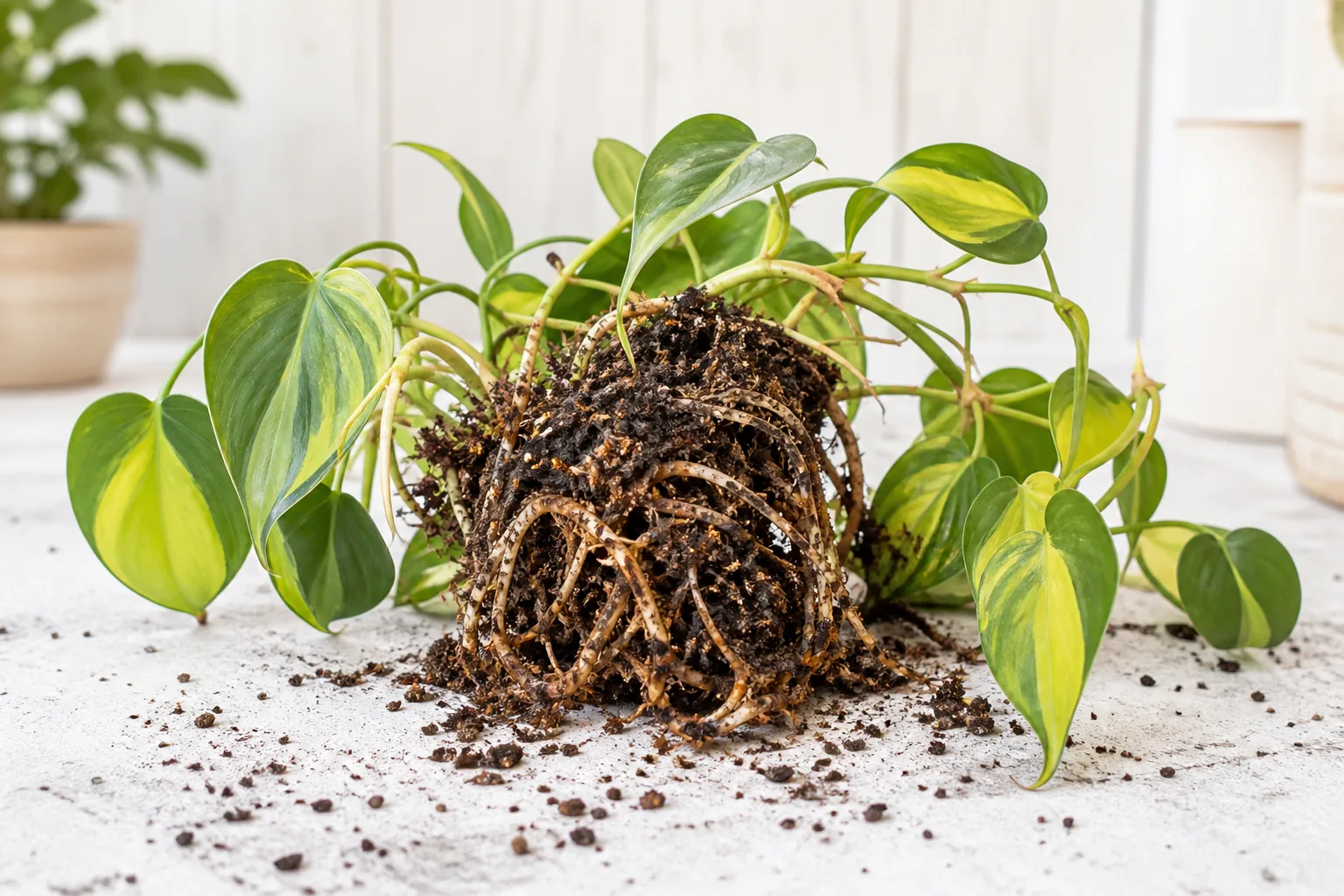
Damaged Roots on Philodendron Brasil: Causes, Checks & Fixes
This guide covers damaged roots on Philodendron Brasil. See also the general Damaged Roots guide, watering, and light pages for this plant.
Damaged Roots on Philodendron Brasil: Causes, Checks & Fixes
Quick answer
Damaged roots on Philodendron Brasil (Philodendron hederaceum ‘Brasil’) hide below the soil line until trailing vines droop, lower leaves yellow, or new lime-streaked growth stalls. This cascading or climbing vine needs well-drained potting mix and time to dry between drinks-when roots sit in wet soil, [they cannot absorb the oxygen needed to function normally](https://www.missouribotanicalgarden.org/gardens-gardening/your-garden/help-for-the-home-gardener/advice-tips-resources/insects-pests-and-problems/environmental/[overwatering on Philodendron Brasil](/plants/philodendron-brasil/overwatering/)). Philodendron Brasil repotting guide trauma, extreme root binding, and physical breakage during unpotting can injure roots even when watering was correct.
First step: unpot, inspect roots, and trim any soft brown or black tissue back to firm white or tan roots. Repot into fresh airy mix with 20–25% perlite in a pot sized to the trimmed root ball, then withhold water for about one week so cut surfaces callus. Do not keep watering limp vines hoping they perk up when the mix is already wet-that deepens root failure.
What damaged roots look like on Philodendron Brasil
Root damage on Brasil shows above and below soil in patterns tied to its vining habit and variegated heart-shaped leaves.
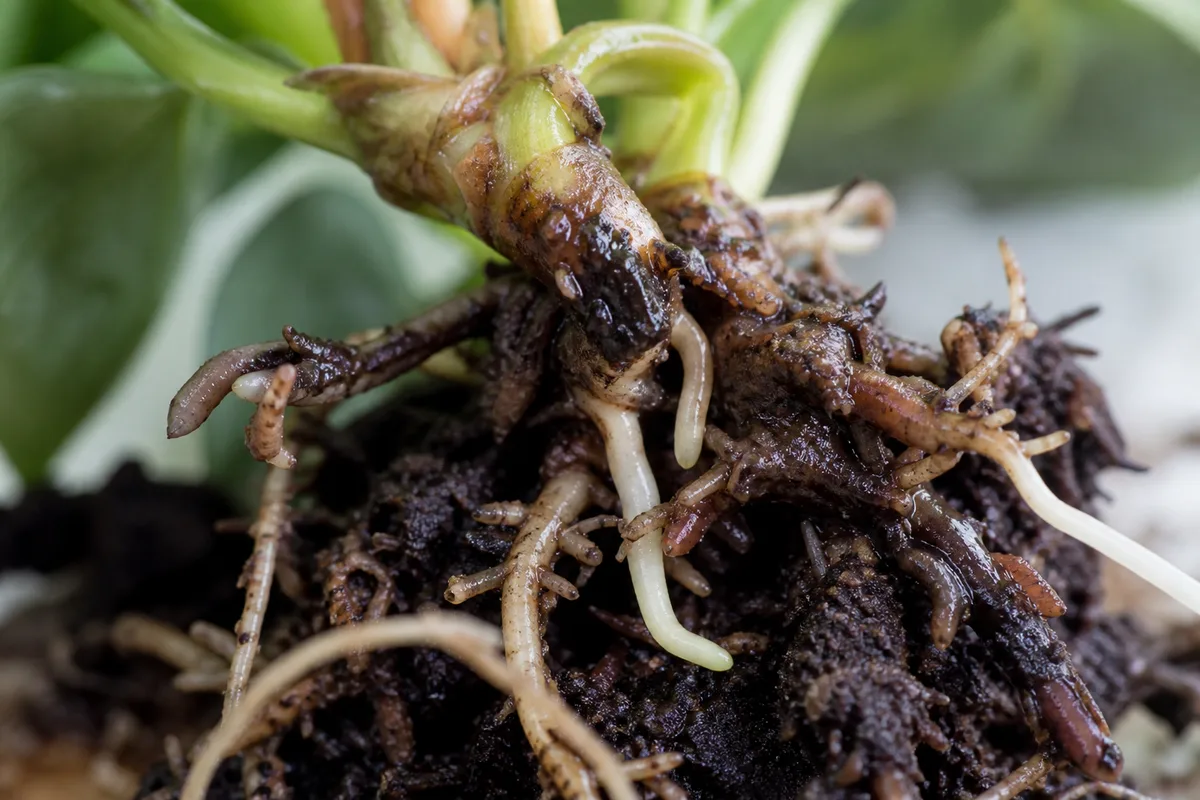
Damaged Roots symptoms on Philodendron Brasil - compare with healthy tissue on the same plant.
Above soil:
- Lower heart-shaped leaves yellow while the pot stays heavy and damp
- Trailing vines go limp and feel soft at nodes near the soil line
- Lime-green variegation dulls or new leaves emerge smaller and mostly green
- Growth stalls despite warm room temperatures and apparently adequate light
- Soil smells sour or musty from drainage holes
- White fungus gnats may hover above constantly wet surface mix
Below soil:
- Roots that should be firm and white or tan instead look brown, black, or translucent
- Mushy sections collapse between fingers; healthy tissue snaps cleanly
- Dense circling roots with little soil left in a root-bound pot
- Freshly broken root tips from rough repotting that turn brown within days
- In severe cases, decay climbs toward the stem base where vines meet soil
Unlike underwatering on Philodendron Brasil, the pot does not feel light. Wilted leaves may indicate soil that is too wet-rotting roots cannot take up water even though the mix is saturated. Dry soil throughout with slightly limp but firm vines usually means thirst, not root injury.
Why Philodendron Brasil gets damaged roots
Several traits make this fast-growing aroid vulnerable to root failure indoors:
Chronic overwatering in slow-draining mix. Brasil grows quickly in summer, which can trick you into watering on habit rather than dry-down speed. Philodendrons prefer evenly moist but not soggy soil; when mix stays wet for days, fine roots die first and the plant cannot move water to its vines.
Oversized decorative pots. Jumping to a much larger container after repotting keeps outer soil wet for weeks while inner roots sit anaerobic. Fast growth does not protect roots from stale water in an oversized pot.
Dense peaty mix without perlite. Heavy moisture-retentive soil never dries within the 7–10 day summer window Brasil expects. Root rot of houseplants develops when waterlogged conditions persist and pathogens attack weakened tissue.
Low light slowing water use. In dim corners, transpiration drops while watering continues on schedule. Mix stays wet longer and roots lose oxygen even when you think you are watering modestly-variegation also fades as the plant struggles.
Physical damage during repotting. Broken or torn roots cannot take up water until they regrow. Rough handling, pulling stuck roots from old mix, or watering immediately after aggressive trimming can shock a plant that was recovering from mild binding.
Extreme root binding with depleted soil. When roots have outgrown the pot, the tight mat holds almost no air or moisture buffer. Water runs through too fast in some zones or pools in others, stressing roots despite regular care. Binding alone can limit uptake until repotting-but careless repotting then adds fresh trauma.
Most cases trace back to culture-too much water around roots for too long-not a random pathogen attacking a healthy plant.
How to confirm the cause
Work through these checks before you repot or prune:
- Pot weight and moisture depth - Lift the pot. Heavy days after watering with damp soil 3–5 cm deep suggests roots are sitting in stale water. Light dry soil with firm vines points away from root damage.
- Smell test - Sour or musty odor from drainage holes or lifted root ball confirms anaerobic conditions. Neutral earthy smell with dry soil suggests another issue.
- Stem firmness at the soil line - Pinch vines where they enter the mix. Firm tissue with wet soil may mean early root decline; mush that dents confirms decay is advancing toward the crown.
- Partial unpot check - Slide the plant partly out of the pot or peek through the drainage hole. Pale firm roots look healthy; brown jelly-like roots confirm damage.
- Watering and pot history - Oversized pot, blocked drainage holes, saucers left full, or watering before the top 3–5 cm dries fits overwatering damage. Recent rough repotting within two weeks fits physical injury.
- Binding assessment - White roots circling densely with little mix left and water running straight through may mean binding stress rather than rot-texture and smell still tell the story.
Full inspection requires gentle unpotting. If roots are mostly firm and soil is dry, water once at the pot edge and recheck in 24 hours before assuming root damage.
First fix for Philodendron Brasil
Unpot, trim soft roots back to firm white or tan tissue, and repot into fresh perlite-amended mix-then withhold water for about one week.
Knock away wet old mix without tearing healthy roots. Cut mushy brown or black sections with sterile scissors until you reach firm tissue. Plants with partial rot may be salvaged by pruning out the rotted part. If more than half the root mass is gone, trim proportionally from trailing vines so remaining roots are not supporting excess foliage.
Let severely damaged plants air on paper towels in Philodendron Brasil light guide for several hours so cut surfaces callus. Repot into fresh well-draining mix with 20–25% perlite. Choose a pot only slightly larger than the trimmed root ball with open drainage holes. Set stems at the same depth as before-do not bury nodes deeper than they were.
Do not water immediately after repotting trimmed roots. Wait roughly one week, then give a cautious edge-water only if vines still feel firm and the mix is dry several centimetres down.
Wear gloves when handling cut tissue-Brasil contains insoluble calcium oxalate crystals toxic to pets and can irritate skin.
Step-by-step recovery
After the first fix:
- Improve light and airflow - Move to bright indirect light so the plant uses water predictably and the mix dries between drinks. Dim corners prolong wet soil after rescue.
- Empty saucers within 30 minutes of every future watering. Never let the pot sit in standing water.
- Remove collapsed lower leaves once new growth appears-they will not recover, and pruning reduces demand on healing roots.
- Propagate backup cuttings - Take stem cuttings with at least one node from firm vines while crown tissue is still healthy. Root them in water separately so you do not lose the plant if the main root ball fails. Brasil roots readily from nodes.
- Hold fertilizer until new lime-streaked leaves emerge and vines stay firm for several weeks. Stressed philodendrons need stable dry-down cycles, not nitrogen pushes.
- Address fungus gnats if present - Let the top 2–3 cm of mix dry between waterings; use yellow sticky traps if adults persist over constantly wet rescue soil.
If stems at the base are already mushy, root rescue alone may not work-shift priority to propagation from firm tissue above the decay.
Recovery timeline
Mild root bruising from repot shock may resolve within two to three weeks once watering stabilizes and vines stay firm. After trimming rot and repotting, expect three to six weeks before new heart-shaped leaves with lime streaks emerge from nodes-growth resumes faster than many collector aroids when roots are healthy.
Judge recovery by firm vines, fresh variegated leaves, and roots that stay pale when you spot-check through drainage holes-not by old yellow foliage. Damaged leaves will not green up again; remove them after new growth is visible.
If limp vines and wet soil persist three weeks after repot and dry-down changes, the remaining root mass may be insufficient. Propagate from healthy stem cuttings rather than repeated soaking.
Lookalike symptoms to rule out
Underwatering causes light dry pots, crispy leaf edges, and limp vines that perk up within hours of a thorough drink-roots stay firm and smell neutral on inspection.
Root rot as active disease overlaps heavily with damaged roots from overwatering; the fix path is the same (trim, repot, dry-down). Distinction matters less than confirming mushy tissue and stopping water.
Repotting stress alone shows mild wilt for one to two weeks after disturbance with mostly firm roots and no sour smell-hold water briefly rather than soaking again.
Not enough light causes leggy plain-green vines and slow dry-down, but roots remain healthy until chronic overwatering in dim conditions follows.
Leggy growth stretches internodes toward windows without root failure-vines stay firm and soil dries on schedule.
What not to do
- Do not water because vines droop while soil is already wet.
- Do not repot into a much larger pot “to give roots room”-extra wet soil kills recovering roots.
- Do not fertilize until new growth is visible and Philodendron Brasil watering guide is stable.
- Do not leave broken mushy root tissue in damp mix hoping it heals submerged.
- Do not yank a tight root ball apart aggressively during repotting-tease gently or score the outer mat.
- Do not stack repotting, pruning, and fertilizing in the same week after root damage.
How to prevent damaged roots next time
Match watering to dry-down speed, not a calendar. Water when the top 1–2 inches of soil has dried-for Brasil, that usually means allowing the top 3–5 cm to dry in summer and stretching intervals in winter.
Use standard potting mix with 20–25% perlite and pots with drainage holes only. Repot every one to two years in spring before roots severely circle the pot, into a container only one size larger. Wait five to seven days before the first drink after repotting unless roots were trimmed for rot.
Keep Brasil in bright indirect light so it uses water steadily. Empty saucers after every watering. Inspect roots during repotting for soft spots before they spread to vines.
When to worry
Damaged roots are high severity when:
- More than half the root mass is mushy on inspection
- Stems soften at the soil line within days
- Soil smells putrid despite a dry-looking surface
- Yellowing climbs rapidly up multiple vines on a wet pot
- No firm roots remain after trimming
If firm stem tissue and some healthy roots survive after thorough trimming, recovery is realistic. If the base turns soft and black, shift to stem-cuttings propagation rather than repeated watering.
Conclusion
Damaged roots on Philodendron Brasil stem from wet soil, repotting mistakes, root binding, or physical trauma to fine roots. Confirm with sour smell, wet heavy pots, and mushy tan tissue turned brown. First fix: unpot, trim rot, air-dry cuts, repot into perlite-amended mix, and withhold water. Prevent with dry-down watering, right-sized pots, and gentle repot timing. Success means firm vines, new variegated leaves, and pale roots-not instant repair of old yellow foliage.
When to use this page vs other Philodendron Brasil guides
- Philodendron Brasil watering guide - Use for routine moisture checks before assuming damaged roots is the main issue.
- Philodendron Brasil problems hub - Browse all 46 common issues on this species.