Root Bound on Philodendron Brasil: Causes, Checks & Fixes
Quick answer
Philodendron Brasil tolerates slight crowding, but severe binding dries soil too fast and stalls vine growth. Slide the plant out-dense circling roots with little mix left confirm when to repot.
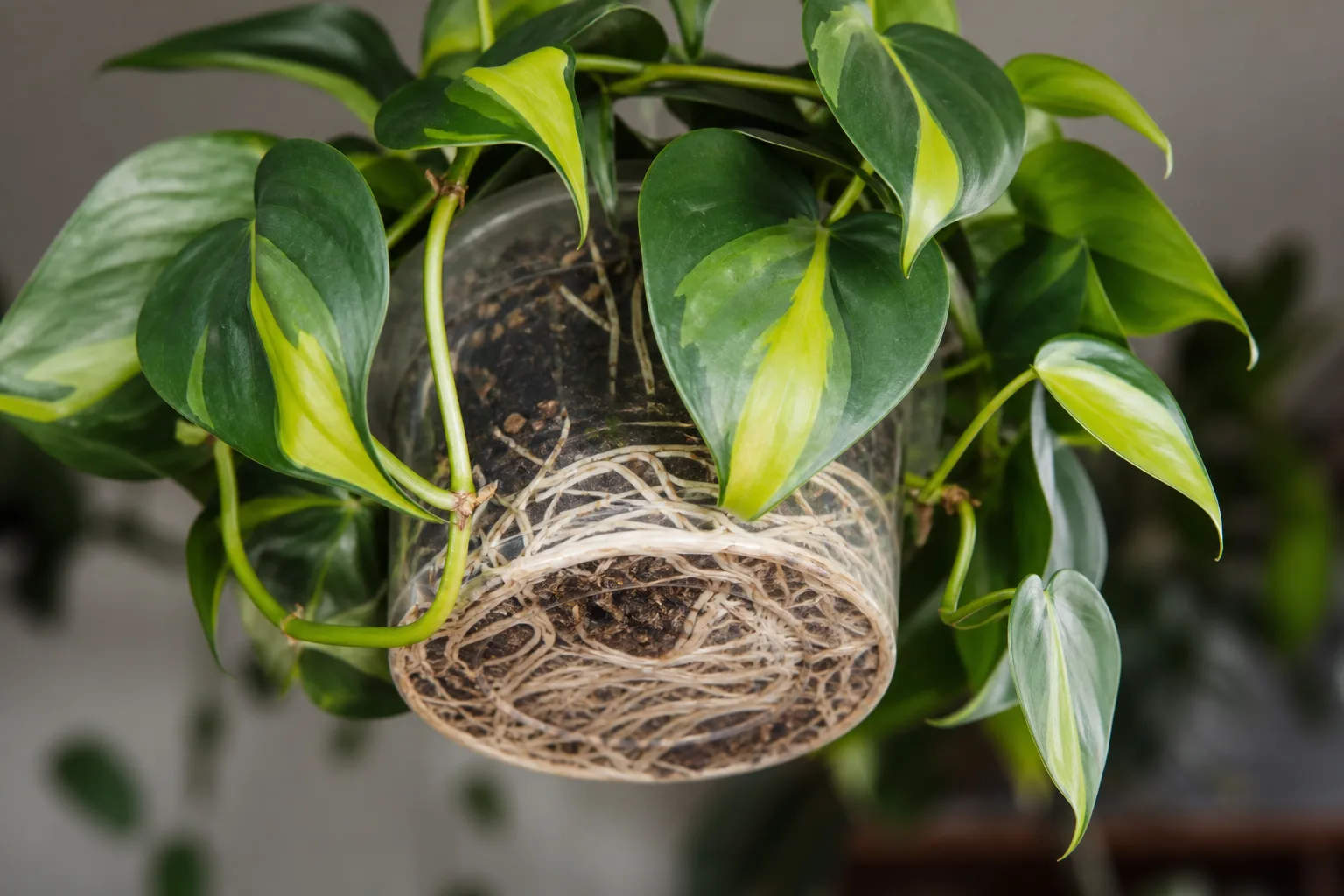
Root Bound on Philodendron Brasil: Causes, Checks & Fixes
This guide covers root bound on Philodendron Brasil. See also the general Root Bound guide, watering, and light pages for this plant.
Root Bound on Philodendron Brasil: Causes, Checks & Fixes
Quick answer
Root bound on Philodendron Brasil is not always an emergency. This rapidly growing trailing vine with heart-shaped lime-and-green leaves can do well when slightly pot-bound, because the mix dries predictably between drinks. Trouble starts when the root mass leaves almost no soil to hold moisture-water runs through, vines wilt between waterings, and new leaves stay small. Your first move is to slide the plant out and look at the root ball. Dense circling roots with little mix left confirm severe binding; a firm crowded ball with healthy new lime-streaked growth may only need monitoring until spring. Full repot procedure lives in the Philodendron Brasil repotting guide.
Reviewed by LeafyPixels Review Board · Author: sai-ananth · Methodology: Recommendations checked against NC State Extension, Iowa State Extension, Clemson HGIC, Missouri Botanical Garden, Wayne CES repotting guidance, and ASPCA toxicity data, then aligned with LeafyPixels Philodendron Brasil cluster guides.
What root bound looks like on Philodendron Brasil
Early binding can look healthy: long trailing stems, glossy heart-shaped leaves with lime variegation, and steady summer growth. As roots consume the pot, the mix dries much faster than it used to-sometimes within a day in bright light. Vines may droop and recover only briefly after watering because there is too little soil to store moisture around the fibrous root system. You might see white roots poking from the drainage hole or circling tightly when you peek under the rim. Growth slows, new leaves stay smaller, and lower leaves can yellow even though you are watering regularly. The pot may feel top-heavy because the trailing canopy outweighs the shrunken soil volume-especially common in hanging baskets where a metre of vine hangs below a 15 cm nursery pot. Variegation can dull if binding pairs with thirst stress, but plain-green reversion usually signals low light-not crowding alone.
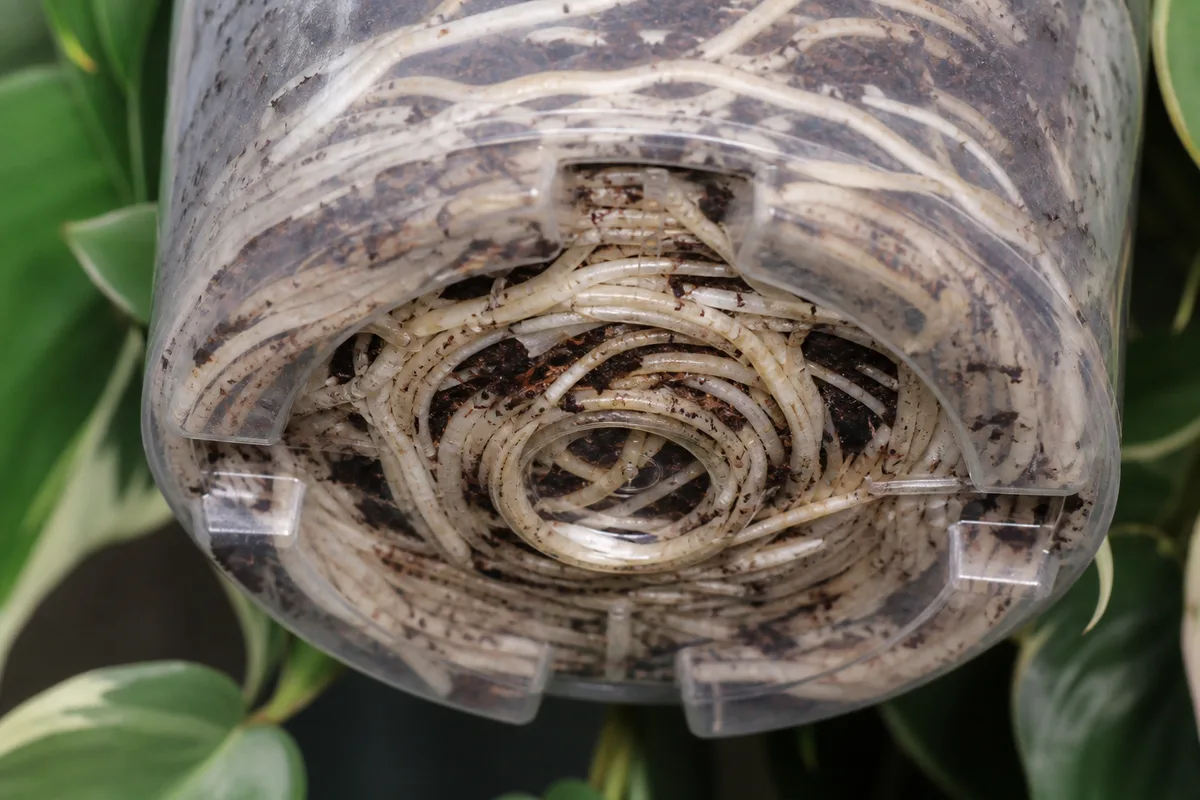
Root Bound symptoms on Philodendron Brasil - compare with healthy tissue on the same plant.
Mild crowding vs. severe girdling
| Severity | What you see on unpot | Dry-down after soak | Action |
|---|---|---|---|
| Mild | Roots touch pot walls; mix still visible between roots | Normal watering interval holds (roughly 7–10 days in moderate light) | Monitor until spring; slight pot-bound tolerance is fine |
| Moderate | Dense outer root mat; water channels through centre | Pot light again within 2–3 days | Plan spring repot one size up |
| Severe (girdled) | Solid root cylinder; almost no loose mix; roots escape holes | Light within 24 hours; repeated wilt despite watering | Repot soon-even outside ideal season if plant is failing |
Why Philodendron Brasil gets root bound
Fast growth in bright indirect light fills hanging baskets and small pots quickly. Philodendron hederaceum ‘Brasil’ is a vining cultivar with variegated leaves that puts out new nodes along trailing stems all season. Because this species prefers evenly moist but not soggy soil, owners sometimes delay repotting-which is often fine until the soil-to-root ratio collapses. Staying in the same nursery pot too long after purchase is a common trigger: the plant looked fine for months, then suddenly cannot stay hydrated. Over-frequent repotting into oversized containers is the opposite mistake; extra wet soil around sparse roots invites rot-root rot can occur in overly moist soils-so many growers keep philodendrons slightly tight on purpose.
Hanging baskets accelerate the timeline. A Brasil whose vines spill 1–2 metres from a shallow hanger rebuilds root mass faster than an upright houseplant because every node can root when it contacts mix. The canopy weight tugs the pot sideways if you size up to a tall decorative container without re-hanging support-see the repotting guide for hanger-specific technique.
How to confirm the cause
Lift the pot and compare weight before and after watering. If water drains straight through and the pot is light again within 24–48 hours, inspect the roots. Gently tip the plant out: a solid cylinder of roots with a thin soil core means binding. Healthy roots should be firm and pale; black mushy tissue points to root rot instead. Check whether symptoms match thirst (dry, light pot, slightly curled leaves on long stems) or binding (repeated wilting despite watering, fast dry-down, visible circling roots). If the mix is wet and stems soften at the base, treat as rot-not binding. Temporary stall after a recent repot is repotting stress; binding builds gradually over one to two seasons.
Work through this inspection order:
- Drainage holes - white roots emerging confirm pressure
- Dry-down speed - track days until the pot feels light after a thorough soak
- Gentle unpot - root ball holding pot shape with little loose mix
- Root firmness and smell - firm white/tan vs. mushy black/sour
- Stem base - softening on wet soil redirects to rot protocol
First fix for Philodendron Brasil
Slide the plant out and assess severity before repotting. If roots circle densely, little soil remains, and you see wilt-dry cycles or roots escaping the drainage hole, plan a repot into a container only one size larger with fresh well-draining mix. If the root ball is crowded but firm, vines are growing, and watering still lasts several days, hold off-mild binding often suits this fast-growing philodendron. Do not jump to a large pot; that increases rot risk more than crowding does.
Do not compensate for binding by watering more often without repotting-chronic wet-dry swings in a dense root mat can invite overwatering damage without replacing lost soil volume.
Step-by-step repotting for a root-bound plant
For numbered timing, hanger handling, and aftercare detail, follow the repotting guide. Summary for confirmed binding:
- Choose spring when the plant is in active growth, if possible.
- Take hanging baskets down to a stable table before unpotting-never repot while the hook is bearing vine weight.
- Select a pot no more than 2 inches wider in diameter than the current container, with a drainage hole.
- Use standard indoor potting mix with 20–25% perlite for airflow around fibrous roots.
- Loosen the outer root mat gently; cut and unwind roots that have circled the plant. Trim only mushy or dead roots, not healthy white ones. On severely girdled balls, make two to four vertical scoring cuts through the outer mat so new tips can grow outward.
- Set the plant at the same depth, backfill with mix, and water thoroughly until water runs through the drainage holes.
- Keep in bright indirect light and skip fertilizer for four to six weeks while roots settle.
Wear gloves when handling cut tissue-philodendrons are toxic to cats and dogs if ingested, and all parts contain calcium oxalate crystals that irritate skin.
Recovery timeline and signs of improvement
After repotting, expect one to two weeks of adjustment-some leaf drop or limp vines are common repotting stress. New firm lime-streaked leaves along vine tips within two to four weeks signal roots are accessing fresh mix. Watering intervals should lengthen compared with the old pot-compare against your watering baseline. Worsening yellow leaves on wet soil, soft stems at the base, or a sour smell mean rot, not binding-stop watering and inspect immediately per the root rot guide.
Practical recovery note: A spring-repotted hanging-basket Brasil with a solid root cylinder typically pushes its first new lime-streaked tip within two to three weeks when kept in bright indirect light and watered only after the top inch dries-judge success by new growth, not by plumping old stressed leaves.
Lookalike symptoms
| Pattern | Root bound | More likely cause |
|---|---|---|
| Fast dry-down after soak | Dense circling root mat, little mix | Underwatering - very light pot, dusty shrunken mix, sparse roots |
| Wet heavy pot, sour smell | Possible overlap when old mix stays wet in centre | Root rot - mushy black roots |
| Slow dry-down, limp vines | Unlikely unless pot was oversized after repot | Overwatering or pot too large |
| Pale plain-green leaves, wide node gaps | Moist soil, firm roots | Not enough light |
| Sudden limp after repot | Firm roots, fresh mix | Repotting stress - wait 2–3 weeks |
| Draft, heat, or missed water | Variable | Wilting - environmental, not crowding |
Underwatering also causes thin, drooping leaves, but the pot stays very light and roots are not circling the pot wall. Overwatering and root rot show wet heavy mix, sour smell, and mushy roots-not a dry cylinder of firm roots. Leggy pale growth with plain-green leaves usually means too little light, not crowded roots.
Mistakes to avoid
Do not repot into a huge decorative pot because the vines are long-the canopy size does not dictate pot width. Do not water more often to compensate for fast dry-down without checking roots; that can rot roots in a still-bound pot. Do not tease apart every root aggressively; philodendrons tolerate some circling. Avoid repotting in winter unless binding is severe and the plant is actively failing. Do not fertilize right after repotting to “boost” a stressed vine. Do not bare-root wash a healthy Brasil-stripping all mix extends transplant shock unnecessarily.
How to prevent root-bound problems next time
Track dry-down speed seasonally-when summer watering shifts from your normal 7–10 day rhythm to every few days without hotter light or a bigger pot, roots likely need space. Repot on symptoms, not a rigid calendar: every one to two years is typical for this rapid grower. Keep bright indirect light so growth stays manageable and you notice stall early. When you do repot, increase pot size gradually and refresh only the mix around the root ball.
When to worry
Act soon if soil dries within a day, repeated wilting continues after thorough watering, or roots are packed so tightly you cannot slip a finger between the ball and pot wall. Mild crowding without wilt or leaf loss can wait until spring. If inspection reveals mostly mushy roots instead of firm white ones, pivot to a root-rot protocol-binding and rot can overlap when old mix stays too wet in a crowded pot. Lower leaves turning yellow with slow growth despite good care can signal binding is overdue.
Urgency check
Low urgency: Slight root circling with steady growth and normal dry-down-monitor until spring.
Medium urgency: Water channels through within days, zero new lime leaves through a warm season, roots exit holes-repot in the next spring window.
High urgency: Repeated wilt despite watering, girdled root brick, or binding plus sour smell/mushy core-act within days regardless of season.
Related Philodendron Brasil guides
- Philodendron Brasil repotting - full seasonal workflow, hanger technique, and aftercare
- Best soil for Philodendron Brasil - perlite and bark mix ratios for post-repot recovery
- Philodendron Brasil watering - dry-down baseline before and after repot
- Root rot - when binding overlaps with mushy roots
- Overwatering - wet-soil lookalike on a bound ball
- Underwatering - dry-soil lookalike without circling roots
- Wilting - environmental wilt vs. crowding
- Repotting stress - post-repot adjustment timeline
- Philodendron Brasil overview - baseline care hub
Related tool
Use the Plant Problem Diagnosis Tool to narrow causes for root bound on this plant before changing multiple variables at once.