Stem Rot on Maidenhair Fern: Causes, Checks & Fixes
Quick answer
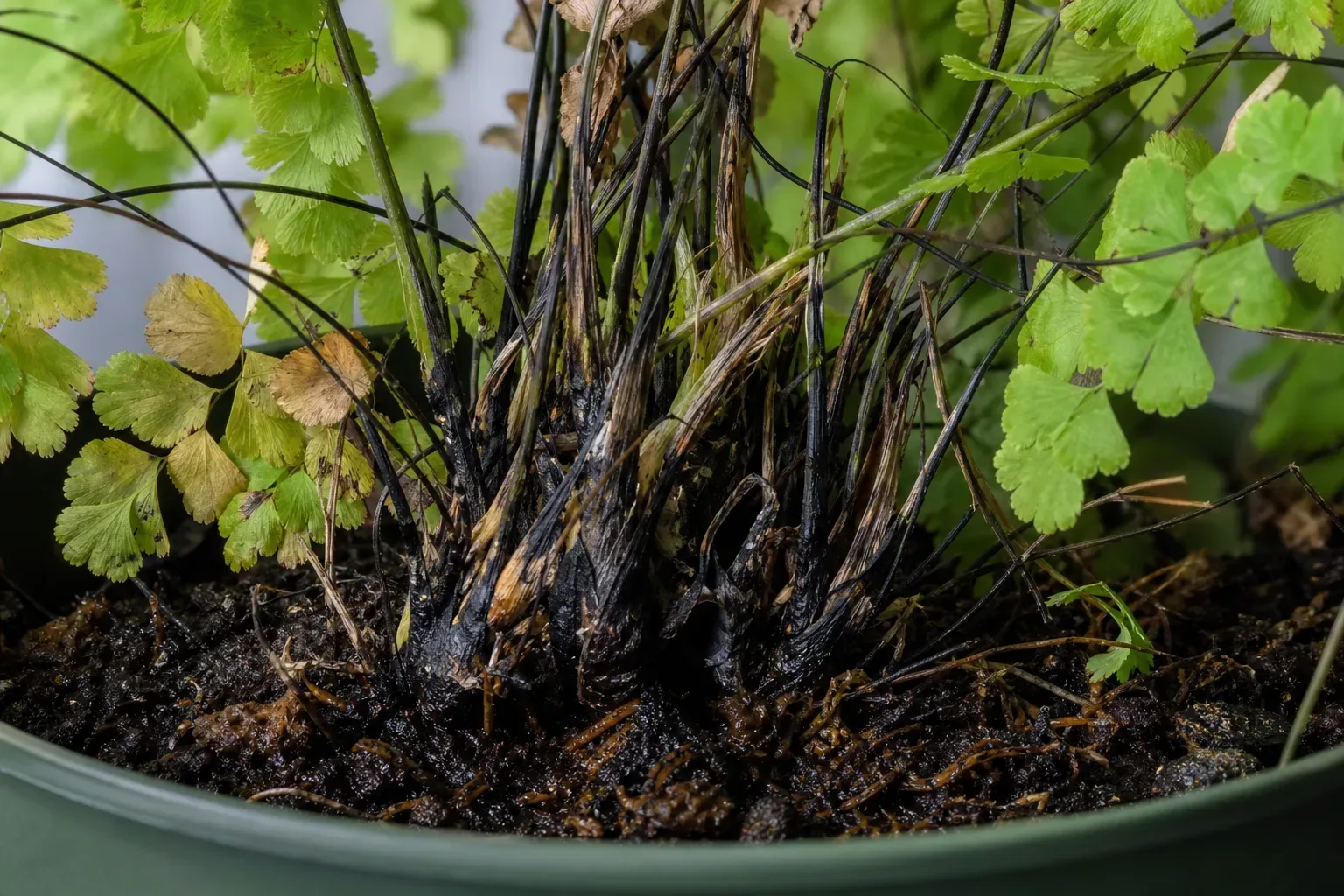
Pinch each black stipe where it meets soil - mush that dents or weeps fluid confirms stem or crown rot on Maidenhair Fern, not drought. First step: cut away all mushy stipe and rhizome tissue with sterile scissors back to firm pale tissue, then stop watering until you repot into fresh airy mix.
Stem Rot on Maidenhair Fern: Causes, Checks & Fixes
This guide covers stem rot on Maidenhair Fern. See also the general Stem Rot guide, watering, and light pages for this plant.
Stem Rot on Maidenhair Fern: Causes, Checks & Fixes
Quick answer
Pinch each black stipe where it meets the soil line. Mush that dents, weeps fluid, or does not spring back confirms stem or crown rot on Maidenhair Fern (Adiantum raddianum) - not drought. Firm wiry stipes on a light dry pot point to underwatering on Maidenhair Fern instead.
This page is the stipe-and-crown-first diagnostic guide. Decay usually starts at the thin black stipes and rhizome crown just below the surface, then moves through adjacent stems within days because this fern has no woody bark to wall off infection. If stipes are still firm but roots below are mushy, start with the root rot guide for below-soil salvage.
First step: cut away all mushy stipe and rhizome tissue with sterile scissors, trimming back to firm pale tissue. Do not water afterward. Let cut surfaces air-dry before you repot into fresh airy mix from the soil guide. Adding water to mushy stipes accelerates spread through the entire crown.
What stem rot looks like on Maidenhair Fern
Maidenhair Fern grows from branching rhizomes just below the soil surface, sending up delicate black stipes topped with fan-shaped leaflets. Rot starts at those stipe bases and the rhizome crown - not on the leaflets themselves until decay cuts off their water supply. NC State Extension describes the species as spreading by creeping rhizomes with wiry black stipes - the exact junction where crown wetness does the most damage.
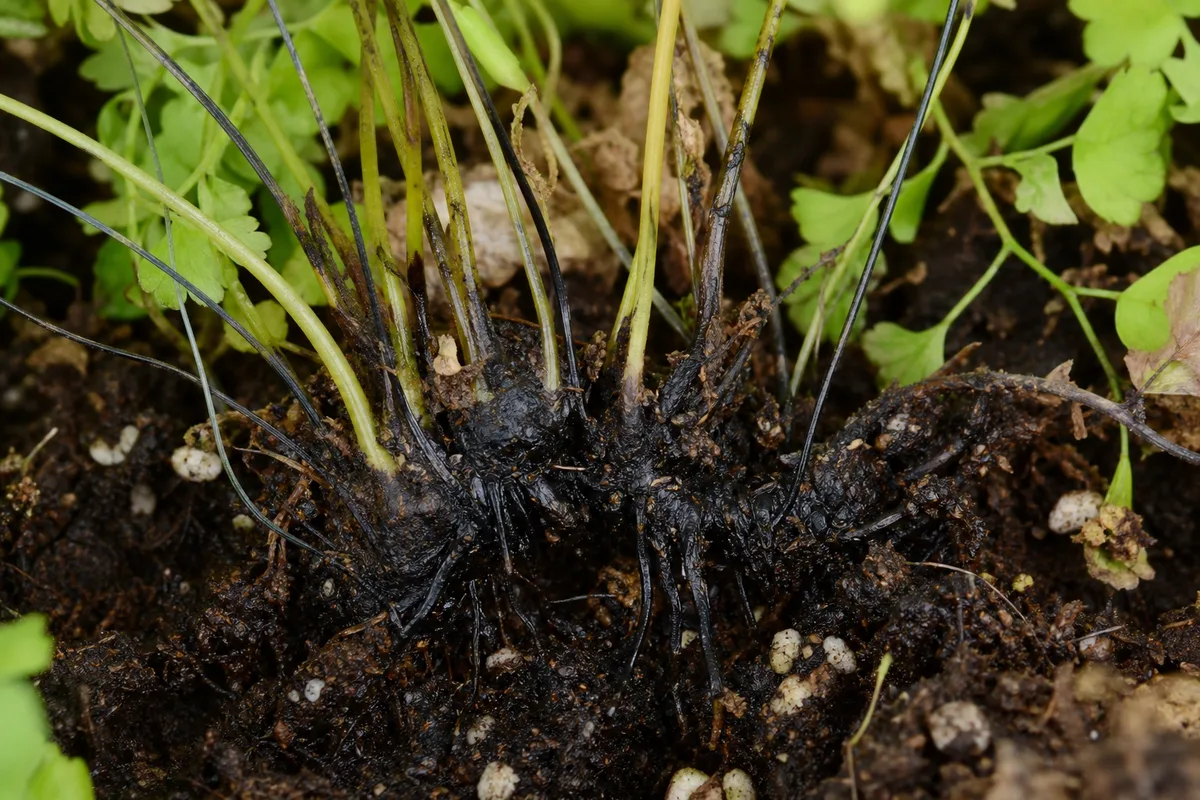
Stem Rot symptoms on Maidenhair Fern - compare with healthy tissue on the same plant.
Early signs:
- One or more black stipes feel soft or hollow when pinched at the soil line
- Stipe color shifts from glossy black to brown or dark gray near the base
- A frond droops while the pot still feels heavy and surface mix is damp
- Lower leaflets yellow or blacken while upper pinnae still look green briefly
Advanced signs:
- Stipes detach with a gentle tug, leaving a mushy stub at soil level
- Brown or black mush visible where multiple stipes cluster at the rhizome crown
- Mass frond collapse - the fern goes from full to flat within days
- Sour or swampy odor from the drain hole when you lift the pot
- Reddish-brown thread-like fungal growth on soil or stipe bases in warm wet conditions
Healthy Maidenhair Fern stipes are firm, wiry, and spring back when bent slightly. Rot feels like pressing into wet tissue - it dents, may weep fluid, and does not spring back. That texture difference matters because this species also collapses instantly when underwatered; dry, light pots with firm stipes and crispy leaflets mean thirst, not rot.
Why Maidenhair Fern gets stem rot
Stem rot on Maidenhair Fern is almost always a culture problem - too much moisture at the crown or in the root zone for too long - not a random fungal attack on an otherwise healthy plant.
Wet crown and stipe bases. The rhizome sits close to the soil surface with every stipe emerging from one crowded crown. Overhead watering, misting directly onto the crown, or leaving the pot in a full saucer keeps stipe bases wet for hours. Decay fungi colonize waterlogged tissue once oxygen is cut off to the roots.
Root rot moving upward. Fine fern roots suffocate quickly in saturated soil. When feeder roots die from overwatering and poor drainage, damage often appears above soil as soft stipes before you notice root color change. By the time a stipe feels mushy, roots below are usually already compromised - see overwatering on Maidenhair Fern for early intervention before crown tissue fails.
Persistent waterlogging in dim light. Maidenhair Fern in low light transpires less while caregivers keep watering on habit to prevent dryness. The pot stays wet for days while the plant uses little moisture - anaerobic conditions that trigger crown and stem decay even when you are trying to protect the fern from drought. The watering guide ties drink timing to pot weight and surface dry-down, not a fixed calendar.
Heavy or compacted mix without bark or perlite. Dense peat holds water too long around fine roots and the rhizome crown. Decorative pots without drain holes or cachepots that trap runoff are common failures. The site’s 50% compost, 30% coco coir, 20% fine bark starter blend from the soil guide holds moisture without turning anaerobic at the crown.
Closed terrariums with stagnant air. High humidity helps Maidenhair Fern, but sealed glass with wet soil and no airflow traps moisture around the crown. Warm, moist, still conditions favor pathogens that attack stems and roots at the soil line. Vent briefly after watering and avoid sealing saturated soil in warm closed glass.
Oversized containers. Excess empty mix around a small rhizome stays soggy indefinitely. Maidenhair Fern prefers staying slightly root-bound; a pot much larger than the root mass invites chronic wetness at the crown.
Bathroom placement trap. Low light plus generous watering plus crown misting keeps stipe bases wet for hours while fronds look fine briefly after each mist. Humidity around leaves does not fix oxygen loss at the crown.
Unlike woody houseplants, Maidenhair Fern has no corky bark to wall off decay. Thin black stipes connect directly to the rhizome - once one base turns mushy, rot can travel through adjacent stipes within days.
Stem rot vs lookalikes (quick check)
| Pattern you see | Most likely issue | Fast differentiator |
|---|---|---|
| Mushy stipes at soil line + heavy wet pot + sour smell | Stem / crown rot | Stipe bases dent under pinch; may weep fluid |
| Crispy fronds + very light dry pot | Underwatering | Stipes firm when pinched; no sour odor |
| Firm stipes + mushy roots below soil | Root rot only | Root rot rescue - stems may still save |
| Brown tips, faster drying, firm stipes | Low humidity shock | No sour smell; soil moisture normal |
| Wilt after recent repot, intact crown | Transplant stress | Rhizome and stipes firm when checked |
| Tiny flies + constantly wet surface | Chronic overwatering risk | Gnats alone do not confirm rot - pinch stipes |
How to confirm the cause
Work through these checks before you repot or divide:
- Stipe firmness at the base - Pinch each black stipe where it meets soil. Mush that dents or leaks fluid confirms rot. Firm tissue throughout means look elsewhere.
- Soil moisture and weight - Has mix been wet three or more days without the top centimeter drying? A heavy pot plus soft stipes supports rot.
- Wilting vs. moisture - Limp, yellowing fronds with wet soil strongly suggest crown or root dysfunction, not underwatering. Plants may wilt even when potting media moisture is adequate once roots or lower stems have decayed.
- Smell test - Lift the pot and sniff the drainage hole. Sour or rotten odor points to anaerobic decay - not normal potting mix smell.
- Watering history - Did you pour onto the crown, mist heavily at night, or leave standing water in the saucer? That pattern fits stem rot on this species.
- Rhizome inspection if unsure - Gently unpot when bases are soft. Healthy rhizomes are firm and pale; rotted tissue is brown, black, or translucent and collapses between fingers.
- Pattern across fronds - Rot often starts on one or two stipes before spreading. Uniform crisp collapse with a dry, light pot is less likely to be stem rot.
If stipes are firm, soil is dry, and leaflets crisp at edges, water once lightly and recheck in 24 hours before assuming rot.
First fix for Maidenhair Fern
Cut away all mushy stipe and rhizome tissue with sterile scissors, trimming back to firm, pale tissue.
Disinfect blades with rubbing alcohol between each cut. Remove any frond whose stipe is fully mushy - those leaflets will not recover. If only the base is soft, trim the stipe above the decay and discard the mushy section.
Do not water after trimming. Lay the plant on paper towels in Maidenhair Fern light guide for 24 hours so cut surfaces dry. Empty any saucer water and isolate the fern from other plants until you know decay has stopped.
Do not mist the crown. Do not fertilize. Do not soak the plant hoping to revive it - wetness is what caused the problem.
If every stipe base and the rhizome crown are mushy, shift focus to division: separate any firm rhizome section that still has healthy roots and at least one firm stipe before the last salvageable tissue rots.
Step-by-step recovery
After the initial trim and dry-down:
- Unpot if roots smell sour or multiple stipe bases are soft - Knock away wet mix gently without tearing firm fronds.
- Trim rotted roots and rhizome - Cut brown, mushy roots and crown tissue back to firm pale material. Sterilize tools between cuts.
- Air-dry 24–48 hours - Keep the plant in bright indirect light with 60%+ humidity but no crown wetness. No water during this window.
- Repot into fresh airy mix - Use 40% coco coir, 30% fine bark, 20% compost, 10% perlite for recovery (shift toward the soil guide 50/30/20 starter ratio once new croziers establish). Choose a pot sized to the trimmed root mass with open drainage. Set the rhizome at the same depth as before; keep stipe bases at or slightly above mix, never buried. See repotting for rhizome-safe handling.
- Water lightly once after repotting - Pour at the pot edge, not over the crown. Empty saucers completely.
- Hold fertilizer until new fronds appear - typically two to four weeks in stable humidity.
- Resume watering when the top centimeter is barely dry - err slightly moist rather than bone dry during recovery, but never waterlogged.
Cut collapsed fronds at soil level to reduce stress on reduced roots.
Recovery timeline by severity
Mild (one or two soft stipe bases, firm rhizome): Decay may stop within one to two weeks after trimming and dry repotting. Expect new fronds in two to four weeks in bright indirect light and 60–80% humidity.
Moderate (multiple soft stipes, some firm rhizome): Trim aggressively, divide if needed, and allow three to six weeks before judging success. Judge recovery by firm new stipes and fresh pinnae, not by old yellow foliage.
Severe (crown mushy, mass collapse within 48 hours): Keep only clearly firm rhizome divisions. If stipe bases keep softening after repotting and a full dry-down period, the growing crown is likely lost.
Collapsed leaflets will not green up; remove them once replacement growth is visible.
What not to do
Do not water wilting ferns automatically - check stipe firmness first. Do not mist a rotting crown hoping humidity will help. Do not repot into heavy garden soil or pots without drainage. Do not leave the plant in standing saucer water. Avoid fertilizing stressed roots immediately after repotting. Do not upsize the pot during recovery - a smaller correctly sized pot dries more predictably. Do not let the root ball swing from swampy to bone dry; Maidenhair Fern roots must never be allowed to dry out, but they also cannot sit in stagnant mix.
How to prevent stem rot next time
Use airy, moisture-retaining mix with open drainage in an appropriately sized pot. Water when the top centimeter is barely dry - check daily in warm weather, less often in cool dim conditions per the watering guide. Pour at the pot edge or bottom-water briefly rather than soaking the crown.
Maintain 60–80% humidity with pebble trays, grouping, or bathroom placement - but provide gentle airflow so the crown is not trapped in stagnant wet air. In terrariums, vent briefly after watering and avoid sealing saturated soil in warm closed glass.
Match water to pot weight and light, and improve drainage before increasing frequency. The same moisture this species needs for healthy pinnae becomes dangerous when it lingers around the rhizome crown without airflow.
Maidenhair Fern care cross-check
Use this decision path before you water a wilting fern:
| What you find | Likely cause | Next step |
|---|---|---|
| Mushy stipes at soil line + heavy wet pot | Stem / crown rot | Trim mushy tissue; do not water; repot per this guide |
| Firm stipes + light dry pot + crispy leaflets | Underwatering | Edge-water once; see watering guide |
| Firm stipes + mushy roots + sour smell | Root rot below soil | Root rot rescue |
| Wet soil for days in dim spot, stipes still firm | Early overwatering risk | Correct drainage and light; see overwatering |
| Wilt after misting, mushy stipe bases | Crown wetness from mist | Stop crown misting; trim if soft |
Stem rot prevention means moist with oxygen, not dry OR swampy. A fern watered on a rigid every-two-days schedule in a dim bathroom will rot if the pot never dries at the surface.
When to divide rhizome vs. discard
Attempt division when:
- At least one rhizome section is firm and pale after trimming
- That section still has viable roots and one or more firm stipes
- Decay has not spread through the entire crown
Replace rather than rescue when:
- Every stipe base and the rhizome crown feel mushy
- Mass frond collapse within 48 hours while soil is wet
- Stipe bases keep softening after trim, dry-down, and repot
Early stipe browning with a firm rhizome and green new fronds still allows trim-and-repot rescue. Escalate immediately if stipes blacken from the base upward or the rhizome crown softens.
How this guide was verified
This guide focuses on stipe-and-crown-first diagnosis for Maidenhair Fern - distinct from below-soil root rot salvage. Recommendations were checked against extension and botanical references, including NC State Extension Adiantum raddianum, Missouri Botanical Garden, University of Maryland Extension, and University of Minnesota Extension. Inline citations sit next to the claims they support; unresolved contradictions are flagged for review rather than silently rewritten.
Author: sai-ananth · Reviewer: LeafyPixels Review Board · Reviewed: June 2026
When to use this page vs other Maidenhair Fern guides
- Maidenhair Fern watering guide - Use for routine moisture checks before assuming stem rot is the main issue.
- Maidenhair Fern problems hub - Browse all 55 common issues on this species.