Bacterial Wilt on Maidenhair Fern: Causes, Checks & Fixes
Quick answer
Wilting Maidenhair Fern ([*Adiantum raddianum*](https://plants.ces.ncsu.edu/plants/adiantum-raddianum/)) with wet soil is usually root rot, not classic bacterial wilt. First step: isolate the plant and inspect roots and fronds before watering or spraying - confirm whether decay, water-soaked lesions, or vascular streaking is present.
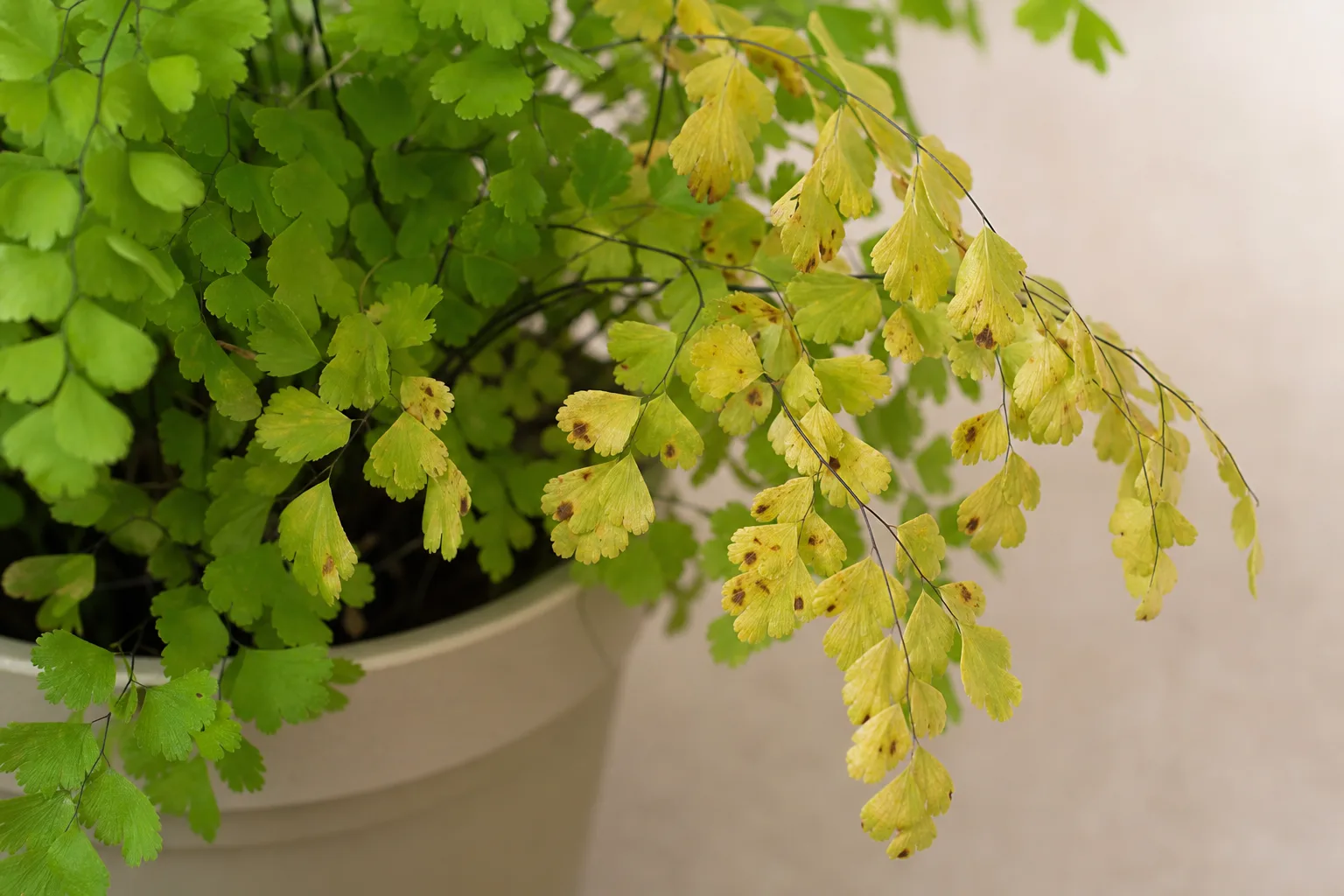
Bacterial Wilt on Maidenhair Fern: Causes, Checks & Fixes
This guide covers bacterial wilt on Maidenhair Fern. See also the general Bacterial Wilt guide, watering, and light pages for this plant.
Bacterial Wilt on Maidenhair Fern: Causes, Checks & Fixes
Quick answer
When Maidenhair Fern (Adiantum raddianum) wilts despite moist soil, most indoor cases trace to root rot or crown decay from waterlogged mix - not classic vascular bacterial wilt. True bacterial problems on ferns more often start as water-soaked frond spots that spread before collapse. For acute wilt triage on any moisture pattern, see wilting on Maidenhair Fern.
First step: isolate the plant and inspect before any treatment. Unpot if soil feels heavy and wet, examine roots for mushy tissue, and scan fronds for spreading water-soaked lesions or dark internal streaks. Do not water, mist, or spray until you know which pattern you are dealing with.
Use the table below to pick your path - full detail follows in each section.
Pattern A / B / C decision table
| Pattern | What you see | Soil / roots | First action | Full guide |
|---|---|---|---|---|
| A - wet-soil wilt (most common) | Limp yellow-green fronds, often no spots; collapse may be even across the plant | Heavy wet mix; mushy brown roots; sour smell possible | Stop watering; unpot and inspect; trim decay | Root rot · Overwatering |
| B - bacterial blight | Translucent water-soaked spots with halos on pinnae; spots spread before wilt | Moisture often appropriate; roots usually firm on check | Isolate; remove spotted fronds; dry foliage; airflow | This page - blight recovery below |
| C - vascular wilt (rare indoors) | One frond or side wilts with adequate moisture; possible dark petiole streaks | Roots may look fine early; rapid plant-wide collapse | Isolate; discard if crown fails; protect collection | Lab confirmation; discard guidance below |
Visual checkpoints before you treat: Pattern A roots on unpot look pale and firm or brown and mushy - no leaf lesions required. Pattern B pinnae show wet-looking translucent halos that enlarge daily. Pattern C is uncommon on home ferns; suspect it only when rot and blight patterns are ruled out and collapse is fast with streaking inside stipes.
What bacterial wilt looks like on Maidenhair Fern
On Maidenhair Fern, “bacterial wilt” searches usually describe one of three distinct patterns.
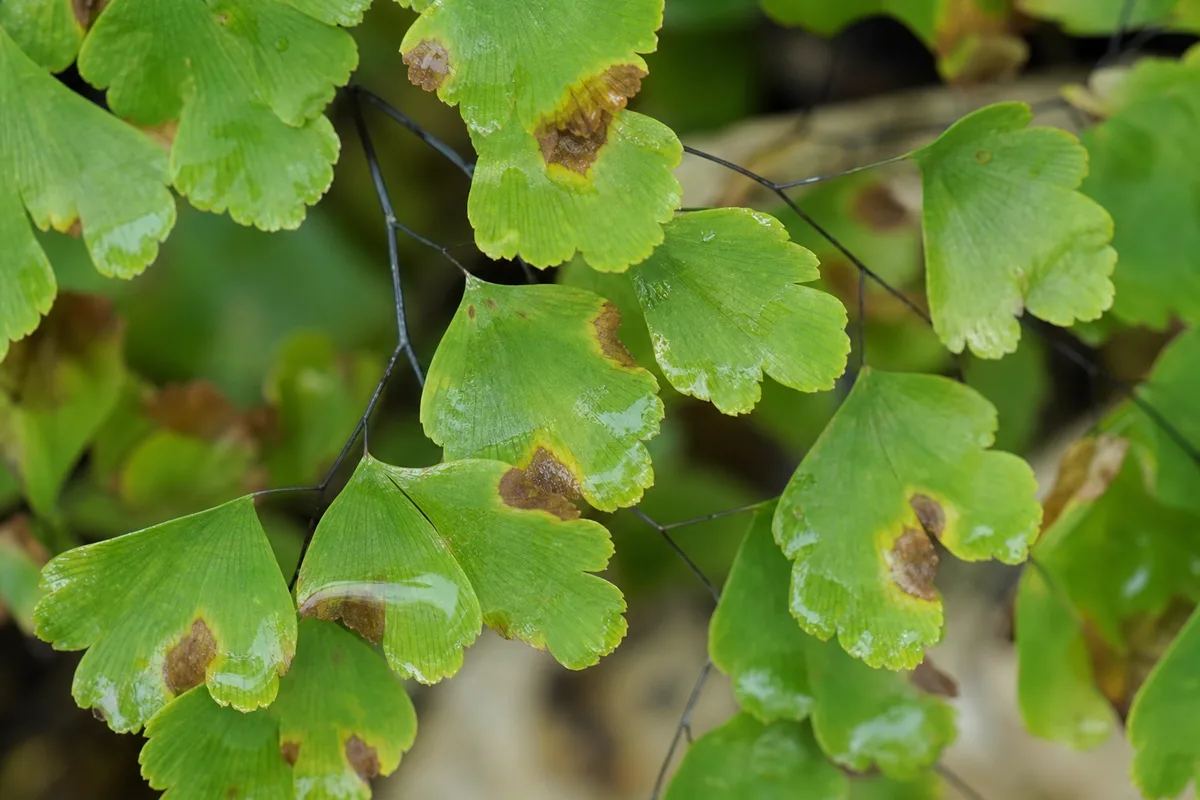
Bacterial Wilt symptoms on Maidenhair Fern - compare with healthy tissue on the same plant.
Pattern A - wilt with wet soil (most common mislabel). Fronds go limp and yellow-green while the pot stays heavy. Leaflets may blacken from the base upward. There are often no obvious spots on frond surfaces - just sudden collapse. This pattern usually means roots or rhizome tissue have failed, not that a vascular bacterium blocked water flow. Wilted leaves may indicate rotting roots that cannot take up water even when soil feels moist. For wet-soil wilt triage, start with wilting and root rot - not bactericides.
Pattern B - bacterial blight progressing to wilt (less common). Small translucent, water-soaked spots appear on delicate pinnae or along frond edges. Spots enlarge quickly, sometimes developing brown centers with yellow or purple halos. In warm, humid, stagnant air, lesions merge and entire frond segments wilt while neighboring fronds still look normal. This matches Pseudomonas-type bacterial blight reported on other fern species - translucent spots that enlarge quickly and turn reddish-brown with halos. Do not confuse these halos with Botrytis gray mold - fungal blight shows fuzzy gray growth on collapsed tissue, not clear soaked lesions.
Pattern C - true vascular bacterial wilt (rare indoors on ferns). Classic bacterial wilt pathogens like Ralstonia solanacearum affect many herbaceous ornamentals but are not typical Maidenhair Fern pathogens. If present, you might see one frond or one side of a frond wilt while soil moisture is adequate, possible dark streaking inside petioles or rhizomes, and rapid plant-wide collapse within days. Bacterial streaming from cut stems in water is a lab-level confirmation - ask an extension plant diagnostic lab if you need definitive ID on a valuable collection.
Maidenhair Fern’s thin fronds show stress within hours, so timing alone cannot separate bacterial from cultural causes. You need the moisture context plus tissue inspection - not the search term alone.
Why Maidenhair Fern appears to get bacterial wilt
Waterlogged roots masquerade as wilt disease. Maidenhair Fern needs consistently moist but well-drained potting soil, but fine fern roots also need oxygen. When mix stays saturated for days - especially in dim corners or oversized pots - over-watering and poor drainage can cause root rot and destroy roots. Damaged roots cannot move water upward, so fronds wilt despite wet soil. That mismatch is the number-one reason this problem gets labeled “bacterial wilt.” See overwatering on Maidenhair Fern for early intervention before the crown fails.
Wet foliage plus high humidity invites bacterial blight. Maidenhair Fern thrives at 60–80% humidity, but overhead watering, evening misting, or crowded terrarium placement keeps pinnae wet for hours. Warm, damp leaf surfaces favor Pseudomonas and related bacteria that enter primarily through hydathodes and wounds. Splashing water between plants spreads inoculum faster than dry care routines. The watering guide ties drink timing to pot weight so roots stay moist with oxygen - not stagnant and saturated.
Terrarium culture amplifies both rot and blight. Sealed cases trap humidity around pinnae while slowing evaporation at the soil surface - anaerobic mix below, wet foliage above. Open briefly after watering or use a humidifier outside closed glass so crowns can breathe.
Physical damage opens entry points. Broken pinnae from handling, pet traffic, or rough repotting create wounds bacteria exploit. Maidenhair Fern’s delicate architecture makes this more likely than on thick-leaved houseplants.
Stress lowers resistance without causing wilt alone. Drafts, fluoride-heavy tap water, and recent repotting weaken fronds but rarely cause sudden vascular collapse unless a pathogen or rotting roots are already involved.
How to confirm the cause
Work through this order before treating:
- Pot weight and soil moisture - Heavy, wet mix for 3+ days with limp fronds strongly suggests root dysfunction, not drought. Cross-check wilting triage.
- Frond surface exam - Look for spreading water-soaked spots with halos (bacterial blight) versus uniform limp collapse without lesions (root rot or shock).
- Smell at drain holes - Sour or swampy odor supports rot. Bacterial blight on foliage may not smell until crown tissue softens.
- Root and rhizome inspection - Slide the plant out carefully. Firm pale roots point away from rot. Mushy brown roots confirm decay. Soft black rhizome crown is advanced failure.
- Stem or petiole slice - On a suspect frond, cut a petiole cross-section. Uniform healthy tissue differs from dark streaking or slimy ooze. Avoid spreading pathogens - sterilize tools after.
- Spread pattern - Bacterial blight often jumps frond to frond where splash contact occurs. Root rot tends to collapse the whole plant evenly once roots fail.
- Neighbor plants - Similar symptoms on ferns watered from the same tray or misted together suggest splash-borne bacteria. Multiple species wilting with wet soil may still be individual rot cases from overwatering.
If roots are firm, soil moisture is appropriate, and only one frond shows localized spots, bacterial blight is more plausible than vascular wilt. If roots are mushy with wet soil, treat as rot first regardless of the search term you started with.
Lab confirmation: Extension labs can test bacterial streaming from cut petioles in water when collection value justifies formal ID. Home growers rarely need this unless Pattern C is suspected after rot and blight are ruled out.
First fix for Maidenhair Fern
Isolate the plant and remove confirmed infected fronds with sterilized scissors - then stop wetting foliage and inspect roots.
Move the fern away from other plants immediately. Cut any frond showing spreading water-soaked lesions or black mushy bases at soil level. Bag and trash removed tissue; do not compost indoors. Wipe scissors with 70% alcohol between cuts and before touching healthy plants.
If the pot feels heavy and roots smell sour, do not mist for humidity recovery yet - unpot and assess root health before repotting. Follow the root rot guide for trim-and-repot steps rather than guessing here. If roots are firm and only localized spotting is present, keep the plant isolated, switch to soil-level watering per the watering guide, and run gentle airflow nearby without blasting dry air directly on pinnae.
Hold all fungicides, bactericides, and fertilizer until you have a confirmed pattern. Copper sprays rarely cure established fern bacterial blight and can damage delicate Maidenhair Fern tissue.
Step-by-step recovery
If bacterial blight is confirmed (spotting plus firm roots)
- Isolate away from the collection.
- Remove every frond with active water-soaked lesions - err on the side of removing more tissue rather than leaving borderline spots.
- Sterilize tools; avoid handling healthy fronds after touching infected ones.
- Water at soil level only; keep humidity up with a pebble tray or humidifier rather than foliar misting.
- Space plants and run a low fan to move air without drying the crown completely.
- Watch for new fronds over 2–3 weeks. If spots reappear on fresh growth, discard the plant to protect neighbors.
If root rot is confirmed (mushy roots, wet soil, wilt without leaf spots)
Pattern A is a root rot emergency, not a bactericide problem. Summary steps:
- Stop watering; unpot and rinse away saturated mix.
- Trim all mushy roots to firm tissue; assess rhizome crown.
- Repot into clean airy mix with open drainage.
For pot sizing, mix ratios, humidity during recovery, and crown salvage thresholds, use the full root rot rescue guide - do not repeat that protocol line-for-line here.
These paths differ - mixing them on day one (repotting plus bactericide plus heavy misting) often accelerates decline on Maidenhair Fern.
Recovery timeline
Localized bacterial blight caught early may show clean new fronds in 2–4 weeks if isolation, leaf removal, and dry-foliage watering stop spread. Judge success by spot-free emerging pinnae, not immediate fullness.
Root rot recovery depends on how much firm root mass remains - mild cases with intact rhizome may push new fronds in a similar window under high humidity. Crown softening or total root loss usually kills Maidenhair Fern within days despite intervention. See root rot timeline detail.
True systemic bacterial wilt on any houseplant rarely offers home recovery. Discarding infected plants is often the best approach when systemic bacterial disease is confirmed - pesticide sprays are not effective because pathogens sit deep within tissues.
Lookalike symptoms
| Symptom pattern | Likely cause | How to tell apart | Guide |
|---|---|---|---|
| Dry light pot, crisp fronds, firm roots | Underwatering | Opposite moisture pattern from wet-soil wilt searches | Wilting |
| Brown tips, leaflet curl, firm roots | Low humidity | Slow margin damage, not sudden collapse | Low humidity |
| Temporary wilt after heat or draft | Shock | Roots firm; no spreading spots | Heat stress |
| Water-soaked spots with halos, firm roots | Pseudomonas bacterial blight (Pattern B) | Translucent soaked tissue, no gray fuzz | This page |
| Brown collapsed fronds with gray fuzz | Botrytis fungal blight | Fuzzy mold on wet dead tissue | Blight |
| Brown irregular crown spots, webbing between fronds | Rhizoctonia blight | Fungal webbing from frond to frond near crown; management differs from bacteria | Blight |
| Static dark spots at frond bases, healthy roots | Possible foliar nematodes | Spots do not spread like bacterial halos; uncommon on maidenhair | Extension lab ID if suspected |
Mistakes to avoid
Do not mist wilted Maidenhair Fern hoping humidity will help - wet pinnae spread bacteria and worsen rot in stagnant crowns. Do not apply fungicide alone for bacterial lesions. Do not confuse Pattern B bacterial halos with Botrytis on the blight page. Do not leave infected frond debris on soil surface. Do not repot into heavy garden soil or pots without drainage “to dry it out slowly.” Avoid fertilizing stressed plants; new salts on damaged roots burn fine fern tissue quickly. Do not return the plant to a crowded terrarium until new growth stays clean for several weeks.
How to prevent bacterial wilt next time
Water at the soil line, not over fronds - avoid overhead watering on ferns to limit bacterial blight spread. If you mist for humidity, do it early enough that pinnae dry before night - or use humidifiers and pebble trays instead. Maintain Maidenhair Fern’s moisture needs without leaving crowns soggy: check daily using pot weight from the watering guide, and ensure pots drain freely.
Sterilize pruning tools between plants. Quarantine new ferns two weeks before placing them near existing collections. Space plants so air moves between fronds. Purchase plants with clean leaf undersides and no water-soaked spotting at the nursery.
Match pot size to root mass - excess wet mix around a small Maidenhair Fern root ball is a rot setup that mimics wilt disease. See poor drainage if water pools in cachepots.
Maidenhair Fern care cross-check
High humidity is non-negotiable for this species, but humidity without wet foliage is the goal. A bathroom with good light and soil-level watering often works better than a sealed case where fronds stay dripping. Pair 60–80% humidity with bright indirect light so the plant uses water predictably and mix does not stay anaerobic. Start from the Maidenhair Fern overview when aligning light, humidity, and watering as one system.
When to worry
Escalate immediately if the crown softens, fronds blacken from the base across the whole plant within 48 hours, or water-soaked lesions spread onto newly emerging fronds daily. Discard rather than propagate when rhizome tissue is slimy or smells foul - saving one fern is not worth losing a collection to splash-borne bacteria.
Early single-frond spotting with firm roots and stable neighbors allows conservative removal and monitoring. Multiple ferns on the same misting tray with new spots warrants isolating the entire group and reviewing shared watering habits.
How this guide was verified
This guide reframes “bacterial wilt” search intent for Maidenhair Fern (Adiantum raddianum) using a Pattern A/B/C diagnostic framework - wet-soil rot, Pseudomonas blight, and rare vascular wilt. Recommendations were checked against extension and botanical references, including Penn State fern diseases, NC State Ralstonia guidance, NC State Adiantum raddianum, Missouri Botanical Garden, University of Minnesota Extension, Illinois IPM, and UC IPM. Inline citations sit next to the claims they support.
Author: sai-ananth · Reviewer: LeafyPixels Review Board · Reviewed: June 2026 · Claims validated: 12 inline extension and botanical links (see footer metadata)
Related Maidenhair Fern guides
- Maidenhair Fern overview - species basics, placement, and care hub
- Wilting - acute collapse triage, wet-vs-dry pot weight
- Root rot - Pattern A full repot and crown salvage
- Blight - Botrytis gray mold vs. bacterial water-soaked spots
- Overwatering - early wet-soil intervention before rot
- Watering - pot-weight checks and moisture rhythm
- Poor drainage - cachepots, mix, and standing water