Root Rot on Maidenhair Fern: Causes, Checks & Fixes
Quick answer
If your Maidenhair Fern wilts while the pot is still wet, check roots before watering again. Trim mushy roots, repot into an airy moisture-retentive mix, and water by dry-down, not calendar.
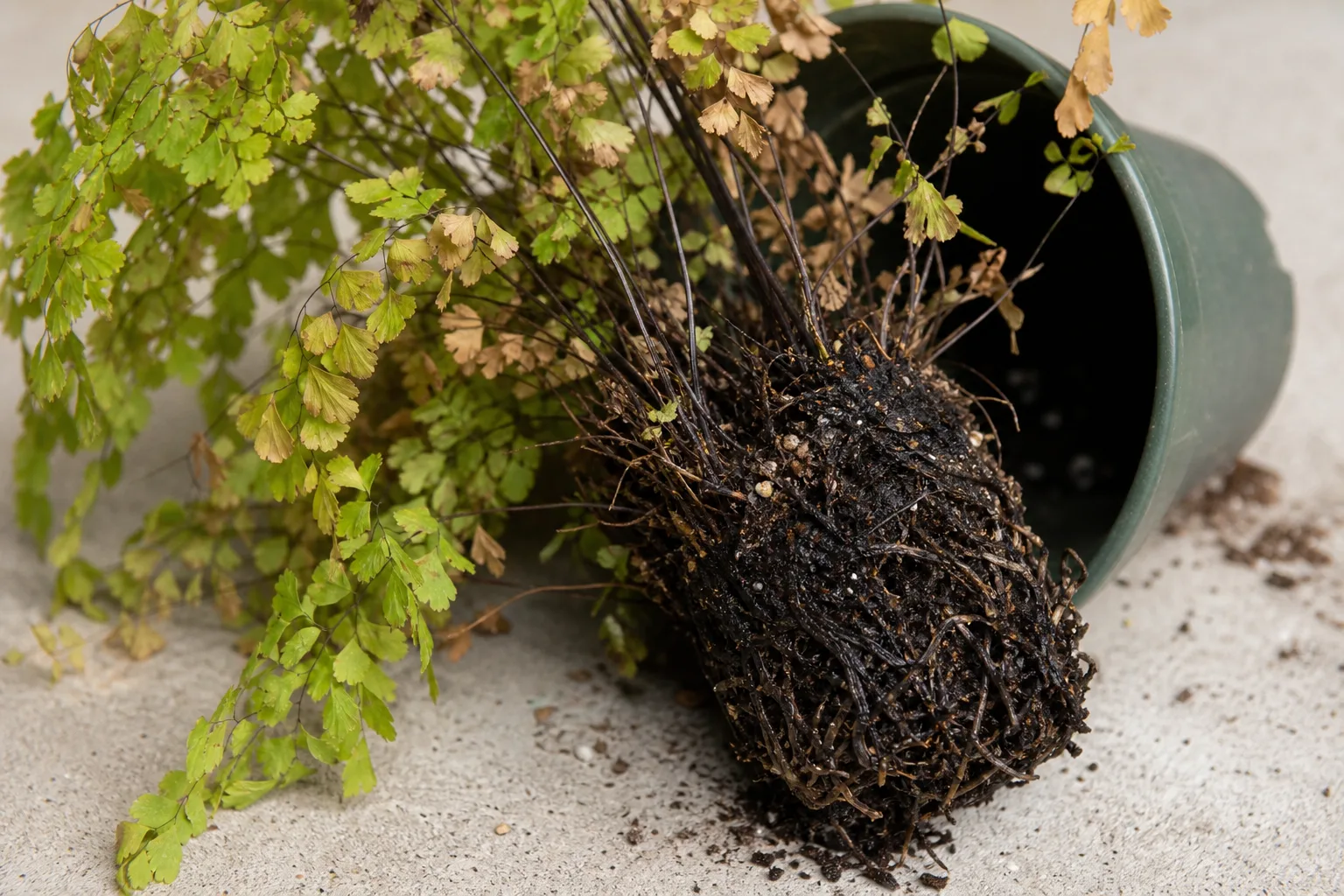
Root Rot on Maidenhair Fern: Causes, Checks & Fixes
This guide covers root rot on Maidenhair Fern. See also the general Root Rot guide, watering, and light pages for this plant.
Root Rot on Maidenhair Fern: Causes, Checks & Fixes
Quick answer
If your Maidenhair Fern is wilting while the potting mix is still wet, treat that as a root-rot red flag, not a cue to water more. The first correct move is to unpot and inspect roots.
Maidenhair fern (Adiantum raddianum) needs soil that stays evenly moist but drains freely, and roots should not be allowed to dry out NCSU Extension. That moisture requirement is why growers overcorrect and keep the mix waterlogged. In low oxygen, roots fail, fronds yellow or collapse, and the plant can look drought-stressed even when the pot is heavy and wet Wisconsin Horticulture.
What root rot looks like on Maidenhair Fern
Root rot on maidenhair fern usually appears as a contradiction: fronds wilt, yellow, or darken while the root zone stays wet. Above ground, it can mimic underwatering on Maidenhair Fern. Below ground, healthy roots should be firm and light colored, while rotted roots turn soft, brown-black, and may separate from the core University of Maryland Extension.
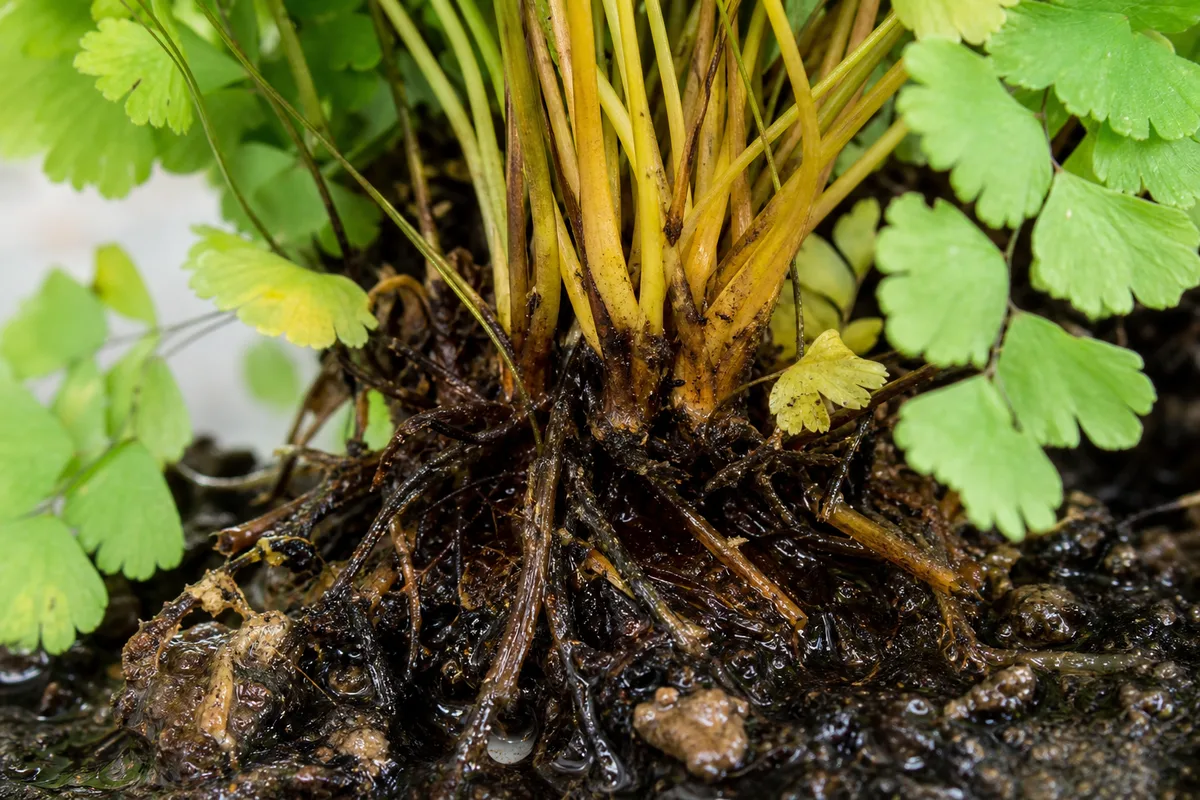
Root Rot symptoms on Maidenhair Fern - compare with healthy tissue on the same plant.
Common signs to document during inspection:
- limp fronds despite wet mix
- sour or swampy smell from the potting medium
- roots that feel mushy or slimy
- dark, soft crown tissue in severe cases
Sour odor in wet soil is often tied to oxygen-poor conditions and root breakdown rather than simple thirst UF EPI.
Why Maidenhair Fern gets root rot
Root rot is usually a condition problem first (constant saturation and low oxygen), then sometimes a pathogen problem. Poor drainage and overwatering are the main triggers in container houseplants UC IPM.
On maidenhair fern specifically, risk goes up when:
- the pot is oversized for current roots
- cachepots trap runoff out of sight
- the mix compacts and stays airless
- light is too low for normal moisture use
- watering is done by calendar, not dry-down checks
This is why root rot and overwatering are related but not identical: overwatering frequency matters, but so do pot size, aeration, light level, and drainage.
Root rot vs lookalikes (quick check)
| Pattern you see | Most likely issue | Fast differentiator |
|---|---|---|
| Wilt + heavy wet pot + sour smell | Root rot / severe overwatering | Roots are mushy and dark |
| Crispy fronds + very light dry pot | Underwatering | Roots still firm and light |
| Brown edges, faster drying, no sour smell | Low humidity / heat stress | Root texture still healthy |
| Wilt after recent repot, no odor | Transplant stress | Roots mostly intact, symptoms stabilize |
| Fungus gnats around constantly wet soil | Chronic overwatering risk | Inspect roots; gnats alone do not confirm rot |
How to confirm root rot (diagnostic order)
- Check moisture history: has the pot stayed wet for multiple days with little dry-down?
- Check drainage path: open holes, no standing water in saucer/cachepot.
- Compare symptom mismatch: wilt despite wet soil is high suspicion.
- Unpot and rinse roots: confirm texture and color.
- Smell the root zone: sour odor supports oxygen-starved decay UF EPI.
Do not diagnose only from frond color. Root inspection is the decision point.
First fix to do now
Unpot, remove all mushy roots, and repot into fresh airy mix in a correctly sized draining pot.
This first fix works because it restores oxygen to surviving roots while maintaining the steady moisture maidenhair still needs.
Step-by-step recovery plan
- Lift the plant and discard saturated old mix.
- Trim all soft, black, or translucent roots using sanitized scissors.
- Keep only firm roots and firm rhizome sections.
- Repot in a container with open drainage, sized close to remaining roots.
- Use an airy mix with moisture retention: about 40% coco coir, 30% fine bark, 20% compost, 10% perlite/pumice.
- Water once to settle mix; let excess drain fully.
- Empty saucers promptly and never leave runoff under the pot.
- Delay fertilizer until clear new growth resumes.
For severe cases with major root loss, divide and keep only firm rhizome portions that still have viable fronds. If crown tissue is soft throughout, rescue odds are low University of Maryland Extension.
Recovery timeline
Use new growth to judge recovery, not old damaged fronds.
- Mild rot (most roots still firm): new fronds often appear in 2-4 weeks.
- Moderate rot (notable trim required): 4-8 weeks to stable growth.
- Severe rot / crown involvement: decline may continue despite repotting.
If you keep seeing rapid collapse in wet soil after repotting, reassess crown firmness and consider that the plant may no longer be salvageable.
What not to do
- Do not keep watering by schedule in low-light rooms.
- Do not move a recovering fern into a much larger pot.
- Do not use dense garden soil in containers.
- Do not leave drainage water trapped in outer pots UF EPI.
- Do not let the root ball swing from swampy to bone dry; maidenhair roots still need steady moisture NCSU Extension.
How to prevent root rot next time
Prevention is a moisture-and-oxygen balance:
- keep substrate evenly moist, not saturated
- use good drainage and fresh, airy media UC IPM
- water when the top layer just begins to lose surface moisture
- adjust frequency with season and light
- avoid stagnant runoff in saucers/cachepots
Maidenhair fern does best in Maidenhair Fern light guide, warmth, and humidity while still needing drainage and airflow Gardeners’ World.
Maidenhair Fern care cross-check
Use this quick logic:
- Fronds limp + pot heavy/wet -> inspect roots before watering.
- Fronds crispy + pot light/dry -> rehydrate and correct moisture consistency.
- Pot wet for too long in dim spot -> improve light/drainage before changing intervals.
For deeper prevention and recovery context, review:
- Maidenhair Fern watering guide
- Overwatering signs on Maidenhair Fern
- Repotting Maidenhair Fern
- Best soil for Maidenhair Fern
- Stem rot on Maidenhair Fern
- Maidenhair Fern plant overview
How this guide was verified
This guide is written specifically for maidenhair fern root-rot diagnosis and salvage, then checked against extension and botanical references for high-stakes claims. Inline citations are placed directly next to claims they support, and unresolved contradictions are flagged for review rather than silently rewritten.
When to worry
Escalate immediately if:
- crown tissue is soft or blackening
- fronds collapse rapidly despite moisture correction
- rot smell persists after repotting
- most roots are already decayed
At that point, keep only clearly healthy divisions or replace the plant.
Conclusion
Root rot on maidenhair fern is usually fixable when you act early and diagnose from roots, not fronds alone. Keep the recovery sequence simple: inspect, trim, repot, then water by dry-down checks. The long-term goal is consistent moisture with oxygen, not constant saturation.
When to use this page vs other Maidenhair Fern guides
- Maidenhair Fern watering guide - Use for routine moisture checks before assuming root rot is the main issue.
- Maidenhair Fern problems hub - Browse all 55 common issues on this species.
- Overwatering on Maidenhair Fern - Different entry point when symptoms overlap with root rot.
- Yellow Leaves on Maidenhair Fern - Different entry point when symptoms overlap with root rot.
- Mold on Soil on Maidenhair Fern - Different entry point when symptoms overlap with root rot.