Poor Drainage on Maidenhair Fern: Causes, Checks & Fixes
Quick answer
Poor drainage on Maidenhair Fern shows as a heavy wet pot, limp fronds, and sour smell while mix stays damp for days. First step: stop watering, confirm drain holes are open and saucers are empty, then repot into airy moist mix if soil will not dry at the surface.
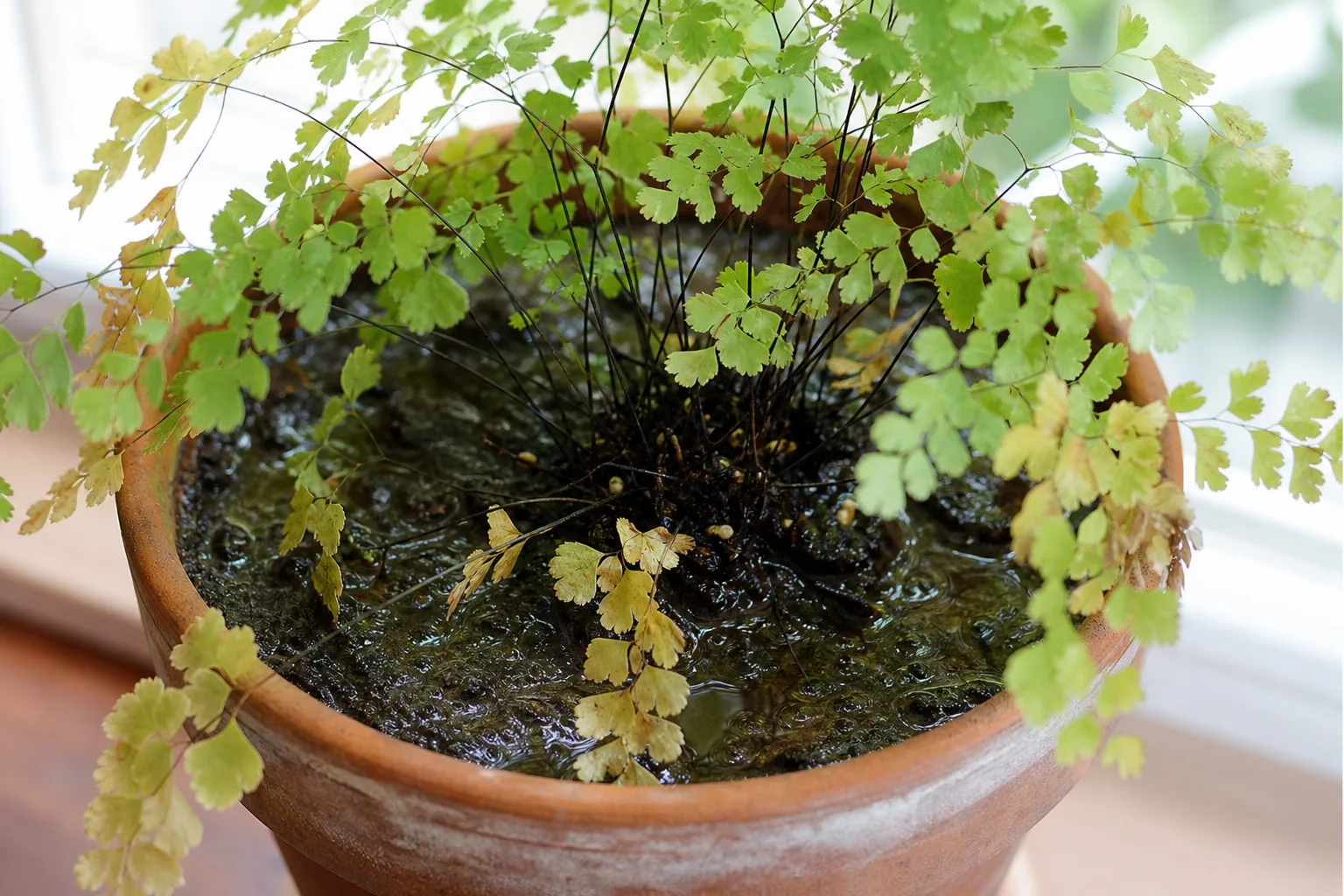
Poor Drainage on Maidenhair Fern: Causes, Checks & Fixes
This guide covers poor drainage on Maidenhair Fern. See also the general Poor Drainage guide, watering, and light pages for this plant.
Poor Drainage on Maidenhair Fern: Causes, Checks & Fixes
Quick answer
Heavy wet pot, limp fronds, and a sour smell from the drain hole - while the top centimeter stays damp for days - are the classic poor-drainage pattern on Maidenhair Fern (Adiantum raddianum). This is mix or container failure, not a mysterious dislike of water.
Poor drainage means stagnant water around fine rhizome roots even though this species needs steady moisture. The balance is moist with airflow, not a saturated sponge. When drainage fails, fronds yellow or wilt while soil stays damp, fungus gnats appear, and soggy soil can encourage root rots on this unforgiving species.
First step: stop watering, confirm drain holes are open and saucers are empty, then repot into fresh airy moist mix if the top centimeter will not dry within a few days. If you water on schedule but mix never dries, stay on this page; if you water before the surface is barely dry, see overwatering instead.
| What you notice | Likely cause | Fix first |
|---|---|---|
| Mix never dries despite careful watering; heavy pot; compacted mucky bottom | Poor drainage (this page) | Stop water, open holes, repot into airy mix |
| Water before top centimeter dries; saucer discipline OK; mix structure fine | Overwatering habit | Hold drinks until surface barely dries |
| Decorative pot traps runoff; no holes or blocked cachepot | No drainage hole | Lift from cachepot; drill or nest in liner pot |
| Mushy roots, sour smell, crown softening | Root rot | Trim decay, repot firm tissue - not dry-down alone |
| Light dry pot, crispy collapse, firm white roots | Underwatering | Water through; do not repot for drainage |
Maidenhair Fern needs consistently moist but well-drained potting soil - moisture with oxygen, not saturation.
What poor drainage looks like on Maidenhair Fern
Poor drainage shows up as chronic wetness, not a single heavy watering. The wilt-on-wet-soil trap catches many keepers: limp fronds look thirsty, so you water again and make saturation worse.
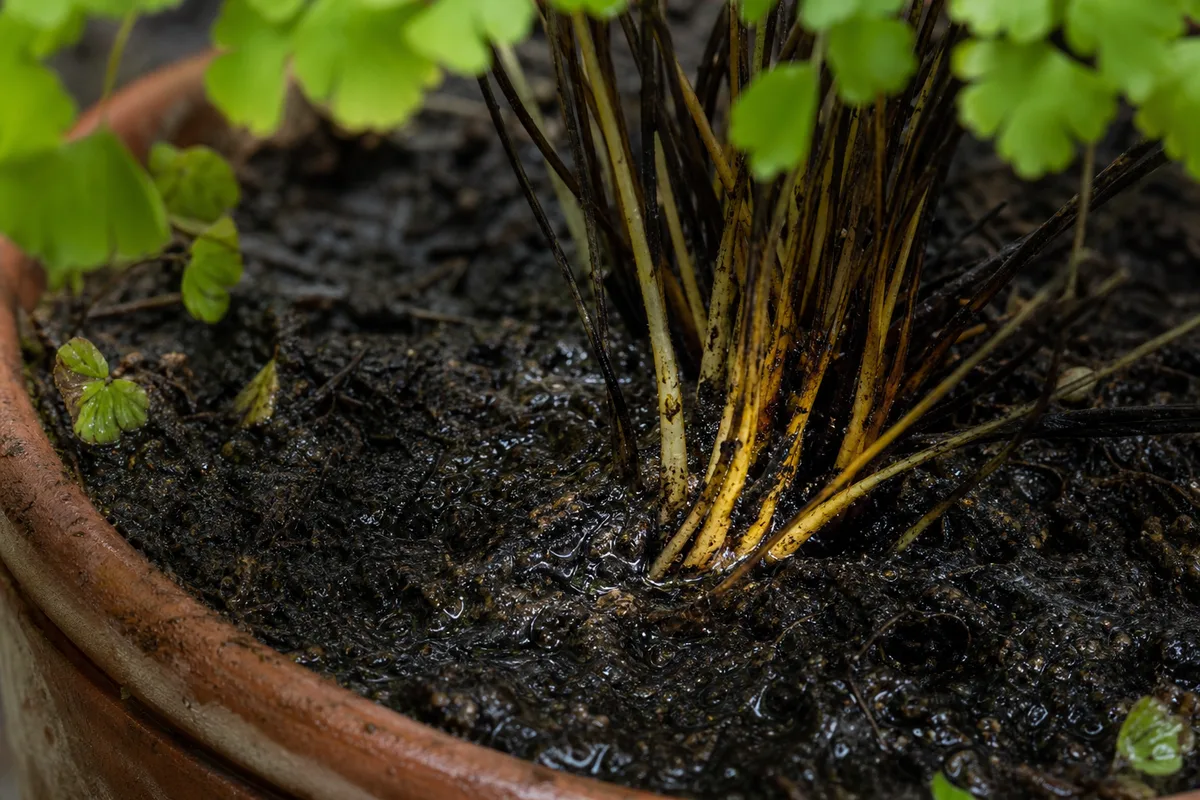
Poor Drainage symptoms on Maidenhair Fern - compare with healthy tissue on the same plant.
Early signs
- Soil stays wet 3+ days; the top centimeter never dries between drinks
- Pot feels heavy long after watering; water sits on the surface or runs down pot sides without soaking in
- Yellow or limp fronds despite damp mix - the same wilt pattern as thirst, but roots are drowning
- Fungus gnats or mold on the surface - wet soil invites them
- White crust on soil surface from salts trapped in stagnant mix - see salt build up if crust is thick and gritty
Advanced signs
- Sour or musty smell from the drain hole before visible root decay
- Crown softness at the soil line - oxygen-starved rhizome tissue failing
- Brown, mushy roots at the pot bottom when you slide the plant out
Wet pot vs. dry pot at a glance
| Signal | Poor drainage (this page) | Underwatering |
|---|---|---|
| Pot weight | Heavy days after watering | Light; lifts easily |
| Surface moisture | Top centimeter stays damp | Dry throughout |
| Frond texture | Limp, soft yellow or wilt | Crispy, papery collapse |
| Smell | Sour or swampy from drain hole | Neutral or dusty dry mix |
| Root check | Pale roots turning brown in muck | Firm white roots; dry rhizome |
Below the surface, compacted or degraded mix feels dense and mucky. Healthy fern roots are pale and firm; prolonged poor drainage turns them brown and soft before fronds fully collapse.
Why Maidenhair Fern gets poor drainage
The moisture paradox
Maidenhair Fern roots must never be allowed to dry out, so growers often choose heavy, water-retentive mix or oversized pots. Without bark or perlite for structure, that mix compacts and holds water the fine roots cannot use fast enough. The goal is moist to wet soil with good drainage - not anaerobic sludge.
Compacted or aged potting mix
Peat-heavy soil breaks down over 1–2 years, collapsing air pockets. Maidenhair ferns need high organic matter and good drainage; compacted mix loses both. A fern in old mix may drain well when new but turn into a wet brick after repeated watering in dim light.
Oversized containers and cachepots
Excess soil around a small root ball stays saturated because roots never reach it. This fern tolerates slight root-binding; a pot one size too large is a common drainage trap - see pot too large when empty wet soil sits below a small rhizome.
Decorative cachepots without drainage trap runoff. Pair with the no drainage hole guide when the outer pot is the problem.
Low light slowing dry-down
A fern in a dim bathroom transpires little. Even correct watering frequency keeps mix anaerobic if the plant is not using moisture - check not enough light if dry-down is slow despite airy mix.
Terrariums and enclosed glass cases
Closed terrariums hold humidity but slow transpiration and evaporation from the soil surface. Fine roots at the crown line sit in mix that stays wet longer than the same blend in an open pot. Use an extra-aerated substrate per the soil guide terrarium notes, ventilate briefly every few days, and never let the crown sit in pooled water at the glass base.
Gravel-bottom myth
A common fix that backfires. Gravel in the bottom does little to keep soil from being saturated - water perches in soil above the gravel layer until that zone saturates, keeping roots wetter than an all-mix pot would. Aggregates at the bottom can slow drainage through the full column.
Hydrophobic dry-down after drought
If the fern dried out hard between soakings, peat can repel water while the pot bottom stays secretly wet - a pattern that looks like drainage failure but is really dry hydrophobic soil. Probe the full depth before repotting for drainage alone.
How to confirm the cause
Work through these checks before repotting:
- Drain test - Water until excess runs out. Does water exit within minutes, or pool on top?
- Dry-down speed - After watering, can the top centimeter dry within 2–3 days in your home’s light?
- Pot vs. root mass - Is there much empty wet soil below a small root ball?
- Hole and saucer check - Are holes open? Does standing water sit in saucers or cachepots?
- Mix texture - Slide the plant out carefully. Crumbly, airy mix with earthy smell is healthy; dense wet muck at the bottom confirms failure.
- Wilting vs. moisture - Limp yellow fronds with heavy wet soil point to drainage or root dysfunction, not drought.
Decision matrix: drainage vs. siblings
| Your pattern | Most likely cause | Next guide |
|---|---|---|
| Careful watering; mix never dries at surface; compacted bottom | Poor drainage | This page - repot airy mix |
| Water before top centimeter dries; holes OK; mix crumbly | Overwatering habit | Overwatering |
| Plant in sealed decorative pot; runoff trapped | No drainage hole | No drainage hole |
| Mushy roots, crown soft, sour smell | Root rot (often from long poor drainage) | Root rot |
| Dry repelling surface; water runs down sides; bottom still wet | Hydrophobic soil | Dry hydrophobic soil |
| Light pot, crispy fronds, firm roots | Underwatering | Underwatering |
Rule out underwatering (light dry pot, immediate frond crisping, firm white roots) and active root rot (mushy roots, soft crown - poor drainage may be the cause, but rot needs trimming per the root-rot guide).
First fix for Maidenhair Fern
Stop watering, clear drain holes, and empty all standing saucer or cachepot water - then assess whether the top centimeter can dry within a few days.
Do not add another drink to limp fronds until you know whether mix is stagnant. Poke drain holes with a skewer, lift the pot out of decorative outer containers per the no-drainage-hole guide, and pour off trapped runoff. If the top layer still will not dry after 3–4 days with open drainage, the mix itself has failed - move to repotting.
This pause gives oxygen-starved roots a chance to breathe without the shock of immediate repotting on every soggy fern. If mix smells sour or roots feel mushy when you inspect, skip the wait and repot the same day.
Step-by-step recovery
- Stop watering until the top centimeter feels barely dry - test daily with a finger.
- Clear drainage - Open blocked holes; remove cachepots; empty saucers after any future drinks.
- Inspect roots - Unpot if mix stays wet beyond 4 days or smells off. Rinse away old mix.
- Trim decay - Cut brown, black, or mushy roots with sterilized scissors; keep firm pale tissue. Dispose of trimmed tissue away from other ferns.
- Repot in fresh airy mix - Use the 50/30/20 compost, coir, and fine bark ratio from the watering guide, or follow the full soil guide recipe. Size the pot to remaining roots, not frond spread - one size up at most. See repotting for rhizome depth and division caution.
- Water once lightly after repotting; let the top centimeter dry slightly before the next drink.
- Hold fertilizer until new fronds appear - typically 2–4 weeks in stable humidity.
- Resume moisture rhythm - Water when the top centimeter is barely dry per the watering guide; never let the root ball go bone dry during recovery, but never return to stagnant saturation.
Cut collapsed fronds at soil level with clean scissors to reduce stress on healing roots.
Recovery timeline
Maidenhair Fern with intact roots and refreshed mix may show new fronds in 2–4 weeks in bright indirect light and 60%+ humidity. Gardeners’ World notes maidenhair ferns need moist compost and high humidity indoors - stable humidity speeds recovery once drainage is fixed.
A typical open-pot rescue: bathroom maidenhair in two-year-old peat mix, heavy pot three days after one watering, sour drain smell, limp lower fronds. Repotted into coco coir, fine bark, and compost in the same-size terracotta pot with open holes; saucer emptied after every drink. First firm new crozier emerged at roughly 18 days under a humidifier at 65% RH; old yellow fronds were trimmed but did not re-green.
Judge success by firm new growth and a pot that dries predictably at the surface - not immediate fullness.
If the crown softens or fronds blacken from the base within days, drainage correction came too late and root tissue may not recover. Salvage firm rhizome sections with attached healthy fronds if any remain.
Lookalike symptoms
- Overwatering - Often the habit; poor drainage is the soil or container failing to release water. Fixes overlap, but drainage work targets mix structure and pot sizing, not just watering less.
- Underwatering - Dry light pot, crispy frond collapse, firm roots - opposite weight and smell pattern.
- Low humidity - Tip browning and desiccation with intact roots and normal pot dry-down.
- Root rot - The consequence of long-term poor drainage; confirmed by mushy roots and sour smell.
- Salt build up - White crust with wilt despite wet soil; flush and scrape rather than only repotting for drainage.
Mistakes to avoid
Do not add gravel at the bottom instead of fixing mix - aggregates raise the perched wet zone without improving aeration where roots sit. Do not repot into heavy garden soil or a much larger decorative pot. Do not leave the fern in standing saucer water to “keep humidity up.” Do not water wilting fronds automatically - check pot weight first. Do not let the root ball dry completely during recovery, but do not interpret “never dry out” as “always saturated.” Do not repot into fresh mix and fertilize the same week on a stressed fern.
How to prevent poor drainage next time
Use airy, moisture-retaining mix - the 50/30/20 compost, coir, and bark blend - in a pot with open drainage sized to the root ball. Repot every 1–2 years before mix collapses.
Water when the top centimeter is barely dry; check daily in warm weather, less in cool dim conditions per the watering guide. Empty saucers completely after every drink. Place the fern where bright indirect light lets the plant use moisture at a predictable rate - see light guide if dry-down is always slow. Maintain 60–80% humidity without trapping stagnant air around a wet crown.
Maidenhair Fern care cross-check
Poor drainage prevention means moist with oxygen, not dry OR swampy. A fern watered on a rigid every-two-days schedule in a dim corner will stay waterlogged if the pot never dries at the surface. Match water to pot weight and light, and fix drainage before increasing frequency out of fear of dryness.
| What you find | Likely cause | Next step |
|---|---|---|
| Heavy pot + limp fronds + mix never dries | Poor drainage | This page |
| Watering before surface dries; mix OK | Overwatering | Overwatering guide |
| Cachepot holds water | No hole | No drainage hole |
| Sour smell + mushy roots | Root rot | Root rot |
| Oversized pot, wet empty soil below roots | Pot too large | Pot too large |
When to worry
Escalate immediately if the crown softens, fronds blacken from the base upward, or the plant collapses within 48 hours of wilting while soil is wet - move to the root-rot guide rather than waiting for dry-down. Repotting during active crown rot can accelerate decline; trim decay first.
Early chronic wetness with firm roots and green new fronds still allows drainage correction and repotting rescue.
Related Maidenhair Fern guides
- Overwatering on Maidenhair Fern - when you water before the surface dries
- No drainage hole on Maidenhair Fern - cachepots and blocked runoff
- Root rot on Maidenhair Fern - mushy roots and crown failure escalation
- Maidenhair Fern watering guide - moisture rhythm and 50/30/20 mix reference
- Maidenhair Fern soil guide - DIY mix, drainage test, terrarium substrate
- Maidenhair Fern repotting guide - rhizome depth, pot sizing, division caution
- Pot too large on Maidenhair Fern - empty wet soil below a small root ball
- Dry hydrophobic soil on Maidenhair Fern - repelling surface vs. wet bottom
- Fungus gnats on Maidenhair Fern - chronic wet surface invite
- Maidenhair Fern overview - full care hub