Not Enough Light on Maidenhair Fern: Causes, Checks & Fixes
Quick answer
Maidenhair Fern with too little light turns pale, stretches on black stems, and stalls new croziers. First step: move to bright indirect light without direct sun, keep humidity at 60%+, and trim weak fronds only after compact new growth appears.
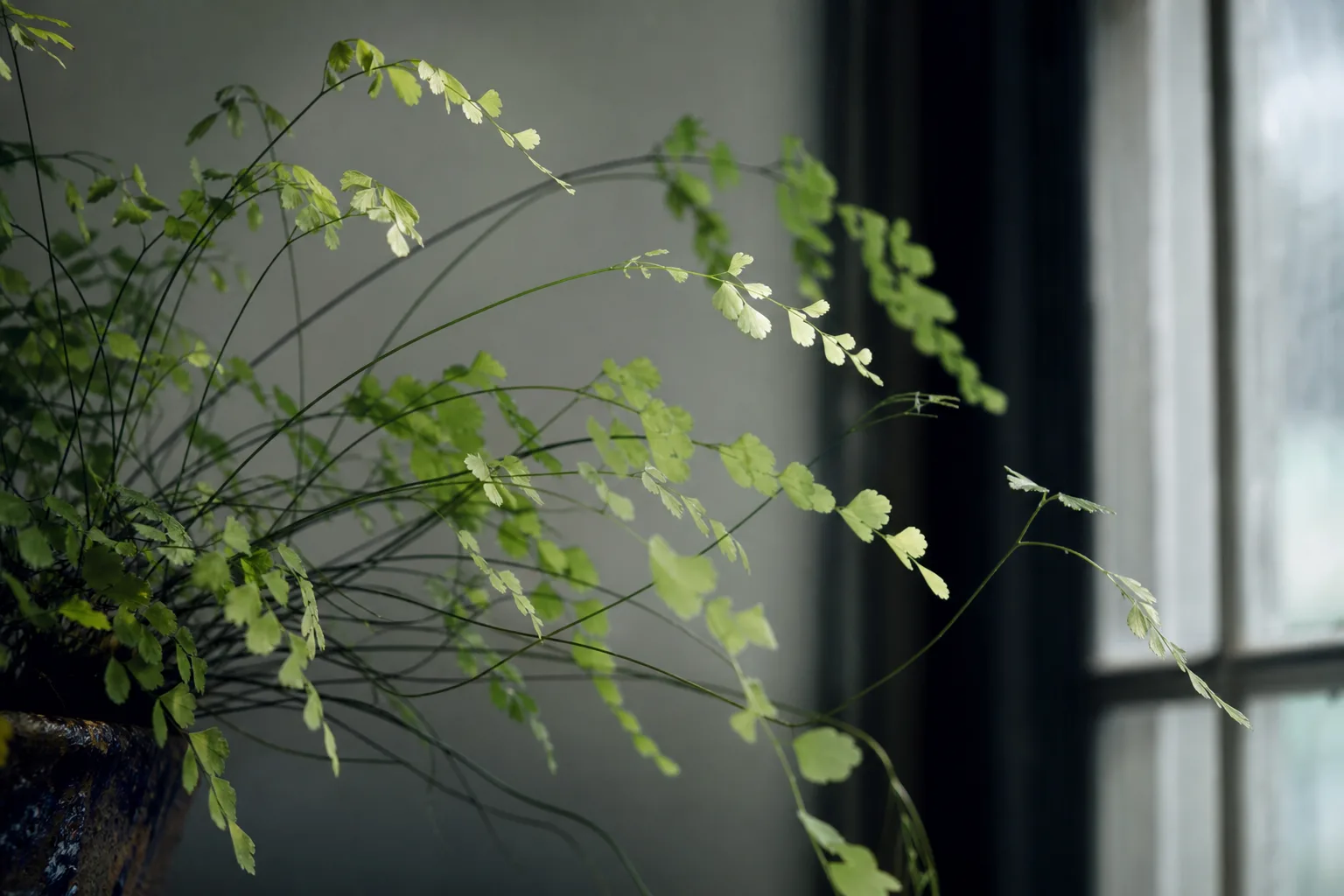
Not Enough Light on Maidenhair Fern: Causes, Checks & Fixes
This guide covers not enough light on Maidenhair Fern. See also the general Not Enough Light guide, watering, and light pages for this plant.
Not Enough Light on Maidenhair Fern: Causes, Checks & Fixes
Quick answer
Your maidenhair fern fronds are pale and stretching toward the window - that pattern almost always means not enough light, not a watering mistake. Adiantum raddianum evolved under dappled canopy light in the tropics; indoors it needs bright indirect light including diffused sun, but never direct sun on the delicate pinnae.
First step: move to the brightest safe indirect spot in your home - typically an east-facing window with a sheer curtain, or 1–2 meters back from south or west glass. Do not add water to pale fronds sitting in a dark bathroom; if soil is wet and sour, see overwatering on Maidenhair Fern before you assume light is the only problem.
Routing check: Pale stretched fronds with a lean toward the window → raise light. Dark brown patches on sun-exposed pinnae → pull back from direct rays - see sunburn on Maidenhair Fern. Yellow limp fronds on constantly wet mix → wet stress, not light alone.
What not enough light looks like on Maidenhair Fern
Low light on maidenhair fern shows up as a growth pattern on those characteristic wiry black stipes and fan-shaped pinnae - not a single brown tip.
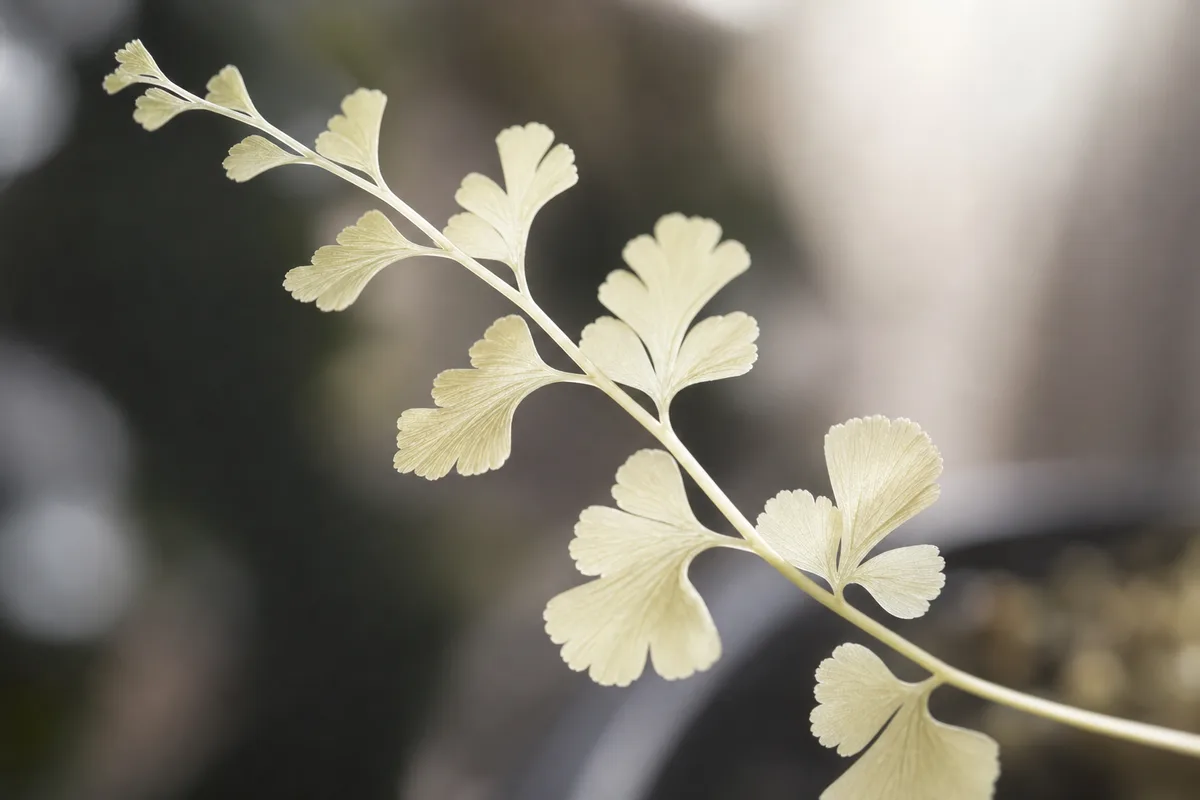
Not Enough Light symptoms on Maidenhair Fern - compare with healthy tissue on the same plant.
Typical signs:
- Pale yellow-green fronds instead of fresh bright green
- Long thin black stems with widely spaced small leaflets (etiolation)
- Fronds leaning consistently toward the brightest direction
- Stalled or absent new croziers for two weeks or more
- Gradual crown thinning as old fronds fade without tight replacement growth
This differs from direct sun damage - scorched dark brown patches on exposed pinnae while the rest of the plant has adequate brightness. It also differs from low humidity tip browning, where frond spacing may stay normal but leaflet edges crisp.
Maidenhair’s thin, membranous fronds photosynthesize less efficiently than thick-leaved houseplants, so dim corners that sustain a pothos will often starve an Adiantum within weeks.
Why Maidenhair Fern gets too little light
Humidity-first dark-bathroom failure
The most common trap: placing the fern in a steamy bathroom for humidity without checking window brightness. Bathrooms can supply higher atmospheric humidity, but a frosted, distant, or north-only window often fails the light test. Steam without photons produces pale stretch, then collapse when minor watering errors stack on a weakened crown.
Misreading “shade lover”
Maidenhair fern wants shade from direct sun, not dim interiors. NC State notes the species needs partial shade to shade but loses vitality in too much shade or full sun. That filtered-canopy middle ground - bright enough to fuel growth, gentle enough to avoid scorch - is what indoor placement must replicate. For native-habitat context, see the Maidenhair Fern care guide.
Winter sun reduction and overhead shading
Lower winter sun angle and shorter days drop effective light December–February even when the pot never moved. Larger plants, heavy curtains, or tinted glass above the fern can block the diffuse rays it depends on. Fronds that looked acceptable in summer may pale after the solstice - plan grow-light supplementation before croziers stall completely.
How to confirm the cause
Work through these checks before Maidenhair Fern repotting guide, fertilizing, or heavy pruning:
- Shadow test at midday. Hold your hand at frond height between the window and the crown. A soft, fuzzy shadow suggests usable indirect light. No shadow means the spot is likely too dim; a sharp dark shadow with warmth on your skin means you may be too close to direct sun.
- Directional lean. Fronds pointing toward one window confirm phototropism - the plant is actively seeking more light.
- New vs. old frond color. Newest croziers palest and most stretched; older fronds may look slightly better but still dull.
- Exclude rot. Pale fronds with firm rhizomes, appropriate moisture, and no sour smell point to light. Yellow limp fronds on wet soil for days point to overwatering or root rot - especially common when dim light slows water use.
- Two-week placement trial. Move to brighter indirect light and change nothing else. Tighter green croziers within two to four weeks confirm light was the limiter.
First fix for Maidenhair Fern
Relocate to the brightest indirect spot available - never direct sun on fronds.
This single change addresses the root cause. The RHS recommends bright, indirect light with east-, north-, or west-facing sheltered exposure for A. raddianum indoors - equivalent to the filtered light it receives under a tropical canopy.
Window placement guide
| Window exposure | Typical placement | Notes |
|---|---|---|
| East | On sill behind sheer, or within 30 cm of glass | Morning light is mild; ideal for maidenhair crowns close to glass |
| North | Fronds within 30–60 cm of glass | Works when crown sits near the pane; watch for winter thinning |
| South / West | 1–2 m back from glass, or behind sheer curtain | Never let sunbeams hit pinnae directly - direct sun scorches delicate foliage |
| Interior shelf | Usually insufficient | More than 2–3 m from any window rarely sustains compact growth |
| Bathroom | Only if window passes shadow test | Humidity helps; darkness does not |
After moving, let the plant acclimate one to two weeks if the light increase is large. Rotate the pot a quarter turn weekly so fronds fill evenly.
Grow-light setup when natural light fails
If no window provides enough indirect light - common in windowless baths or deep interior rooms - add a full-spectrum LED grow light 30–45 cm above the crown at low intensity for 10–12 hours daily. Clemson HGIC notes maidenhairs are difficult in most homes without special care; supplemental light replaces missing window photons rather than competing with harsh rays. A 15–25 watt LED panel or equivalent bar fixture is usually enough for a single 30 cm pot; increase distance if pinnae bleach.
Maintain 60–80% humidity when moving closer to windows - glass zones are drier. Water when the top centimeter is barely dry; brighter light increases dry-down rate compared to a dim corner.
Step-by-step recovery
Once light improves, support recovery in this order:
- Identify the brightest indirect location without direct frond exposure.
- Move gradually over several days if the light jump is large - sudden intense light can stress pale tissue.
- Add a humidifier if window placement dries air around the crown.
- Wait two to four weeks for greener, more compact new croziers.
- Trim the palest leggy fronds at the soil line only after replacement growth is visible.
- Rotate weekly for even exposure.
- Hold fertilizer until new fronds show good color - nitrogen in shade produces weak stretch.
Recovery timeline
Expect the first sign of improvement - tighter green croziers - within two to four weeks after a meaningful light increase. Full crown density may take one growing season because old pale stretched fronds will not darken or shorten.
Signs recovery is working:
- New fronds emerge closer together with better color
- Lean stops increasing
- Soil dry-down becomes more predictable in the brighter spot
- Crown stays firm and green
Signs the problem is worsening:
- Continued yellowing with wet soil despite less frequent watering
- Crown softening or sour-smelling mix
- Widespread collapse after staying in deep shade
- New growth still sparse after four weeks in a clearly brighter spot - inspect roots and check for spider mites on stressed fronds
Winter improvements may require grow lights until spring sun strengthens. Overlap with slow growth is common in short-day months even when light is technically adequate.
Lookalike symptoms
| What you see | More likely cause | Quick check |
|---|---|---|
| Pale stretch + lean toward window | Not enough light | Shadow test fails; new croziers widely spaced |
| Dark brown patches on sun-facing pinnae | Direct sun scorch | Damage on exposed fronds only; see sunburn |
| Yellow limp fronds, wet soil for days | Overwatering in dim light | Mix soggy; sour smell; pot heavy |
| Crispy brown leaflet tips only | Low humidity | Frond spacing normal; tips dry while crown produces croziers |
| Uniform pale yellow, no stretch | Possible nutrient issue | Rare in fresh mix; fix environment first |
| Mild winter slowdown, green existing fronds | Normal dormancy | No progressive pale stretch; resumes in spring |
Leggy growth with pale pinnae and no pest signs almost always traces to placement before fertilizer or repotting.
Mistakes to avoid
- Moving into direct south or west sun to “fix” pale fronds quickly. Never put ferns directly in a south or west-facing window - maidenhair pinnae scorch within hours.
- Keeping the fern in a dark humid room without light supplement. Humidity without photons weakens the crown until minor watering mistakes cause collapse.
- Watering more because fronds look pale. Dim ferns use less water; extra drinks keep mix wet and invite rot - see yellow leaves when color shifts on damp soil.
- High nitrogen fertilizer in shade. Produces weak elongated growth that collapses faster.
- Repotting on day one. Unless roots are clearly rotting, fix light and watering rhythm first.
Maidenhair Fern care cross-check
Light drives water use on this species. A fern in a dim corner transpires slowly; if you keep summer watering frequency, the mix stays saturated while roots lose oxygen. Brighter correct placement improves both growth and watering predictability when drainage is sound - pair with the watering guide and low-humidity checks if brown tips appear alongside pale stretch.
Maidenhair fails faster than Boston fern under the same dim window because its fronds are thinner and its drought buffer is smaller - do not assume “fern” placement rules transfer between species.
How to prevent insufficient light next time
Site maidenhair fern where bright indirect light and humidity coexist - a bright bathroom that passes the shadow test, a terrarium near a window, or a humidifier at a well-lit shelf. If grown in full shade, foliage will lose its vitality; choose the window first, then solve humidity.
Clean window glass seasonally, open sheers during daylight, and watch for winter slowdown. Supplement with a grow light when days shorten. Rotate monthly during active growth.
When to worry
Insufficient light alone is gradual. Worry when pale fronds pair with wet sour soil or crown collapse - overlapping rot from dim overwatering needs root inspection, not just a brighter window. Act before the plant becomes too sparse to photosynthesize effectively.
If the fern has lived in deep shade for many months with almost no new croziers, recovery may be slow or partial. A hard cutback to the rhizome can trigger fresh growth only after light, humidity, and moisture rhythm are already corrected - see the Maidenhair Fern overview for revival steps.
Related Maidenhair Fern problems
- Sunburn and scorched leaves - when you overshoot into direct sun
- Overwatering and root rot - common in dim, slow-drying corners
- Low humidity - brown tips with otherwise normal frond spacing
- Slow growth and leggy growth - overlapping symptoms when light is marginal
- Yellow leaves - especially when soil stays wet in low light
- Wilting and drooping leaves - can follow light stress plus moisture mismatch
For baseline placement, watering, and humidity targets, start with the Maidenhair Fern care guide.
When to use this page vs other Maidenhair Fern guides
- Maidenhair Fern watering guide - Use for routine moisture checks before assuming not enough light is the main issue.
- Maidenhair Fern problems hub - Browse all 55 common issues on this species.
- Leggy Growth on Maidenhair Fern - Different entry point when symptoms overlap with not enough light.
- Slow Growth on Maidenhair Fern - Different entry point when symptoms overlap with not enough light.
- Yellow Leaves on Maidenhair Fern - Different entry point when symptoms overlap with not enough light.