Leggy Growth on Maidenhair Fern: Causes, Checks & Fixes
Quick answer
Leggy Maidenhair Fern fronds mean too little light-black stems stretch and pinnae space out. First step: move to brighter indirect light without direct sun, keep humidity at 60%+, and trim weak fronds only after compact new growth appears.
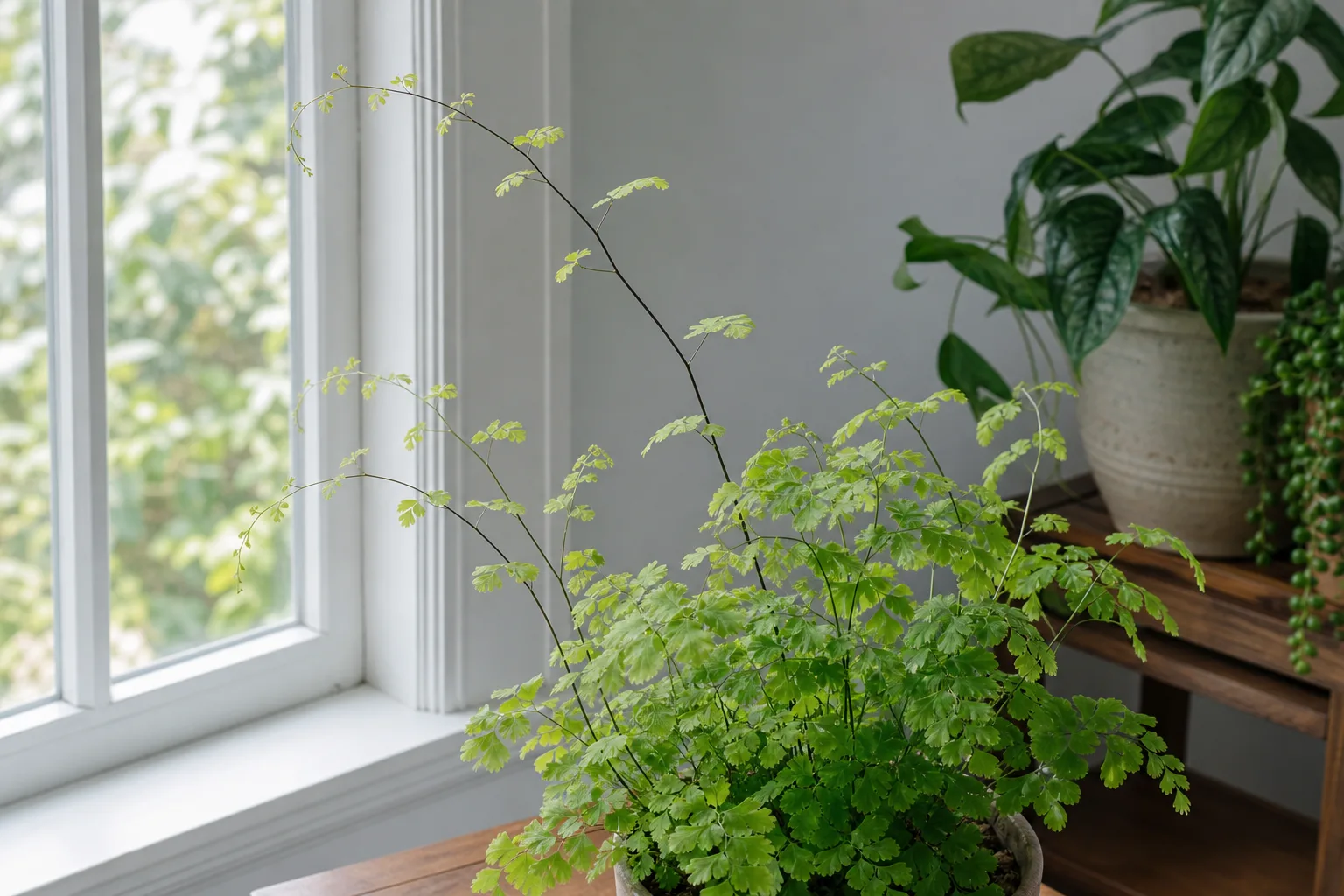
Leggy Growth on Maidenhair Fern: Causes, Checks & Fixes
This guide covers leggy growth on Maidenhair Fern. See also the general Leggy Growth guide, watering, and light pages for this plant.
Leggy Growth on Maidenhair Fern: Causes, Checks & Fixes
Quick answer
Leggy growth on Maidenhair Fern (Adiantum raddianum) means too little light at the frond crown-black wiry stems stretch toward windows with thin internodes and sparse pinnae. First step: move to brighter indirect light without direct sun while keeping humidity at 60%+ and soil evenly moist.
This page focuses on structural etiolation-the stretch shape low light creates over weeks. For general low-light vigor, pale stall, and window placement workflow, see not enough light on Maidenhair Fern. For full window and grow-light specs, pair with the Maidenhair Fern light guide.
Leggy growth vs. not enough light vs. slow growth
These maidenhair problem pages overlap because dim placement affects color, speed, and stem shape together-but the first diagnostic question differs.
| Page | Primary symptom | First action |
|---|---|---|
| Leggy growth (this page) | Long black stems, wide pinnae spacing, lean toward window | Confirm etiolation; relocate to bright indirect light |
| Not enough light | Pale fronds, stalled croziers, general vigor loss before stretch worsens | Brightest indirect placement; full low-light diagnostic path |
| Slow growth | Few new fronds for weeks with otherwise acceptable spacing | Check light, temperature, and root health together |
Legginess is the architecture insufficient photons produce. A fern can look pale on not enough light before internodes lengthen dramatically-both need brighter placement, but this page is where you confirm sparse leaflet spacing and permanent stem stretch.
What leggy growth looks like on Maidenhair Fern
Leggy Adiantum raddianum differs from its normal graceful arch:
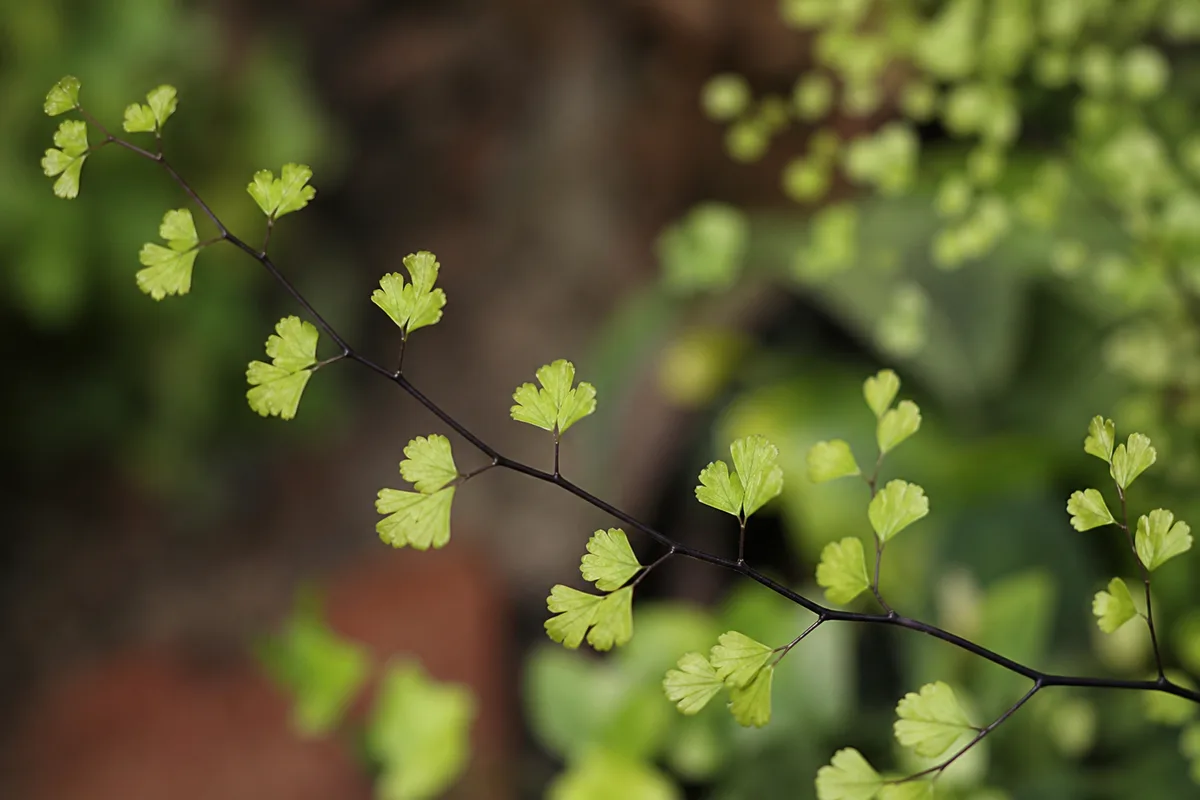
Leggy Growth symptoms on Maidenhair Fern - compare with healthy tissue on the same plant.
- Long wiry black stems with pinnae spaced far apart along the rachis
- Smaller pinnae on newest fronds compared to older compact fronds
- Pale yellow-green color instead of bright green
- Fronds leaning or reaching toward the brightest direction
- Thin weak croziers that unfurl slowly
Normal maidenhair habit is arching and delicate but dense along each stem-not sparse and stretched. NC State notes this fern needs partial shade to shade but loses vitality in too much shade-the stretch you see indoors is that vitality loss expressed as etiolation.
Arch vs. stretch: a field check
Original frond comparison photos for this guide are in production. Use the same measurements a grower would photograph:
| What you measure | Normal arching | Leggy etiolation |
|---|---|---|
| Pinnae spacing along black stem | Dense-leaflets overlap or nearly touch | Sparse-visible gaps between pinnae |
| Newest internode length | Short; croziers open close to prior pinnae | Long; croziers emerge far above last pinnae |
| Stem direction | Even cascade around pot | Hard lean toward one window |
| Pinnae size on new fronds | Full-sized, bright green | Smaller, paler than older fronds |
Why Maidenhair Fern gets leggy
Insufficient light is the primary cause. Indoor plants become spindly or “leggy” as they stretch to reach for more light, and stems grow long with large gaps between leaf nodes when light is insufficient. On maidenhair fern, that shows as elongated black stipes with widely spaced pinnae.
Common triggers:
Interior placement - Shelves more than 2–3 meters from windows, north rooms with obstructions, or shaded corners produce etiolation. East- or west-facing windows typically deliver 100–500 foot-candles at the glass; frond-level intensity drops sharply farther into the room.
Humidity-first traps - Growers place ferns in steamy bathrooms or closed terrariums for moisture without checking whether fronds receive bright filtered light. MOBOT recommends bathroom placement where humidity is higher, but a frosted small window or dim corner still fails-humidity cannot replace photons.
Terrarium low light - A glass case in a dim interior looks lush briefly, then new croziers emerge pale and stretched. Terrariums work when they sit near an east window with bright ambient light, not when they substitute for a window entirely.
Sudden move to dimmer spot - Relocation for aesthetics without light assessment triggers stretch within weeks.
Competing window plants - Larger plants shade the fern on a shared sill.
Winter light drop - Lower sun angle and shorter days reduce effective brightness December through February without adjustment.
Excess nitrogen in dim light - Soft weak growth elongates further; light remains the root fix.
Lookalike symptoms to rule out
| Pattern | Stem / frond look | Soil / air | First fix |
|---|---|---|---|
| Leggy etiolation (this page) | Long black stems, sparse pinnae, lean to window | Often slow dry-down in shade | Brighter indirect light |
| Normal arching | Dense pinnae on curved stems; no directional lean | Normal | None-healthy habit |
| Low humidity tip burn | Crisp brown leaflet margins; stems may stay compact | Dry air near heat or AC | Humidifier; not light alone |
| Root rot collapse | Limp yellow fronds; soft crown | Wet sour soil for days | Trim decay; dry-down; see root rot guide |
| Sun scorch | Bleached or crispy patches on sun-facing pinnae | Normal moisture | Filter or move back from direct rays |
How to confirm the cause
- Shadow test at midday - Hold your hand at frond level. A very faint or absent shadow suggests insufficient brightness for compact growth. East- or west-facing placements that deliver medium-bright light (roughly 100–500 FC) at the plant usually pass this check.
- Direction lean - Fronds point toward the window; confirms phototropism from one-sided light.
- Compare frond ages - Older fronds compact, newest stretched-recent light loss.
- Rule out rot - Leggy but firm roots and moist appropriate soil; no sour smell. Escalate to root rot if the crown softens.
- Humidity check - Low humidity browns tips without widening internodes; legginess specifically indicates light lack. See low humidity when tips crisp but spacing stays normal.
First fix for Maidenhair Fern
Relocate to the brightest indirect spot available without direct sun on fronds.
East-facing window with sheer curtain, or 1–2 meters back from south or west glass, works well. Maidenhair fern responds best in bright indirect light including diffused sun, but dislikes direct sun. NC State lists dappled sunlight or partial shade (2–6 hours of direct sun outdoors)-translate that indoors as bright ambient light, never hot sunbeams on pinnae.
Maintain 60–80% humidity and even moisture-light improvement fails if fronds desiccate from dry air near glass. Rotate the pot a quarter turn weekly for even new growth.
Do not jump to full direct sun-leaves may scorch in direct sun on delicate maidenhair leaflets.
Step-by-step recovery
- Assess current light; identify brightest indirect placement per the light guide.
- Move fern gradually over a week if light increase is large-avoid shock after dim acclimation.
- Run humidifier or use bathroom placement only if the window still supplies adequate brightness.
- Water when top centimeter is barely dry; stable moisture supports new fronds per the watering guide.
- Wait two to four weeks for compact new croziers.
- Trim weakest leggy fronds at soil line once replacement growth is visible.
- Hold fertilizer until new fronds show good color-light is the primary input.
Recovery timeline
Compact new fronds in two to four weeks after adequate light returns. Full aesthetic recovery may take one growing season as old stretched fronds are gradually removed.
Old elongated black stems never shorten-only new growth can look compact. Etiolation is longer-than-usual internodes that permanent tissue cannot reverse.
Winter correction may slow until spring sun strengthens-patience matters.
Grow-light calibration for winter supplementation
When natural light is weak-north rooms, short winter days, or office desks-a full-spectrum LED grow light bridges the gap.
Practical specs for maidenhair fern:
- Type: Full-spectrum white LED (not narrow red/blue only)
- Distance: 30–45 cm (12–18 inches) above the frond crown
- Duration: 10–12 hours daily on a timer; do not exceed 16 hours total light per day when combining artificial and natural light
- Heat check: Hold your hand at frond level-if it feels warm after 10 minutes, raise the fixture
Aim for frond-level brightness in the medium-bright range (roughly 100–500 foot-candles)-enough that new croziers emerge upright with full-sized pinnae within two to three weeks, not merely “a bulb in the room.” Increase duration before moving the lamp closer; thin pinnae scorch faster than pothos under hot bulbs.
Full window-by-window placement and acclimation steps live on the Maidenhair Fern light guide.
What not to do
Do not move directly to harsh south sun-scorch damages delicate pinnae. Do not pile nitrogen fertilizer to “green up” a shaded fern. Avoid keeping a leggy fern in dim light and pruning repeatedly without brightening-new fronds will stretch again. Do not assume a humid bathroom or terrarium supplies adequate light without checking frond-level brightness.
How to prevent leggy growth next time
Site maidenhair fern where bright indirect light is realistic all day-not only where the pot looks decorative. If grown in full shade, foliage will lose its vitality.
Brighter spots often mean drier air near windows-add a humidifier when moving closer to glass. Supplement with a grow light when natural light is insufficient. Rotate monthly; inspect new croziers for compact pinnae spacing.
When to worry
Leggy growth alone is correctable. Worry if stretch pairs with yellowing, wet sour soil, or crown collapse-inspect roots and drainage alongside light. Those patterns need root rot and overwatering protocols, not light relocation alone.
Related Maidenhair Fern guides
- Maidenhair Fern light guide - window placement, acclimation, and grow-light setup
- Not enough light - general low-light vigor and pale-frond workflow
- Low humidity - tip burn lookalike when spacing stays normal
- Root rot - escalation when stretch pairs with crown collapse
- Slow growth - stalled croziers with overlapping dim-light causes
- Maidenhair Fern overview - full care hub
Related tool
Use the Plant Problem Diagnosis Tool to narrow causes for leggy growth on this plant before changing multiple variables at once.