Overwatering on Maidenhair Fern: Causes, Checks & Fixes
Quick answer
Overwatered Maidenhair Fern sits in stagnant, airless mix while fronds yellow or collapse. Stop watering, check drainage and roots, and repot into airy moist soil if mix smells sour or roots are mushy.
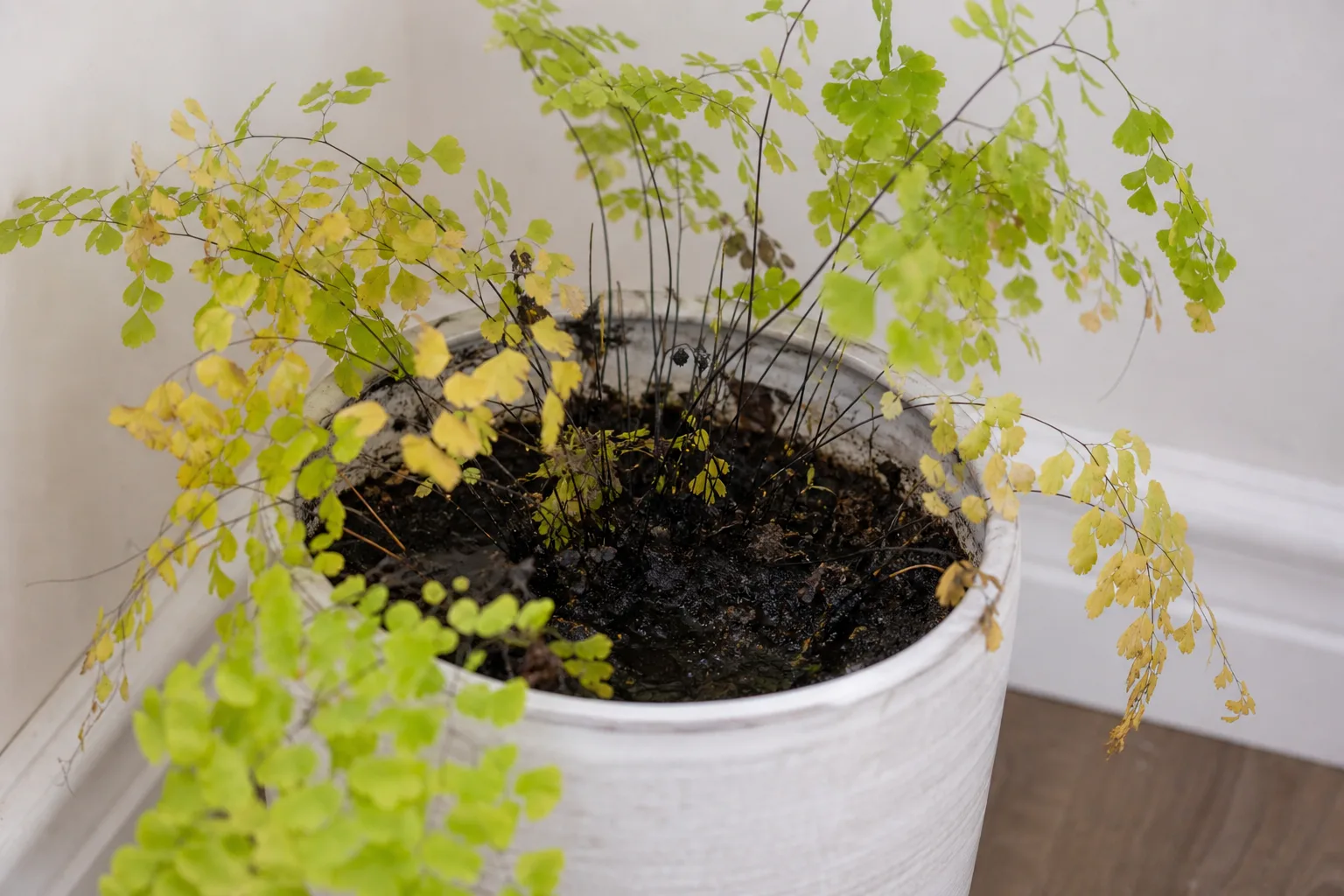
Overwatering on Maidenhair Fern: Causes, Checks & Fixes
This guide covers overwatering on Maidenhair Fern. See also the general Overwatering guide, watering, and light pages for this plant.
Overwatering on Maidenhair Fern: Causes, Checks & Fixes
Quick answer
Overwatering on Maidenhair Fern (Adiantum raddianum) means roots sit in stagnant, airless mix - not that you watered once too generously. First step: stop watering, inspect drainage and roots, and repot into fresh airy moist soil if mix is sour or roots are mushy.
This fern needs constant moisture, which confuses many growers into keeping soil saturated. Use consistently moist but well-drained potting soil. The goal is even hydration with oxygen - not a wet sponge that never dries. For the full moisture rhythm, see the Maidenhair Fern watering guide.
What overwatering looks like on Maidenhair Fern
Overwatered Maidenhair Fern often mimics thirst: limp, yellow, or collapsing fronds while soil feels wet. Key clues:
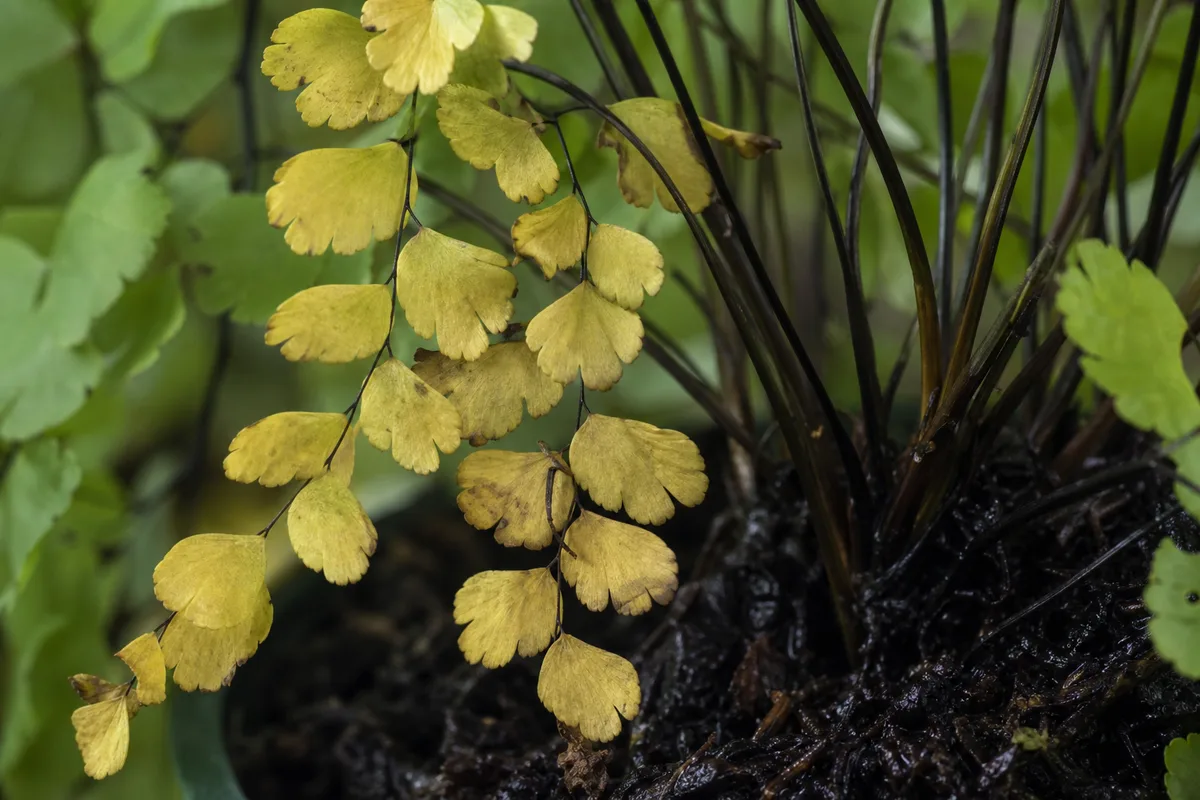
Overwatering symptoms on Maidenhair Fern - compare with healthy tissue on the same plant.
- Pot stays heavy for days; top centimeter never dries
- Sour or musty smell from drain holes
- Yellow fronds without sun exposure on the sunny side
- New fronds stunted or failing to unfurl
- White fungus gnats hovering near soil surface
Over-watering and poor drainage can cause root rot and encourage fungus gnats. Advanced overwatering leads to brown mushy roots and crown softness. Yellow leaves can be due to under or over-watering on maidenhair fern - wet soil with limp fronds points to the latter.
This differs from properly moist care - a healthy pot feels slightly lighter when the top centimeter is barely dry, then regains weight after a thorough drink with drainage.
Why Maidenhair Fern gets overwatered
Misreading moisture needs - Growers water on schedule because roots must never be allowed to dry out, but ignore whether the pot actually dries between drinks. NC State Extension notes this fern needs moist to wet soil with roots that should not dry out - that is not permission to keep mix anaerobic.
Low light reduces water use - A fern in a dim corner transpires slowly; daily watering keeps mix saturated while the plant uses little moisture.
Poor drainage - Blocked holes, no holes, heavy peat-only mix, or cachepots trapping runoff. Be sure the plant’s pot drains well and avoid letting plants stand in water.
Oversized pots - Excess soil volume stays wet around a small fern root ball.
Cool weather - Winter watering at summer frequency saturates mix while growth pauses.
Terrarium and bathroom traps - NC State Extension recommends bathrooms and terrariums for humidity, and Gardeners’ World calls maidenhair ideal for steamy bathrooms or bottle gardens. Those placements raise humidity but create standing-water risk: sealed glass has no drain exit, and decorative cachepots hold runoff from the inner pot. Limited evaporation plus calendar watering keeps mix saturated even when fronds look briefly perky after misting.
Peat or coir compaction - Surface can feel merely damp while the core stays waterlogged; roots growing in waterlogged soil may die when oxygen is cut off while caregivers add more water fearing drought.
Lookalike symptoms to rule out
| What you see | Likely cause | First check |
|---|---|---|
| Heavy wet pot, yellow limp fronds, sour smell | Overwatering (this page) | Stop watering; unpot; inspect roots |
| Light dry pot, rapid crisp collapse | Underwatering | Soak thoroughly; raise humidity |
| Moist appropriate soil, tip browning over days | Low humidity | Humidifier; pebble tray |
| Crisp fronds on sun-exposed side | Direct sun scorch | Move to bright indirect light |
| Wet soil, mushy roots, soft crown | Advancing root rot | Trim decay; repot; see root rot guide |
| Wet soil for days, fungus gnats | Wet cycle + fungus gnats | Fix drainage first; gnats follow wet soil |
How to confirm the cause
- Pot weight - Heavy and wet for 3+ days after last watering?
- Smell - Sour odor from soil supports overwatering over underwatering.
- Wilting pattern - Limp fronds with wet soil indicate root dysfunction when decayed roots cannot supply water.
- Root inspection - Mushy brown roots confirm; firm pale roots may mean temporary stress only.
- Light context - Dim placement plus frequent watering is a common overwatering setup.
Dry, light pots with crispy collapsed fronds indicate underwatering - opposite diagnosis.
First fix for Maidenhair Fern
Stop watering and inspect roots before the next drink.
Mild wet cycle only - Soil is wet but roots are firm, no sour smell, stipes still wiry: let the top centimeter dry slightly, improve light and airflow, empty all saucer water. Do not water again until the surface feels barely dry.
Mushy roots or sour mix - Unpot immediately. Trim decayed roots, discard wet mix, and repot into fresh airy substrate using the soil guide 50% compost, 30% coco coir, 20% fine bark starter blend in a pot with open drainage sized to the root mass.
Soft crown or stipe bases - Escalate to the root rot guide - salvage firm rhizome divisions if any tissue remains pale and springy after trimming.
Step-by-step recovery
- Remove standing saucer water; verify drain holes are open.
- Unpot if yellowing, smell, or limp fronds accompany wet soil.
- Rinse roots; trim mushy tissue with clean scissors.
- Repot into fresh well-draining moist mix at the same depth - 50% compost, 30% coco coir, 20% fine bark per the soil guide.
- Water lightly once; discard drainage.
- Place in bright indirect light with 60%+ humidity - MOBOT recommends bathroom placement or pebble trays for humidity recovery.
- Resume watering only when top centimeter is barely dry - typically every 2–3 days in warm bright conditions, less in cool dim weather per the watering guide.
- Hold fertilizer until new fronds emerge.
Recovery timeline
Firm-rooted plants may show new fronds in 2–4 weeks after repotting and corrected watering. A typical indoor recovery: stopped daily watering in a dim corner, let the top centimeter dry between drinks, repotted into coco-bark blend after sour smell, and saw new croziers at roughly three weeks with 65% humidity.
Severe rot with soft crown often kills Maidenhair Fern within days - salvage firm rhizome divisions if possible. If every stipe base and the rhizome crown feel mushy, see root rot rescue rather than repeating wet-cycle fixes here.
Causes to rule out
- Underwatering - Dry pot, immediate frond collapse, firm roots.
- Low humidity - Tip browning with reasonably managed soil moisture.
- Direct sun - Scorch and yellow on sun-facing fronds.
- Fungus gnats - Flies indicate wet soil but damage follows root decay, not gnats directly.
- Poor drainage - Setup cause that keeps mix saturated regardless of watering intent.
What not to do
Do not water wilting fronds without checking soil and roots. Do not repot into garden soil or non-draining containers. Do not interpret “moist always” as “never let top soil dry slightly.” Avoid fungicide drenches before fixing drainage. Do not mist instead of correcting drainage - mist adds surface moisture without restoring oxygen to saturated roots.
How to prevent overwatering next time
Water when the top centimeter is barely dry, using pot weight as a guide from the watering guide. Use airy mix with bark and coco coir per the soil guide.
Match frequency to season and light - check daily in heat, less in winter. Avoid overwatering; stick to a schedule based on plant needs and use pots with drainage holes. Empty saucers after every drink. In terrariums, water lightly at the edge and ventilate briefly so closed glass does not trap perpetual saturation.
When to worry - escalate to root rot
Escalate immediately if crown tissue softens, stipe bases dent or weep fluid, fronds blacken from the base, or rot smell intensifies. Early overwatering with firm roots and yellow lower fronds responds to repotting and drier surface rhythm on this page.
Switch to root rot on Maidenhair Fern when:
- Most roots are brown and mushy after unpotting
- Crown or rhizome tissue feels soft, not just wet soil
- Fronds collapse within 48 hours while mix stays saturated despite drainage fixes
This page covers early stagnant saturation before confirmed decay. Root rot covers below-soil salvage when tissue is already failing.
How this guide was verified
This guide focuses on early wet-cycle diagnosis for Maidenhair Fern - distinct from confirmed root rot salvage. Recommendations were checked against extension and botanical references, including NC State Extension Adiantum raddianum, Missouri Botanical Garden, BBC Gardeners’ World, and University of Minnesota Extension. Inline citations sit next to the claims they support.
Author: sai-ananth · Reviewer: LeafyPixels Review Board · Reviewed: June 2026
Related Maidenhair Fern guides
- Maidenhair Fern watering guide - pot-weight checks and moisture rhythm
- Root rot on Maidenhair Fern - below-soil salvage when crown tissue fails
- Underwatering on Maidenhair Fern - dry-pot lookalike with opposite fix
- Fungus gnats on Maidenhair Fern - wet-soil secondary sign
- Poor drainage on Maidenhair Fern - setup cause overlap
- Yellow leaves on Maidenhair Fern - symptom overlap
- Best soil for Maidenhair Fern - 50/30/20 mix and drainage tests
- Maidenhair Fern overview - full care hub