Maidenhair Fern Light Needs: Best Window, Sun & Warning
Quick answer
Maidenhair fern needs bright indirect light-not shade and not direct sun. An east window or filtered north or west exposure works best. Judge placement by firm new croziers and evenly green fronds, not by how bright the room feels to you.
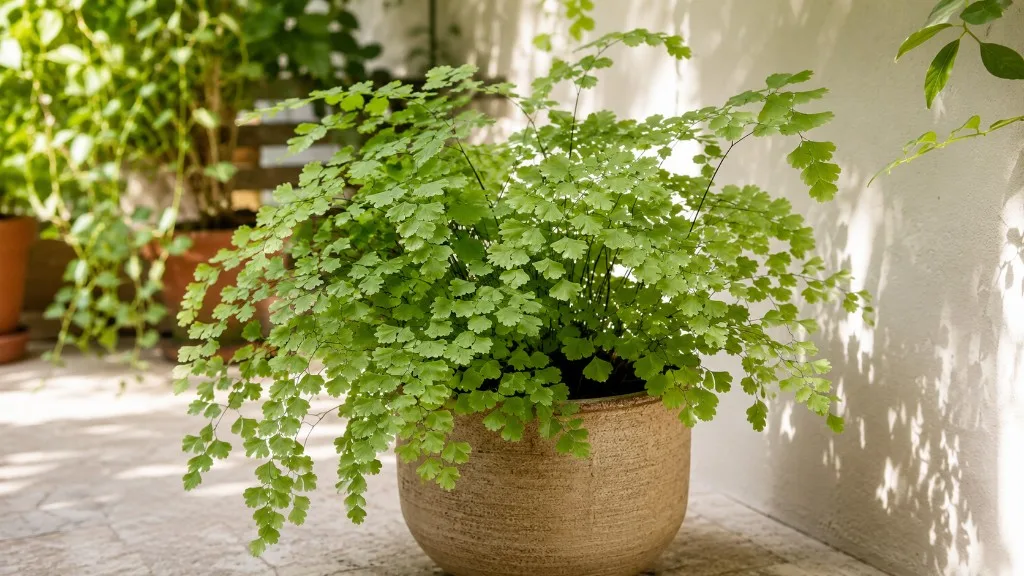
Maidenhair Fern Light Needs: Best Window, Sun & Warning Signs
Maidenhair Fern Light Needs: Best Window, Sun & Warning Signs
Maidenhair fern (Adiantum raddianum) has thin, lace-like fronds on wiry black stems that lose water fast. Light is not a separate setting from watering and humidity-it controls how quickly the plant drinks, how densely new croziers emerge, and whether fronds bleach or collapse. The most common mistake is treating “shade-loving fern” as permission to place the pot in a dim hallway, or exposing delicate foliage to unfiltered afternoon sun after a shop window looked bright.
This guide covers the best natural and artificial light for maidenhair fern indoors, window-by-window placement, acclimation, stress signs on fronds, and how light changes your watering rhythm. Pair it with the overview, watering, and soil guides.
Best light for maidenhair fern
Maidenhair fern performs best in medium to bright indirect light-strong ambient brightness without direct sun on the fronds. The RHS lists A. raddianum as needing bright, indirect light with high humidity and moist but well-drained compost.
Think forest-edge brightness: the plant receives plenty of reflected light but never sits in a sunbeam. Gardeners’ World recommends plenty of bright, indirect light but no direct sunshine on the delicate fronds.
Proof of good light: new croziers (coiled frond tips) emerge upright, pinnae open full-sized and evenly green, and the plant maintains frond count without constant collapse. Old brown tips from past stress do not repair-judge by new growth only.
Best window placement
Window direction matters because maidenhair fronds scorch in minutes in direct sun but stretch and weaken in deep shade.
| Window | Suitability | Notes |
|---|---|---|
| East | Excellent | Gentle morning sun, bright afternoon ambient light-often the easiest indoor placement |
| North | Good | Steady bright indirect light in many climates; may need grow-light supplement in dark winter rooms |
| West | Good with filter | Afternoon sun is harsh-use sheer curtain or place 3–4 feet back from the glass |
| South | Filtered only | Never unfiltered midday sun; 4–6 feet back or behind sheer curtain |
| Interior shelf | Poor long-term | More than 6–8 feet from a window usually produces weak, collapse-prone fronds |
NC State notes that an east window, bright north exposure, or filtered west/south light can work depending on your room. Keep the pot close enough that light reaches the fronds, not just the wall behind the plant. Rotate a quarter turn weekly if growth leans toward the glass.
Terrariums and bathrooms work when they supply bright filtered light plus humidity-not when a closed terrarium sits in a dim corner. A glass case near an east window is ideal; a bathroom with only a frosted small window often fails without supplemental light.
Can maidenhair fern take direct sun?
Only lightly, and only after acclimation. Fronds formed in lower light burn if moved suddenly to a south sill. Direct sun causes:
- Bleached white or tan patches on sun-facing pinnae
- Crisp, papery frond sections within hours on hot afternoons
- Overnight collapse if combined with dry soil
If you see bleached patches or sudden frond collapse after a move, pull the plant back and increase light gradually over two to three weeks-never jump from a dim shelf to unfiltered south exposure.
Low-light limits
Low light is a poor long-term setup. Maidenhair may lose vigor in too much shade-fronds emerge smaller, pinnae spacing widens, and the plant becomes more drought-sensitive because root activity slows while owners keep the same watering schedule.
Clemson HGIC calls maidenhairs difficult in most homes without special care and notes Adiantum species often need north-window light plus high humidity. A dim interior spot without both is where most maidenhairs fail.
In lower light, reduce fertilizer and let the top centimeter of mix dry slightly longer-but never let the root ball go fully dry. If new croziers are pale, small, or slow to open, light is limiting growth before humidity or water quality.
Using grow lights
When natural light is weak-north rooms, winter at high latitude, or office desks-a full-spectrum LED grow light extends viable placement.
Practical specs for maidenhair fern:
- Type: Full-spectrum white LED (not narrow red/blue only)
- Distance: 12–18 inches (30–45 cm) above the frond crown
- Duration: 10–12 hours daily; use a timer for consistency
- Heat check: Hold your hand at frond level-if it feels warm after 10 minutes, raise the fixture
Grow lights should deliver steady plant-facing brightness, not heat stress. Thin fern fronds scorch faster than thick-leaved pothos under hot bulbs. Increase duration before moving the lamp closer.
How to move maidenhair fern safely
Sudden light shifts trigger frond drop, curling, or scorch depending on direction:
- Dim to bright: Move closer to the window in stages over two weeks; watch for bleaching on the first new fronds
- Bright to dim: Expect some lower frond loss; reduce watering frequency as transpiration drops
- Never combine a major light move with Maidenhair Fern repotting guide, fertilizing, or a hard pruning on the same day
Make one light change, then wait at least two weeks to read new crozier quality before adjusting water or feed.
Frond stress signs tied to light
| Sign | Likely light issue | Action |
|---|---|---|
| Bleached or crispy sun-facing pinnae | Too much direct sun | Filter or move back |
| Small pale fronds, wide spacing | Too little light | Move closer or add grow light |
| Overnight full collapse | Usually drought ± low light | Check soil first; then improve light if fronds were weak |
| Brown edges in bright spot | Sun + low humidity | Filter sun; raise humidity |
| Lush fronds, constant new croziers | Light is adequate | Maintain placement |
Light and watering link
Every light change changes water use. Maidenhair fern fronds transpire heavily in bright, warm spots-check the watering guide every 2–3 days in active growth near an east window. In a dimmer winter corner, extend the interval slightly but never allow the root ball to dry completely.
A plant that stays wet too long in low light may develop root stress even while fronds look green-if the pot stays soggy more than a few days after watering, improve light or aerate the mix before adding more water.
Conclusion
Maidenhair fern rewards bright, filtered light paired with stable moisture and humidity-not dark corners and not sunny sills. An east window or filtered bright exposure, judged by firm new croziers, is the practical target for most homes. When natural light falls short, a cool full-spectrum LED 12–18 inches above the crown fills the gap without the scorch risk of direct sun. Change light gradually, adjust watering to match, and read the newest fronds-they tell you whether the placement is working long before old damage fades.
When to use this page vs other Maidenhair Fern guides
- Maidenhair Fern overview - Start here for whole-plant context before deep-diving this topic.
- Maidenhair Fern problems hub - Jump to symptom-specific fix guides when this care topic does not resolve the issue.
- Not Enough Light on Maidenhair Fern - Escalate here when light adjustments are not enough.
- Leggy Growth on Maidenhair Fern - Escalate here when light adjustments are not enough.
- Sunburn / Scorched Leaves on Maidenhair Fern - Escalate here when light adjustments are not enough.