Sunburn Scorched Leaves on Maidenhair Fern: Causes, Checks
Quick answer
Sunburn on Maidenhair Fern shows as bleached, papery, or dark brown patches on fronds facing the window - often after a move to a sunny sill or when summer sun intensifies. First step: pull the pot out of direct sun or add a sheer curtain before changing watering.
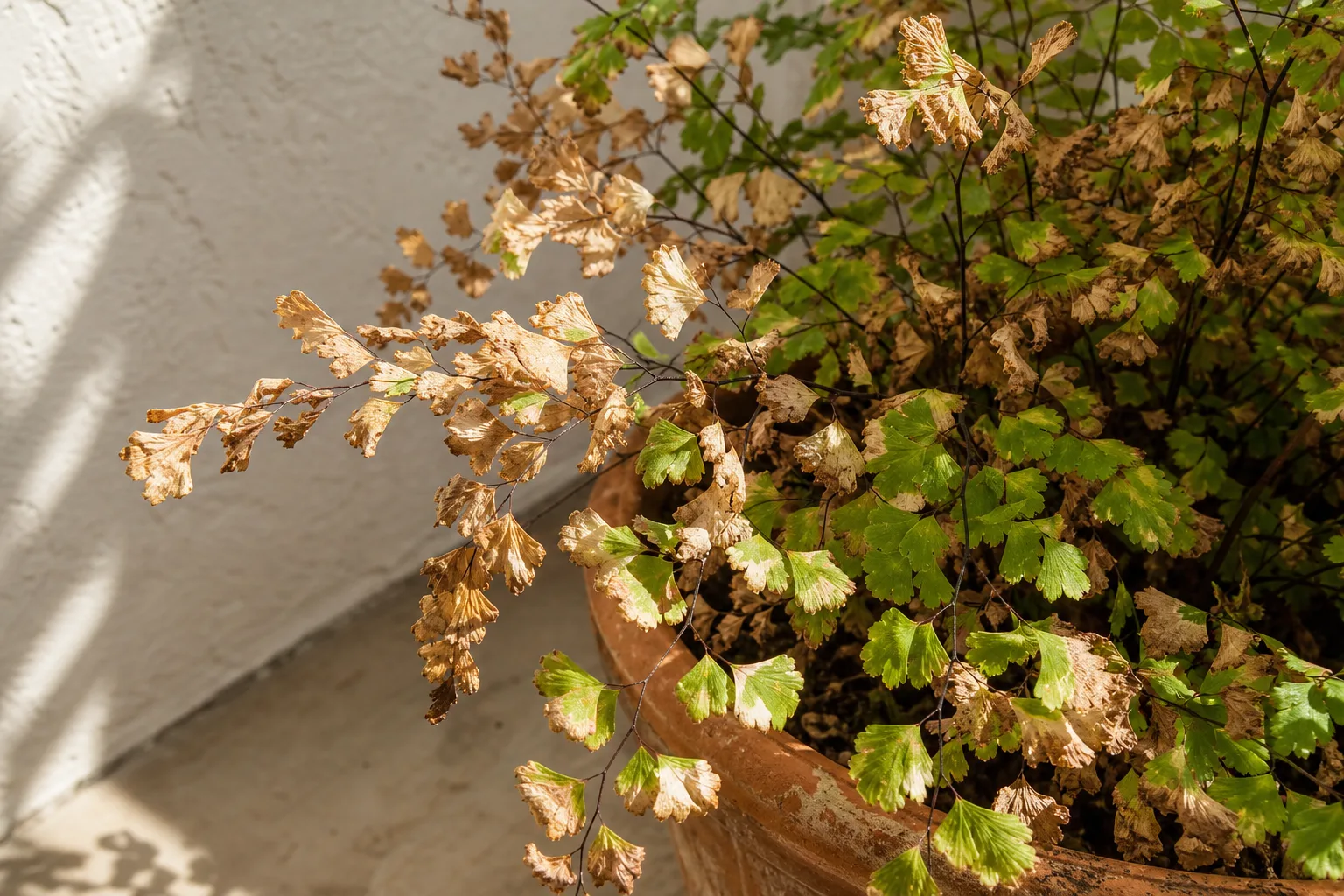
Sunburn Scorched Leaves on Maidenhair Fern: Causes, Checks & Fixes
This guide covers sunburn / scorched leaves on Maidenhair Fern. See also the general Sunburn / Scorched Leaves guide, watering, and light pages for this plant.
Sunburn Scorched Leaves on Maidenhair Fern: Causes, Checks & Fixes
Quick answer
Sunburn on Maidenhair Fern (Adiantum raddianum) appears when direct or harsh reflected light hits thin, membranous leaflets that evolved for filtered understory shade. The damage shows as bleached white patches, papery tan zones, or dark brown scorch marks concentrated on the side facing the window - often within hours of a move to a sunny sill.
First step: move the fern out of direct sun immediately - pull it back from south- or west-facing glass, add a sheer curtain, or relocate to Maidenhair Fern light guide where fronds never touch direct rays. Do not shower, repot, or fertilize on day one. Sunburn is a light problem; extra water on already-moist soil will not heal scorched tissue and can invite root problems on this moisture-sensitive fern.
What sunburn looks like on Maidenhair Fern
Maidenhair Fern’s fan-shaped pinnae on black wiry stems make sun damage easy to spot once you know the pattern.
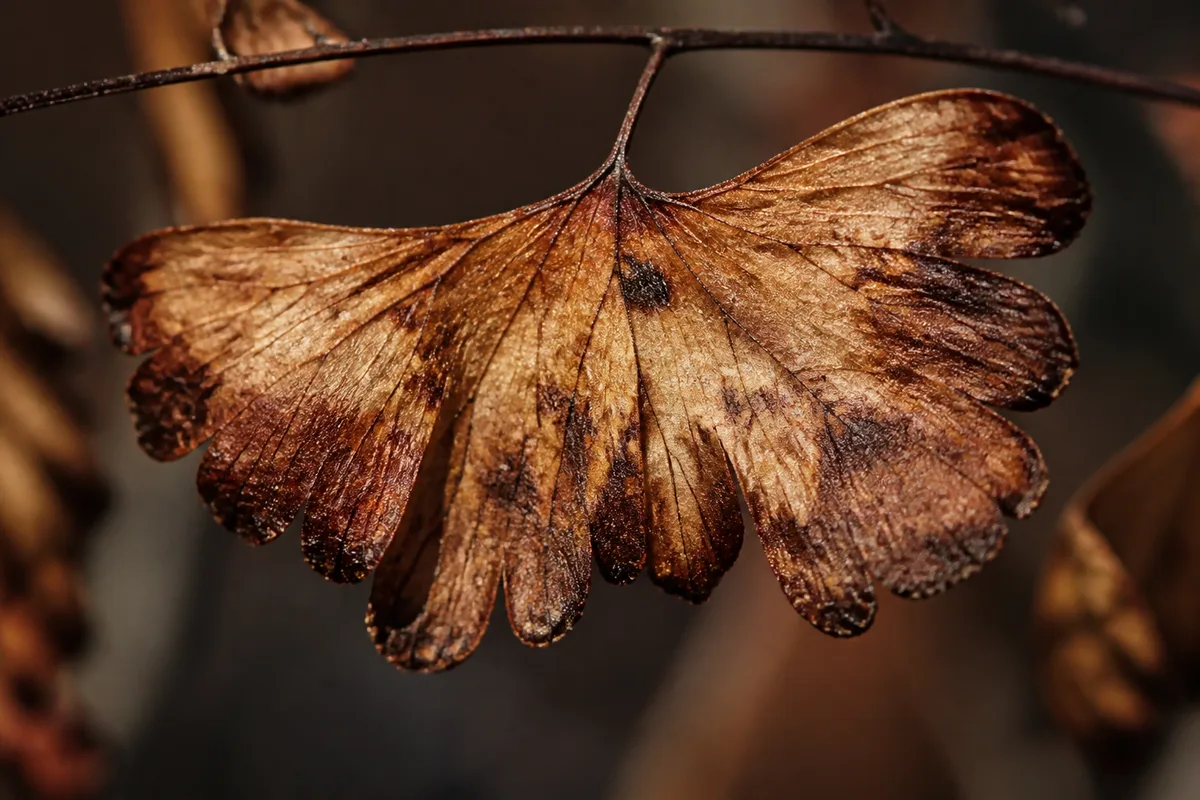
Sunburn / Scorched Leaves symptoms on Maidenhair Fern - compare with healthy tissue on the same plant.
Typical sunburn signs:
- Bleached or whitish patches on window-facing leaflets, with green tissue on the shaded side
- Dark brown to black scorch marks on pinnae that received afternoon direct sun - harsh sun creates dark scorch marks on delicate leaflets
- Papery, crispy texture that crumbles when touched - distinct from soft yellowing from overwatering on Maidenhair Fern
- One-sided damage on fronds nearest glass or a reflective surface
- New croziers browning as they unfurl in direct light - a serious escalation
- Sudden appearance after moving from a shop bench, bathroom shelf, or dim corner to a bright windowsill
How this differs from other Maidenhair Fern problems:
- Faded leaves wash out evenly in dim light - no sharp scorch patches
- Heat stress often limps the whole plant on hot days even when soil is moist; sunburn stays localized to exposed tissue
- Brown tips from low humidity on Maidenhair Fern creep inward slowly at margins, not as sudden window-side patches
- underwatering on Maidenhair Fern collapses fronds with a dry, light pot - sunburn can occur on moderately moist soil
Why Maidenhair Fern burns so easily
Understory physiology - This fern needs partial shade to shade and loses vitality in full sun. Its delicate, lace-like fronds have high surface area and almost no waxy protection - UV and heat overwhelm leaf cells quickly.
“Bright indirect” is not “direct sun” - Maidenhair Fern responds best to bright indirect light including diffused sun, but dislikes direct sun. South- and west-facing windows deliver direct indoor sunlight above 1,000 foot-candles for hours - far beyond what thin fern leaflets tolerate without filtering. Leaves may scorch in direct sun on Maidenhair Fern overview.
Sudden acclimation failure - Fronds formed in lower light lack sun tolerance. Moving from a humid nursery or dim interior to an unfiltered windowsill causes scorch within a day or two without gradual acclimation over one to two weeks.
Hot window glass - Fronds pressed against warm panes cook even when room air feels comfortable. Summer sun angle shifts can turn a safe spring placement into an afternoon scorch zone by June.
Reflected and magnified light - Mirrors, white walls, and water droplets on leaflets in direct sun can concentrate rays onto pinnae.
Grow lights placed too close - Intense LEDs near the crown can bleach leaflets the same way window sun does.
How to confirm the cause
Work through these checks before changing watering or trimming heavily:
- Light exposure audit - Do fronds receive direct sun for any part of the day? South- or west-facing unfiltered glass is the highest-risk placement.
- Damage pattern - Is scorch confined to the window-facing side? One-sided bleaching confirms light injury - when a plant gets too much direct light, the leaves become pale, turn brown, and die.
- Recent moves - Did symptoms start within 24–72 hours of relocating closer to a window, removing a sheer curtain, or moving outdoors?
- Seasonal shift - Did damage appear in late spring or early summer without a pot move? Sun angle intensifies through the same window.
- Soil moisture - Top centimeter barely dry or still moist with crisp patches points to sun, not drought. Bone-dry pot with collapse suggests underwatering instead.
- Glass contact - Fronds touching hot pane? Localized scorch on outer pinnae only supports sunburn.
- Pest check - Spider mites cause stippling and webbing, not large bleached patches. Inspect undersides before assuming light alone.
Rule out heat stress (hot registers, room-wide heat wave with uniform limp), chemical damage (spray residue patterns), and fluoride burn (tip-focused browning with crust on soil).
First fix for Maidenhair Fern
Remove the fern from direct sun today.
Move the pot to bright indirect light - an east window with sheer curtain, a spot one to two meters back from south or west glass, or a north exposure with adequate ambient brightness. Hang a sheer curtain if the only bright spot is a sunny sill. Avoid deep shade; if grown in full shade, foliage will lose its vitality - the plant still needs energy for recovery.
Do not compensate with extra watering if soil is already moist. Do not repot, fertilize, or mist heavily on day one. Stabilize light first.
Step-by-step recovery
- Relocate out of direct rays and leave the plant in the new spot for at least one week.
- Check soil daily - maintain consistent moisture without waterlogging; sunburn does not mean the fern needs a flood.
- Raise humidity toward 60–80% with a humidifier at frond height - paired with corrected light, this supports clean new croziers.
- Trim fully scorched or black fronds at the soil line once active decline stops - leave partially green fronds if they still photosynthesize.
- Hold fertilizer until new fronds unfurl cleanly for two to three weeks.
- Acclimate gradually if you need more brightness later - increase exposure over seven to ten days with morning-only gentle light first.
- Monitor new croziers - vivid green emerging leaflets confirm recovery; repeated browning during unfurl means light is still too harsh.
Recovery timeline
Scorched leaflet tissue never re-greens - expect to trim damaged fronds and judge success by new growth, not old patches.
If black wiry stems stay firm and the crown is intact, new fronds typically appear within two to four weeks after light stabilizes. Minor bleaching on a few outer pinnae may need no trimming if inner tissue stays green and new growth is clean.
Mass scorch across most fronds with crown softening is a poor recovery sign - inspect rhizomes before investing more effort.
Lookalike symptoms
Heat stress - Whole-plant limp and crisp margins during heat waves or near radiators; cooling and humidity help more than shade alone if direct sun is not involved.
Faded leaves from low light - Uniform paleness without crispy patches; fix is brighter indirect light, not less sun.
Underwatering - Dry, light pot with sudden frond collapse; thorough rehydration is the fix, not relocation to shade.
Fluoride or salt burn - Tip-focused browning from tap water; switch to filtered or rainwater - pattern differs from window-side scorch.
Spider mites - Fine stippling and webbing in dry air; rinse and treat pests if confirmed.
Causes to rule out
- Overwatering after misdiagnosing scorch as thirst - Wet, heavy mix with yellowing and sour smell
- Cold draft after window contact - Frond drop from AC blast on glass, not bleaching
- root rot on Maidenhair Fern - Mushy rhizomes and foul soil; unrelated to light patches unless chronic stress stacked
What not to do
Do not leave the fern on a sunny sill hoping extra misting will protect it - mist lasts minutes and can magnify sun on wet leaflets. Do not move into a dark closet; recovery needs bright filtered light. Avoid Maidenhair Fern repotting guide during active scorch. Do not fertilize to ” perk up” burned fronds. Do not trim every frond to soil line on day one unless tissue is fully dead.
How to prevent sunburn next time
Treat bright indirect or diffused light without direct rays as non-negotiable for this species. Use sheer curtains on south- and west-facing windows. Re-check placement when seasons change - a safe winter sill can scorch by midsummer. Acclimate new plants over seven to ten days when increasing light. Keep fronds off hot glass. If using grow lights, start at moderate distance and duration. Pair humidity support with correct light - a humid bathroom chosen for moisture but with afternoon sun on the crown still burns leaflets.
Maidenhair Fern care cross-check
Sunburn on this fern often follows a well-intentioned move to “more light” without filtering. The species needs brightness but not beams. After shading, align watering with how fast the corrected placement dries the pot - brighter filtered spots use water slightly faster than deep shade, but scorch recovery is still primarily a light fix.
When to worry
Worry when new croziers brown during unfurling, most fronds crisp within 24 hours of a sunny move, or the plant sits in direct afternoon sun through summer. Crown tissue that stays soft after a week in stable filtered light suggests damage beyond cosmetic scorch.
Conclusion
Sunburn on Maidenhair Fern shows as bleached, papery, or dark brown patches on sun-exposed pinnae when direct or harsh light exceeds what this understory fern tolerates. Confirm with window direction, one-sided damage pattern, and recent placement changes. Move out of direct sun first, maintain even moisture and humidity, trim dead fronds after decline stops, and judge recovery by firm stems and clean new croziers - not tissue that cannot heal.
When to use this page vs other Maidenhair Fern guides
- Maidenhair Fern watering guide - Use for routine moisture checks before assuming sunburn / scorched leaves is the main issue.
- Maidenhair Fern problems hub - Browse all 55 common issues on this species.
- Brown Tips on Maidenhair Fern - Different entry point when symptoms overlap with sunburn / scorched leaves.