How to Propagate Maidenhair Fern: Division Step-by-Step &
How to Propagate Maidenhair Fern: Division Step-by-Step & Aftercare
How to Propagate Maidenhair Fern: Division Step-by-Step & Aftercare
How to Propagate Maidenhair Fern: Division Step-by-Step & Aftercare
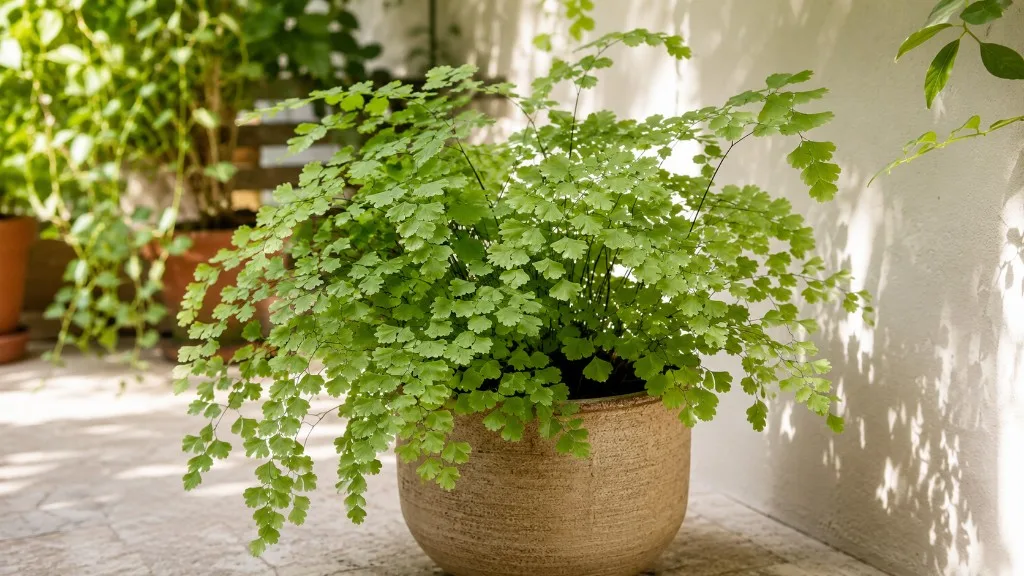
Maidenhair fern (Adiantum raddianum) has fine roots and moisture-sensitive fronds, so propagation is less about rooting a cutting in a jar and more about splitting a healthy rhizome clump without shocking the tissue. The easiest reliable method for home growers is division at repotting - the same approach NC State Extension lists as the recommended propagation strategy for this species. Each new section needs a portion of creeping rhizome, attached roots, and enough living fronds to photosynthesize while roots recover.
The main propagation mistake is dividing a weak plant too aggressively and leaving tiny pieces without enough roots or fronds to survive dry indoor air. Maidenhair divisions collapse faster than tougher ferns like Boston fern because their leaflets desiccate within hours when humidity drops. This guide walks through timing, supplies, numbered division steps, humidity-bag recovery, a week-by-week aftercare schedule, and an honest look at spore propagation for readers who want the full fern life cycle - not a generic houseplant cutting routine.
Why maidenhair fern is propagated by division, not water cuttings
Ferns are seedless vascular plants. They reproduce in nature through spores and, in clumping species like A. raddianum, by creeping rhizomes that spread the plant horizontally. Unlike pothos or philodendron, maidenhair fern does not produce adventitious roots from detached frond stems. A single cut frond - even a beautiful one on a wiry black stipe - lacks the crown tissue and rhizome buds needed to regenerate a full plant.
That biology explains why water propagation fails on maidenhair fern. Fronds submerged in standing water rot long before they form useful roots. The Royal Horticultural Society notes that the easiest way to propagate most ferns is by division, splitting crowns or rhizome segments that already carry roots and growing points. For maidenhair, you are reallocating pieces of an existing root system, not coaxing new roots from a leaf.
Division also matches how the plant grows indoors. NC State describes Adiantum raddianum as spreading by creeping rhizomes in moist soil, forming a clump 1 to 2 feet tall and wide over time. When the pot fills with intertwined rhizomes and fine roots, natural fork points appear - and those are your division lines.
When to propagate maidenhair fern
The best time to propagate maidenhair fern is spring through early summer, when lengthening days and warm room temperatures push new croziers (coiled fiddleheads) from the rhizome. This overlaps with repotting season - Gardeners’ World recommends dividing when you repot every one to two years - because the plant is metabolically active and can repair root damage quickly.
Clemson HGIC notes that overcrowded ferns should be repotted and divided in early spring using fresh mix, which aligns with the same window for propagation. Late summer division can still work if humidity stays high and the plant is not heat-stressed. Fall and winter division is risky indoors: lower light slows root regeneration, heated air drops humidity below what maidenhair tolerates, and wet mix stays cold longer in dim corners.
Timing is also about plant condition, not calendar alone. Propagate when the parent shows firm green fronds, active new croziers, and no active pest outbreak or root rot. Skip propagation immediately after shipping, a recent repot within the last month, or while the plant is in active wilt - stabilize first, then multiply.
Active growth signals that mean go ahead
Look for these green lights before you unpot:
- New croziers unfurling from the crown - thin black stipes with coiled tips
- Root ball lifting as a solid mass when you slip the plant out, or roots circling the pot surface
- Evenly moist mix that dries at a predictable rate - the plant is hydrated and metabolically engaged
- No sour smell, blackened crown tissue, or widespread yellowing beyond normal old-frond drop
If you are already planning spring repotting because roots have filled the pot, division is a natural add-on step rather than a separate stress event.
When to wait instead of dividing
Hold off when any of these apply:
- The plant is actively wilting or recovering from underwatering collapse
- Root rot signs are present - wet mix, mushy roots, foul odor - see root rot protocol first
- You cannot maintain elevated humidity for at least two to three weeks (dry winter heat with no humidifier and no bag or dome)
- The clump is still small - a 10 cm nursery pot with only two to three fronds total has nothing viable to split yet
Propagation is a reward for good care, not a rescue for bad care.
Supplies and tools for division
Gather everything before you expose roots. Maidenhair rhizomes desiccate within minutes in typical indoor air.
Essential tools:
- Sharp knife or pruning shears, disinfected with 70% isopropyl alcohol
- New pots with drainage holes, each 2–5 cm wider than the division’s root mass - not oversized
- Fresh potting mix matching your soil guide - moisture-retaining but well-draining, with coco coir and fine orchid bark
- Room-temperature water - filtered or rainwater if you already use it for watering
- Clear plastic bag or humidity dome large enough to cover the pot without crushing fronds
- Spray bottle for misting if bag condensation is low
Optional but useful:
- U-shaped wire pins if you need to hold a division steady in loose mix
- Small humidifier or pebble tray for the recovery zone
- Labels if you are running multiple divisions side by side
Clemson HGIC recommends repotting overcrowded ferns with a mix of equal parts packaged houseplant potting mix and peat moss or leaf mold. For maidenhair indoors, a slightly chunkier blend with perlite or orchid bark improves drainage without letting the root ball dry out completely - the balance your mature plant already prefers.
Step-by-step: dividing maidenhair fern at repotting
Division is the most reliable maidenhair fern propagation method for home growers. You are not inventing new growth; you are separating pieces that already support themselves, then giving each one a humid recovery period while fine roots rebuild.
Minimum viable division size: aim for at least three to four healthy fronds plus a 5–8 cm rhizome segment with visible fine roots and at least one growth bud. Smaller pieces can work under expert terrarium conditions but fail often in open pots on a windowsill. Illinois Extension advises that each divided stem must have a fair amount of roots and should be repotted immediately so roots do not dry out - critical for maidenhair’s thin root system.
Water the parent 12–24 hours before dividing so fronds are turgid and roots are flexible. Dry, brittle root balls tear; hydrated ones separate along natural lines with less damage.
Unpotting and finding natural split lines
- Tip the pot gently. Support the frond mass with one hand and slide the root ball out. If it sticks, run a knife around the pot wall rather than yanking wiry stipes.
- Shake or rinse lightly to expose rhizome forks. Maidenhair often forms a dense mat - you are looking for sections where multiple frond clusters attach to separate rhizome arms.
- Identify natural divisions where the rhizome forks or where two crown clusters sit far enough apart to pull without tearing every root.
Work on a clean surface with damp paper towels nearby. Exposed fern roots lose moisture fast.
Separating or cutting rhizome sections
Tease first, cut second. Pull apart sections that release with minimal tearing. Where the mass is dense, use a sterile sharp knife to cut vertically through the root ball, keeping as many fronds and roots as possible on each piece.
Each division must include:
- Rhizome tissue with at least one growth bud
- Fine white or tan roots attached to that segment
- At least three to four fronds - fewer leaves mean less photosynthetic capacity during recovery
Remove only blackened roots or fully brown fronds. Over-pruning a small division weakens it further. Do not take single-frond fragments; they rarely become full plants.
Potting each division at the correct depth
- Fill each new pot one-third full with pre-moistened mix.
- Set the division so the crown where fronds emerge sits at or slightly above the mix surface - the same depth it grew before.
- Backfill gently and water until excess drains from the holes. Settle mix with water, not finger packing - maidenhair roots need air as much as moisture.
- Empty the saucer so the pot is not sitting in standing water.
Pot immediately after cutting. Illinois Extension is explicit: re-pot each piece right away because drying roots are a primary failure mode on ferns.
Rhizome orientation and crown depth after replanting
Crown burial kills maidenhair fronds. If you bury the rhizome too deeply, existing fronds blacken from the base and new croziers fail to emerge. The rhizome should sit horizontal, just below the surface, with frond stipes rising vertically from the top - not tilted sideways or submerged under an inch of mix.
Think of the crown as a surface-level junction between frond and root, similar to how Clemson HGIC warns not to bury creeping rhizomes on Davallia ferns - maidenhair is equally sensitive, even though its rhizomes are thinner and less visible.
After potting, a light top-dress of mix is fine, but you should still see where stipes meet soil. If in doubt, err shallow and add a thin layer later once new growth confirms the plant is rooting.
Post-division humidity recovery setup
Fresh divisions cannot transpire efficiently with reduced root mass. Humidity is the difference between recovery and overnight collapse.
For the first 2–3 weeks, enclose each pot in a clear plastic bag with three or four small ventilation holes, or use a humidity dome. Place the setup in bright indirect light - Missouri Botanical Garden recommends partial shade to shade indoors, never direct sun. Magnified heat inside plastic cooks delicate fronds within hours.
Open the cover briefly every 2–3 days to exchange air and prevent mold on wet leaflets. If condensation fully coats the bag walls, widen a vent hole; if fronds look limp and no condensation forms, mist lightly inside the bag or move the pot to a humidifier zone.
Terrarium placement works well for small divisions - the enclosed glass mimics the moist rock-crevice habitat maidenhair evolved in. University of Minnesota Extension notes terrariums as effective mini-greenhouses for humidity-loving houseplants during dry indoor seasons.
After 2–3 weeks, when fronds stay turgid without the bag for 48 hours, remove the cover gradually - unzip or roll the bag down over several days rather than exposing the plant to dry air instantly.
Aftercare weeks 1 through 4
Use this timeline instead of guessing day by day.
Week 1 - stabilize, do not disturb. Keep mix evenly moist but not waterlogged. Water when the top centimeter begins to dry; use room-temperature water. No fertilizer. Do not unpot to “check roots” - disturbance breaks fragile new root hairs. Expect some old frond edge browning; worry only if the crown softens.
Week 2 - watch for croziers. First new croziers often appear in 2–4 weeks during spring conditions with stable humidity. If all fronds collapse but the crown remains firm and pale inside, maintain humidity and moisture - maidenhair can push new growth from rhizome buds after a dramatic wilt. If the crown turns black or mushy, the division is lost.
Week 3 - reduce humidity cover. Begin acclimating to ambient room humidity if new growth is visible. Keep 50% humidity or higher - Clemson lists this as the minimum maidenhair needs - using a humidifier if heated air is dry. Continue bright indirect light; avoid moving the pot between rooms daily.
Week 4 - normal care rhythm. Transition to your standard watering check - every 2–3 days when the top cm is barely dry in active growth. Hold fertilizer until several new fronds are fully open; Clemson advises not feeding new or repotted ferns for six months, and maidenhair is especially sensitive to salt burn on stressed roots.
Success looks like firm green fronds, multiple new croziers, and mix that dries at a predictable rate - not constant digging or repotting again.
Signs propagation is succeeding vs. failing
Success signals:
- New croziers emerging from the crown or rhizome surface
- Existing fronds stay turgid or only lose the oldest pinnae while new growth opens
- White root tips visible at drainage holes in small pots after week 3
- Mix dries slightly between waterings - roots are taking up moisture
Failure signals:
- Whole-frond collapse within 48 hours - usually division too small, humidity too low, or crown buried
- Blackening at the crown where stipes meet soil - rot from overwatering on Maidenhair Fern or buried rhizome
- Sour-smelling mix with mushy roots - treat as root rot if caught early; discard if the crown is gone
- Rhizome shriveling while mix is dry - underwatering after over-handling; re-bag for humidity and moisten evenly
Temporary wilt on day 2–3 after division is common even on successful splits. Panic repotting causes more damage than waiting under a humidity bag.
Common mistakes that kill maidenhair divisions
| Mistake | What happens | Fix |
|---|---|---|
| Splitting into one-frond pieces | Cannot photosynthesize enough to feed new roots | Recombine or discard; next time keep 3–4 fronds minimum |
| Burying rhizome too deep | Fronds blacken from base; no new croziers | Unpot, reset crown at soil surface, re-bag |
| Skipping humidity cover | Leaflets desiccate overnight | Bag or dome immediately; humidifier nearby |
| Checking roots every day | Breaks new root hairs; extends shock | Wait at least 2 weeks; judge by frond turgor and new growth |
| Oversized new pot | Wet mix stays cold and anaerobic around small root mass | Repot into a pot only 2–5 cm wider than the division |
| Fertilizing in week 1 | Salt burn on damaged roots | Wait until new fronds are several inches tall |
Maidenhair is less forgiving than Boston fern when split too small because its leaflets are thinner and lose water faster - but the same humidity-first recovery principles apply.
When not to propagate
Do not propagate maidenhair fern as a first response to every problem. If pests, rot, or severe dehydration are active, stabilize the parent plant first or take only clean unaffected material.
Avoid over-fragmentation: turning one pot into five tiny divisions in a single session leaves each piece with too little root mass to support its frond load. Two or three reasonable sections beat five starving ones.
Do not propagate when you cannot commit to humidity for the recovery window. A division without a bag, dome, or humidifier in a 25% RH winter room is likely a funeral.
Finally, do not propagate solely because fronds look messy. Old brown pinnae may need pruning or a watering adjustment - not surgery.
Division vs. spores: which method fits your goal
| Factor | Division | Spores |
|---|---|---|
| Difficulty | Moderate - needs clean splits and humidity | High - sterile technique, months of waiting |
| Timeline to new plant | 2–4 weeks to first croziers; pot-sized plant in one season | Prothalli in 1–2 months; transplantable sporophyte in 1–2 years per RHS guidance |
| Equipment | Knife, pots, mix, humidity bag | Sterilized compost, sealed containers, spore collection |
| Success rate for beginners | High when divisions are sized correctly | Variable - contamination and timing errors common |
| Best for | Multiplying a healthy houseplant | Fern enthusiasts learning the full life cycle |
For 99% of maidenhair fern owners, division at repotting is the correct answer. Spores belong in the optional curiosity column.
Optional: propagating maidenhair fern from spores at home
Adiantum raddianum produces sori on fertile fronds - NC State notes round to elongated sori covered by a revolute pinnule margin. Spore propagation is biologically valid but slow and contamination-sensitive at home.
Collection: Snip a frond segment bearing dark brown mature sori (not pale green unripe tissue). Place in a dry paper envelope for 1–3 days in a warm, dry spot. Ripe spores fall as fine dust - the American Fern Society describes tapping the paper to separate spores from chaff.
Sowing: Surface-sow spores thinly on sterilized moist compost in a sealed clear container. The RHS emphasizes sterilizing compost before sowing and keeping spores uncovered because they need light to germinate. Expect a green prothallus film in 1–2 months, then first tiny fronds weeks later.
Timeline honesty: From midsummer sowing, RHS guidance suggests true fronds by winter; autumn sowings may wait until spring. Young ferns need 1–2 years before they resemble a shop-sized maidenhair. Mold wipes out trays overnight if technique is casual.
Unless you enjoy propagation as craft, division delivers a usable plant faster with far less equipment.
Conclusion
Maidenhair fern propagation works when you treat it as rhizome surgery with a humidity recovery plan, not as stem-cuttings-in-water. Division during spring repotting remains the dependable home method: each section keeps rhizome, roots, and at least three to four fronds, pots at crown level, and spends 2–3 weeks under a vented humidity bag in bright indirect light. Expect new croziers in 2–4 weeks when conditions hold; hold fertilizer until fresh fronds prove the roots are working.
Spores teach the full fern life cycle but demand sterile technique and months to years before you have a display plant - division is what most readers actually need. Get the split size, crown depth, and humidity window right, and one delicate lace fern becomes two without a return trip to the nursery - or to Google for the steps this page now lays out end to end.
When to use this page vs other Maidenhair Fern guides
- Maidenhair Fern overview - Start here for whole-plant context before deep-diving this topic.
- Maidenhair Fern problems hub - Jump to symptom-specific fix guides when this care topic does not resolve the issue.
- Stem Rot on Maidenhair Fern - Escalate here when propagation adjustments are not enough.