How to Prune Maidenhair Fern: When, Where & What to Cut
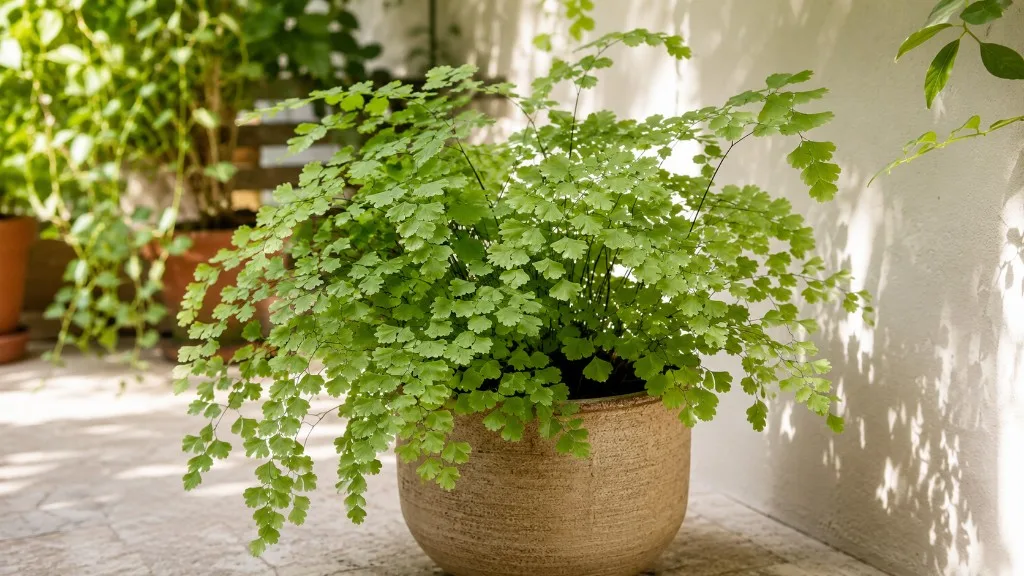
How to Prune Maidenhair Fern: When, Where & What to Cut
How to Prune Maidenhair Fern: When, Where & What to Cut
Quick Answer - Groom at the Rhizome, Not the Blade
First action: inspect the plant in good light, then remove one fully dead frond - brown, dry, with no remaining green tissue - by cutting its black stipe flush at the rhizome base with sterilized scissors. Maidenhair fern pruning is grooming, not shaping. Adiantum raddianum does not branch from mid-frond cuts, respond to shearing, or regrow from trimmed leaflet edges. New fronds emerge only from creeping rhizomes at the soil line. Most healthy specimens need occasional dead-frond removal and crown cleanup - not scheduled hard cutbacks.
What Maidenhair Fern Pruning Actually Means
For indoor growers, maidenhair fern pruning means selective grooming: removing fronds that no longer photosynthesize, clearing decaying debris from the crown, and optionally trimming brown edges on otherwise green blades. It does not mean shearing the plant into a dome, thinning green fronds for fullness, or cutting back to force bushier growth.
Each mature frond is a single compound leaf on a wiry black stipe that unfurled once from the rhizome. Remove a green frond and you remove that photosynthetic surface until a new crosier emerges - a process that can take weeks indoors when humidity drops or soil dries even briefly. Clemson HGIC notes that maidenhairs are among the most delicate indoor ferns and commonly develop brown leaflets when home humidity is too low. Grooming removes tissue that holds dust, traps moisture against the crown, and harbors scale; it does not replace fixing dry air, missed watering, or fluoridated tap water - the primary causes of maidenhair decline.
Three tasks fall under pruning. Dead frond removal takes out fully brown, yellow, or dry fronds at the base. Tip trimming addresses minor edge browning on otherwise healthy fronds. Crown cleanup clears fallen pinnules and old stipe stubs from the center to improve airflow and reduce pest habitat.
How Maidenhair Ferns Grow - and Why Cut Placement Matters
Maidenhair ferns spread via short, creeping rhizomes that form a dense clump. NC State Extension describes Adiantum raddianum as clump-forming with decompound, membranous fronds on wiry black stipes - delicate, lace-like leaflets arranged in flat planes. New growth originates near the soil line from the rhizome network, not from nodes along an existing frond the way pothos stems branch after a cut.
New fronds begin as tightly coiled crosiers and unfurl into the familiar fan-shaped pinnae. All replacement growth comes from the rhizome and crown, not from cut edges on mature fronds. This growth pattern means mid-frond cuts do not regenerate. Slice a healthy frond halfway up and the top portion is gone; the bottom stub browns slowly without producing a replacement tip. The correct placement for full frond removal is at the base, as close to the rhizome as you can reach with clean scissors.
What to Check Before You Cut
Before reaching for scissors, distinguish three conditions:
- Fully dead fronds - entirely brown or dry, stipe brittle, no green tissue remaining. Safe to remove at the base any time.
- Green fronds with brown tips on Maidenhair Fern - blade still photosynthesizing; tip damage usually reflects humidity, water quality, or brief drought stress. Decide between cosmetic tip trim and whole-frond removal based on how much tissue is affected.
- Widespread yellowing or sudden collapse - often underwatering on Maidenhair Fern, overwatering on Maidenhair Fern, or root stress rather than a grooming problem. Pause heavy removal and audit Maidenhair Fern watering guide, drainage, and light before cutting more tissue.
Also inspect the crown center for accumulated debris, mealybugs, or scale at stipe bases. Missouri Botanical Garden warns to watch for scale and mealybugs on maidenhair fern and notes that fronds die back quickly if soils are allowed to dry out - grooming exposes pests early but cannot fix chronic drought.
Check that the crown sits slightly above the soil surface. Burying the rhizome crown when Maidenhair Fern repotting guide or piling trimmings over it encourages crown rot on this moisture-loving but air-sensitive plant.
The First Cut to Make
Remove one fully dead frond before any tip trimming or crown clearing. Sterilize scissors with 70% isopropyl alcohol. Lift the dead frond gently, trace the black stipe to where it meets the rhizome crown at soil level, and snip flush through dead tissue only. Do not pull upward - tearing stipes damages rhizomes. Missouri Botanical Garden advises removing any browned foliage immediately rather than letting it linger on the plant.
If no frond is fully dead, your first action is inspection and care correction, not cutting. Fix the most likely stressor - dry soil, low humidity, or harsh light - before cosmetic tip work on green fronds.
When to Prune Maidenhair Fern
Dead or clearly declining fronds can be removed whenever you notice them. Routine batch cleanup of multiple spent fronds fits best in late spring through early summer, when longer days and warmer temperatures support new crosier emergence. There is no strict dormancy indoors, but growth visibly accelerates in the warm season.
Avoid removing many green fronds during winter stress, immediately after repotting or division, or while the plant is recovering from drought or root problems. If the fern collapsed because the soil dried completely, rehydrate and stabilize care before cutting heavily - a stressed maidenhair has little reserve tissue to push new fronds.
Brown Tips vs Whole Frond Removal
Brown tips are among the most common maidenhair complaints. Clemson HGIC notes that ferns with thin, delicate fronds - including maidenhairs - commonly develop brown leaves or leaflets at low humidity. Dry soil episodes, fluoridated or chlorinated tap water, cold drafts, and direct sun all produce tip burn on Adiantum raddianum.
Minor tip browning - a few millimetres on an otherwise green frond - can be trimmed with clean scissors at a slight angle following the leaflet’s natural taper. The cut edge stays brown; it will not revert to green. Extensive browning - more than roughly one-fifth of the frond length, or tips that keep advancing after you trim - usually means an underlying stressor. Removing the entire frond at the base produces a cleaner result than chasing advancing dieback with repeated tip cuts.
When Not to Prune
Defer heavy grooming when:
- The plant is wilted or the soil has been bone-dry for days
- You just repotted or divided the root mass
- Many fronds are yellowing simultaneously (likely root zone stress)
- Winter light is weak and new crosier emergence has stalled
- Active pest infestation is spreading - isolate and treat before spreading debris
Where to Cut
Full frond removal: cut the stipe at the base where it emerges from the rhizome or soil surface. Do not leave a brown stub above the crown - decaying stumps hold moisture and invite pests.
Tip trimming: snip only the damaged margin on an otherwise green frond, following the natural taper at a slight angle. Never cut into healthy green tissue hoping to force new growth at the cut edge.
Crown cleanup: brush or gently pull loose pinnules and old stipe debris from the crown center by hand. Do not dig into living rhizome tissue.
Step-by-Step Maidenhair Fern Grooming
- Work in good light so you can distinguish fully dead fronds from green ones with brown tips.
- Sterilize scissors with 70% isopropyl alcohol.
- Remove one dead frond at a time - lift gently, cut the stipe flush at the base, never pull rhizomes upward.
- Address brown tips on healthy fronds with angled snips if damage is minor.
- Remove whole fronds at the base where damage is extensive.
- Brush loose pinnules and old debris from the crown center.
- Step back and assess - the plant should look cleaner, not dramatically smaller.
- Increase humidity after grooming if home air is dry, but do not soak the crown.
How Much You Can Safely Remove
While maidenhair ferns are not woody shrubs, the one-third rule still applies as a sensible ceiling: avoid removing more than one-third of green fronds in one session unless you are performing a deliberate rejuvenation on a severely declining specimen. Fully dead fronds do not count toward that limit.
Staged removal across two spring sessions is safer than one aggressive cut when you want to reduce overall size. Small plants with few green fronds have almost no spare capacity - take only fully dead tissue until care conditions improve. NC State Extension classifies maidenhair fern as high maintenance with a moderate growth rate, so recovery after heavy green-frond loss can take a full growing season indoors.
Hard Cutback for Recovery
When most or all fronds have collapsed from drought, cold, or neglect, a hard cutback may be appropriate - but only if the rhizome is still viable. Gently brush soil from the crown and check the rhizome: firm and pale or greenish tissue means the plant is alive; black, mushy rhizome means root rot on Maidenhair Fern has taken hold and pruning will not save it.
If the rhizome is firm, cut all dead fronds flush to soil level with sterilized scissors. Do not leave brown stumps. Move the plant to Maidenhair Fern light guide, keep soil consistently moist without waterlogging, and maintain high humidity. New crosiers typically emerge within two to eight weeks depending on season and care stability. Hold fertilizer until new fronds reach several inches - tender maidenhair growth burns easily on recently stressed plants.
This is a recovery measure, not routine pruning. Healthy maidenhairs should never need a full soil-level cutback.
Tools and Sterilization
Maidenhair stipes are thin but wiry - sharp household scissors or small floral snips work well. Bypass blades make cleaner cuts than dull scissors that crush delicate tissue. Keep 70% isopropyl alcohol nearby to wipe blades before you start and between cuts on diseased fronds. Iowa State Extension recommends sanitizing pruning tools to reduce pathogen spread between plants.
A bag for clippings and a soft brush to clear debris from the crown are useful but not required.
Aftercare and Recovery
New fronds typically emerge within two to six weeks after spring grooming when humidity stays above 60%, soil remains consistently moist but not waterlogged, and the plant receives bright to medium indirect light. Hold fertilizer briefly after heavy cleanup, then resume diluted feeding monthly during active growth.
Filtered or rainwater reduces tip burn compared with straight tap water in many municipalities. Success looks like new crosiers unfurling from the crown, firm remaining fronds, and tip burn limited to outer fronds rather than spreading inward.
The ASPCA lists maidenhair fern as non-toxic to cats and dogs, so groomed fronds can go to compost without the toxicity concerns that apply to many common houseplants.
Mistakes to Avoid
- Shearing green fronds for shape. Maidenhair ferns do not respond like hedges. Random shortening leaves brown stubs that never refill.
- Cutting mid-frond expecting regrowth. New growth comes from the rhizome, not the cut edge.
- Repeated tip trimming without fixing humidity or water. Tips return until care improves.
- Removing too many green fronds at once. The plant needs foliage to push new fronds.
- Grooming a drought-stressed fern heavily. Stabilize moisture before major cleanup.
- Leaving brown stipe stubs at the crown. Decaying stubs trap moisture and attract pests.
- Burying the crown when repotting. Keep the rhizome crown slightly above soil to reduce crown rot risk.
Conclusion
Pruning a maidenhair fern well means following fern rules, not shrub rules. Remove fully dead fronds at the rhizome base as your first and most common task. Trim brown tips conservatively on otherwise green blades when appearance matters. Clear crown debris to improve airflow. Fix humidity, watering, and water quality when tip burn keeps returning - before scissors become the wrong tool for the job.
When to use this page vs other Maidenhair Fern guides
- Maidenhair Fern overview - Start here for whole-plant context before deep-diving this topic.
- Maidenhair Fern problems hub - Jump to symptom-specific fix guides when this care topic does not resolve the issue.
- Leggy Growth on Maidenhair Fern - Escalate here when pruning adjustments are not enough.
- Slow Growth on Maidenhair Fern - Escalate here when pruning adjustments are not enough.
- Brown Tips on Maidenhair Fern - Escalate here when pruning adjustments are not enough.