Yellow Leaves on Maidenhair Fern: Causes, Checks & Fixes
Quick answer
Yellow fronds on Maidenhair Fern often mean too much direct light or waterlogged roots. Move to bright indirect light, confirm drainage, and inspect roots before watering again.
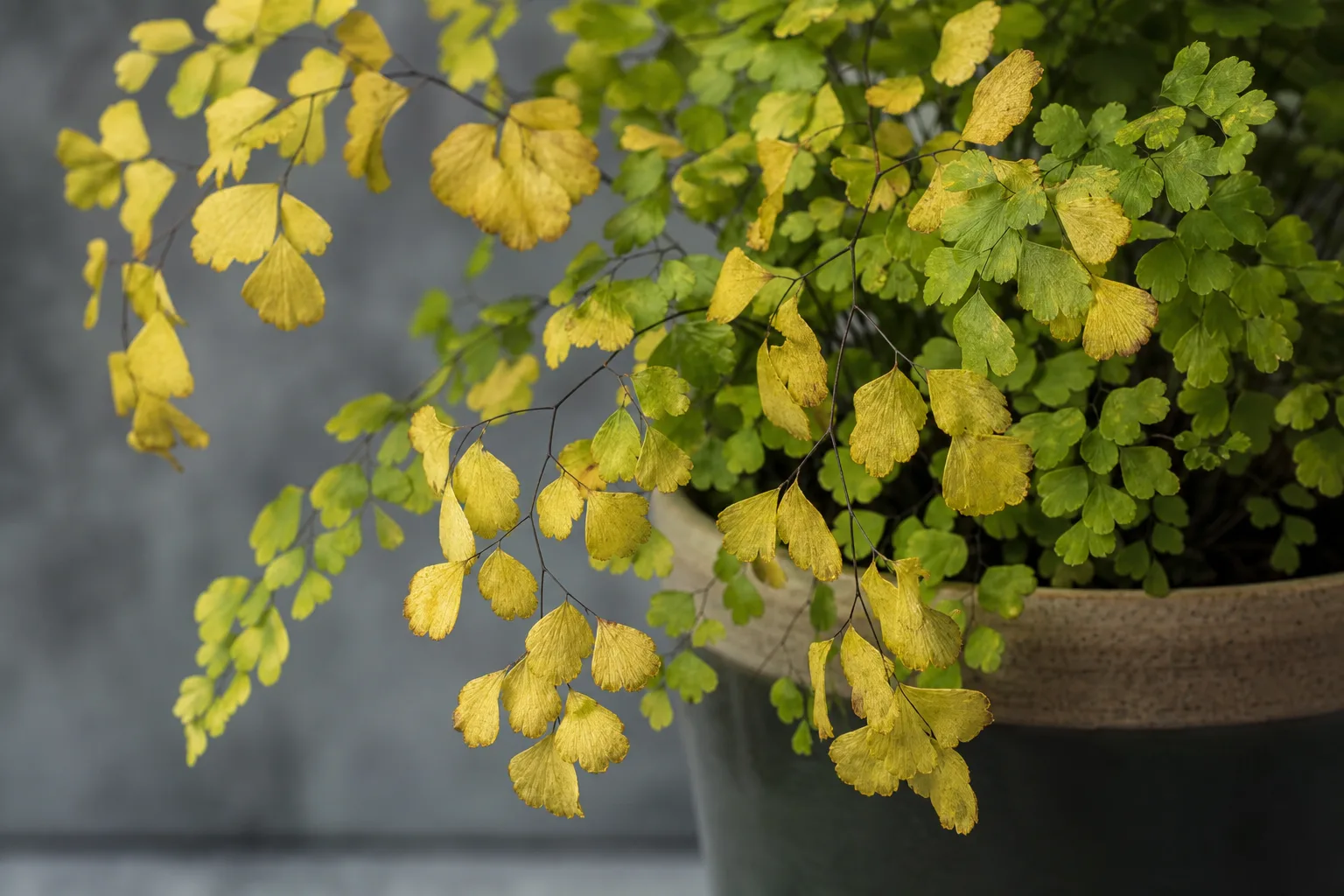
Yellow Leaves on Maidenhair Fern: Causes, Checks & Fixes
This guide covers yellow leaves on Maidenhair Fern. See also the general Yellow Leaves guide, watering, and light pages for this plant.
Yellow Leaves on Maidenhair Fern: Causes, Checks & Fixes
Quick answer
Yellow leaves on Maidenhair Fern (Adiantum raddianum) usually mean too much direct sun or chronically wet roots - not nitrogen deficiency. The wet-soil mismatch matters: limp yellow fronds despite heavy, damp mix point to root uptake failure, not thirst.
First step: move to bright indirect light and inspect drainage and root firmness before the next watering. For light placement detail, see the Maidenhair Fern light guide. For wet-root salvage, see root rot on Maidenhair Fern when inspection finds mushy roots.
What yellow leaves look like on Maidenhair Fern
On Maidenhair Fern, yellowing typically affects whole fronds or large sections of leaflets, turning chartreuse then straw-yellow before browning. Black wiry stems often stay dark while leaf tissue fades - a useful diagnostic clue that separates foliar stress from crown rot unless stipes themselves soften.
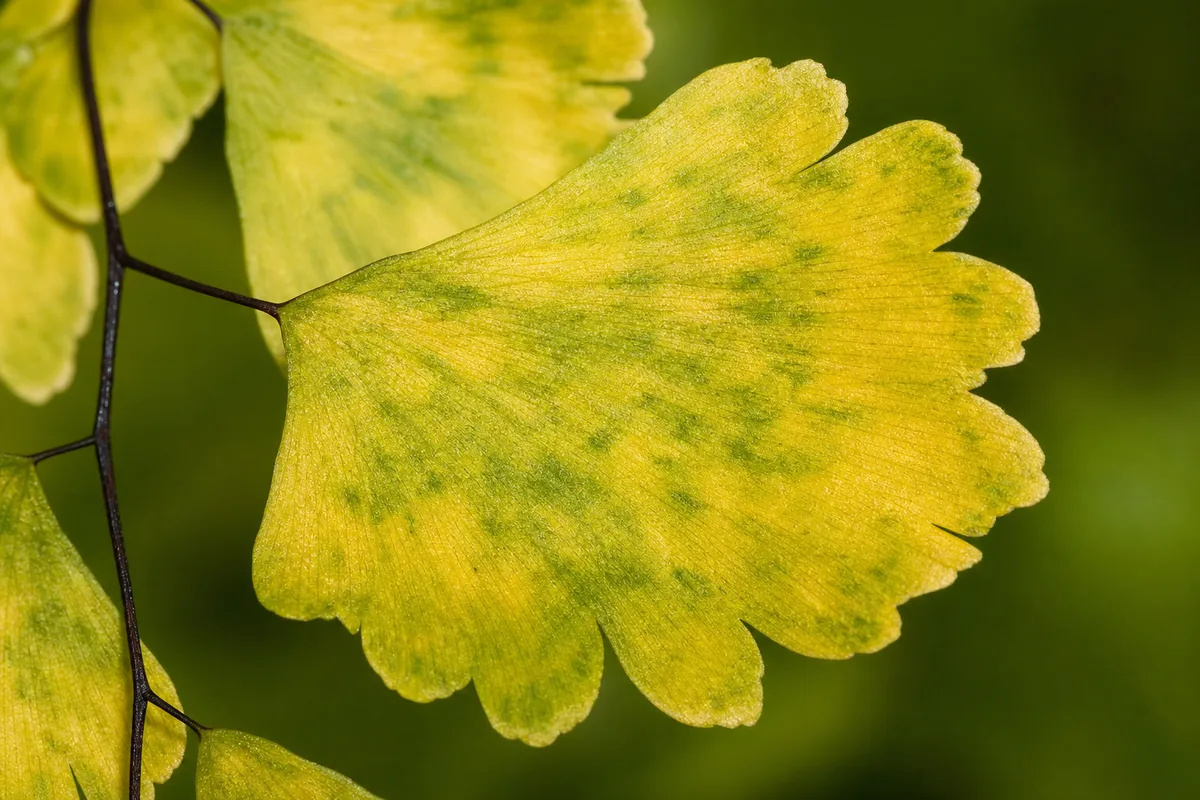
Yellow Leaves symptoms on Maidenhair Fern - compare with healthy tissue on the same plant.
Common patterns:
- Lower or outer fronds yellow first while new center fronds still look green
- Uniform pale green-yellow fronds on the sun-facing side of the plant
- Yellow fronds that feel limp despite wet soil - root uptake failure
- Rapid mass yellowing after the pot sat in standing saucer water
- Stippled yellowing with raised brown bumps or white cottony clusters on stipes - pest stress
Leaves may scorch in direct sun. Sun stress often adds crispy brown patches; pure overwatering yellows without scorch marks but pairs with heavy pots and sour odor. For scorch-only cases with minimal wet-soil involvement, see sunburn on Maidenhair Fern.
Yellow leaves vs lookalikes (quick check)
| Pattern you see | Most likely issue | Fast differentiator |
|---|---|---|
| Sun-facing uniform chartreuse fronds + crispy edges | Direct light burn | Pot weight normal; roots firm; no sour smell |
| Limp yellow fronds + heavy wet pot + sour smell | Overwatering / root rot | Mushy roots; see overwatering or root rot |
| One or two oldest outer fronds fade at base | Normal senescence | New center croziers stay bright green |
| Light dry pot + immediate frond collapse | Underwatering | Opposite of wet-soil yellowing; see underwatering |
| Brown tips first, slow spread | Low humidity alone | Whole fronds rarely yellow first; see low humidity |
| Raised bumps or white fluff on black stipes | Scale or mealybugs | Sticky residue; inspect with magnification |
Black stems staying dark while leaflets fade = foliar stress, not stem rot - unless the crown softens or stipes turn mushy at soil level.
Why Maidenhair Fern gets yellow leaves
Too much direct light
Too much direct light bleaches and yellows thin fern tissue. Maidenhair Fern responds best to bright indirect light including diffused sun, but dislikes direct sun. NC State Extension notes this fern needs partial shade to shade and loses vitality in too much shade or full sun. South- or west-facing sills without sheer curtains are a frequent cause - especially after a well-meaning move from a dim corner.
Overwatering, poor drainage, and root rot
Overwatering and poor drainage starve roots of oxygen. Over-watering and poor drainage can cause root rot and yellowing even while surface soil feels moist. Maidenhair Fern needs steady moisture - but in well-drained, airy mix, not a stagnant swamp. The soil guide 50/30/20 blend (compost, coco coir, fine bark) holds moisture without turning anaerobic.
Root rot or decay from prior waterlogging limits water uptake; fronds yellow and wilt with wet soil. Wilted leaves may indicate soil that is too wet when rotting roots cannot take up water.
Cool dim corners and winter overwatering
Cool, dim conditions plus frequent watering keep mix wet while the plant uses little water - common in winter near closed windows. Caregivers water on habit to prevent the dryness maidenhair hates, but low light slows transpiration. The pot stays saturated for days while fronds yellow from root stress. The watering guide ties drink timing to pot weight and top-centimeter dry-down, not a fixed calendar.
Pests, drafts, and less common causes
Watch for scale and mealybugs on maidenhair fern. Scale appears as small hard bumps on stipes and leaflets; mealybugs look like white cottony masses in frond crevices. Both drain sap and can yellow or stipple tissue before you notice the insects. See scale insects on Maidenhair Fern and mealybugs on Maidenhair Fern for treatment paths.
Avoid placing plant in drafty areas or in locations near heat registers. Cold drafts and radiator blasts dry fronds unevenly and can yellow or crisp leaflets without the wet-pot pattern of root failure.
Fluoride or hard-water tip burn usually browns leaflet edges first rather than whole-frond chartreuse - water quality detail lives in the watering guide.
How to confirm the cause
- Light check - Do fronds receive direct sun for any part of the day? Is the yellow side facing the glass?
- Moisture history - Has mix stayed wet 3+ days? Is the pot heavier than usual?
- Drainage - Are holes blocked? Does a decorative cachepot hold water?
- Smell and roots - Sour odor or mushy tan roots confirm rot; firm pale roots suggest light or temporary stress.
- Pest scan - Inspect black stipes and leaflet undersides for scale shells or mealybug fluff.
- New growth - Pale stretched fronds in a dark corner indicate too little light, not overwatering.
Underwatering yellows are less common on Maidenhair Fern but show dry, light pots and immediate frond collapse - opposite of wet-soil yellowing.
First fix for Maidenhair Fern
Relocate to bright indirect light and pause watering until you inspect roots.
Move the plant behind sheer curtains or farther from the window so fronds never touch direct sun. If soil is wet and smells off, unpot gently, trim mushy roots, and repot into fresh airy mix from the soil guide - coco coir, fine bark, and compost in a pot with open drainage.
If roots are firm and soil is merely wet, let the top centimeter dry slightly before the next thorough drink. Empty saucers completely.
For recovering fronds in dry rooms, consider siting pots in bathrooms where atmospheric humidity is generally higher or use a pebble tray - but only after drainage and light are corrected. NC State Extension notes this fern does well in bathrooms and terrariums when humidity is high; Gardeners’ World recommends bathroom or terrarium placement for steamy air. High humidity helps stressed leaflets; it does not fix waterlogged roots.
Step-by-step recovery by cause
Light-burn protocol
- Move to bright indirect light - no direct sun on leaflets.
- Remove fully scorched fronds at soil level once placement is stable.
- Hold fertilizer until new green croziers unfurl.
- Do not jump from deep shade to harsh sun - transition over a week with sheer curtain.
Waterlogged-root protocol
- Stop watering; empty saucers and cachepots.
- Unpot if yellowing is widespread with wet, sour mix; rinse and inspect roots.
- Trim brown or mushy roots; keep firm pale tissue only.
- Repot into fresh moisture-retaining but draining mix sized to the root ball.
- Water lightly once, then resume when the top centimeter is barely dry per the watering guide.
- Remove fully yellow collapsed fronds at soil level; wait for new green fronds.
Hold fertilizer until active new growth returns.
Salvage via rhizome division
Severe root rot with most roots mushy gives a poor prognosis - Maidenhair Fern rarely rebounds from advanced decay. Division of any firm rhizome sections with healthy stipes is the salvage path. If crown tissue is soft throughout, rescue odds are low - see root rot on Maidenhair Fern for the full trim-and-repot sequence.
Recovery timeline
Maidenhair Fern may produce new fronds in 2–4 weeks once light and roots stabilize. Yellowed leaflets on old fronds will not re-green - judge recovery by new croziers, not old tissue.
Severe root rot with most roots mushy gives a poor prognosis. Division of firm rhizome sections is the last salvage option before replacement.
Causes to rule out
- Low humidity alone - Usually browns tips first, not whole-frond yellowing. See low humidity on Maidenhair Fern.
- Normal senescence - One or two oldest outer fronds fade naturally at the base.
- Fungus gnats - Nuisance flies; yellowing usually ties to wet soil, not gnats directly.
- Nutrient deficiency - Uncommon when mix is fresh; fix environment before fertilizing.
What not to do
Do not add nitrogen fertilizer to yellow stressed fronds. Do not keep watering limp plants without checking roots. Do not move from deep shade directly to harsh sun - transition gradually with sheer curtain. Avoid Maidenhair Fern repotting guide into heavy garden soil or oversized pots. Do not assume a dim bathroom will fix yellowing without drainage and adequate light.
How to prevent yellow leaves next time
Match bright indirect light with a moist but draining mix - 50% compost, 30% coco coir, 20% fine orchid bark works well for this species. Use consistently moist but well-drained potting soil.
Water when the top centimeter dries slightly, not when calendar says so. Be sure the plant’s pot drains well and avoid letting plants stand in water. Maintain a very humid atmosphere with pebble trays, a humidifier, or appropriate bathroom or terrarium placement - without that support, this fern is difficult to keep healthy indoors.
Review the Maidenhair Fern overview for the full care cluster: watering, light, and soil.
Maidenhair Fern care cross-check
Use this quick logic before a second intervention:
- Fronds limp + pot heavy/wet → inspect roots; see overwatering or root rot.
- Sun-facing uniform pale fronds → shade first; see light guide.
- Black stipes firm + one basal frond fading → likely senescence; wait for new croziers.
- Stippling + bumps on stipes → check scale and mealybugs.
Correct the condition that changed most recently first, then wait two weeks before changing anything else.
How this guide was verified
This guide is written specifically for maidenhair fern yellow-frond diagnosis, then checked against extension and botanical references for high-stakes claims. Inline citations are placed directly next to claims they support, and unresolved contradictions are flagged for review rather than silently rewritten.
When to worry
Treat as urgent when the crown softens, yellowing spreads to all new fronds within a week, or roots are mostly mushy on inspection. Early yellowing on a few fronds after a sunny window placement is reversible with shade and adjusted watering.
Conclusion
Maidenhair Fern yellow leaves signal light burn or root-zone stress more often than hunger. Confirm sun exposure and soil moisture, inspect roots when wet soil pairs with limp yellow fronds, and restore bright indirect light with evenly moist - not stagnant - mix. Black stems staying firm while leaflets fade is normal foliar stress on this species; soft crowns are not. Judge recovery by new green fronds, not old yellow tissue.
When to use this page vs other Maidenhair Fern guides
- Maidenhair Fern watering guide - Use for routine moisture checks before assuming yellow leaves is the main issue.
- Maidenhair Fern problems hub - Browse all 55 common issues on this species.
- Overwatering on Maidenhair Fern - Different entry point when symptoms overlap with yellow leaves.
- Underwatering on Maidenhair Fern - Different entry point when symptoms overlap with yellow leaves.
- Not Enough Light on Maidenhair Fern - Different entry point when symptoms overlap with yellow leaves.