Scale Insects on Maidenhair Fern: Causes, Checks & Fixes
Quick answer
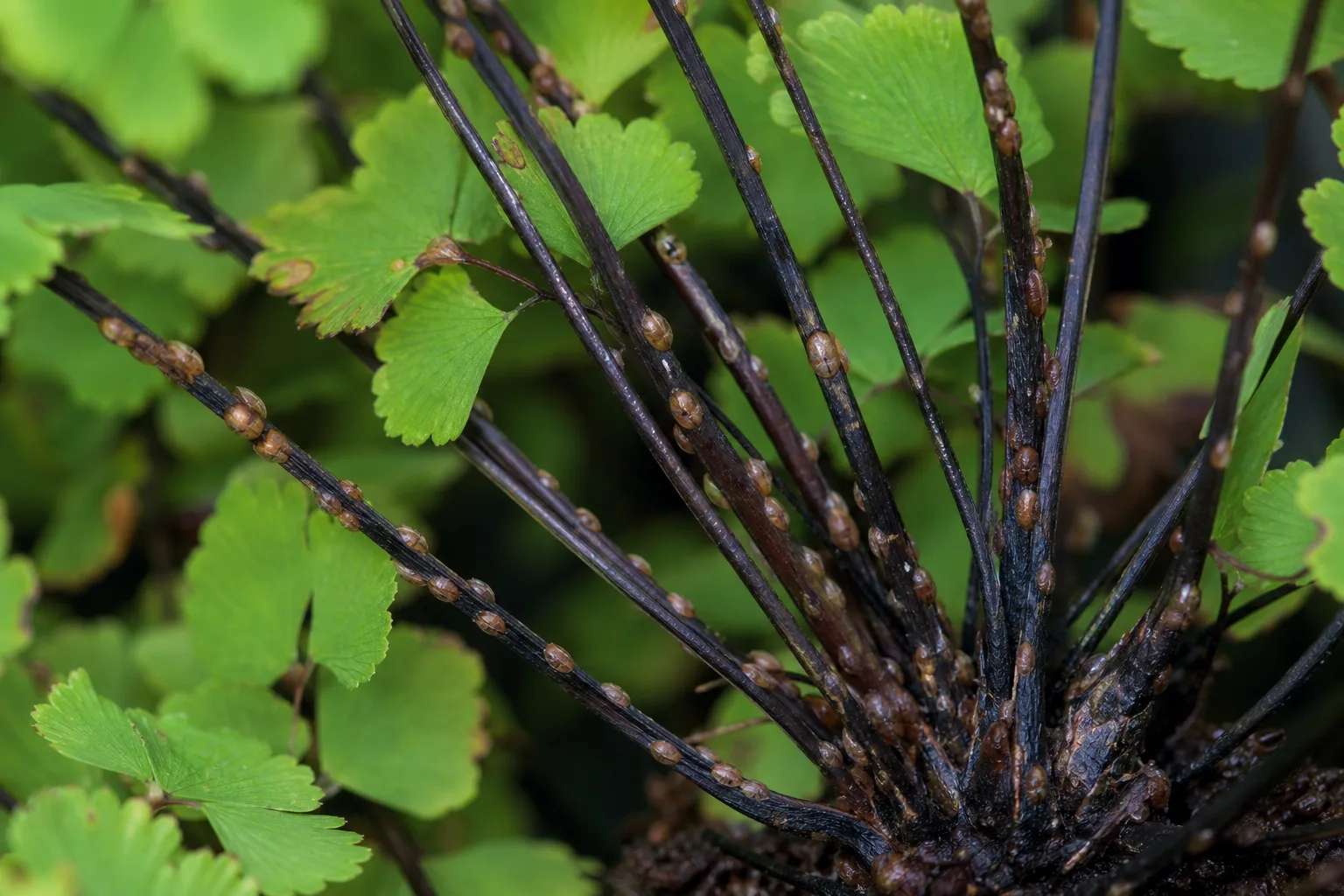
Scale insects on Maidenhair Fern look like flat brown or white bumps on black stems and frond bases, often with sticky honeydew. First step: isolate the plant and remove every visible scale with an alcohol-dipped swab before applying any spray.
Scale Insects on Maidenhair Fern: Causes, Checks & Fixes
This guide covers scale insects on Maidenhair Fern. See also the general Scale Insects guide, watering, and light pages for this plant.
Scale Insects on Maidenhair Fern: Causes, Checks & Fixes
Quick answer
Scale insects on Maidenhair Fern (Adiantum spp.) appear as flat brown or white shell-like bumps on black wiry stems and frond bases, often with sticky honeydew on delicate leaflets before you notice stem colonies during casual watering. First step: isolate the plant and scrape off every visible scale with a cotton swab dipped in 70% isopropyl alcohol before applying any spray.
Maidenhair Fern’s thin black stems and crowded croziers give scale plenty of attachment points that casual rinsing misses. Fern scale (Pinnaspis aspidistrae) is a common culprit on true ferns - male scales show as conspicuous white flecks against dark stems, while females form small brown oyster-shaped shields. Brown soft scale also attacks ferns indoors and produces honeydew that can lead to sooty mold on fine foliage.
What scale insects look like on Maidenhair Fern
Scale on Maidenhair Fern does not look like a disease spot - it is an insect glued to the plant. On this fern, honeydew often coats upper leaflets first because fine foliage catches sticky droplets before you bend down to inspect black rachises at the crown.
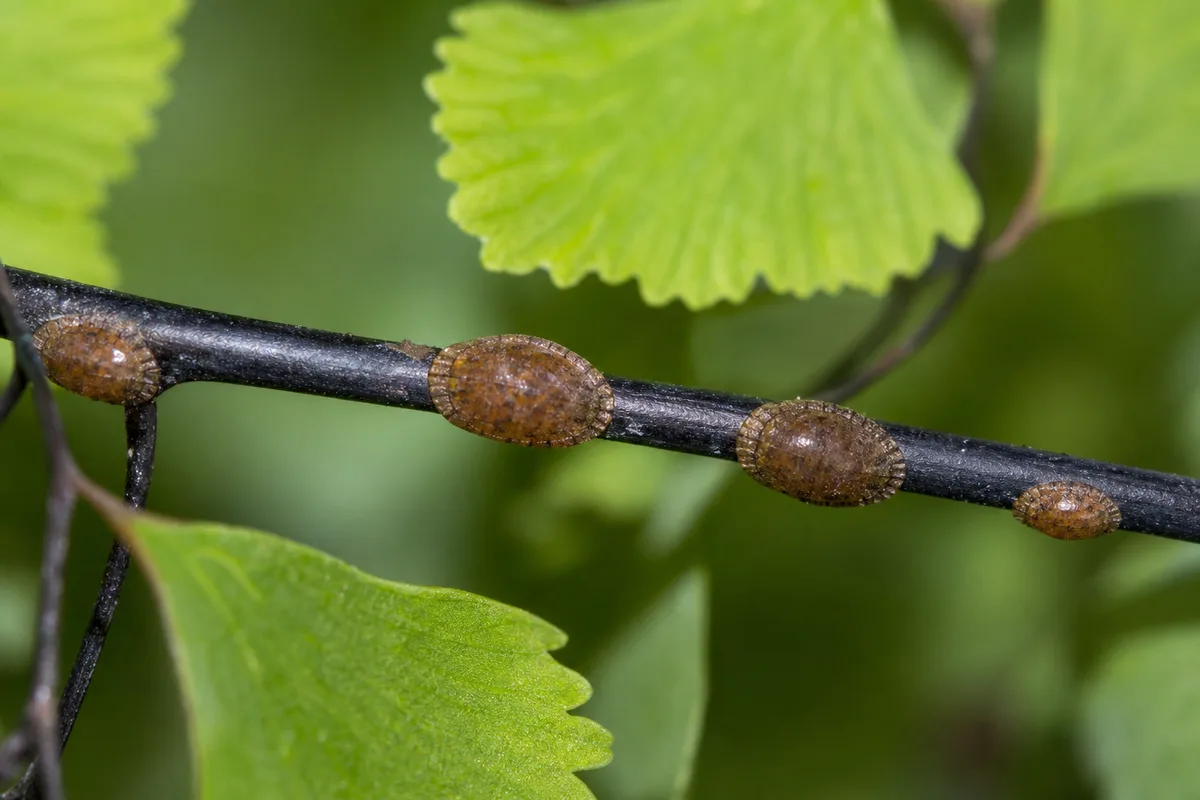
Scale Insects symptoms on Maidenhair Fern - compare with healthy tissue on the same plant.
Where to inspect: stem joints, croziers, pot rim
Check these locations first:
- Black stem joints where fronds branch from the crown
- Frond bases and croziers before leaflets fully open
- Undersides of older leaflets near the rachis
- Pot rim and soil line where stems touch moist mix
Typical signs include:
- Flat brown, tan, or oyster-shaped bumps that do not wipe off with a dry cloth
- White ridged flecks on dark stems (male fern scale armor)
- Sticky, shiny leaflets and nearby surfaces from honeydew
- Yellowing or pale spots on leaflets near heavy clusters
- Black sooty mold growing on honeydew deposits - overlap with sticky leaves on Maidenhair Fern and mold on soil when residue spreads below the crown
- Gradual frond wilt or stunted new growth when feeding is heavy
- Ant trails on shelves or pot rims farming honeydew from soft scale colonies
Scale adults are immobile once settled. Only brief crawler stages move between plants, which is why early removal stops spread better than a single spray.
Fern scale vs. brown soft scale on black stems
| Sign | Fern scale (Pinnaspis aspidistrae) | Brown soft scale (Coccus hesperidum) |
|---|---|---|
| Bump shape | Flat oyster-shaped brown shields; white ridged male armor on stems | Rounded, tan to brown, slightly convex bumps |
| Best visible on | Black rachises and croziers - white male flecks contrast sharply | Persistent stems and older frond bases |
| Honeydew | Light to moderate; males do not feed beyond second stage | Often heavy; sticky leaflets are an early clue |
| Sooty mold | Common on upper leaflets when honeydew accumulates | Common; may coat multiple fronds quickly |
| Treatment note | Two horticultural oil cycles two weeks apart per NC State fern-scale guidance | Same contact sprays; armor is softer and may wipe easier |
On maidenhair, both pests hide in the same stem crevices - identification matters less than confirming immobile bumps plus honeydew, then treating the whole plant on a repeat schedule.
Why Maidenhair Fern gets scale insects
New plant introduction - Scale hitchhikes on nursery ferns tucked against stem bases. Skipping quarantine is the most common entry route into a collection.
Fern scale host preference - Pinnaspis aspidistrae infests many true ferns, including maidenhair types, along with palms and broadleaf houseplants. The pest is built for foliage plants with sheltered stem crevices.
Brown soft scale on ferns - Brown soft scale (Coccus hesperidum) is common on houseplant ferns, favoring perennials with persistent stems like Maidenhair Fern over short-lived annuals.
Stress from dry air - Maidenhair Fern collapses quickly when humidity drops or watering lapses. Stressed plants do not attract scale by themselves, but weakened ferns recover slowly from sap loss and tolerate treatment poorly.
Crowded frond bases - Dense crowns trap humidity and hide bumps until honeydew or sooty mold appears on upper leaflets.
Indoor-outdoor cycling - Summering ferns outdoors exposes them to scale reservoirs on garden plants; insufficient inspection on return indoors spreads crawlers to the collection.
How to confirm the cause
Work through these checks before treating:
- Scrape test - Mature scale flakes off with gentle pressure from a fingernail, toothpick, or swab. Mineral deposits and old scars do not.
- Color and shape - Brown flat shields or white ridged flecks on stems point to scale. White cottony clusters in axils suggest mealybugs instead.
- Honeydew - Sticky fronds near bumps confirm sap feeders, not fungal leaf spots.
- Underside inspection - Use a hand lens on stem joints; crawlers look like tiny moving dots compared with immobile adults.
- Spread check - Inspect ferns, palms, and broadleaf plants sharing the same window or shelf.
- Care cross-check - Confirm the fern is not underwatering on Maidenhair Fern or sitting in soggy mix. Scale and root stress can overlap, but bumps on stems confirm pests.
Symptom lookalike comparison
| What you see | Likely cause | Key differentiator |
|---|---|---|
| Hard flat bumps on black stems | Scale | Flakes off with scrape test; may have honeydew |
| White cottony wax in axils | Mealybugs | Soft wax, not oyster-shaped armor |
| Chalky white spots on leaflets | Mineral deposits | Wipes off dry; no live body beneath |
| Flat water-soaked lesions | Edema or leaf spot | On leaflets only; no stem bumps |
| Fixed brown patches on old stems | Corky scars | Does not spread; no stickiness |
| Soft green insects on new growth | Aphids | Mobile; see aphids on Maidenhair Fern |
| Fine stippling with webbing | Spider mites | Dry-air pest; see spider mites |
If bumps are absent and stickiness is gone after a thorough rinse, reconsider mealybugs, aphids, or mineral residue before spraying.
First fix for Maidenhair Fern
Isolate and manually remove every visible scale before applying any pesticide.
Move Maidenhair Fern away from other plants. Dip a cotton swab in 70% isopropyl alcohol and wipe each bump on stems and frond bases - contact kills exposed scale under the shell. Support delicate fronds with your free hand; do not soak the entire crown in alcohol. On thin black rachises, a brief dab on the bump alone beats dragging alcohol across the full frond length, which can crisp delicate tissue.
Physically removing scale immediately lowers the population and makes it easier to spot any rebound during follow-up checks. Dead scale may remain on the plant after alcohol treatment, so mark treated stems or photograph them so you can tell old shells from new infestations.
Do not reach for systemic insecticides on day one. Imidacloprid does not control armored scales such as fern scale, and many systemics stress sensitive ferns. Do not repot or prune heavily before pest removal - both add stress to an already sap-drained fern.
Step-by-step recovery
After manual removal:
- Gentle frond rinse - Wash leaflets and stems with lukewarm water in the sink; let the pot drain fully. Time rinses so the fern returns to stable humidity afterward - a wet crown in dry air invites frond drop during recovery.
- Horticultural oil or insecticidal soap - Apply a product labeled for houseplants, covering stems, frond bases, and leaflet undersides. Horticultural oils and insecticidal soaps work by direct contact and must coat crawlers and soft-bodied nymphs.
- Fern sensitivity patch test - Ferns are sensitive to many pesticides, though horticultural oil is usually tolerated when plants stay shaded until the spray dries. Test one frond first; wait 48 hours before full application.
- Repeat on a label interval - Plan two thorough treatments about two weeks apart for fern scale, matching extension guidance for true ferns. Continue weekly monitoring for six weeks because crawlers hatch on staggered schedules.
- Re-swab new bumps - Any scale alcohol missed will look unchanged; scrape and dab again rather than relying on spray alone.
- Wash sooty mold - Once honeydew production stops, rinse black coating off leaflets with plain water.
- Manage ants - If ants farm honeydew on the shelf, wipe trails and isolate the fern so ants do not protect surviving scale colonies.
- Quarantine - Keep the fern isolated until no new live scale appears for at least two weeks.
- Hold fertilizer - Resume half-strength feeding only after new fronds emerge clean.
Recovery timeline
Light infestations on a stable fern often show cleaner new croziers within three to four weeks when manual removal and oil or soap repeats stay on schedule. Sooty mold fades as honeydew dries up; expect visibly cleaner leaflets within one to three weeks after insects are controlled.
Heavy stem coverage on a drought-stressed plant with widespread yellowing may take six weeks or longer, and some damaged leaflets will not revert - judge success by new fronds without bumps, not by old scarred tissue.
What not to do
Do not use homemade soap mixes - do not mix homemade soap products as this can burn plants. Do not apply full-strength alcohol across entire fronds; spot-treat bumps only. Avoid broad-spectrum sprays not labeled for indoor ornamentals. Do not place the fern in direct sun immediately after oil or soap treatment. Do not return it to the collection while live scale remains on stems. Skip neem oil as a default on maidenhair - many growers see leaflet burn; horticultural oil after patch test is the safer extension-backed repeat spray.
How to prevent scale next time
Quarantine new plants at least two weeks and inspect black stem bases before placing Maidenhair Fern near the collection. Keep newly acquired houseplants in an isolated area away from sensitive ferns.
After outdoor summer placement, rinse and inspect every stem joint before the fern rejoins indoor shelves - crawlers move during the transition week. Weekly stem and crown checks during watering catch new bumps before honeydew spreads. Feed half-strength only during active growth - avoid soft nitrogen flushes that produce tender tissue pests prefer. Watch for scale and mealybugs as part of routine Maidenhair Fern care.
Maidenhair Fern care during recovery
Scale recovery needs stable moisture and humidity - do not let pest treatment coincide with drought stress or a cold draft that triggers mass frond drop. Keep watering even and humidity steady while sprays dry on shaded foliage; a recovery tray or grouped plants helps more than misting directly onto oil-treated fronds.
Maidenhair Fern is non-toxic to cats and dogs, but keep alcohol swabs and pesticides away from pets until sprays dry. Contact your veterinarian if a pet chews alcohol-treated or pesticide-coated fronds.
When to worry - and when to discard
Escalate when white fern scale armor covers most stems, honeydew leads to thick sooty mold blocking light, ants persist despite cleaning, or multiple collection plants show new bumps within a week. Spot treatment on one isolated stem succeeds when caught early.
If live scale remains after six weeks of documented alcohol removal plus two oil or soap cycles on schedule, contact your local cooperative extension office for pest-ID help and product options suited to indoor ferns - chronic armored scale often needs professional eyes on crawler timing.
Discard and bag a collapsing, heavily infested fern before crawlers reach neighboring plants - bag the plant before removing to limit spread.
Related Maidenhair Fern problems
- Maidenhair Fern overview - baseline care for this species
- Mealybugs - cottony wax in stem axils, not hard shields
- Aphids - soft mobile insects on new growth
- Spider mites - stippling in dry indoor air
- Sticky leaves - honeydew and sooty mold follow-up
- Low humidity - stress that slows recovery after treatment
- Watering - stable moisture during quarantine
When to use this page vs other Maidenhair Fern guides
- Maidenhair Fern watering guide - Use for routine moisture checks before assuming scale insects is the main issue.
- Maidenhair Fern problems hub - Browse all 55 common issues on this species.
- Sticky Leaves on Maidenhair Fern - Different entry point when symptoms overlap with scale insects.
- Yellow Leaves on Maidenhair Fern - Different entry point when symptoms overlap with scale insects.
- Mealybugs on Maidenhair Fern - Different entry point when symptoms overlap with scale insects.