Aphids on Maidenhair Fern: Causes, Checks & Fixes
Quick answer
If soft pear-shaped bodies move on new croziers with sticky honeydew, treat as aphids. Cottony white wax on black stems may be mealybugs instead. Isolate, wash every frond, then use insecticidal soap labeled for houseplants.
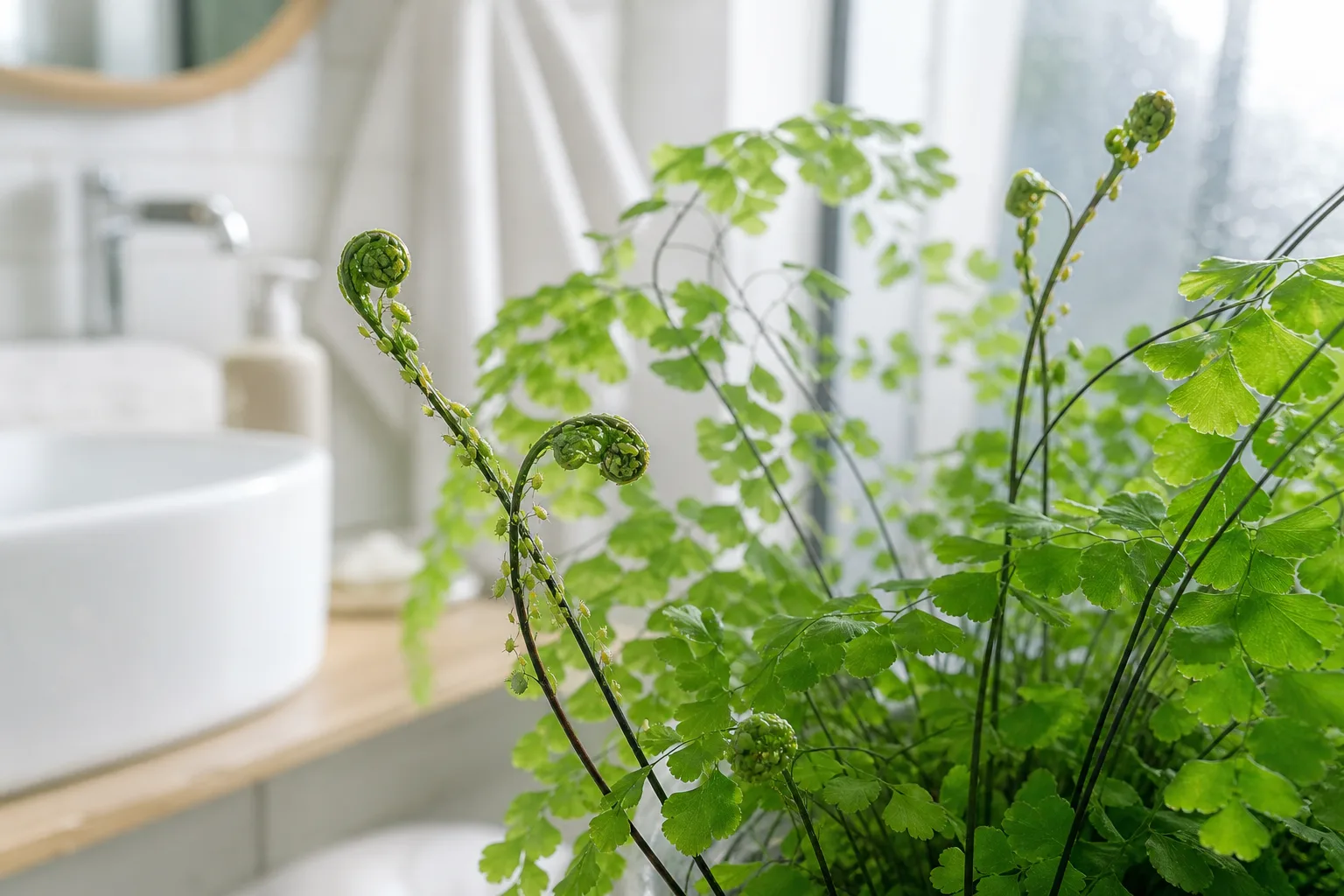
Aphids on Maidenhair Fern: Causes, Checks & Fixes
This guide covers aphids on Maidenhair Fern. See also the general Aphids guide, watering, and light pages for this plant.
Aphids on Maidenhair Fern: Causes, Checks & Fixes
Quick answer
Soft pear-shaped bodies that move on unfurling croziers with sticky honeydew point to aphids on Maidenhair Fern (Adiantum raddianum and related Adiantum species). Cottony white wax on black stem joints may be mealybugs instead-confirm before spraying.
First step: isolate the plant and wash every frond with lukewarm water, then treat with insecticidal soap labeled for houseplants if live aphids remain.
Maidenhair Fern’s constantly emerging fronds provide fresh feeding sites for aphids unless caught early. Use yellow sticky traps to detect winged aphids near infested ferns-traps monitor spread, not replace washing.
For baseline culture while you treat, see the watering guide and overview.
What aphids look like on Maidenhair Fern
Aphids on delicate maidenhair fronds cluster where tissue is softest:
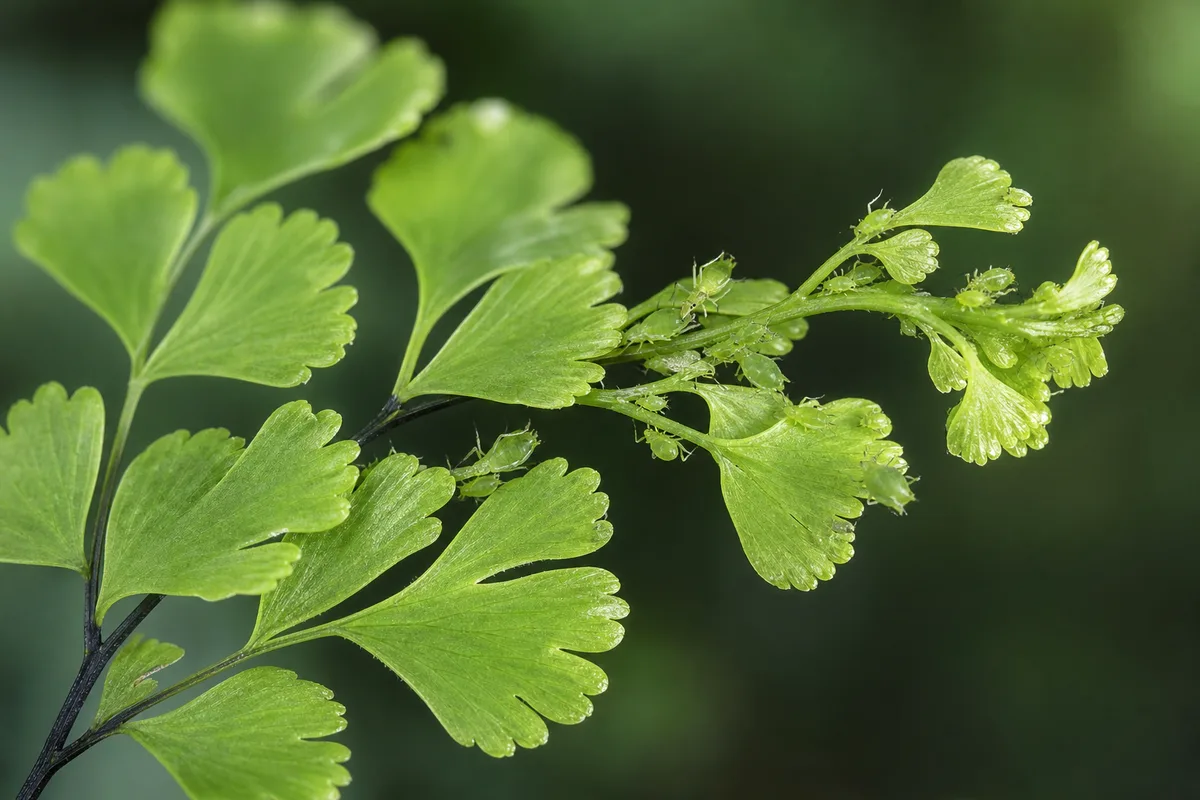
Aphids symptoms on Maidenhair Fern - compare with healthy tissue on the same plant.
- Unfurling croziers at the crown before leaflets fully expand
- Undersides of newest leaflets along characteristic black stipes
- Soft green, black, or yellow pear-shaped bodies-visible without magnification on heavy infestations
- Common houseplant species include green peach aphid (Myzus persicae) and melon aphid (Aphis gossypii)
Damage includes curled or distorted new fronds, shiny honeydew on fine pinnae, sooty black mold growing on dried honeydew, and stunted frond expansion. On maidenhair’s membranous leaflets, sooty mold spreads faster than on thick-leaved houseplants because honeydew coats more surface area per frond.
Winged aphids may fly to neighboring plants when colonies crowd-a reason to isolate immediately and place traps.
Aphids vs. mealybugs on the same crown
| Sign | Aphids | Mealybugs |
|---|---|---|
| Body appearance | Soft, exposed, pear-shaped | Hidden under white cottony wax |
| Typical location | New croziers and tender leaflet undersides | Stem joints, crown crevices, pot rim |
| Movement | Crawl when disturbed | Slow movement when wax is parted |
| Crush test | Smears easily | Pink fluid under wax when crushed |
| Primary sibling guide | This page | Mealybugs on Maidenhair Fern |
Why Maidenhair Fern gets aphids
Outdoor summer exposure - Aphids colonize patio ferns and ride indoors in fall, often with ants farming honeydew on outdoor specimens.
New nursery stock - Quarantine gaps allow introduction to collections. Keep newly acquired houseplants isolated during a two-week monitoring period.
Soft nitrogen-rich growth - Over-fertilized ferns produce tender tissue aphids prefer. Hold fertilizer during active infestation.
Constantly emerging fronds - Unlike slow-growing succulents, maidenhair pushes new croziers continuously, giving aphids fresh feeding sites every few days in warm conditions.
Ant association - Ants protect aphids from predators in exchange for honeydew. Outdoor specimens with ant trails on pots need both pest treatment and ant disruption at the pot base.
Adiantum species are susceptible to common houseplant pests including aphids, mealybugs, and scale-regular crown inspection is part of normal care.
Lookalike symptoms to rule out
| Symptom pattern | Likely cause | Next step |
|---|---|---|
| Sticky fronds, soft moving insects on new tips | Aphids | Wash + soap protocol below |
| White cottony wax on stems, no exposed pear bodies | Mealybugs | Alcohol dab on wax clusters first |
| Fine webbing, stippled yellow leaflets | Spider mites | Increase humidity; miticide per label |
| Silver scarring, black specks in tissue | Thrips | Blue sticky traps; repeat soap |
| Sticky leaves, no insects visible | Sticky leaves triage | Magnify crown; check for scale |
| Dry curled margins, no honeydew | Low humidity | Humidifier; tray-not overwatering on Maidenhair Fern |
How to confirm the cause
- Visual ID - Soft-bodied insects that move when disturbed; not cottony (mealybugs) or armored (scale).
- Location - Concentrated on newest growth at crown.
- Honeydew - Sticky fronds confirm sap feeders; see sticky leaves guide if residue appears before insects.
- Sticky traps - Winged forms caught on yellow traps near the pot.
- Exclude mites - No fine webbing; aphids are larger and slower than spider mites.
- Mealybug check - Part any white wax on black stipes; aphids stay exposed on croziers, mealybugs hide under fluff.
First fix for Maidenhair Fern
Isolate and wash fronds thoroughly before spraying.
Move Maidenhair Fern away from other plants. Rinse every frond-especially undersides and croziers-with lukewarm gentle spray in a sink. Support delicate leaflets to prevent breakage.
Drain well after rinsing. Maidenhair rhizomes rot if the crown stays saturated. Let the pot drain completely and provide airflow before returning to its usual spot-do not overwater to “boost humidity” during treatment.
Apply insecticidal soap labeled for houseplants if live aphids remain after washing-soap must contact insects directly to work. Do not mix homemade soap products; they can burn delicate pinnae.
Test one frond first. Repeat wash and soap weekly until two weeks pass with no live aphids. Maintain 60–80% relative humidity during recovery.
Step-by-step recovery
- Isolate infested fern from the collection.
- Wash all fronds top and bottom; dislodge aphids with finger pressure on sturdy black stipes only-never crush delicate pinnae.
- Let pot drain fully; avoid crown saturation.
- Apply insecticidal soap per label on one tested frond, then full plant if no burn appears in 48 hours.
- Place yellow sticky traps nearby to catch winged aphids-monitor only, not sole treatment. Position traps away from pets.
- Inspect new croziers every three to four days; re-treat at first sign of return.
- Wipe honeydew from fronds with damp cloth to limit sooty mold on fine pinnae.
- Hold fertilizer until infestation clears.
- Quarantine two weeks after last aphid sighting.
Recovery timeline
| Week | What to expect |
|---|---|
| Week 1 | First wash dislodges most visible aphids; honeydew may persist |
| Week 2 | Repeat soap; new croziers should open without heavy curl if treatment works |
| Week 3 | Two weeks with no live aphids = clear; trim distorted old fronds after clean replacement growth |
Most infestations clear in two to three weeks with weekly washing and soap. Badly distorted fronds will not reshape-remove them after replacement growth appears.
What not to do
Do not use homemade dish soap on delicate Maidenhair Fern leaflets. Do not apply horticultural oil heavily without label clearance-fern sensitivity varies. Avoid systemic pesticides not labeled for indoor ornamentals. Do not ignore ants outdoors-they maintain aphid colonies. Do not overwater to maintain humidity; use a humidifier instead. Sticky traps catch beneficial insects too-use as monitor, not treatment.
How to prevent aphids next time
Quarantine new plants two weeks; inspect new croziers before placement near Maidenhair Fern.
Feed half-strength balanced fertilizer only in active growth-avoid nitrogen flushes. Watch for scale and mealybugs alongside aphids during weekly checks.
Check patio ferns before fall move-in. Bathroom and terrarium placements can help humidity during recovery but still need crown airflow-see the overview for placement guidance.
Maidenhair Fern care cross-check
Aphid recovery needs stable moisture and humidity-do not let pest stress coincide with dry root balls. Follow the watering rhythm and target 60–80% RH per overview guidance.
Maidenhair Fern is non-toxic to cats and dogs; still keep soaps and sticky traps away from pets during application.
If fronds feel sticky but you cannot find insects, start with the sticky leaves triage guide before escalating sprays.
When to worry
Escalate when new croziers fail to open, sooty mold covers most fronds, winged aphids appear on traps at multiple pots, or aphids spread to neighboring plants. Spot treatment on one new frond succeeds when caught within days.
Related Maidenhair Fern problems
- Sticky leaves - honeydew triage when bugs are hard to see
- Mealybugs - cottony wax on stems, primary lookalike
- Spider mites and thrips - different damage patterns on fine fronds
- Low humidity - curl without honeydew
When to use this page vs other Maidenhair Fern guides
- Maidenhair Fern watering guide - Use for routine moisture checks before assuming aphids is the main issue.
- Maidenhair Fern problems hub - Browse all 55 common issues on this species.
- Sticky Leaves on Maidenhair Fern - Different entry point when symptoms overlap with aphids.
- Mealybugs on Maidenhair Fern - Different entry point when symptoms overlap with aphids.
- Yellow Leaves on Maidenhair Fern - Different entry point when symptoms overlap with aphids.