Thrips on Maidenhair Fern: Causes, Checks & Fixes
Quick answer
Thrips on Maidenhair Fern leave silvery streaks and black specks on thin leaflets and distort new croziers. Isolate, wash fronds thoroughly, set blue sticky traps, and treat with insecticidal soap labeled for houseplants if bugs persist.
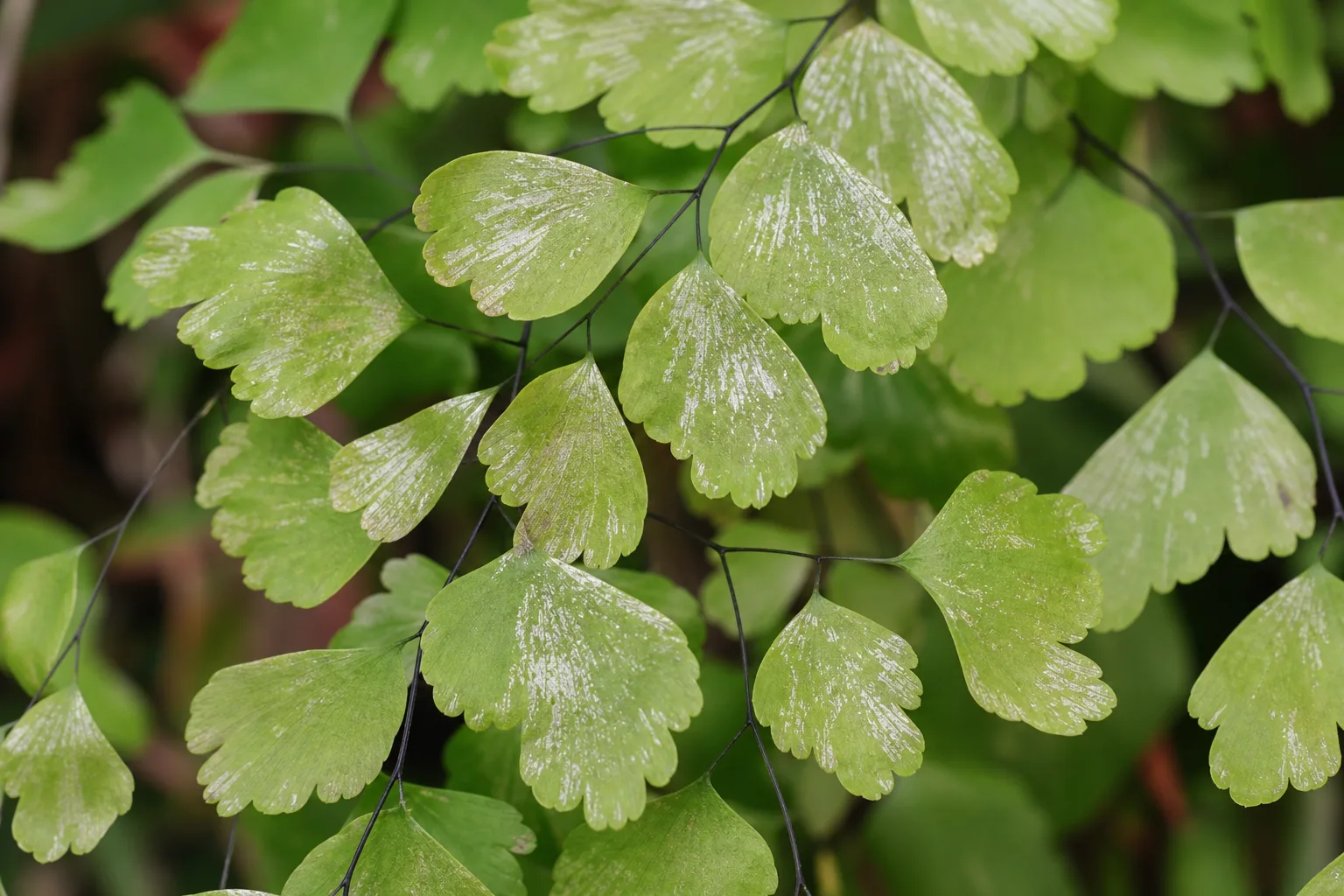
Thrips on Maidenhair Fern: Causes, Checks & Fixes
This guide covers thrips on Maidenhair Fern. See also the general Thrips guide, watering, and light pages for this plant.
Thrips on Maidenhair Fern: Causes, Checks & Fixes
Quick answer
Thrips on Maidenhair Fern (Adiantum raddianum) leave silvery streaks and black frass specks on delicate leaflets and can warp new croziers. First step: isolate the plant and wash every frond with lukewarm water, then set blue sticky traps and treat with insecticidal soap labeled for houseplants if bugs persist.
On membranous maidenhair pinnae, thrips damage shows as pale linear scars within days - faster than the stippling progression on thicker leaves. No fine webbing rules out spider mites; no sticky honeydew clusters rules out aphids.
Thrips scrape leaf surfaces with rasping mouthparts, then suck the fluid that is released. Use yellow or blue sticky traps to detect flying insects like thrips near the crown.
Thrips vs. spider mites vs. aphids on Maidenhair Fern
| Sign | Thrips | Spider mites | Aphids |
|---|---|---|---|
| Leaflet damage | Linear silvery streaks | Fine yellow stippling dots | Localized yellow halos |
| Webbing | None | Fine silk on undersides | None |
| Frass / residue | Black tar-like specks | None | Sticky honeydew |
| Insects (paper tap) | Slender, fast 1/16 in. | Tiny dots, slow | Pear-shaped clusters on tips |
| Preferred tissue | New croziers, crown crevices | Undersides in dry air | Soft new growth tips |
| Primary guide | This page | Spider mites | Aphids |
What thrips look like on Maidenhair Fern
Thrips damage on Maidenhair Fern typically appears on:
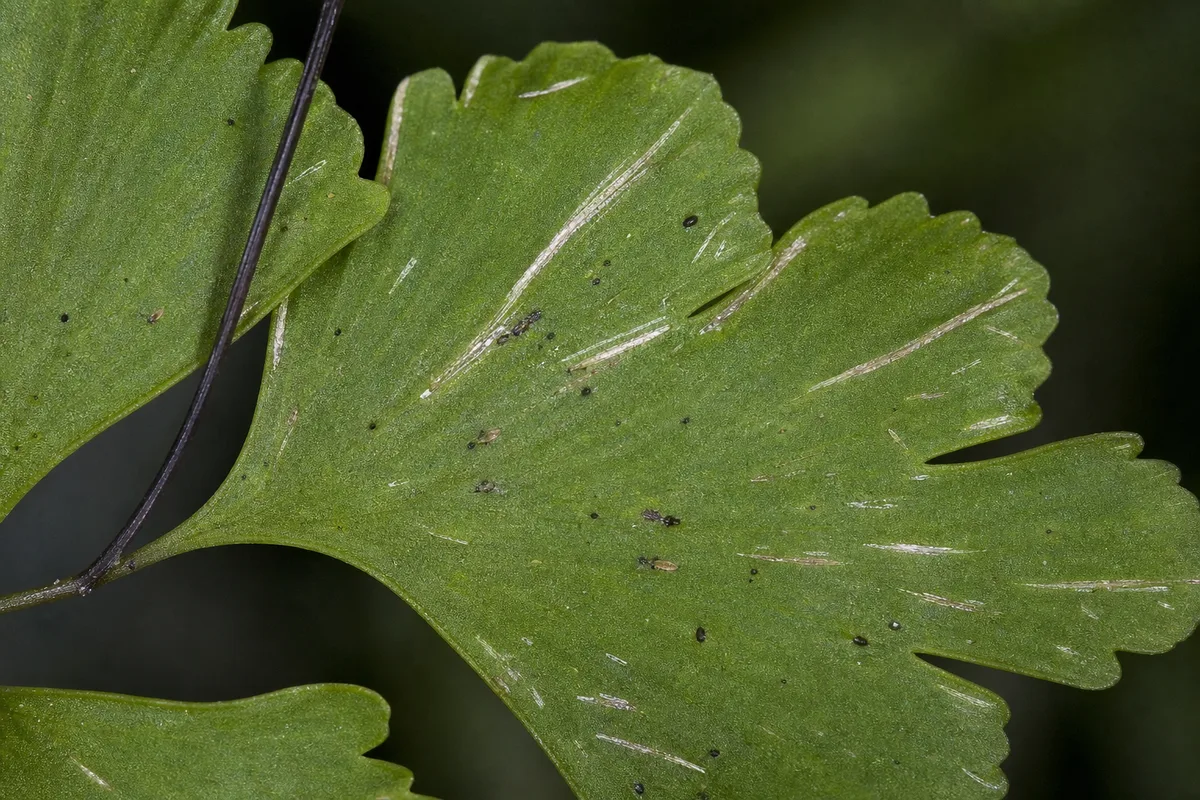
Thrips symptoms on Maidenhair Fern - compare with healthy tissue on the same plant.
- Silvery or bronze streaks running along individual leaflets on black wiry stems
- Tiny black tar-like specks - thrips frass glued near feeding scars
- Distorted or crinkled new croziers that fail to unfurl evenly
- Dull, grayish cast on affected fronds as feeding spreads
- Stalled new frond emergence when infestation is heavy
The insects themselves are very small, about 1/16 inch long and slender, usually tan or dark colored, and run quickly when disturbed. Magnification helps. Tap fronds over white paper - moving specks confirm thrips over dust or mineral deposits.
Why Maidenhair Fern gets thrips
New plant introduction - Thrips hitchhike on nursery stock; skipping quarantine spreads them to delicate ferns nearby.
Tender new growth - Maidenhair Fern constantly produces soft croziers. Thrips prefer young leaves and tucked crevices where leaf stalks join stems. NC State Extension notes Adiantum raddianum has membranous delicate fronds that show feeding damage quickly.
Outdoor summer exposure - Ferns on patios collect thrips that ride indoors when temperatures drop.
Over-fertilized soft growth - Excess nitrogen produces extra-tender tissue that attracts thrips and other insect pests.
Crowded plant shelves - Dense groupings let thrips walk or fly short distances between pots.
High humidity supports Maidenhair Fern health, and indoor high humidity may discourage most thrips species - but thrips still infest humid bathrooms and terrariums when introduced.
How to confirm the cause
- White-paper tap test - Hold paper under fronds; tap gently; look for slender moving insects.
- Silver streak pattern - Scraping damage differs from mite stippling dots or aphid honeydew shine.
- Frass check - Small dark tar-like spots glued near feeding damage confirm thrips over fungal spots.
- Crown inspection - Examine unfurling croziers and leaflet margins with a hand lens.
- Sticky trap catch - Blue or yellow cards near the pot capture winged adults within days.
- Exclude lookalikes - No webbing (mites), no cottony wax (mealybugs), no pear-shaped clusters (aphids).
First fix for Maidenhair Fern
Isolate and wash fronds thoroughly before chemical treatment.
Move Maidenhair Fern away from healthy plants. Rinse every frond - top and bottom - with lukewarm gentle spray in a sink. Support delicate leaflets with your hand to prevent breakage. Knock thrips off with a strong jet of plain water from a sink spray.
Place a blue sticky trap within two feet of the crown to catch adults. Repeat washing every 2–3 days for two weeks.
If live thrips remain, apply insecticidal soap labeled for houseplants - insecticidal soap is effective against thrips when spray covers insects directly. Do not mix homemade soap products as this can burn plants. Test on one frond first; Maidenhair Fern leaflets are sensitive.
Step-by-step recovery
- Isolate infested Maidenhair Fern from the collection.
- Wash all fronds and stems; drain the pot well afterward - do not let roots sit waterlogged; see watering guide for moisture rhythm during treatment.
- Set blue sticky traps near the crown; replace when coated.
- Repeat water washes every 2–3 days; inspect with paper tap test.
- Apply insecticidal soap per label if washing alone fails - cover croziers and undersides.
- Trim badly distorted fronds at soil line once clean new growth appears.
- Hold fertilizer until two weeks pass with no new damage.
- Quarantine two weeks after last thrips sighting before returning near other plants.
- Monitor neighbors that shared the same shelf or window.
Because juveniles may pupate on leaves or in soil, repeat treatments for at least three weekly cycles - one spray rarely clears an infestation.
Recovery timeline
Light infestations often improve in 3–4 weeks with washing, traps, and soap. New fronds should emerge without silver scarring when treatment succeeds.
Badly scarred leaflets will not regain their original green - remove them after replacement fronds look clean. Heavily infested indoor plants may be simpler to discard than treat repeatedly if most of the crown is damaged and thrips spread to your collection.
Lookalike symptoms
| What you see | Likely cause | Guide |
|---|---|---|
| Silver streaks + black frass, no webbing | Thrips | This page |
| Stippling dots + fine webbing | Spider mites | Spider mites |
| Honeydew + soft clusters on tips | Aphids | Aphids |
| Brown margins, no insects | Low humidity | Low humidity |
| Tip browning, crusty mix | Salt / fluoride | Salt build-up |
What not to do
Do not use homemade dish soap - it burns delicate fern leaflets. Do not scrub fronds aggressively or dab alcohol on leaf tissue. Avoid heavy horticultural oil without label clearance for ferns. Do not return the plant to the collection after a single wash. Do not fertilize while thrips are actively feeding on tender new growth.
How to prevent thrips next time
Quarantine new plants two weeks and inspect croziers before placing near Maidenhair Fern. Keep newly acquired houseplants isolated for a few weeks while monitoring with sticky traps.
Feed half-strength balanced fertilizer only during active growth - avoid nitrogen flushes. Watch for scale and mealybugs alongside thrips during weekly underside checks.
Maintain 60–80% humidity for fern health per the overview; it also supports your broader pest-prevention strategy indoors.
Maidenhair Fern care cross-check
Thrips treatment must not interrupt consistent moisture - a stressed, dry root ball collapses fronds faster than thrips alone. Maidenhair Fern is non-toxic to cats and dogs; still keep treated plants away from pets until sprays dry.
When to worry
Escalate if new croziers emerge already scarred, silver damage covers most fronds, or thrips appear on multiple plants. Early streaking on one isolated fern responds to washing and traps when caught within the first week.
Related Maidenhair Fern guides
- Spider mites on Maidenhair Fern - primary lookalike (stippling + webbing)
- Aphids on Maidenhair Fern - honeydew lookalike
- Mealybugs on Maidenhair Fern - cottony wax lookalike
- Scale insects on Maidenhair Fern - raised bump lookalike
- Low humidity on Maidenhair Fern - dry-air damage without insects
- Maidenhair Fern watering guide - moisture during pest recovery
- Maidenhair Fern overview - full care hub