Mealybugs on Maidenhair Fern: Causes, Checks & Fixes
Quick answer
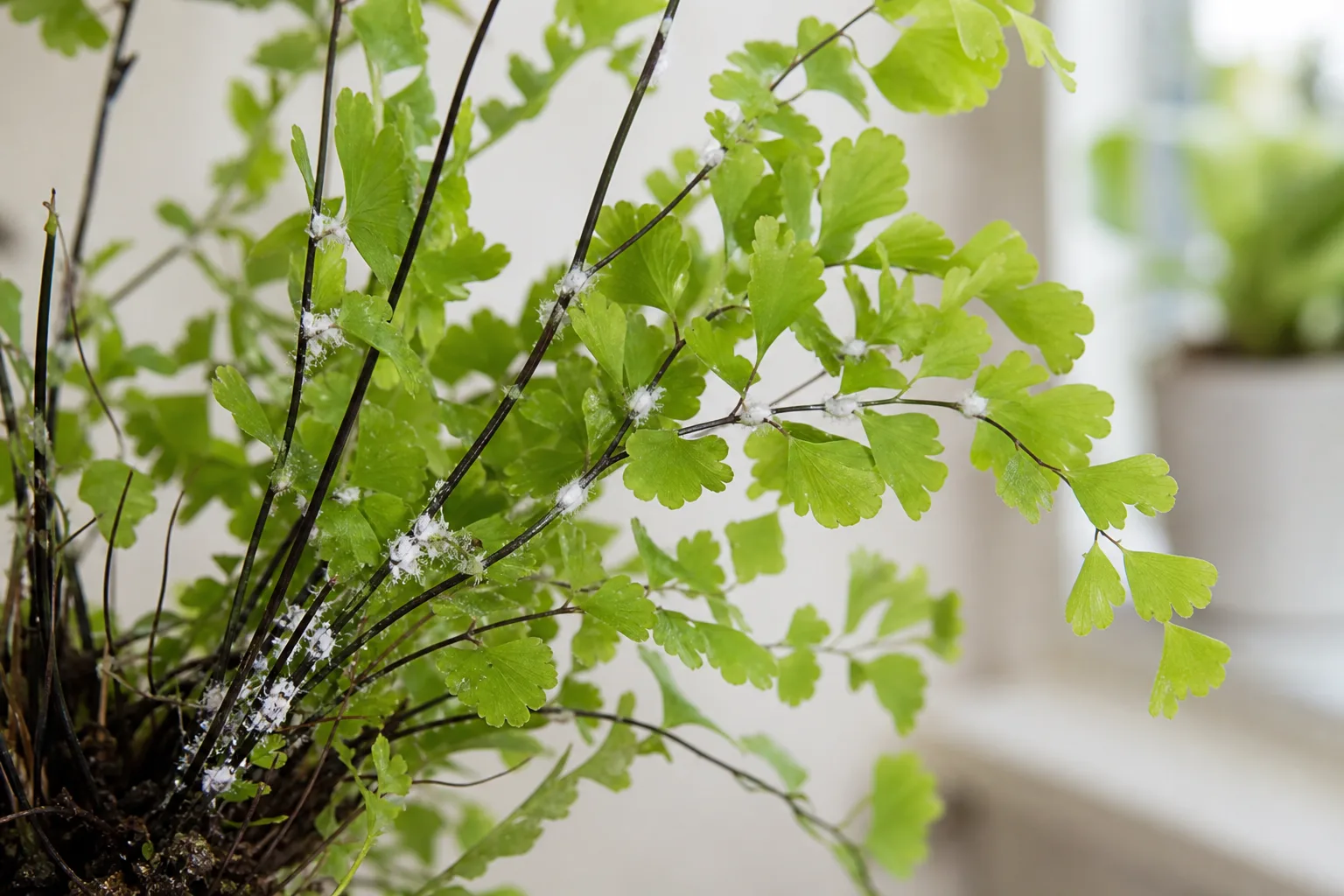
Mealybugs on Maidenhair Fern look like white cottony clusters on stems and frond bases. Isolate, dab visible bugs with alcohol, wash fronds, and treat with insecticidal soap while keeping humidity high during recovery.
Mealybugs on Maidenhair Fern: Causes, Checks & Fixes
This guide covers mealybugs on Maidenhair Fern. See also the general Mealybugs guide, watering, and light pages for this plant.
Mealybugs on Maidenhair Fern: Causes, Checks & Fixes
Quick answer
Mealybugs on Maidenhair Fern appear as white cottony clusters on black stems and frond bases. First step: isolate the plant, dab visible bugs with 70% isopropyl alcohol on a swab, wash fronds gently, and follow with insecticidal soap labeled for houseplants.
Watch for scale and mealybugs on Maidenhair Fern - the wiry stems and crowded croziers offer hiding spots. Mealybugs suck sap from delicate leaflets, causing yellowing, stunted fronds, and sticky honeydew that attracts sooty mold on fine fern foliage.
What mealybugs look like on Maidenhair Fern
Mealybugs on Maidenhair Fern typically cluster at:
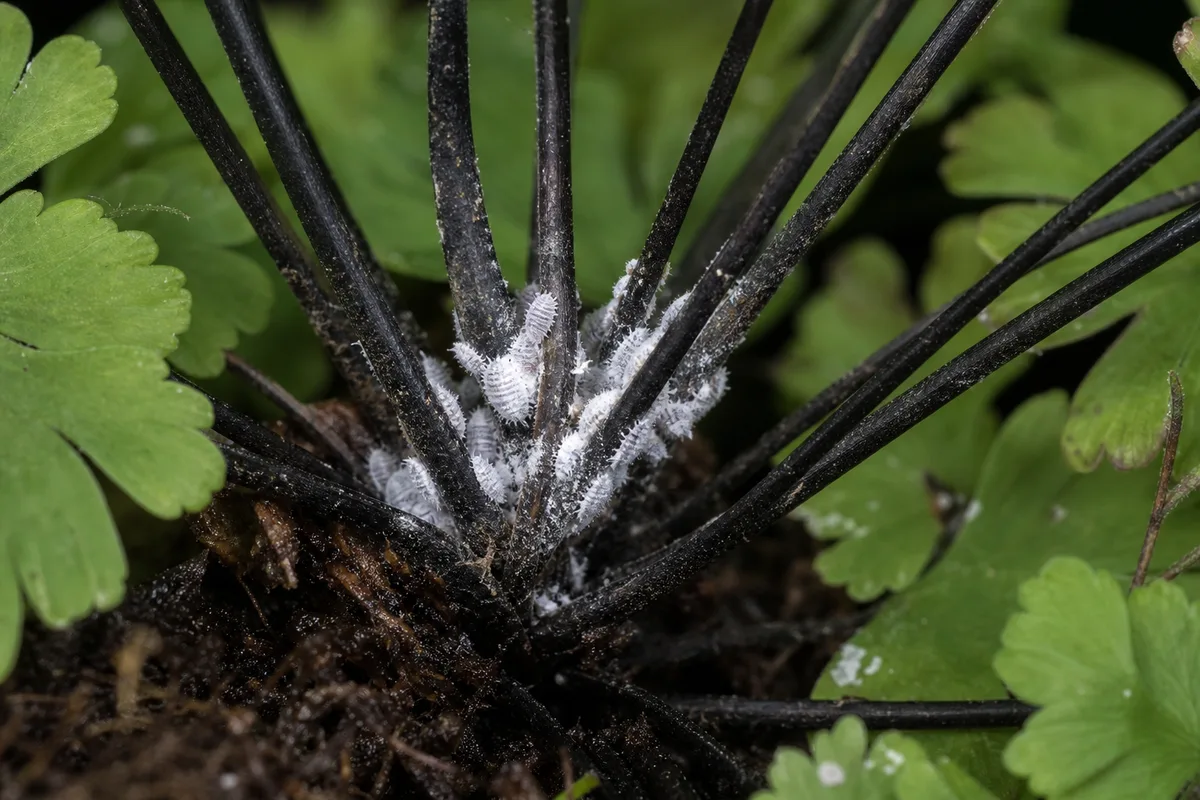
Mealybugs symptoms on Maidenhair Fern - compare with healthy tissue on the same plant.
- Frond bases where black stems meet the crown
- Undersides of new croziers before leaflets fully expand
- Soil line and pot rim where stems touch mix
- Root zone in advanced infestations when bugs move below soil
Signs include white cottony wax, sticky shiny fronds, yellowing leaflets near clusters, and ants farming honeydew if present outdoors or on balconies.
Individual bugs are soft-bodied; the wax coating protects them from casual rinsing - targeted removal is required.
Why Maidenhair Fern gets mealybugs
New plant introduction - Mealybugs hitchhike on nursery stock and spread during quarantine gaps.
Soft over-fertilized growth - Nitrogen-heavy feeding produces tender tissue mealybugs prefer.
Crowded frond bases - Maidenhair Fern’s dense crown traps humidity and hides pests.
Stress - underwatering on Maidenhair Fern or low humidity weakens ferns, though mealybugs also attack healthy plants.
Indoor-outdoor cycling - Summer outdoors exposes ferns to mealybug reservoirs; insufficient inspection on return indoors spreads them.
How to confirm the cause
- Visual ID - White cottony masses on stems, not fungal fuzz on soil (which lacks discrete bodies).
- Disturb test - Touch wax; mealybugs smear pink-gray fluid; mold does not.
- Honeydew - Sticky fronds near clusters confirm sap feeders.
- Magnification - Oval bodies with filaments under wax.
- Spread check - Inspect plants sharing the same shelf or window.
First fix for Maidenhair Fern
Isolate and manually remove every visible cluster before spraying.
Move Maidenhair Fern away from the collection. Dip a cotton swab in 70% isopropyl alcohol and dab each cottony cluster - contact kills exposed mealybugs. Support delicate fronds while working; avoid soaking the crown in alcohol.
Follow with a gentle lukewarm frond wash in the sink. Apply insecticidal soap labeled for houseplants, covering stems and undersides - insecticidal soap is effective against scales, aphids, thrips, spider mites, whiteflies and mealybugs when spray reaches bodies directly.
Repeat alcohol dab and soap applications weekly for 3–4 weeks. Maintain 60%+ humidity during recovery - stressed dry ferns handle treatment poorly.
Step-by-step recovery
- Isolate infested fern immediately.
- Alcohol-swab every visible mealybug cluster on stems and frond bases.
- Wash fronds gently with lukewarm water; let drain.
- Apply insecticidal soap per label; test one frond first for sensitivity.
- Inspect weekly; re-treat any new cotton patches.
- Check pot rim and top centimeter of soil; mealybugs hide below soil line - scrape visible clusters.
- Quarantine two weeks after last bug sighting.
- Reduce fertilizer until new fronds emerge clean.
Recovery timeline
Light infestations often clear in 3–4 weeks with weekly treatment. New fronds without wax or stickiness confirm success.
Heavy crown infestations on a declining plant may warrant disposal - bag the plant before removing to prevent spread to other houseplants.
Causes to rule out
- Powdery mildew - White dust on leaflets, not cotton clusters on stems.
- Mineral deposits - Hard water spots wipe off dry; no sticky honeydew.
- Scale insects - Hard brown shields, not cottony wax.
- Mold on soil - Saprophytic fuzz on mix surface without stem clusters.
What not to do
Do not use homemade soap sprays - do not mix homemade soap products as this can burn plants. Do not apply alcohol to entire fronds - spot-dab clusters only. Avoid systemic pesticides not labeled for ferns without label review. Do not return to the collection while cotton patches remain.
How to prevent mealybugs next time
Quarantine new plants two weeks minimum; inspect stem bases before placement. Keep newly acquired houseplants in an isolated area away from Maidenhair Fern.
Weekly underside and crown checks during watering catch early infestations. Feed half-strength only during active growth - avoid soft nitrogen-heavy flushes. Watch for scale and mealybugs as part of routine Maidenhair Fern care.
Maidenhair Fern care cross-check
Pest recovery requires stable humidity and moisture - do not let treatment coincide with drought stress. Maidenhair Fern is non-toxic to cats and dogs, but keep alcohol and pesticides away from pets during application.
When to worry
Escalate when mealybugs cover new growth, fronds yellow widely, or multiple collection plants show cotton clusters. Spot treatment on one isolated stem succeeds when caught early.
Conclusion
Mealybugs on Maidenhair Fern hide on wiry black stems and frond bases. Confirm cottony clusters, isolate, alcohol-dab each bug, wash gently, and repeat insecticidal soap weekly until new fronds emerge clean. Prevention depends on quarantine and regular crown inspection - the same careful attention this fern’s moisture needs already require.
When to use this page vs other Maidenhair Fern guides
- Maidenhair Fern watering guide - Use for routine moisture checks before assuming mealybugs is the main issue.
- Maidenhair Fern problems hub - Browse all 55 common issues on this species.
- Sticky Leaves on Maidenhair Fern - Different entry point when symptoms overlap with mealybugs.
- Yellow Leaves on Maidenhair Fern - Different entry point when symptoms overlap with mealybugs.
- Slow Growth on Maidenhair Fern - Different entry point when symptoms overlap with mealybugs.